Patricia Hului

Patricia Hului is a Kayan who wants to live in a world where you can eat whatever you want and not gain weight.

She grew up in Bintulu, Sarawak and graduated from the University Malaysia Sabah with a degree in Marine Science.

She is currently obsessed with silent vlogs during this Covid-19 pandemic.

Due to her obsession, she started her Youtube channel of slient vlogs.

Follow her on Instagram at @patriciahului, Facebook at Patricia Hului at Kajomag.com or Twitter at @patriciahului.

Check out these photos of Batu Lintang Camp after liberation

Also known as Lintang Barracks and Kuching POW camp, the Batu Lintang camp was a Japanese internment camp during the Second World War (WWII).

Unlike other Japanese internment camps, the Lintang Barracks held both Prisoners of War (POWs) and civilian internees.

The camp was originally British Indian Army barracks. The Japanese took it over from March 1942 and extended the original area.

After the Japanese officially surrendered on Aug 15, 1945, the camp was liberated on Sept 11, 1945 by the Australian 9th division.

Check out these photos of Batu Lintang camp taken after the Japanese had surrendered:

Check out these photos of Batu Lintang Camp after liberation
Flying over the prisoner of war camp (POW) in Batu Lintang at a low height, Royal Australian Air Force (RAAF) Beaufighter pilots reported sighting white POWs, clad in khaki shorts, who excitedly waved as the RAAF aircraft flew over to drop leaflets announcing Japan’s surrender.

One pilot also reported having seen white women who could have been either nurses or nuns.

Reportedly, there were 160 nuns interned in Batu Lintang camp in March 1944. Of these nuns, a large majority of them were Dutch Roman Catholic sisters with a few English sisters.

This image is believed to have been taken by the navigator of a Beaufighter aircraft possibly of 30 Squadron RAAF, whilst on operations to drop leaflets and to investigate the POW camp on Aug 22, 1945.

The RAAF planes were sent to drop these leaflets all over Sarawak’s First Division.

The leaflet was a foolscap size with a broad orange border.

Read the content of the leaflet here.

Check out these photos of Batu Lintang Camp after liberation
A photo taken on Sept 12, 1945. A Japanese guard delivering a fowl to Mrs Iva Penlington of Yorks, England who was interned at the camp, in payment for the two years use of her typewriter.
Check out these photos of Batu Lintang Camp after liberation
A photo taken on Sept 11, 1945. After the surrender ceremony at Kuching, 9th Australian Division, Kuching Force Commander Brigadier Sir Thomas Charles Eastick, accompanied by Lieutenant Colonel A.W. Walsh, 8th Australian Division ( a POW) and Lieut-Col Tatsuji Suga, Commandant of all POW camps in Borneo, visited Batu Lintang Camp.

A parade was held at which the prisoners were informed of their liberation.

In this photo, a section of the parade sitting in front of Eastick are listening to the address.

After the liberation, Eastick oversaw the liberation and repatriation of Allied POWs and internees in Sarawak.

Subsequently, he became the military governor of Sarawak from Sept 10, 1945 until December.

The last White Rajah of Sarawak Vyner Brooke awarded him The Most Excellent Order of the Star of Sarawak.

It was the highest order of chivalry within the Kingdom of Sarawak.

Check out these photos of Batu Lintang Camp after liberation
A group of POWs leaving their compound to board the hospital ship Wanganella. The hut named ‘Australia House’ is in the background.

The camp was divided into different compounds with each person was allotted a very small space within a barrack building.

These compounds included British officers and non-commissioned officers (NCOs), Australian officers and NCOs, Dutch officers and NCOs, other ranks of British soldiers, British Indian Army, Royal Netherlands East Indies Army, Roman Catholic priest and religious men, male as well as female civilian internees.

Agnes Newton Keith, one of many civilian internees

Check out these photos of Batu Lintang Camp after liberation
Agnes Newton Keith (left) speaking to Major T.T. Johnson (centre) and Eastick (right) after the surrender ceremony,

Keith was an American author and wife to Harry G. Keith.

She arrived in Sandakan in 1934 where her husband was working as the Conservator of Forests and Director of Agriculture under North Borneo Chartered Company.

When Sandakan was first captured by the Japanese on Jan 19, 1942, the Keiths were allowed to stay at their own home.

However on May 12, the couple were imprisoned on Berhala island. They spent eight months there before they were transported to Batu Lintang Camp.

Under the encouragement of her husband, Keith wrote three autobiographical accounts of her life in North Borneo.

Her book Three Came Home (1948) is based on her experience during WW2 and was made into a film of the same name in 1950.

Check out these photos of Batu Lintang Camp after liberation
A photo taken on Sept 15, 1945. Internee children being taken for a ride in an Australian field ambulance soon after their release from the Japanese by members of the Kuching Force.

There were 34 children interned at the camp and all of them survived the war.

The women of the camp often went without provision to ensure the children’s survival.

During their internment, the children were taught by the nuns.

Check out these photos of Batu Lintang Camp after liberation
A former Japanese guard from Batu Lintang Camp handcuffed on the front of a jeep.
About 8000 captured Japanese soldiers were then held at the camp after they had surrendered.

Life at Batu Lintang Camp

Check out these photos of Batu Lintang Camp after liberation
Private J. M. Curry who was cook for Australian officers at the POW camp.

Curry is wearing the chawat (loin cloth) issued to him by the Japanese, his only clothing in two years.

The oven was improvised from an officer’s trunk packed round with clay. All the kitchen gear had to be improvised as the Japanese only provided them with two 44 gallon drums.

Check out these photos of Batu Lintang Camp after liberation
A typical POW’s bed in the interior of ‘Australia House’.
Check out these photos of Batu Lintang Camp after liberation
Former POWs standing around the coffin that has been used in for a burial conducted by a former internee, Father Brown.

Due to shortage of materials, coffins were constructed with a collapsible bottom so that they could be used again.

At first, the dead were buried in coffins but soon the number of fatalities increased.

Toward the end of the war, the bodies were buried in shrouds made from rice sacks or blankets.

Check out these photos of Batu Lintang Camp after liberation
The daily ration of boiled rice for 1200 men in the camp only half filled this pig trough which they used for mixing with sweet potato.

In a war crime trial held against the Japanese soldiers in-charge of Batu Lintang camp, it is revealed that the only meat the prisoners was pig’s heads.

Reportedly, about 400 Allied POWs died of malnutrition in the last 12 months of the war.

The prosecuting officer of the case claimed that the diet fed to the camp’s pigs was more nutritious than the food given to the prisoners.

Check out these photos of Batu Lintang Camp after liberation
The frightfulness of the treatment handed out by the Japanese to their POWs is shown by the emaciated condition of two British soldiers who were evacuated from Batu Lintang camp.

Like many Japanese POW and internee camps, the life in Batu Lintang was harsh.

Both POWs and civilians were suffering from malnutrition, diseases such as beriberi, malaria, dengue and scabies.

The mortality rate among the British soldiers was extremely high with two third of the POW population in the camp.

Check out these photos of Batu Lintang Camp after liberation
A photo taken on Sept 18, 1945. All Japanese soldiers of Batu Lintang camp, were ordered from their quarters, searched and placed in the former British officers compound.
Check out these photos of Batu Lintang Camp after liberation
Private H. J.P. Riseley, a former POW, holding his chicken pet as he stands on the verandah of ‘Australia House’.

Check out these photos of Batu Lintang Camp after liberation
The graves of British, Dutch and Australian POWs at Batu Lintang Camp.

By July 1946, all the bodies had been exhumed and reburied in Labuan War Cemetery.

The Labuan cemetery is also the final resting place of soldiers who died during the Japanese invasion of Borneo, the Borneo Campaign 1945 and POWs who perished in the horrific Sandakan Death marches.

Photos by Australian War Memorial. Copyright expired – All Images are under Public Domain.

Check out these rare photos of The Astana, Kuching

If the Tsardom of Russia had their The Winter Palace and the Chinese emperors had their Forbidden City, we Sarawakians have what we call The Astana.

Once called Government House, it is now the official residence of the Governor of Sarawak.

It was built in 1870 by the second White Rajah Charles Brooke as a wedding gift to his wife Margaret Alice Lili de Windt.

The former palace of the White Rajahs is located on the north bank of the Sarawak, opposite the Kuching Waterfront.

One of the early descriptions of the Astana

Meanwhile, Sabine Baring-Gould and Charles Agar Bampfylde in their book A History of Sarawak under its two White Rajahs 1839-1908 had this to say about the building.

“Something must be said of the Astana, the residence of the Rajah and Ranee, which had then just been completed. It is built of brick in three separate sections, with a roof of iron-wood shingles, in appearance closely resembling slates. The illustration will best convey an idea of its exterior appearance, which in the opinion of some has been sacrificed for the sake of internal comfort. However that may be, no more comfortable or cooler house exists in the East. On the first or upper floor of the centre section are the drawing rooms and dining room spacious and lofty, and surrounded by a broad veranda. The side blocks contain the bedrooms, the lateral veranda of which are connected with those of the central block by covered bridges. In the basement are the Rajah’s office, guard room, household offices, bathroom, etc. The entrance is in the tower, in the lower part of which is the main staircase, and above is the billiard room. In a separate building, connected with the main building by a covered passage, are the bachelor’s quarters.

“The well laid out gardens are extensive and contain many beautiful tropical plants. Behind the Astana is the old graveyard of the former Malay Rajahs, in which are some well-carved monuments of ironwood. Beyond the gardens are grazing lands. The Rajah has two cattle farms, and he takes a great interest in rearing cattle, importing pedigree bulls from England to improve the stock in the country. Kuching is almost wholly supplied with milk and butter from the Astana diaries.”

Over the years, the Astana has witnessed so many historical events including the rise and fall of the Brooke era, the Japanese occupation, the British colonial days and now as Sarawak under the Malaysian federation.

It was here that local chiefs and their followers would meet especially those who came from outside of Kuching.

Former British colonial officer Alaistar Morrison stated in his book Fair Land Sarawak: Some Recollections of an Expatriate, “Any prominent personality visiting Kuching, such as Temenggong Oyong Lawai Jau, would normally be accompanied by a number of followers and you would meet them at the Astana receptions. These were prominent people in their own communities and they were perfectly at their ease in the Astana even if they did not wear lounge suits.”

The first reception of the Ranee

Speaking of receptions, the dining hall of the Astana was where the former Ranee Margaret held her first reception back in 1870.

In her book My Life in Sarawak (1913), she wrote,

“The dining room of the Astana was large, and could accommodate about two hundred and fifty guests… Some days before the party, on looking out my sitting room window towards the landing place and the path leading up from it to our door, I saw a number of little boys staggering under the weight of numerous round, red lacquer boxes. These were very large, and I sent for Talip (the butler) and asked him what they were. He informed me that they were to be used for the various cakes and fruit in the same way as we use silver dishes. Talip arranged that on this great occasion we should all sit on the floor round the room, and that the place occupied by the chief’s wife, with myself in their midst, should be set out with piles of gorgeous cushions covered with gold brocade – also borrowed from the houses of my guests. A fortnight or so was occupied in the preparations, and at last the day came to which I had been looking forward so much. I glanced into the dining room in the morning and thought how pretty a meal laid out for Malay ladies looked – very much prettier that the table arrangements at our dinner parties in England. Great strips of white and red material, bought for the occasion in the Bazaar, were laid down both sides of the room with cross pieces at each end. The red boxes were put at equal distances on these strips and between the boxes were dishes with the fruits of the country – mangosteens, mangoes, oranges, pineapples, etc. The red lacquer boxes made beautiful notes of colour all round the room.”

Unfortunately, there is no photo of Margaret’s first reception in Sarawak. One could only imagine how it looked like through her description.

The curse of Astana’s tower

With a building complex that has a history spanning more than a century, it is bound to have its own old wives’ tale.

One of these stories were told by John Beville Archer. He was the former Chief of Section in the Sarawak Civil Service and one of many Japanese internees during the Second World War (WWII).

In a June 1, 1948 issue of the Sarawak Gazette, Archer wrote how Toshinari Maeda’s untimely death might be related to the curse of Astana’s tower.

Maeda was a Japanese general and the first commander of the Japanese forces in northern Borneo during occupation.

“The main entrance of the Astana is the imposing and rather ancient tower overlooking the chief door to the palace.
Now there is a Brooke tradition that the exterior of this tower must not be whitewashed or renovated.
If this should occur, so runs the legend, some disaster will take place.
The tower had therefore became covered by an ivy-like creeper, and parts of the original building were crumbling in venerable decay.
The Japanese, vainglorious and victorious, saw fit to put this ruin into apple-pie order.
The creeper was torn down, masons, plasterers and white washers got busy.
Shortly afterwards Field Marshal Prince Maeda, cousin of the Emperor Sun god and Generalissimo, fell miserably to earth in a crashed plane somewhere round about Miri.”

To be precise, Maeda’s plane crash somewhere off Bintulu when flying from Kuching to Labuan in September 1942.
The wreckage of the plane and his body were never found.

After the war ended, the state became the Crown Colony of Sarawak (1945-1963). The colony was headed by a British governor appointed by King George IV and later by Queen Elizabeth II.

The official residence of the Governor of Sarawak at that time was the Astana.

Here are the photos of The Astana taken during Sarawak colonial days in 1959:

Check out these rare photos of The Astana, Kuching
The view of the ground behind the Astana where Santubong mountain could be seen in the background.
Check out these rare photos of The Astana, Kuching
The swimming pool, tennis court and outside bar behind the Astana.
Check out these rare photos of The Astana, Kuching
The fish pond in the Astana grounds.
Check out these rare photos of The Astana, Kuching
Sentry outside entrance to the Astana.
Check out these rare photos of The Astana, Kuching
Looking across river to Kuching from the tower of the Astana.
Check out these rare photos of The Astana, Kuching
The back of the Astana from the grounds.
Check out these rare photos of The Astana, Kuching
Another point of view of the former Rajah’s residence.
Check out these rare photos of The Astana, Kuching
The front of the Astana, Kuching.
Check out these rare photos of The Astana, Kuching
The back verandah.
Check out these rare photos of The Astana, Kuching
The Governor’s private sitting room.
Check out these rare photos of The Astana, Kuching
The hall.
Check out these rare photos of The Astana, Kuching
The sitting room in the private secretary’s flat.
Check out these rare photos of The Astana, Kuching
The Lady Rachel room.
Check out these rare photos of The Astana, Kuching
Entrance steps in the Astana.
Check out these rare photos of The Astana, Kuching
The dining room with round table.
Check out these rare photos of The Astana, Kuching
The air conditioned library in the Astana.
Check out these rare photos of The Astana, Kuching
The Governor’s bedroom.
Check out these rare photos of The Astana, Kuching
The private secretary’s bedroom.
Check out these rare photos of The Astana, Kuching
The Ranee’s room, Astana.
Check out these rare photos of The Astana, Kuching
Round table (seats 9) in dining room.
Check out these rare photos of The Astana, Kuching
The games room and comptroller of the household’s desk.
Check out these rare photos of The Astana, Kuching
Office of the assistant private secretary underneath the Astana.
Check out these rare photos of The Astana, Kuching
The Governor’s office
Check out these rare photos of The Astana, Kuching
The Duchess room,
Check out these rare photos of The Astana, Kuching
The kitchens.
Check out these rare photos of The Astana, Kuching
The Governor’s office,
Check out these rare photos of The Astana, Kuching
Bathroom of the Lady Rachel room.

All images are part of the Colonial Office photographic collection held at The National Archives, United Kingdom. There is no known copyright restrictions.

The history of strawberry shortcake that you never knew

Are you a fan of strawberry shortcake? If you are based in Kuching, one of the places you can get a hand on a strawberry shortcake is at The Hash Cafe. Pair it with a cup of hot coffee or black tea and you have the perfect afternoon tea session.

However, did you know that the dessert we know as strawberry shortcake today (especially in Asian countries) is different from its original version?

Let us take a look into the history of strawberry shortcake

First of all, there are two types of shortcake. In the American version, a shortcake is a crumbly sweet cake or biscuit that has been leavened with baking powder or baking soda.

Meanwhile in the United Kingdom, the term shortcake mainly refers to a biscuit that is similar to shortbread.

A typical shortcake is made with flour, sugar, baking powder, salt, butter, milk or cream and sometimes egg.

Of all the desserts made from shortcake, the most popular one is none other than strawberry shortcake.

It is made from layers of shortcakes with sugared strawberry slices and whipped cream in between.

The first strawberry shortcake recipe appeared in an English cookbook in 1588.

Back then, the dessert was made from biscuits (or scones) and strawberry served with butter and sweetened cream.

By the early 20th century, the topping was replaced with heavy whipped cream.

The history of strawberry shortcake that you never knew
The Western version of strawberry shortcake using biscuits. Credit: Unsplash.

The Japanese version of strawberry shortcake

The strawberry shortcake that most Malaysians are familiar with is the Japanese version of the recipe.

And we all have to thank the founder of Fujiya Co. Ltd Rinemon Fujii for this.

Fujiya is a Japanese chain of confectionery stores and restaurants that was founded in 1910 in Yokohama.

In 1912, Fujii went to the US to learn to make Western desserts. During his stay, he was fascinated with a dessert made with butter sponge cake, sweetened fruit and whipped cream.

When he returned to Japan in 1922, Fujii came up with his own version of strawberries, whipped cream and sponge cake.

It was not until the cake appeared in TV commercials in 1958 that the dessert caught the attention of Japanese people.

The dessert is particularly famous during the Christmas season that some might refer it as Japanese Christmas cake.

Today, if you say ‘cake’, most Japanese would immediately think of this sponge cake with whipped cream and strawberry.

The history of strawberry shortcake that you never knew
The Japanese version of strawberry shortcake. Credit: Pexels.

Read about other desserts on KajoMag.com here:

Nuns or concubines: Who invented Italian pastry, cannoli?

Know the legends behind these 5 famous Chinese desserts

What you need to know about Basque burnt cheesecake

What you should know about French cake, madeleine

Brooketon, the extraterritorial extension of Sarawak during Brooke dynasty

Many Sarawakians today might not be familiar with Brooketon but about a century ago, it was a mining settlement that was once under the Sarawak government.

What made this settlement special was that it was located in Brunei, not in Sarawak.

During the reign of second White Rajah of Sarawak Charles Brooke, Brooketon was considered an ‘extraterritorial extension’ of Sarawak.

William Cowie and the mine in Brunei

Brooketon, the extraterritorial extension of Sarawak during Brooke dynasty
Brooketon Colliery by the end of 1900. Credit: Public Domain/Copyright Expired.

Before going into how Brooke ‘acquired’ a territory outside of Sarawak, let us take a look into the history of William Cowie.

Cowie was a Scottish engineer, mariner and businessman born in 1849.

He was famously known for helping establish British North Borneo (present-day Sabah) and being the chairman of the British North Borneo Company.

In March 1882, Cowie purchased a 40-year concession for the exploitation of coal fields in Muara town in Brunei.

The Muara coalmine was first commercially mined in 1883.

At the same time, Cowie rented a shipyard in Labuan for 99 years from which he shipped his coal.

Some years later, he wanted to sell his concession rights in Muara and the person who bought the deal was Brooke.

On Sept 6, 1888, Cowie transferred his leases to Brooke for £25,000.

After the transfer, the coalmine in Muara incurred heavy losses from the outset and it was not until 1917 that even a minuscule surplus of $1,527 was shown on a year’s trading.

Rajah Charles Brooke, the de facto ruler of Brooketon

Brooketon, the extraterritorial extension of Sarawak during Brooke dynasty

So why keep a mine that isn’t making money? Charles Agar Bampfylde, the Resident of the First Division of Sarawak (1896-1903) once explained that Brooketon without its coalmine “would be but a small fishing hamlet, that the mine found employment for a great many people.

And that it was “entirely on that account” that Brooke kept the mine open.

Meanwhile, English historian Steven Runciman believed that the Rajah bought the mine “perhaps more from fear that otherwise on the North Borneo Company might take it over than from any great faith in its potentialities”.

There is another possible theory on why Brooke bought the mine.

After Sarawak had acquired Limbang in 1890 from the Brunei sultanate, the purchase of the coal mine and its strategic location near the sea would give the Rajah a stranglehold on Brunei and and bring him closer to fulfilling his ultimate ambition, which was to incorporate Brunei within Sarawak.

According to writer Rozan Yunus in his article Before the Oil, It was Coal, the colliery was strategic as it was very near to Muara town where then and as well as now here is a safe deep-water anchorage to which the mine was connected to rail.

By 1911, there was more than 1,447 people lived in the settlement with about 30 shops.

Rozan wrote, “Politically too, even though he only had economic rights, Rajah Charles became the ‘ruler’ of the area. The mine employed hundred of miners and that required him to introduce a police force, post office and roads transforming Muara into an ‘extraterritorial’ settlement – an extension of Sarawak”.

Thanks to the post office, Brooketon became the first place in Brunei where a postage stamp was issued.

Who came up with the name Brooketon?

While many records claimed that Brooke was the one who named the settlement Brooketon, researcher A.V.M Horton pointed out it was Cowie who came up with the name.

In his paper Rajah Charles Brooke and Mining Concessions in Brunei 1888-1924, Horton wrote, “Mr Cowie had renamed the colliery settlement ‘Brooketon’ in honour of Sir Charles. Subsequently the latter was most touchy on this point: in early 1907, after a British ‘resident’ had been appointed to administer Brunei, he detected a (non-existent) British plot to suppress the name and complained to the colonial office.

“It might be observed, however, that if Brunei Malays were as well disposed towards as some writers have claimed, then it is somewhat surprising that the name ‘Brooketon’ no longer survives.”

The colliery which was known as Muara Coal Mine, was renamed as Brooketon Colliery.

The history of the mining settlement inspired the card game ‘Letters to Brooketon’

Bruneian game creator company Comet Games was so inspired with the rich history of the mining settlement that they created a card game called ‘Letters to Brooketon’.

The imaginary scenario idea behind the game is ‘What if there were local Bruneians who were against Charles Brooke and wanted to sabotage the coal mines?’

In order to play the game, each player is secretly assigned a role as either a Miner or a Mole.

Thus, it is the job of each player to find out who is who as the game progresses, lest they want the opponent to win.

The highlight of the game is deception and how you twist and play against your opponents in every round.

What is left of Brooketon Colliery

The mine was closed in 1924 due to financial losses driven by the decreasing price of coal during the world economic recession.

By then, the mine and its settlement had already returned to Brunei in 1921.

When the Japanese occupied Brunei during the Second World War (WWII) and tried to reopen the mine, they failed.

At the end of the war, the Australian forces landed at Brooketon as part of the Borneo Campaign 1945.

Today, the former fishing/mining settlement has now become Brunei’s primary deep water port with a population of 2,102 in 2016.

As for Brooketon Colliery, all that remains is an overgrown railway, locomotives, mine entrances and an abandoned Morris Minor.

Thankfully, it is currently a protected site under the Antiquities and Treasure Trove Act of Brunei Darussalam.

What you need to know about the Fall of Singapore during WWII

When the Malayan Peninsula and subsequently Singapore were captured during World War II (WWII), it was considered among the Japanese Army’s greatest wartime achievements.

Meanwhile, it was the worst Far Eastern defeats for Great Britain.

During WWII, Singapore was British military base in Southeast Asia.

Also known as the Fall of Singapore, the battle lasted from Feb 8 to 15, 1942.

It resulted in the Japanese capture of Singapore and the largest British surrender in history.

What you need to know about the Fall of Singapore during WWII
Japanese victorious troops march through the city centre. Credit Public Domain.

Here are eight things you should know about the Fall of Singapore:

1.Why did Japan attack Singapore?

According to Paul H. Kratoska in his book The Japanese Occupation of Malaya, Japan considered Malaya and Sumatra ‘the nuclear zone of the Empire’s plans for the Southern area’, and saw the Malay Peninsula as ‘the economic and communication axis for the entire Southern area’.

Moreover, Singapore also had considerable strategic importance because Britain’s Singapore Naval Base provided a centre for operations against Japan.

At that time, Singapore was the key to British imperial interwar defence planning for Southeast Asia and the Southwest Pacific.

If Singapore had fallen, it also meant the Allied forces in Southeast Asia had also fallen.

On the same day that the Japanese was attacking Pearl Harbour, they simultaneously bombed Royal Air Force bases to the north of Singapore on the Malay coast.

By doing this, the Japanese successfully eliminated British air forces available to protect or retaliate the troops on the ground.

The British retaliated by sending the battleship ‘Prince of Wales’ and the battle ‘Repulse’ at the head of fleet of ships.

This efforts turned out futile as they both were torpedoed and sank into the sea.

Hence even before the Japanese troops even set foot on Singapore, they already destroyed the British naval and aerial capabilities.

2.The Battle of Singapore

Somehow, the British was really expecting the Japanese forces to attack from the sea at the south of Singapore instead of from the Malay peninsula where treacherous jungle and mangrove swamp covered the region.

The British commander at the time, Arthur Percival had about 90,000 men at his disposal.

After the Japanese had attacked Kota Bharu just after midnight on Dec 8, 1941 right before the attack on Pearl Harbour, it marked the beginning of Japanese invasion of Malaya.

The Japanese assaulted their way from there heading south towards Singapore.

By Feb 8, 1942 with only around 23,000 troops, the Japanese forces which led by General Tomoyuki Yamashita entered Singapore.

Despite being outnumbered three to one, the Japanese managed to gain a strong foothold in Singapore.

One factor which contributed to that was Percival’s miscalculation in locating his troops.

Even though the British forces were far superior in number, they were were spread so thinly.

This allowed the Japanese forces to easily overwhelmed them by attacking the weakest part of the line.

Just seven days later, Percival decided to surrender to prevent further loss of life.

3.The Japanese called the Fall of Singapore ‘the bluff that worked’

What you need to know about the Fall of Singapore during WWII
Lieutenant-General Yamashita (seated, centre) thumps the table with his fist to emphasise his demand for unconditional surrender. Lieutenant-General Percival sits between his officers, his clenched hand to his mouth. (Photo from Imperial War Museum/Public Domain).

On the evening of Feb 15, Percival tried to negotiate with Yamashita on the some of the conditions for the surrender of Singapore.

The British Lieutenant-General wished to delay the ceasefire so that all of his men to receive their orders on time.

In the same time, Percival wished to keep 1000 of his men armed in case that the Japanese would retaliate against the local populations.

Yamashita, however, threatened to carry on the planned attack for that night if the British did not surrender.

This was all a facade on Yamashita’s side. He was actually afraid that the British might discover the real situation of the Japanese in Singapore.

What Percival did not know was that the Japanese had a smaller number of troops compared to the British.

Furthermore, the Japanese were at the end of their supplies with literally only hours of shells left.

If Yamashita and Percival were to play a game of poker, now we know who would be the winner.

4.Winston Churchill called it the worst disaster in British Military History

When the Battle of Singapore first started, British Prime Minister Winston Churchill ordered Percival to fight to the last man standing.

Hence imagine the shock Churchill received when he received the news that Singapore had fallen.

He called it the ‘worst disaster’ in British military history.

Later in his book The Hinge of Fate, Churchill blamed himself for the lack of fortification in order to prepare for the war.

“I do not write this in any way to excuse myself. I ought to have known. My advisers ought to have known and I ought to have been told and I ought to have asked. The reason I had not asked about this matter, amid the thousands of questions I put, was that the possibility of Singapore having no landward defences no more entered into my mind than that of a battleship being launched without a bottom.

“I am aware of the various reasons that have been given for this failure: the preoccupation of the troops in training and in building defence works in Northern Malaya; the shortage of civilian labour; pre-war financial limitations and centralised War Office control; the fact that the Army’s role was to protect the naval base, situated on the north shore of the island, and that it was therefore their duty to fight in front of that shore and not along it. I do not consider these reasons valid. Defences should have been built.”

The Fall of Singapore left the prime minister feeling in disgrace. According to his personal physician Lord Moran, it left a scar in his mind.

Moran wrote, “One evening, months later, when he was sitting in his bathroom enveloped in a towel, he stopped drying himself and gloomily surveyed the floor: ‘I cannot get over Singapore’, he said sadly.”

5.Was Arthur Percival to be blamed?

What you need to know about the Fall of Singapore during WWII
Percival (right) and his party carry the Union flag on their way to surrender Singapore to the Japanese. (Photo credit: Imperial War Museum/ Public Domain)

When things go south, it is natural for the blame game to start.

As for the Battle of Singapore, most fingers turned toward Percival.

His critics blamed him for not building the fixed defences in either Johor or the north of Singapore.

When his chief engineer Brigadier Ivan Simson requested to start construction in the area, Percival dismissed him with the comment, “Defences are bad for morale for both troops and civilians.”

Furthermore, teamwork was not in the Allied forces’ dictionary during the Battle of Singapore.

He was not in tune with Sir Lewis Health who was commanding Indian III Corps and Gordon Bennett who was commanding the Australian 8th Division.

Ultimately, Percival’s willingness to surrender to the invading Japanese forces was seen as undermining the British power in Southeast Asia.

Percival became a POW was sent to a camp near Hsian, China.

He was freed by an American intelligence agency, the OSS (Office of Strategic Services) as the war drew to an end.

After that, he went to the Philippines to witness the surrender of the Japanese army there.

In a twist of fate, Percival was ‘reunited’ with his old nemesis General Yamashita there.

Reportedly, Percival refused to shake Yamashita’s hand during their unexpected reunion as he was angered with the mistreatment of POWs in Singapore by the Japanese.

6.The escape of Australian general Gordon Bennett

Apart from Percival’s controversial decision to surrender, another person who came under scrutiny was Australian Lieutenant General Gordon Bennett.

On Feb 15, when Percival was negotiating about the surrender, Bennett decided to escape from Singapore.

After handing the command of the Australian 8th Division to Brigadier Cecil Callaghan, Bennett took a sampan with some junior officers and local Europeans crossing the Strait of Malacca to the east coast of Sumatra.

From there, the group proceeded to Padang on the west coast of Sumatra and then to Java before flying to Melbourne on Mar 2, 1942.

While Bennett was busy escaping, almost 15,000 Australian soldiers were captured in Singapore.

Unsurprisingly, Bennett’s choice to abandon his move was heavily criticised.

On Nov 17, 1945, the Prime Minister of Australia appointed Justice Ligertwood to be a commissioner to inquire into the action of Bennett relinquishing his command and leaving Singapore.

Later in his report, Ligertwood stated, “At the time General Bennett left Singapore he was not a prisoner of war in the sense of being a soldier who was under a duty to escape. He was in the position of a soldier whose commanding officer had agreed to surrender him and to submit him to directions which would make him a prisoner of war.

“Having regard to the terms of the capitulation I think that it was General Bennett’s duty to have remained in command of the AIF until the surrender was complete.

“Having regard to the terms of the capitulation I find that General Bennett was not justified in relinquishing his command and leaving Singapore.”

7.What you should know about Japanese Tomoyuki Yamashita

What you need to know about the Fall of Singapore during WWII
Portrait of Tomoyuki Yamashita, Japanese general of the Imperial Japanese Army during World War II. Yamashita led Japanese forces during the invasion of Malaya and Battle of Singapore, with his accomplishment of conquering Malaya and Singapore in 70 days earning him the sobriquet The Tiger of Malaya. (Photo: Public Domain).

Thanks to his accomplishment conquering Malaya and Singapore in 70 days, Yamashita earned the nickname “The Tiger of Malaya”.

Most people do not know that the man behind “The Tiger of Malaya” was in a way, a believer of peace despite his proven successful achievements in leading his men in battle.

When he was promoted to lieutenant-general in November 1937, Yamashita insisted that Japan should end the conflict with China.

Moreover, he proposed to keep peaceful relations with the United States and Great Britain.

Clearly, Yamashita’s proposal was ignored.

Fast forward to WWII, he was the man who led Japan to victory in Singapore against Britain.

He was assigned to defend Philippines at the end of the war and was able to hold on to part of Luzon until Japan Empire formally surrendered in August 1945.

After the war, Yamashita was tried for war crimes committed by troops under his command during the Japanese occupation of the Philippines.

The American military tribunal in Manila tried him for the Manila massacre and many atrocities against the civilians and POWs in the Philippines.

Even though Yamashita denied giving the orders for these war crimes and denied having any knowledge of these events, the court found him guilty. He was sentenced to death by hanging.

In his final statement right before he was hanged, Yamashita named and thanked the American officers who were in-charge of him during the military trial.

He also said that he did not blame his executioners and pray that the gods bless them. Yamashita was executed on Feb 23, 1946.

His controversial trial led to what the military all over the world now know as the Yamashita Standard.

It is when a soldier “unlawfully disregarding, and failing to discharge, his duty as a commander to control the acts of members of his command, by permitting them to commit war crimes.”

The overall situation was irony for Yamashita as the first orders he gave to his soldiers at the start of WWII was “no looting, no rape, no arson.”

8.The aftermath

Nonetheless, the Fall of Singapore resulted in the largest British surrender in history with a total of a nearly 85,000 personnel including Australians captured and about 5000 were killed or wounded.

Thousands were held captives in Singapore’s Changi Prison and thousands others were sent to other parts of Asia.

Many of them who boarded the infamous hell ships did not survive the journey.

A huge number of the captured Allied forces found themselves working as forced labour on Burma-Siam Death Railway, Sumatra Railway and Sandakan Airfield.

Unfortunately, many POWs perished during their internment.

Throughout the entire 70-day campaign in both Malaya and Singapore, about 8,708 Allied forces were killed or wounded while the Japanese forces suffered from 9,824 casualties.

The Fall of Singapore also marked the beginning of Japanese occupation of Singapore.

Singapore was renamed Syonan-to meaning ‘Light of the South Island’.

During this time, the local Singaporeans suffered great hardships under the rule of Japanese.

The Chinese people in particular were targeted by the Japanese due to the Second Sino-Japanese War with thousands were murdered in the Sook Ching massacre.

Finally, the island was returned to British colonial rule on Sept 12, 1945 following the formal signing of Japanese surrender.

What you need to know about Chinese hotpot

Raise your hand if you love Chinese hotpot!

Putting aside that you will really need a shower after your meal, the idea of cooking everything in a pot and eating together is an experience everyone should try at least once.

Here are five things you should know about Chinese hotpot:

1.The history of Chinese hotpot

According to the book A History of Food Culture in China, the idea of hotpot cooking originates from as far back as the Neolithic era when people sat around a fire pit for communal dining.

Rongguang Zhao, Gangliu Wang, Aimee Yiran Wang stated that sitting around a fire eating dinner from a hanging pot was also a way to get warm.

A pot made of copper created during the Three Kingdoms Period (200-280AD) is now known to be the origin of hotpot.

During the mid-late Qing Dynasty, hotpot became popular among Chinese emperors.

Qianlong Emperor (1711-1799) specifically was a hardcore hotpot fan.

According to the documents from the Imperial Household Department, the emperor ate 23 different types of hotpot 66 times in one month from August 16 to September 16 in 1799.

He also ate more than 200 hotpot dishes in 1789. Qianlong’s royal hotpot included ingredients such as “sliced pheasant, wild boar meat, roe deer tenderloin, wild duck breast and squid roll”.

Qianlong was not the only Chinese emperor who enjoyed hotpot.

When his successor Jiaqing Emperor ascended the throne on Feb 9, 1796, his coronation banquet served 1,550 hotpots for the attendees.

2.The common ingredients are basic stock, protein, starch, vegetable and condiments.

What you need to know about Chinese hotpot

So what is a hotpot?

It is a pot of simmering broth in which diners cook their raw ingredients together.

The basic ingredients for a hotpot can be divided into five categories; the stock, protein, starch, vegetables and condiments.

For meat lovers out there, hotpot is where you can go crazy with the ingredients.

Forget about the usual pork, chicken, beef, one can opt for unconventional ingredients such as beef tongue, offal, pork brain and blood tofu.

Additionally, seafood lovers can even put in their favourite sea creatures like squid, lobster, crawfish, octopus or cuttlefish.

And of course for those who don’t mind having processed food, a hotpot can have ingredients such as beef balls, fish balls and different kinds of tofu.

As for vegetables, a hotpot may include bok choy, napa cabbage, bean sprouts, lettuce, spinach and more.

For some carbs, the common ingredients are any types of Chinese noodles, glass noodle and instant ramen and udon.

A feast of hotpot is incomplete without variety of condiments such as soy sauce, sesame oil, vinegar and minced garlic or ginger.

3.There are so many variations of Chinese hotpot

What you need to know about Chinese hotpot
A yin-yang hotpot with both spicy and non-spicy broth.

Generally, Chinese hotpot can be divided into southern style and northern style, following the cultural regions of China.

The northern style of hotpot comes with simpler broth while the southern style leads toward spicier broth and variety of dipping sauces.

Speaking of southern style hotpot, the most famous of its kind is none other than Chongqing hotpot.

Also known as spicy hotpot, it is similar to the famous Chinese malatang.

A spicy Chongqing hotpot soup base is mainly made of red chilli oil flavoured with beef fat and all kinds of spices such as bay leaf, clove and cinnamon.

Unlike the southern style hotpot which is known for its spicy and intense flavour, the northern style hotpot has milder broth.

The most common type of northern style hotpot is the instant-boiled mutton or Mongolian fire pot.

Instead of the soup base, the focus of this hotpot dish is on the main ingredients which mainly using different cut of mutton.

What you need to know about Chinese hotpot
The southern style hotpot is known for its spiciness.

4.Other variations of Chinese hotpot from outside of China

What you need to know about Chinese hotpot
Shabu-shabu spread.

The idea having a wide array of raw ingredients and cooking them together in boiling water not only can be found in China.

In Japan for instance, shabu-shabu is a hotpot dish of thinly sliced meat and vegetables boiled in water and served with dipping sauce.

It is common to cook the ingredient piece by piece right at the table while eating when it comes to shabu-shabu.

Similarly, Thai suki is a Thai variant of hotpot deriving from Chinese hotpot.

To cater to Thai taste, the dipping sauce is usually made from chilli, lime and coriander leaves.

5.Believe it or not, there is a self-heating hotpot package in the market

Let say you want to give a Chinese hotpot but lacking in companions, fret not.

There is a self-heating hotpot package available in the market which is perfect for one person.

A self-heating hotpot was first introduced in China a few year ago thanks to the rise in popularity in Sichuan-based hotpot restaurants.

It requires no external heat source and all you need is just a bottle of water.

The package include a packet of quicklime. When mixed with water, it will release enough heat to cook the hotpot.

This instant food wonder comes with many different kinds of dry ingredients like black fungus, vermicelli and mushroom as well as variety of flavours such as sweet and sour tomato, chicken pepper and Mala beef.

All images are stock photos from Pixabay.com.

5 European explorers and their horrific deaths in 19th century Borneo

Borneo in the 21st century is heaven for all adventurers out there. Here you can find a piece of everything, be it a sandy beach or chilly mountain, exotic animals or unique culture; we have it all.

Plus, the people of Borneo are known for their friendliness and generally being good hosts. It is a vast contrast from what it was like two centuries ago.

To be sure, 19th century Borneo would not have made it to any vacationer’s list of ‘places you must visit before you die’, because, well, there was a high chance that you could actually die.

Rampant headhunting, wild animals, tropical diseases, hostile locals and piracy were just some of the cause of deaths for many explorers.

Regardless, these factors did not stop many Europeans from coming to Borneo to explore the island.

Some survived their trips while others met their ends here in Borneo.

Here are five European explorers and their horrific deaths in 19th century Borneo:

1.Robert Burns

Who was he?

He was a Scottish trader and explorer who became the first European to visit Kayan territory in Borneo.

Burns left Glasgow for Singapore in the 1840s and worked on the island with a Scots-owned trading company, Hamilton Gray.

He then first sailed to Labuan where he sought permission to travel to Bintulu.

Burns reportedly set foot in Bintulu around 1847 before making his way to Rajang and Baram rivers to mingle with the Kayan people.

During this time, he learned about Kayan culture, jotting down their vocabulary all the while.

His paper about the Kayan was published in the Journal of the Indian Archipelago and Eastern Asia in February, 1849.

How did he die?

Burns died a horrific death – decapitated by pirates while sailing off the northeast coast of Borneo island.

Aboard the British registered schooner Dolphin, Burns planned to visit the Kinabatangan river to trade.

Somewhere at Maludu bay, a group of pirates managed to disguise themselves as traders and went onboard the Dolphin.

The pirates attacked Burns and his crew when they lowered down their guards as they thought their ‘guests’ were just wanting to trade.

According to the surviving crew, Burns’ head was severed from his shoulder in one blow.

Read more about Robert Burns here.

2.Frank Hatton

5 European explorers and their horrific deaths in 19th century Borneo

Who was he?

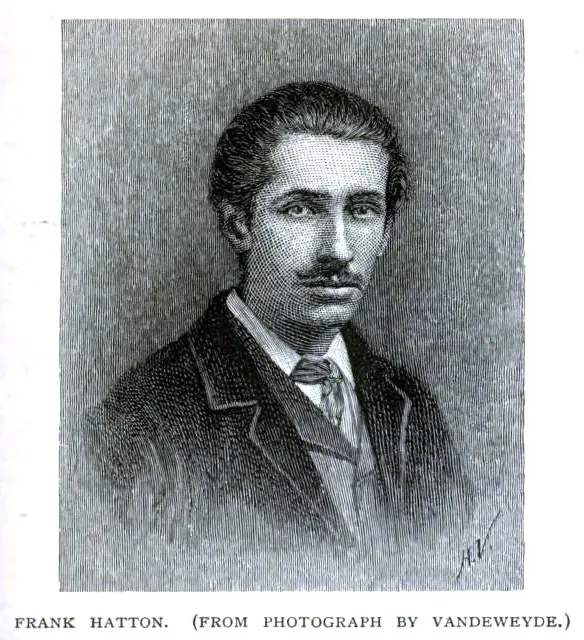
Born in 1861, Frank Hatton was an English geologist and explorer.

He joined the British North Borneo Company as a mineral explorer.

His job in British North Borneo (now Sabah) was to investigate the mineral resources in the country.

During his journey, Hatton became the first White man that ever made contact with some of the local tribes such as the Dusun.

How did he die?

Hatton died in 1883 due to accidental shooting from his own gun.

It is believed that his Winchester rifle got tangled in jungle creepers, went off and shot him in the chest.

His last words were in Malay saying to his servant Odeen, “Odeen, Odeen mati saya!” (Odeen, Odeen I am dead!) while resting his head on his servant’s shoulder.

Hatton’s last expedition was to find himself an elephant and acquire its tusks.

If he was to succeed in doing so, Hatton might have been the first European hunter to do so in North Borneo back then.

Read more about Frank Hatton here.

3.Franz Witti

5 European explorers and their horrific deaths in 19th century Borneo

Who was he?

He was a former navy officer in the Austro-Hungarian Empire and one of the first few Europeans to explore the northern part of Borneo.

Witti was hired by the British North Borneo Company in 1877 to make a survey of the natural resources in the area.

But before that he already conducted several surveys on his own.

Witti was also known to be the first person who discovered oil about 26km outside of present-day Kudat town in Sabah.

How did he die?

Witti got caught between a tribal feud of two different Murut groups.

During his last expedition which started in March 1882, Witti arrived in Limbawan somewhere near Keningau.

The local Murut chief named Jeludin warned him and his party not to travel to Peluan because there was a feud between Jeludin’s group of Nabai and Peluan.

However, Witti continued his journey and arrived in a village.

There, his group was ambushed by some hundreds of headhunters reportedly from the Murut Peluan group.

The Murut Peluan group attacked Witti and his party because they were friendly with their enemy, from the Murut Nabai group.

Some reports said that he was killed by a spear while others claimed it was a blowpipe that took his life.

Witti didn’t die without a fight as he killed two men using his revolver.

Read more about Franz Witti here.

4.James Motley

Who was he?

Had James Motley lived longer, it is arguable that he might have been comparable to his near contemporary in Borneo, Alfred Russell Wallace.

Born in 1822, Motley first came to Labuan in 1849 to pioneer coal mining for the Eastern Archipelago Company.

There, he did not have a good relationship with fellow naturalist Hugh Low at that time.

He then left Labuan and spent some time exploring the coast of Sumatra until he found his way in Banjarmasin in the south eastern part of Borneo.

Motley is credited with making the first list of Borneo birds and had collected over 2000 plants in Borneo.

How did he die?

Motley, his wife, two daughters and son were among the 100 Europeans killed during the Banjarmasin War.

The war was a power struggle between Sultan Hidayatullah II of Banjar and the illegitimate grandson of the former sultan Tamjied Illah.

During the war, all the Europeans – including the missionaries – were killed by rebels.

Prior to the massacre, on April 18, 1859, Motley had actually written a letter to his father on the Isle of Man assuring him that there was no need to worry.

A mere 12 days later, Motley and his family were found dead.

Read more about James Motley here.

5 European explorers and their horrific deaths in 19th century Borneo
W.A van Rees’ illustration of Banjarmasin War in 1865. Photo credit: Public Domain/Copyright Expired.

5.Georg Müller

Who was he?

Born in 1790, Georg Müller was a German-Dutch engineering officer who served in the French army during the Napoleonic Wars.

After the Battle of Waterloo, Müller became a civil servant under the Dutch Indies.

As part of his job, he represented the Dutch government to make official contact with the sultans of Borneo’s east coast.

How did he die?

The circumstances surrounding his death remain unconfirmed to this day.

In 1825, he visited the Sultan of Kutai requesting permission to explore the interior part of Borneo.

The sultan was reluctant to give his permission since the area was beyond his territories.

Nonetheless, Müller went up the Mahakam river with a dozen Javanese soldiers.

From here, the details of what happened get blurry.

It is understood that he managed to cross the watershed into the Kapuas basin.

He was killed possibly around mid-November, 1825 somewhere on the Bungan river, at the Bakang rapid.

The general understanding is that Müller and his party were killed by the local Dayak group.

As for which specific group, Dutch explorer Anton Willem Nieuwenheis believed that the Pnihing was responsible for Müller’s death. The Pnihing or Punan Aoheng of East Kalimantan belongs to the Punan Bah ethnic group.

The Müller Mountains, a mountain range in Central Borneo which extends along the northern border of Kalimantan were named after him.

The mountains are the source of the Kapuas watershed where Müller became the first European to visit the area.

8 popular brands that are accused of being copycats

Famous brand strategist Bernard Kelvin Clive once said, “Strong brands are not built through shortcuts and copycats.”

While this might sound encouraging for those who have original ideas, there are popular brands out there that are widely known for being copycats and making money out of it (unfortunately).

Here are eight popular brands that you might not know that are being accused of being copycats:

1.Oreo

8 popular brands that are accused of being copycats

Did you know that the Oreo cookie is the number one selling cookie globally in the 21st century?

The sandwich cookie which consists of two chocolate biscuits with a sweet creme filling is popularly known as the ultimate dunking cookie.

Originally from the United States, this sandwich cookie is now available in over 100 countries.

Tracing back its history, Oreo was first developed and produced by the National Biscuit Company (today known as Nabisco) in 1912.

When Oreo was first came out, it was launched as an imitation of the Hydrox cookie which was introduced four years earlier in 1908.

Eventually, Oreo exceeded Hydrox in popularity, making Hydrox look like Oreo’s copycat instead.

So why did Oreo turn out to be more successful than Hydrox?

In an article published by Fortune Magazine back in 1999, author Paul Lukas wrote, “It’s a familiar story: A small fledgling company comes up with a great new product – so great that a bigger, more powerful company copies the idea. The larger firm flexes its superior distribution and promotional muscles, the smaller outfit watches helplessly as its business slips away, and that’s that – another case of the strong running roughshod over the weak.”

As for Hydrox, the sandwich cream cookie was discontinued in 1999 and then was reintroduced in 2015.

2.Lego

8 popular brands that are accused of being copycats

Hillary Page was an English toy maker who founded the Kiddicraft toy company in 1932.

After World War II, Page designed and produced the Kiddicraft Self-Locking Building Bricks.

These bricks could be stacked on each other and were held in place by studs on the top.

On top of that, the bricks featured slits on their side that allowed doors or windows to be inserted.

Page filed a patent the basic design of 2 X 4 studded brick in 1947 and marketed it the same year.

Danish carpenter Ole Kirk Christiansen and his son Godtfred were “inspired” by Kiddicraft brick and designed their own version in 1949.

They called it The Automatic Binding Brick which later became known as Lego brick in 1953.

Since the two companies were based in two different countries and it was during the time when there was no such thing as the internet, Page didn’t know there was a rip-off of his creation being sold on the other side of the continent.

In the meantime, Page was having hard time maintaining his toy company. Tragically, he died by suicide on June 24, 1957.

Two years after his death, Lego established their British branch company and almost immediately became a hit among the children.

Did they know the predecessor of Lego bricks came from their own country?

Regardless, it was reported that Page never knew the existence Lego until his death.

Eventually in 1981, Lego bought over to the residual rights to the Kiddicraft brick designs and paid the new owners of Page’s company UK£45,000.

3.Xiaomi

Before you search ‘Xiaomi copycat’ on Google, prepare a bucket of popcorn first.

The result is a whole saga of reviews and news about Xiaomi being a poor imitation of Apple as well as the so-called rivalry between RealMe and Xiaomi.

Speaking of imitating Apple, the accusation against Xiaomi is not only limited to their smartphones, but also laptop designs and marketing strategy.

The company chairman and CEO Lei Jun was also accused of imitating Steve Jobs.

During Xiaomi’s earlier product announcements, Lei even donned dark shirts and jeans, an image known to be associated with Jobs.

4.Instagram

8 popular brands that are accused of being copycats

When Instagram was accused of copying from Snapchat, its co-founder Kevin Systrom had something to say it about it.

Instagram’s Stories is the very same feature as its rival Snapchat wherein photos and videos shared with friends are deleted after 24 hours.

“Imagine the only car in the world was the Model T right now. Someone invents the car, it’s really cool, but do you blame other companies for also building cars that have wheels and a steering wheel and A.C. and windows? The question is what unique stuff do you build on top of it?” Systrom said.

He added, “It would be crazy if we saw something that worked with consumers that was in our domain and we didn’t decide to compete on it. I think Snapchat’s a great company, I think they’re going to continue to do well, but when you look back – they didn’t have filters, originally. They adopted filters because Instagram had filters and a lot of others were trying to adopt filters as well.”

Additionally, he argued that new products that are launched now are all remixes of existing products.

5.Miniso

If one day you have decided to be “inspired” by other people’s original ideas, might as well be honest about it.

According to Miniso’s official website, founder and CEO Ye Guofu gained inspiration for Miniso while vacationing in Japan in 2013.

He came across a number of specialty stores in Japan which stocked good quality, well-designed and inexpensive products that were mostly manufactured in China.

Most people believed that these “specialty stores” Ye visited were Uniqlo, Muji and Daiso.

If Ye took the inspiration and came up something new, Miniso might not be called a “copycat”.

The problem is the Chinese retailer markets itself as a Japanese brand.

From the store aesthetic to brand design, they share too many similarities with Muji and Uniqlo.

Moreover, their Japanese language labels were criticised for being grammatically incorrect.

Later, Miniso management admitted that they used Baidu Translate to produce their Japanese translations.

6.Sketchers

When Nike filed a patent infringement lawsuit against Skechers in 2019, Nike called them out for copying their strategy.

The lawsuit stated that, “Skechers contends it merely takes inspiration from competitor products, which it calls Skecherizing. However. Skechers’ business strategy includes copying its competitors’ designs to gain market share.”

Nike is not the only footwear company that is unhappy with Skecher’s alleged copycat strategy.

In 2021, Crocs listed Skechers as one of the companies unfairly copying its iconic foam footwear.

7.Tencent

If you are going to be a copycat, might as well be proud of it. Take it from Tencent.

The company is one of the biggest investment, gaming and entertainment conglomerates in the world.

Tencent founder and chairman, Pony Ma famously said, “To copy is not evil.”

Alibaba Group’s Jack Ma was once even quoted saying, “The problem with Tencent is the lack innovation; all of their products are copies.”

Honor of Kings, one of the mobile games launched by Tencent Games is inspired by League of Legends.

Another example is in Tencent’s popular app WeChat. What had started as an instant messaging app, some of the features such as news feed and search functions were added to challenge Chinese search engine Baidu.

They then introduced WeChat Pay to compete with Alibaba Group’s Alipay.

Today, Tencent is the world’s largest video game vendor and one of the most financially valuable companies.

8.Facebook

8 popular brands that are accused of being copycats

Yes, this list is incomplete without the famous, giant social media app Facebook.

CNN called the social media giant a “$770 billion clone factory. The report stated, “Facebook has released a long list of copycat products lifted from Youtube, Twitch, TikTok, LinkedIn, Pinterest and Slack. Facebook has taken on popular dating apps, launched a Craiglist competitor and famously ripped off Snapchat’s most popular feature Stories in 2016, shortly before the latter went public.”

When Facebook could not continue copycatting their competitors, they bought them over. That is what happened to Instagram and WhatsApp.

Earlier in 2021, the court ordered Facebook to pay USD4.72 million in damages to an Italian developer over the social network’s Nearby feature.

The feature was launched months after Business Competence introduced Faround app which was designed to help users find Facebook friends near their location.

Facebook’s strategy of copying their competitors’ products was allegedly inspired by Chinese tech companies such as Tencent.

According to emails dating back to 2012 that were revealed in an antitrust hearing in 2020, CEO Mark Zuckerberg and COO Sheryl Sandberg agreed to a suggestion that the company quickly clone other products “to prevent our competitors from getting footholds.”

This explains why Facebook always comes up a copycat version of their competitors’ products months after they are first launched.

All photos are stock images from Pixabay.com.

3 unbelievable Japanese holdout stories you should know about

Napoleon Bonaparte once said, “Victory belongs to the most persevering”.

This is not necessarily works every time especially when comes to Japanese holdouts.

In Japanese, they called them ‘Zanryu nipponhei’ or the remaining Japanese soldier.

They were the soldiers of the Imperial Japanese Army and Imperial Japanese Navy during World War II (WWII) who continued to fight in the war even after the surrender of Japan in August 1945.

There were two main reasons why these men refused to surrender.

It was either they doubted the truthfulness of the formal surrender or they did not know that the war had ended because communications had been cut off by Allied forces.

Here are three unbelievable Japanese holdout stories you should know about:

1.The Japanese holdout who terrorised the Filipino farmers during his hiding

Hiroo Onada was only 18 years old when he was enlisted in the Imperial Japanese Army Infantry.

He was sent to Lubang Island in the Philippines on a mission to do all he could to hamper enemy attacks on the island.

His orders included destroying the airstrip and the pier at the harbor as well as not to surrender under any circumstances.

Onada took the order literally. He did not surrender even when the Japanese emperor had already announced their surrender.

He continued his campaign living in the mountains of Lubang island with three fellow soldiers; Private Yuichi Akatsu, Corporal Shoichi Shimada and Private First Class Kinshici Kozuka.

At this time, Onada and his fellow comrades continued to carry out guerrilla activities and engaged in shootouts with the local police.

In October 1945, they received a leaflet announcing that Japanese had surrendered.

They concluded it was Allied propaganda.

Subsequently, Akatsu walked away from others and surrendered to Philippine forces in 1950.

Then, Shinada was killed by a search party looking for the men on May 7, 1954.

Years later on Oct 19, 1972, Kozuka was killed by local police when he and Onada were carrying out their guerrilla activities.

In the end, the Japanese government had to locate Onada’s commanding officer Major Yoshimi Taniguchi.

The major had long surrendered and working as a bookseller.

Finally on Mar 9, 1974, Taniguchi went to Lubang Island to meet with Onada and relieve him from his duty.

After spending 29 years in hiding, Onada finally returned to Japan.

Onada passed away on Jan 16, 2014 due to heart failure.

Throughout his lifetime, Onada never apologised for killing about 30 Filipino civilians and stealing their food and burning their crops.

3 unbelievable Japanese holdout stories you should know about
Hiroo Onoda (right) offers his military sword to Philippine President Ferdinand Marcos (left) on the day of his surrender, 11 March 1974. Credit: Public Domain.

2.The Japanese holdout who was not a Japanese, ethnically.

During WWII, thousands of Formosan (Taiwanese) and Korean men were enlisted into Imperial Japanese Army because their countries were Japanese colonies.

They were forced to take up Japanese names and served under Japanese flag during the war.

One of them was Teruo Nakamura (also known as Attun Palalin and Suniuo). He was an Amis, one of the sixteen officially recognised groups of Taiwanese aboriginal groups.

After he was enlisted into the Imperial Japanese Army, Nakamura was sent to Morotai Island in the Dutch East Indies (now Indonesia).

Not long after that, the Allies forces took over the island in Sept 1944 and the Japanese Army allegedly declared Nakamura dead on November 1944.

However, he continued to live on the island. In mid 1974, a pilot spotted Nakamura’s hut.

A few months later, the Japanese Embassy requested help from the Indonesian government to search for Nakamura.

Indonesian soldiers found him on Dec 18, 1974. Instead of returning to Japan, he decided to be repatriated straight to Taiwan.

The Taiwanese media referred to him as Lee Kuang Hui, a Chinese name he found out after his return.

Unlike Onada who received his pension after his repatriation, Nakamura was not entitled to any because he was not a Japanese in ethnicity or nationality.

The public and the Taiwanese government were not happy and they managed to raise a fund for him.

According to Taipei Times, his return to Taiwan was bittersweet.

The report stated, “His parents were dead, and only two siblings survived – all going by Chinese names now. Suniuo’s wife’s new husband (of more than 10 years) was originally willing to move out and let the couple reunite, but Suniuo decided not to disturb their life and bought an apartment nearby.”

Just four years after his return, Teruo Nakamura died of lung cancer.

Today, he is the last known Japanese holdout to surrender after the end of WWII.

3.The Japanese holdout who became a jungle survival expert

Before Sergeant Shoichi Yokoi became a Japanese soldier, he was an apprentice tailor.

He arrived on Guam in February 1943 as part of the 38th Regiment.

When the American forces captured the island in the 1944 Battle of Guam, Yokoi was forced into hiding along with nine other Japanese soldiers.

Seven of the original ten eventually moved elsewhere leaving Yokoi and two others in the region.

The three men separated but visited each other until 1964 when the other two died in a flood leaving Yokoi behind.

He survived by hunting primarily at night.

Then in January 1972, two local hunters discovered him in a remote jungle of Guam. Yokoi’s tailoring skills had come in handy over the years, as he was seen wearing a pair of burlap pants and a shirt that he made from tree bark.

A month later after being discovered, he was sent back to Japan, almost 28 years after US forces had regained control of the island in 1944.

He spent his post-war life writing a best-selling book on his experience and became a regular commentator on television programs where he discussed survival skills.

Perhaps due to his experience as a jungle survivor in Guam, Yokoi became an advocate of austere living after his repatriation.

He passed away in 1997 at the age of 82 and was buried under a gravestone that had been commissioned by his mother in 1955 after Yokoi had been officially declared dead.

James Erskine Murray and his tragic death in Borneo

Inspired by James Brooke’s success in founding the kingdom of Sarawak in 1841, another British adventurer James Erskine Murray wanted to establish his own fiefdom too.

While Murray might share the same first name and nationality with Brooke, he did not share the same fate with first White Rajah of Sarawak.

In his pursue to achieve his dream, Murray found himself dead in the hands of the locals and buried at sea off the coast of Borneo, thousands of miles from home.

So what went wrong?

James Erskine Murray and his journey to Borneo

Born in 1810, Murray was a lawyer and the author of a travel book on the Iberian Peninsula.

In 1841, he took his family including his wife, two sons and two daughters to Port Phillip, Australia.

Then in early 1843, he left Port Philip and headed to Hong Kong on a ship named Warlock.

In Hong Kong, he sold Warlock and bought a 90-tonne schooner Young Queen and a 200-tonne brig Anna.

After hiring enough crew, the two vessels set sail from Hong Kong on Nov 9, 1943.

James Erskine Murray and his tragic death in Borneo
A schooner. Image by Pixabay.com

James Erskine Murray at Tenggarong

A fortnight later, they arrived off the Sambas river in western Borneo. The Dutch did not think too much about it.

They spent the Christmas season in Banjarmasin.

By early February 1844, the expedition arrived at the mouth of Mahakam river.

The river is the most important river in southeast Borneo.

Murray’s plan was to visit Tenggarong, the capital city of Sultanate of Kutai which was located in the upper river of Mahakam.

When he arrived at Tenggarong, Murray expressed his desire to trade with Sultan Muhammad Salehuddin Aliuddin.

The sultan agreed but said he must consult his court of datu first.

Looking at how agreeable the sultan was, Murray proposed to the sultan should present him with a large tract of land for an independent settlement so that he himself or some other Englishman be allowed to reside at Tenggarong to protect any of his fellow countrymen who might come to trade

For his own record, he wrote that he had tried by all possible means to gain the friendship of the people so that “a vast field for English enterprise and manufactures” might be opened up in this part of Borneo.

The sultan declined his proposal politely.

While Murray and the Sultan were going back and forth with their proposals, Chinese traders came alongside Murray’s two ships.

The British learned from the Chinese that some Europeans – probably Englishmen – were being held prisoner in Kutai.

They were most probably captured when the sultan pirated an English ship recently.

Murray sent his men to investigate but the local people showed up and warned them away before they could find anything.

Meanwhile, tension was rising between Murray and the sultan with guns being stationed within a few hundred yards of the ships and many armed men began to assemble near the palace.

B.R. Pearn wrote in his paper “Erskine Murray’s Fatal Adventure in Borneo 1843-44” that Murray considered several solutions to get himself out of the sticky situation. In the end, he chose to withdraw but not without some extreme demands.

“The solution, in his view, was to obtain hostages from the Sultan to ensure a safe withdrawal downstream. He must also, as a matter of duty, seek the release of the European prisoners. He wanted as well recompense for the losses incurred through the treatment the expedition had received, probably meaning the lose imposed by the unprofitable trip to Tenggarong. He therefore proposed to address the Sultan, making these demands and saying that if the hostages were not sent aboard he would open fire.”

The battle between James Erskine Murray and Sultan of Kutai

On the morning of Feb 16, Murray sent the letter to the Sultan demanding that the hostages should be the prime minister, the Shahbandar (port officer) and the secretary.

Along with the European prisoners, these men should be sent aboard Murray’s ships within two hours.

The letter was sent to the palace at 8.30am. By 11 o’clock, there was no reply from the palace.

Murray then proceeded to fire a shot over the sultan’s palace.

Immediately, the batteries on shore and the war boats which had been hiding not far from the ships fired back.

The two ships began to retreat downstream after suffering damage and casualties.

As they made their way downstream, about 50 war boats pursued them.

Down the river, several hidden batteries opened fire on the two vessels.

The death of James Erskine Murray

The battle continued throughout afternoon.

At about 6pm as the sky started to get dark, the two vessels were now lashed together.

While the fires continued to exchange, men from both sides began to feel tired.

Murray himself then took over one of the guns and start to fire, while doing so he was fatally shot.

A bullet stuck him in the left breast and before he died, his last words were “My God”.

Besides Murray, two other men were killed and five other were wounded during the fight.

After nearly thirty-six hours of violence of battle, the locals abandoned their pursuit and the two ships made their escape.

Murray was buried at sea on Feb 18, 1844.

The aftermath

According to Pearn, Murray’s disaster evoked little sympathy from his contemporaries in Borneo waters.

Many criticised him for his “imprudence and unguarded conduct” which “brought upon himself the attack.”

Pearn stated, “It is evident that Murray acted on inadequate information and so was led to visit particularly dangerous area. His ignorance of local conditions thus caused him to commit himself to very unfriendly country.”

Murray’s tragic fate had an unexpected effect. The incident made the Dutch cautious over British presence in Kalimantan.

By 1845, the long-reigned Sultan Muhammad Salehuddin was obliged to sign a treaty with the Dutch, acknowledging their overall sovereignty over Kutai.

A year later, the first Dutch Resident was appointed for Eastern Borneo covering the Kutai region.

In 1883, the Sultan of Kutai formally conceded the absorption of his realm into the Dutch East Indies.

1 10 11 12 13 14 75