By Ng Ai Fern
Most people come to Fort Canning Park, one of Singapore’s most historic green spaces, for its past. Some come for the museums. Others come for the view.
But today, many visitors arrive for something else entirely: its trees – centuries old, rare, or simply photogenic.
Here are three famous trees in Fort Canning Park, including one that technically isn’t just about the tree at all.
1. The most famous heritage tree in Fort Canning: The Majestic Rain Tree
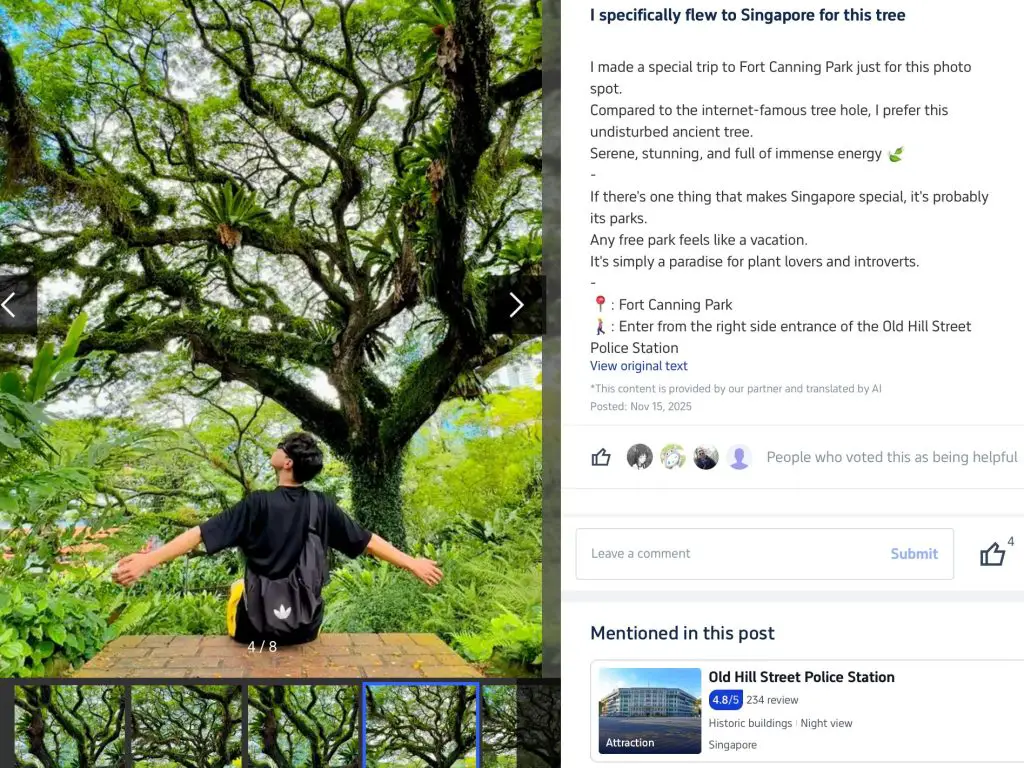
“I flew all the way to Singapore just to see this tree.”
– a Trip.com post that has since gained significant attention online
The post even provides detailed directions to locate the Rain Tree within Fort Canning Park – no small feat in a 22-hectare green space with multiple entrances and winding paths.
Native to tropical America, the Rain Tree (Samanea saman) was introduced to Singapore in 1876. It is one of the Heritage Trees in Fort Canning Park, conserved under Singapore’s Heritage Tree Scheme for its ecological and historical value.
According to the Heritage Tree Guide, the Rain Tree gets its name from the way its leaflets close when the sky is overcast. It is also known locally as “Pukul Lima” – “five o’clock” in Malay – because its leaves fold in the evening.
2. The most mysterious tree: The Kapok Tree that allegedly walks at night
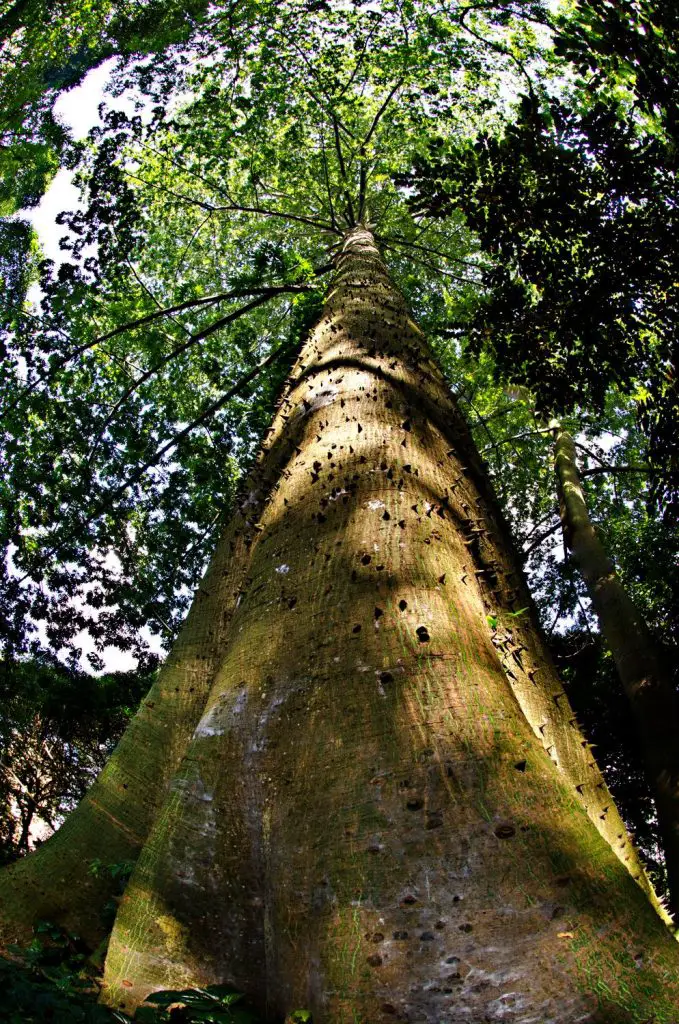
The Kapok Tree (Ceiba pentandra) is another Heritage Tree found in Fort Canning Park and, like the Rain Tree, is native to tropical America.
Unlike its photogenic counterpart, the Kapok Tree is less famous on social media and far more renowned in folklore and ghost stories.
According to the Fort Canning tree trail guide, the Kapok is a fast-growing species that can reach heights of 50 to 70 metres, and is likely still growing today.
Its cream-coloured flowers emit a milky scent and later produce large seed pods that split open to release white, cotton-like floss. The word kapok itself means “floss” in Malay. This waterproof fibre was traditionally used to stuff pillows, mattresses, and even life buoys.
Across cultures, the Kapok Tree is steeped in mysticism.
In ancient Maya mythology, it was believed to form a sacred link between the heavens, earth, and the underworld – its roots reaching below while its branches held up the sky. Some Caribbean folklore even claims the Kapok Tree walks at night.
Closer to home, in Singapore and Malaysia, it is said that “Dear Lady P” loves to sit on its branches.
Despite its imposing presence, the Kapok Tree remains relatively overlooked online – perhaps not because of its ghostly reputation, but because its sheer height makes it difficult to frame as a dramatic photo backdrop.
3. The most photographed “tree” in Fort Canning
This is the spot almost every visitor recognises, even if they don’t know its name.
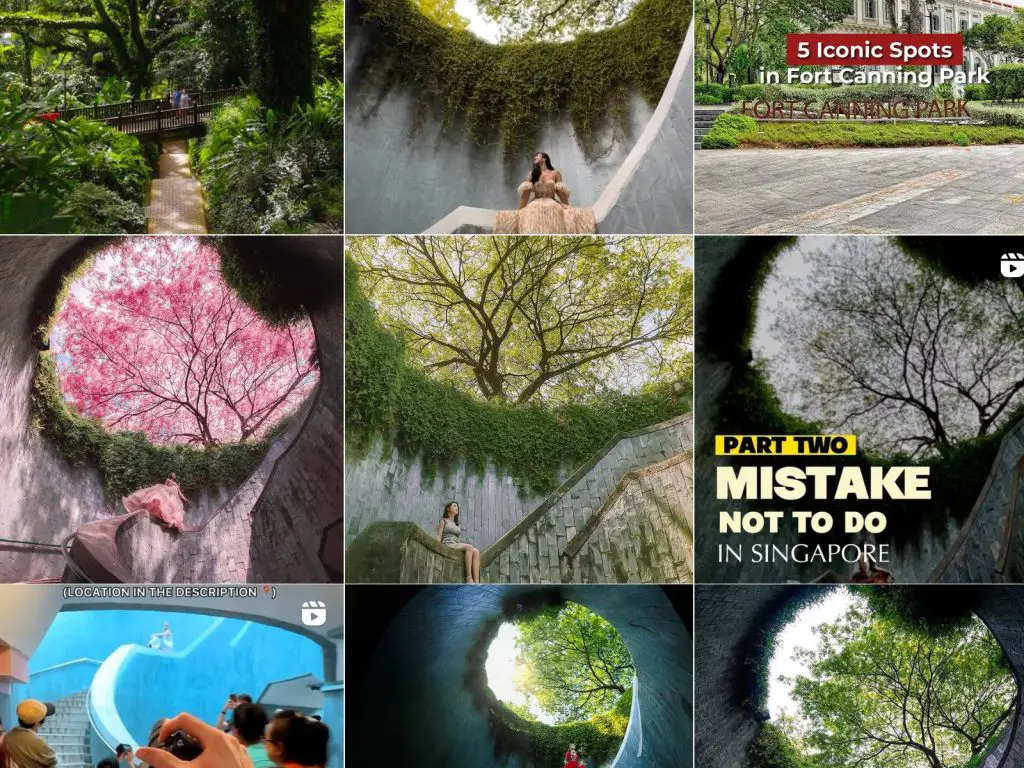
Many come specifically to take a photo here, often queuing for long stretches of time for what has become Singapore’s most viral “tree” photo.
Here’s the truth: it isn’t a tree.
It isn’t a tree hole.
And it isn’t really a tree tunnel either.
It’s a drainage tunnel.
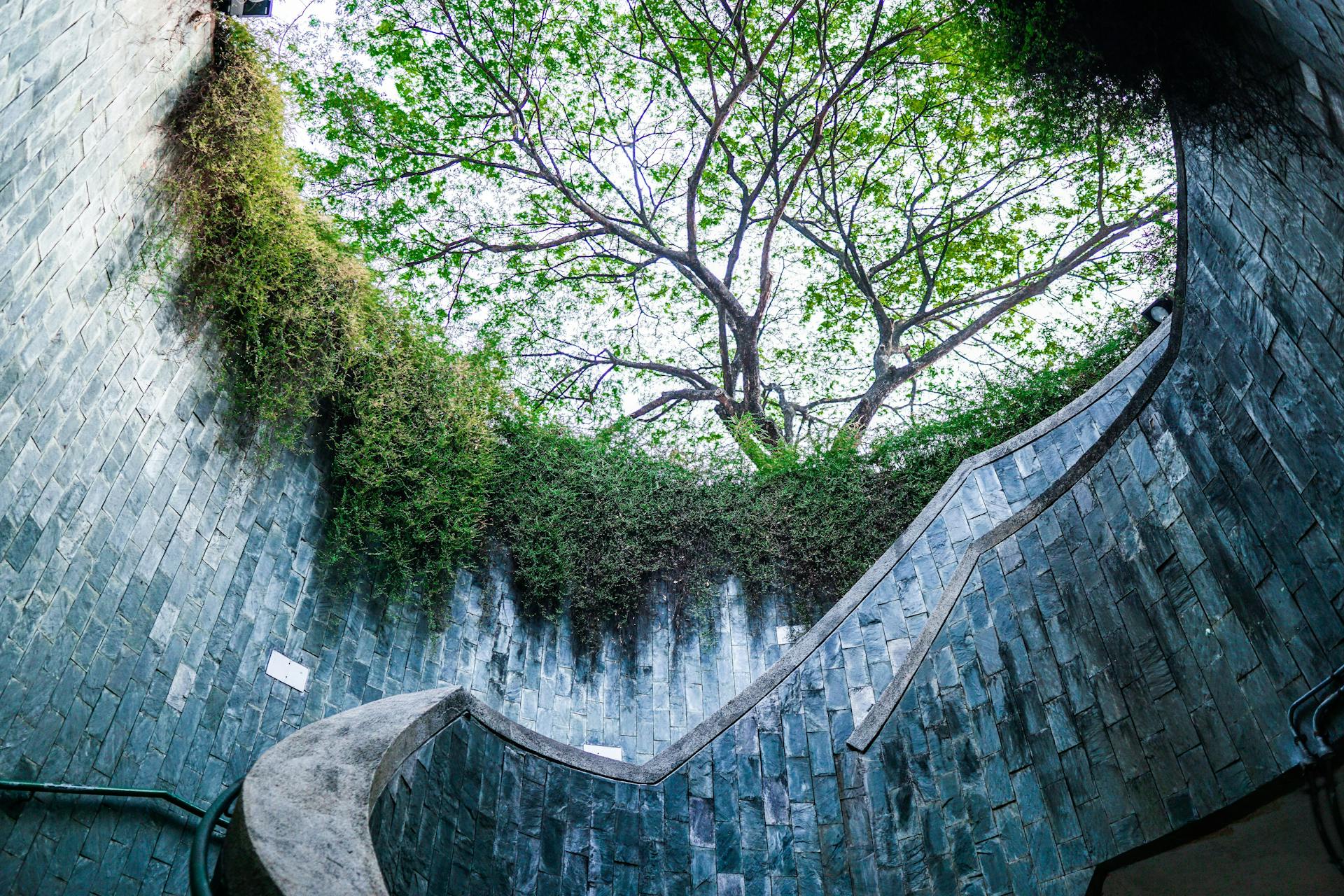
The circular opening frames a yellow Flametree above, while most photos are taken from the spiral staircase below. Together, they create the illusion of a “tree inside a tunnel”, a visual trick that has taken Instagram and Xiaohongshu by storm.
Follow the park signage to the famous “tree tunnel.” Visit at any time, but expect a queue. There have even been reports of disputes, theft, and complaints due to overcrowding.
It might just be the most photogenic piece of tree-related travel content, not only in Singapore and Johor Bahru (as Phua Chu Kang would say), but possibly the world.
Visiting Fort Canning Park Today
Once known as the “forbidden hill,” Fort Canning is now open for everyone to enjoy. Visitors can explore the Heritage Gallery, the Spice Gallery, and nine historical gardens, all free of charge. Guided tours and virtual tours are also available.
Do keep an eye on the tropical weather: watch for lightning or falling branches during storms, and bring plenty of patience for your photoshoot.
Back home in Sarawak, our trees may be older. But there is something uniquely striking about seeing heritage trees standing quietly just steps away from bustling Orchard Road. Best of all, Fort Canning is less than an hour’s flight away with Scoot and AirAsia and soon, AirBorneo.