Browse Tag

Sabah - Page 8

Super Ono! Your answer to poke bowl in Kota Kinabalu

If you are craving for poke bowl in Kota Kinabalu, Super Ono is the place for you!

This trendy food store first opened up in Sabah’s capital on Nov 11, 2018.

Poke became a food trend in the United States since 2012 with many of these beautifully garnished poke bowls featured on Instagram.

And now the trend has officially arrived in the northern part of Borneo.

How to make your own poke bowl at Super Ono?

Poke (pronounced poh-keh) is basically diced raw fish served as either an appetiser or as a main course.

It is one of the main dishes of Native Hawaiian cuisine. Traditionally, it consists of fish served with traditional condiments such as sea salt, candle nuts, seaweed and limu (Hawaiian word for algae).

When you first arrive at Super Ono, take an ordering form and start to curate your own poke bowl.

First of all, pick your base. You can choose white rice, brown rice, Quinoa (pronounced keen-wah), green mix or seaweed rice.

Then pick your choice of protein. You can have either fresh salmon, fresh tuna, salmon tartar, baked chicken, baked salmon or shoyu tuna.

Are you a vegetarian? No worries because you can choose tofu as your protein too.

Here comes the fun part where you can choose four different kinds of toppings. The choices are Japanese cucumber, edamame, Pico De Galla (tomato salsa), pineapple, corn, boiled egg, tamago, carrot, kimchi, pomelo, crab meat and chuka wakame (Japanese seaweed).

After that, pick one ingredient as one of your unlimited toppings for that final crunch of your poke. You can pick sesame seed, spring onion, dry chili flakes, chia seed, walnuts, sunflower seeds or several other ingredients.

Finally, choose your dressing to seal the deal on your poke bowl. Super Ono offers Hawaiian Ka Lole, Flaming Sriracha, Super Ono Classic, Sesame Mayo or Japanese Shoyu.

According to experts, salty dressings such as shoyu sauce goes best with your poke bowl.

But why not take the chance to go crazy or experimental once in awhile since you can make your own poke bowl?

Even if you are not familiar with poke, Super Ono still makes a good pit stop for those who want to spice up their food crawl in Kota Kinabalu.

For more information on Super Ono, check out their Facebook page.

Super Ono! Your answer to poke bowl in Kota Kinabalu

6 archaeological sites in Sabah that you need to know

Sabah is not only blessed with amazing nature and high biodiversity, it also has colourful archaeological past.

Here are at least 6 archaeological sites for visitors to explore at the Land Below the Wind:
1.Pulau Balambangan

Pulau (island) Balambangan is an island located off the northern tip of Borneo. Situated at west of Banggi island, Balambangan is now part of Tun Mustapha Marine Park.

Although the park is widely known as Malaysia’s biggest marine park, many are not informed of its archaeological significance.

At the southern part of the island, there is a group of caves called Batu Sireh (sometimes also known as Batu Kapur).

During the late Miocene (about 10 million years ago), these caves were part of a shallow marine environment.

Over the million years, the coral reefs were slowly deposited. With the help of some rain and seawater, voila! What used to be the coral reef is now the limestone caves of Batu Sireh.

2. Timbang Dayang, Pulau Banggi

Moving on to 3km away from Pulau Balambangan at Pulau Banggi, a discovery was made about 25 years ago at Bukit (hill) Timbang Dayang of the island.

In 1994, a group of locals stumbled upon a bronze drum accidentally in a cave on a hill. The entrance was so narrow only one person could enter it at a time. They turned it over to the Sabah Museum and an excavation team was quickly deployed.

The drum was the first ever bronze drum ever found in Sabah. According to researchers from Universiti Malaysia Sabah, the finding had a significant impact on Dongson Age studies in Malaysia.

Before this discovery, bronze drums had been found in Peninsular Malaysia such as in Sungai Lang (Selangor), Batu Burok (Terengganu), Tembeling (Pahang) and Kuala Klang (Selangor).

Meanwhile in Borneo, another two bronze drums were found in Sambas, West Kalimantan.

3. Kinabatangan Valley

What makes Agop Batu Tulug an interesting archaeological site is that approximately 500 to 900 years ago, it used to be a burial site.

The site is a group of several caves located at Kinabatangan district. Inside, at least 125 carved wooden coffins were found made from belian hardwood.

These coffins were even decorated with carvings of buffalo heads, crocodiles, house lizards and snakes.

Some believed the coffins belonged to Chinese traders who once settled in the area as Chinese artefacts were found among the remains.
Other than Agop Batu Tulug, there were about 68 ancient wooden coffins found in Batu Supu of Kinabatangan.

In the book Wood Coffin Burial of Kinabatangan, Sabah by Stephen Chia, the Batu Supu limestone complex is believed to contain even more sites and coffins.

This is because there are still many parts of the complex still unexplored.

These coffins were dated back to the 10th to 13th century. Apart from the coffins, they also found remains of human skeletons, beads and ceramics near the burial place.

Besides these two locations at Kinabatangan, other wooden coffins in Sabah were found in Serupi (40), Tapadong (20), Miasias and Sipit (10), Sungai Kalisun (8), Danum Valley Research Centre and Segarong (5).

6 archaeological sites in Sabah that you need to know
Some of the wooden coffins made from belian wood on display at Sabah State Museum.
4. Tingkayu, Baturong and Madai of Kunak districts
6 archaeological sites in Sabah that you need to know
Some of the artifacts found at Kunak district archaeological sites on display at Sabah State Museum.

The Tingkayu area of Kunak district is one of the famous archaeological sites in Malaysia.

About 28,000 years ago, the area used to be a river until lava flow from the now extinct Mostyn volcano dammed it up, turning it into a lake.

Then somehow 17,000 years ago, the lake was drained. But going even further than that, simple stone tools were found in the area which are believed to have originated from about 31,000 years ago.

Prehistoric humans were believed to live around the shore of Lake Tingkayu. When the lake dried, they moved to limestone area of Baturong. Then they eventually moved to further east to Madai caves.

5. Bukit Tengkorak and Melanta Tutup, Semporna
6 archaeological sites in Sabah that you need to know
Some archaelogical samples displayed at Sabah State Museum’s prehistoric section.

Located at Jalan Tampi-tampi which is about 10km south of Semporna town, Bukit Tengkorak’s archaeological site is the largest pottery making factory in Southeast Asia during the Neolithic period.

The site is on a hill about 600 feet above sea level. Researchers found numerous pottery shards with various patterns dating 3,000 BP (or 1050 BC).

About 12km from Bukit Tengkorak lies Melanta Tutup, an archaeological site where traces human settlement could be traced back to Neolithic age.

Here, researchers found burial jars that yielded a date of 3,000 to 1,000 years ago.

6. Mansuli Valley, Lahad Datu

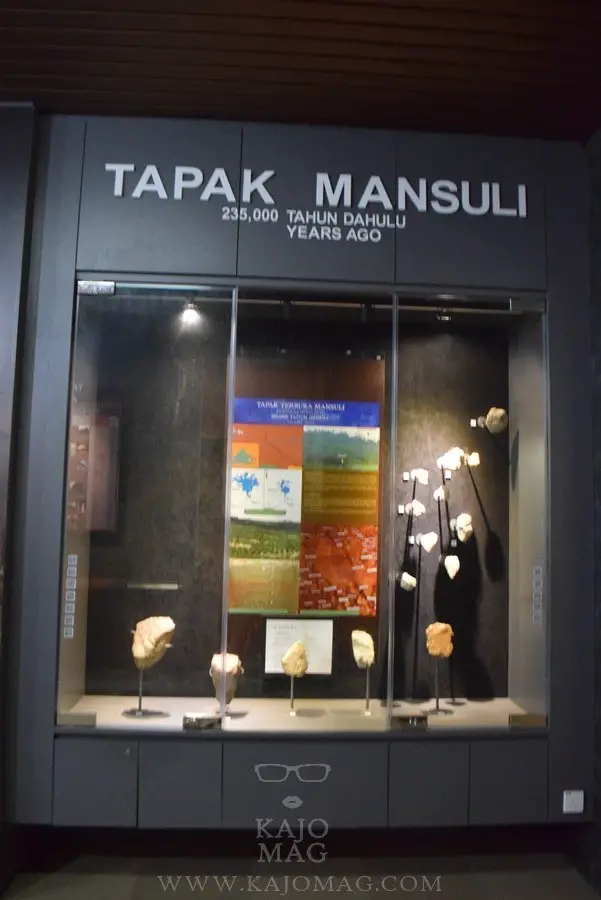
Back in 2012, researchers from Universiti Sains Malaysia and Sabah Museum found more than 1,000 stone tools believed to date back 235,000 years at Mansuli Valley.

Located about 30km from Lahad Datu town, there are two archaeological sites at Mansuli Valley namely Mansuli and Samang Buat Cave.

When Tom and Barbara Harrisson did a survey at Samang Buat Cave in 1964, they found four wooden coffins inside the cave. According to their reports, one of the coffins was “distinctly long”.

6 archaeological sites in Sabah that you need to know
Even if you cannot make it to Lahad Datu archaeological sites, you can still catch of glimpse of Sabah prehistoric past at its state musuem.

You can read more about these archaeological sites from Mansuli Valley Lahad Datu, Sabah in the Prehistory of Southeast Asia by Jeffrey Abdullah and Wood Coffin Burial of Kinabatangan, Sabah by Stephen ChiaOr make your way to Sabah State Museum.

The meanings behind Dum Spiro Spero and Pergo et Perago

Long before there were Malaysian states of Sabah and Sarawak, there were North Borneo and the Kingdom of Sarawak.

Like many European administrations of the 19th century, these two regions adopted Latin phrases as their states’ mottos.

Sarawak’s motto was Dum spiro spero while North Borneo embodied the phrase Pergo et Perago.

Sarawak’s Dum Spiro Spero

Charles I of England was the monarch over the three kingdoms of England, Scotland and Ireland from 1625 until his execution in 1649.

During his final imprisonment, he wrote “Dum spiro Spero” on a copy of The Faerie Queene which was one of the books Charles I read before he died.

Historians believed it was his personal motto.

This Latin phrase means “While I breathe, I hope”. It is a modern paraphrase of ideas that comes from two ancient writers, Theocritus and Cicero.

It makes the perfect motto for those who refuse to quit until the very last breath, much like our own Sarawak phrase “Agi idup, agi ngelaban”.

After the Kingdom of Sarawak was established in 1841, the motto can be found on its Coat of Arms.

On Sept 26, 1928, the third Rajah of Sarawak Charles Vyner Brooke established The Most Excellent Order of the Star of Sarawak as the highest order of chivalry within the Kingdom of Sarawak.

The motto of this order was “Haraplah Salagi Bernafas”, which was the translation for Dum Spiro Spero.

Fast forward to 2019, the order no longer exists and Sarawak’s motto now is “Bersatu, Berusaha, Berbakti” (United, Striving, Serving).

Besides Kingdom of Sarawak, it was also the motto of South Carolina in US, St Andrews in Scotland and many others.

North Borneo’s Pergo et Perago

Meanwhile, the North Borneo Chartered Company (NBCC) was formed on Nov 1, 1881 to administer and exploit the resources of North Borneo.

The company motto was Pergo et Perago, which means “I persevere and I achieve” or “I undertake a thing and go through with it” in Latin. NBCC’s founder and first chairman was Alfred Dent.

Just like Sarawak, North Borneo’s motto was found on the first arms of North Borneo.

Besides that, Pergo et Perago was initially found on North Borneo’s one-cent and half-cent coins.

Nowadays, this Latin phrase becomes the motto of many educational institutions.

As for Sabah the present-day North Borneo, its motto has now changed to “Sabah Maju Jaya” or Let Sabah Prosper.

10 unexploded bombs found in Sabah and Sarawak over the past 10 years

What would you do if you stumbled upon unexploded bomb in your backyard? Well, the best and only thing to do is to call the police.

Here in East Malaysia, discoveries of unexploded bombs have been reported from time to time. In most cases, these unexploded bombs were discovered by construction workers.

Additionally, a number of them were from the World War II (WWII) era. Beyond this, there are little details on whose bombs they were. Did most of them belong to Japanese or Allied forces?

Nonetheless, here 10 reports of unexploded bombs found in Sabah and Sarawak over the past 10 years:

1.Sandakan (Mar 31, 2010)

A WWII bomb was found in the compound of a driving school in Sandakan, Sabah. An excavator operator found it accidentally when digging a drain.

The authority immediately cordoned off and a bomb disposal unit from Kota Kinabalu flew in to defuse it.

2.Kuching (Apr 26, 2018)

We bet that when this grass cutter showed up for work on the morning of Apr 26 this year, the last thing he thought he would find was an unexploded bomb.

He found it in a drain near Kampung Sungai Bedil Besar, Kuching. After examination, the bomb was reported to be an unexploded ordnance (UXO) which is used for training.

3.Lahad Datu (Aug 20, 2018)

Unlike most unexploded bombs on this list, this one was launched quite recently. It was used during Ops Daulat when the 2013 Lahad Datu military standoff occurred.

The bomb belonged to the Malaysian Armed Forces and was believed to have not exploded during the battle against the Royal Sulu Army.

A plantation worker found it in the early morn of Aug 20 at Ladang Sahabat 17 Plantation.

4. Tawau (June 23, 2014)

While carrying excavation work to build a specialist medical centre, a group of construction workers found a remnant of World War II at the site.

The police bomb unit then immediately detonated the bomb. Reportedly, it was the first time such unexploded bomb was found in Tawau. The authority believed there could still be many bombs that have yet to be found.

5.Sandakan (July 28, 2017)

Can you imagine stumbling upon a 250kg bomb in your daily work? That happened when a construction worker carrying out excavation work at the Road Transport Department building, Sandakan.

And the scariest part? The 130cm long bomb, a remnant from World War II, was still active.

Authorities believed that it was possible for bombs to be found in Sandakan as the area was attacked during WWII.

6.Sarikei (Apr 24, 2018)

There can be a lot of things you can find if you start to dig the earth for something. The most common thing you would find are earthworms.

Meanwhile in Sarikei a man dug up an exploded WWII bomb near Tanjung Manis Fisheries port when digging the ground for scrap metal.

7.Sibu (Dec 28, 2013)

How many bags of sand are used to detonate a bomb? In this case, it took 50 bags of sand piled over the bomb before it was detonated an hour later.

Oil palm plantation workers found the unexploded bomb in Sungai Assan on an afternoon while working at the site.

8.Miri (Dec 7, 2014)

Watch out when trying to dig a hole to plant something, you might find a bomb instead.

A man in Miri was digging a hole near his house to grow coconut trees. Instead, he found a 5kg bomb measuring 38cm long and 11cm in diameter from WWII.

9.Bau (Mar 9, 2013)

Here is a bomb used during the Indonesian-Malaysian Confrontation. A villager in Bau came across it near his farm.

According to authorities, the 65-mm gauge mortar remained active all this time.

And this was not the first time a bomb has been found in the district.

10.Sarikei (Dec 16, 2018)

This is the latest bomb finding incident in Sarawak. A WWII bomb which was still active was found in Ulu Kedup, Sarikei.

A man found it while cleaning up the river afterbridge repair work.

Do you have any old stories about finding relics from WWII? Let us know in the comment box. 

10 interesting facts about the 19th century Iranun pirates

Forget about Captain Jack Sparrow, the most fearsome pirates in this part of the world were the Iranun people.

Although the Iranun people are native to Mindanao island in Philippines, they also had settlements on the west coast of Malaysian Sabah as well.

During the 19th century, they were infamous for their piracy activities.

The British gave them the exonym ‘Illanun’. That is where the Malay term ‘lanun’ or pirate came about.

Here are 10 interesting facts about the 19th century Iranun pirates:

10 interesting facts about the 19th century Iranun pirates
Illustrations of Illanun or Iranun pirates circa 1800s. Credits: Public Domain.

1.The Spanish called the Iranun pirates “los Illanuns de la Laguna”

This was because their main stronghold was located on the shores of a lagoon in Mindanao island. Besides being a stronghold, it was also where their wives and children lived.

2.They also had settlements in Sabah

Apart from Mindanau island, the Iranun pirates also had settlements along the coast of Sabah including Kota Marudu, Ambong Bay and Tempasuk back then.

3.The Iranun pirates were the fiercest pirates in this region during the 19th century.

According to author Owen Rutter, the Iranuns were the fiercest and most powerful pirates of the Eastern ships.

He wrote, “They never hesitated to attack European ships, and, while they might give quarter to a native crew, to white men, they showed no mercy, owing, it is said, to the former treatment they had received at the hands of the Spaniards.”

4.Their favourite weapon was called ‘kampilan’

A kampilan is a single-edged long sword, traditionally used by various ethnic groups in the Philippines. Apart from kampilan, the Iranun pirates were also known to use spears, kris (a type of dagger) and guns.

5.The Iranun pirates marked the number of heads they took on their kampilan

Remember Killmonger from Black Panther? He scarred his body with every kill he committed. As for the Iranuns, they marked their kampilan every time they beheaded someone. According to Rutter, he had seen an Iranun kampilan with no less than 27 markings.

6.They preferred to kill in a single blow

A kampilan had a long enough handle to be wielded with two hands. Combining the weight of the kampilan and the force of two hands, a single blow was enough to cut someone’s head off their shoulders.

10 interesting facts about the 19th century Iranun pirates
Piraguas piratas de los Joloanos c.1850 A depiction of garay warships used by Sulu pirates. Credits: Public Domain.

7.They cruised not only in the Sulu Archipelago

Although their piracy and sailing skills were well-known in the Sulu Archipelago, they also roamed the Malay peninsular, throughout the Philippines, Papua New Guinea, Java, Sumatra, Bay of Bengal and all the way up to Penang.

8.An Iranun squadron was usually up to 40 big vessels

Sometimes a fleet might be numbered up to even 200 vessels of different sizes. One man would command the whole fleet while each small boat had its own captain. Each small boat was usually made of their own relatives.

9.They had two main objectives for their piracy

The Iranun pirates had two reasons to commit piracy; plunder and slaves. They stole from the ships they boarded and they took slaves from the coastal villages they attacked.

In Borneo, they were known to attack the Melanau people who settled along the coast of Sarawak.

10.The Iranun pirates usually disguised themselves as traders

Their modus operandi was to disguise themselves as traders so that they could board a ship. They were cunning thieves as well; even when they robbed a ship, they avoided taking objects that could be identified easily as stolen property.

Rutter explained that this would be so it was difficult to prove that they were anything but peaceful traders when their ships were being overhauled.

Read about how the pirates killed the first European man who wrote about the Kayan people here.

Sir Hugh Low and his adventures in Malaysian Borneo

Malaysian history textbooks gave credits to Sir Hugh Low as the first successful British administrator in Malayan states during the late 19th century.

He was the fourth Resident of Perak in 1877. It was reported that he left Perak with a credit balance of 1.5 million Straits Dollars by the end of his retirement in 1889.

Low’s most acknowledged contribution to Malaysia was for introducing rubber plantations to the country.

He first planted the seeds in Kuala Kangsar in 1877 and subsequently created a model for rubber plantations in Malaya.

Before Low even arrived in Malaya, however, he first travelled Sarawak before making his way up to Sabah.

Sir Hugh Low and his adventures in Malaysian Borneo
Hugh Low, a British Naturalist and Administrator. Credits: Public Domain.

Hugh Low and his accounts of Sarawak

Born in 1824 to a horticulturist father, Low started to show interest in botany at an early age while working at his family’s nursery.

At the young age 20, his father sent him to Southeast Asia to collect plants. Low was based in Singapore first before he made friends with Sarawak’s first White Rajah, James Brooke.

Brooke invited Low to Sarawak and together they travelled to the interior.

He spent about 30 months in Sarawak, long enough for him to pick up a little bit of conversational Malay.

He recorded his experience and published it in a book Sarawak, Its Inhabitants and Productions: Being Notes During a Residence in that Country with His Excellency Mr. Brooke in 1848.

The book not only provided the general survey of the kingdom, but also its natural resources and the indigenous peoples.

He described the customs and traditions of Sarawak tribes he encountered during his stay. This included the Malays which he became acquainted with, Sea Dayaks, Land Dayaks, Melanau and Kayans.

Being a botanist, Low also detailed the significance of plants he collected during his adventure in his book.

Low’s book was considered one of the first detailed accounts on Sarawak.

Hugh Low and his exploration in Sabah

After writing his book about Sarawak in England, Low made his return to the island of Borneo.

Again thanks to his friendship with the Rajah, he became Brooke’s colonial secretary in Labuan.

This was when Brooke was appointed as the first governor of newly established British Colony, Labuan.

During his stay in Labuan, Low explored part of North Borneo. His notable exploration in the area is when he ascended to Mount Kinabalu, the highest peak in Southeast Asia.

Low made the first documented ascent of the mountain in March 1851. Then in 1858, he made another two ascents that year in April and July.

Although now the highest peak Low’s Peak is named after him, the truth is he never reached the highest point of the mountain. He described the peak as “inaccessible to any but winged animals.”

Nonetheless, a non-winged English explorer did actually reached the highest peak of the mountain. John Whitehead, a naturalist and zoologist made it to the top in 1888.

Hugh Low and a gully

Besides the highest peak of the mountain, the lowest point of the mountain was also named after the British administrator.

Low was recorded as the first person who looked down into it in 1851. Low’s Gully is a 1,800m deep gorge on the north side of Mount Kinabalu.

To this day, the gully is dubbed one of the least explored places on Earth.

More than 100 years after Low looked down into the ravine, Low’s Gully made headlines across the world.

In March 1994, a British Army expedition of seven British and three inexperienced Hong Kong soldiers made a disastrous descent in to the gully.

Half of the party (two British and three Hong Kong soldiers) were trapped for 16 days before being rescued.

One British media reported the search and rescue as an embarrassing and expensive rescue operation.

Years later in 1998, a joint expedition by Malaysian and British team made the first successful complete descent of Low’s Gully.

Sir Hugh Low and his adventures in Malaysian Borneo
The highest and lowest points of this mountain was named after Hugh Low. Credits: Pixabay.

Hugh Low’s Legacy

Besides Low’s Peak and Gully, there were numerous species named after him thanks to his contribution.

He discovered Nepenthes lowii, a tropical pitcher plant endemic to Borneo during his ascent to Mount Kinabalu.

There are also five species of orchids, a treeshrew, a squirrel, a beetle and two butterflies named after him.

Low made home in this part of the globe and even raised a family in Labuan. After his wife Catherine Napier died of fever in 1851, he buried her at the Government House which was locally known as Bumbung 12.

Low designed Bumbung 12 (twelve roofs in Malay) with a long and low structure and planting trees around it.

Unfortunately the house was completely destroyed during World War II and the only thing left was its water storage tank.

Today the site is one of the island’s main attractions called the Labuan Botanical Garden.

Located behind Labuan’s old airport, some of the oldest trees in the garden are believed to be planted by Low.

All of the graves in the area were relocated to different parts of Labuan except for one, a grave which belonged to a foxhound named Jim.

Although the grave of Low’s wife was already relocated, urban legend has it her ghost was still roaming around in the area.

As for Low, he died on Apr 18, 1905 in Italy.

Top 20 most amazing facts about Sabah’s biodiversity

Apart from its rich culture, Sabah is also widely known for its rich biodiversity.

Did you know that Sabah’s rainforest even inspired the live action remake of The Jungle Book?

One of the movie’s visual effect artists, Helen Brownell reportedly drew inspiration from her adventures in Sabah for some of the landscapes in the film.

We bet Brownell is not the only one who is amazed by its diverse flora and fauna combined with its unique topography.

For the uninitiated, here are 20 amazing facts about Sabah and its nature:

Top 20 most amazing facts about Sabah’s biodiversity
Do you know all top three peaks in Malaysia are found in Sabah?

1.Malaysia’s top 3 highest mountains are found in the Land Below the Wind

This Malaysian state of Borneo was given the nickname Land Below the Wind because it lies below the typhoon belt of East Asia.

The highest mountain, Mount Kinabalu stands tall at 4,095m. It is also the highest peak in the Malay Archipelago as well as the highest mountain in Malaysia.

Lonely Planet even named it as one of the world’s 50 most epic hiking trails.

The second highest mountain is Mount Trusmadi at 2,642m and Mount Tambuyukon closing in at 2,579m.

2. 59% of Sabah is covered by forest!

In the ’70s, the forest cover for Sabah was up to 90%. However due to agriculture and development, the number went down to 59% over recent years.

Why it is still amazing is because 59% of Sabah is about the same size as Denmark.

3. There is one place nicknamed the ‘waterfall capital’.

That place is Maliau Basin! Located at the center of the state, the 390 sq km area has at least 28 waterfalls towering over 5 m. This perhaps shows that Maliau Basin may house the highest number of waterfalls per unit area in the world, if not in Malaysia. The one waterfall that stands out is the majestic 7-tier Maliau Falls.

4. 76% of the world’s coral species is found here!

Sabah is home to at least 612 coral species! The state is also part of the Coral Triangle; an area of tropical marine waters of Indonesia, Papua New Guinea, Solomon Islands, Philippines and Timor-Leste. It is recognised as the centre of world marine biodiversity.

5.The largest giant clam species Tridacna Gigas in the world can be found in the Land Below the Wind.

One of the amazing creatures living in Sabah’s water is the giant clam. The largest of them all, Tridacna Gigas can weigh up to 200kg!

In the wild, it has an average lifespan of over 100 years. Apart from Sabah, it also can be found off the shores of the Philippines.

6. There is a safe haven for marine turtles.

Do you know that the oldest marine turtles conservation programme in the world is in Sabah? Established in 1966, the first turtle conservation site in Sabah was on Selingan Island, Sandakan.

Together with Little Bakungan and Gulisaan, these three islands made up Turtle Islands Park which lie in the Sulu Sea.
This park is considered the safe haven for green and hawksbill turtles.

Top 20 most amazing facts about Sabah’s biodiversity
There is a place which can be considered a safe haven for marine turtles and it is in Sabah.

7. Sipadan is one of the top dive sites in the world.

What do The Guardian, CNN Travel, Dive Magazine, Deacon Herald and Deeper Blue have in common? They all named Sipadan as one of the top dive sites in the world.

Located off the east coast of Sabah, the island was formed by living growing on top of an extinct volcanic cone.

One of the highlights of this island is its Turtle Tomb. It is an underwater cave with maze-like tunnels and chambers where many turtles skeletons have been found from turtles who got lost and ended up drowning in this cave.

8. The largest crocodile species is found in Sabah.

Apart from Sarawak, reptile lovers can also find the largest crocodile species in the Land Below the Wind.
Measuring possibly up to 7 meters in length, the saltwater crocodile (Crocodylus porosus) is the largest of all living reptile.

9.Reticulated Python, the longest snake in the world called Land Below the Wind home.

If saltwater crocodile is the largest reptile in the world, the longest reptile is the reticulated python.
Plus, it is also one of the three heaviest snakes in the world. Besides Sabah, this reptile can also be found slithering around South Asia and the Indo-Australian Archipelago.

10.Lower Kinabatangan-Segama Wetlands is the largest Ramsar Site in Malaysia.

A Ramsar Site is a wetland site designated of international importance under the Ramsar Convention. As of 2016, there are 2,231 Ramsar Sites throughout the world and the largest one in Malaysia is Lower Kinabatangan-Segama (78, 803ha).

11.The world’s smallest elephant is found here.

Speaking of Lower Kinabatangan-Segama Wetlands, one of the species calling that places home is the Borneo pygmy elephant.
It is the world’s smallest elephant, a subspecies of Asian elephant.
However according to IUCN, the population has been declining for the past 75 years die to habitat loss and hunting.

12.The world’s tallest tropical tree is here too.

In July 2018, scientists found the world’s tallest tropical tree in Tawau Hills Park. Towering at 96.9m, the tree is Shorea faguetiana located at about 24km from Tawau town.

That tree is even taller than the Statue of Liberty (93m)! Prior to this, the then tallest tree was also found in the state, at the Danum Valley Conservation Area, recorded at 94.1m.

13.  Sabah is home to one of the most wanted birds in the world.

Here in Sabah, you can find one of the world’s most wanted birds by birdwatchers. It is the Bornean Bristlehead, an uncommon species and endemic only to Borneo.

14. One of the oldest tropical rainforest in the world is in Sabah.

Danum Valley Conservation Area, about 2 hours’ drive from Lahad Datu, is not only the largest protected rainforest area in the state, it is also estimated to be almost 140 million years old.

15. Malaysia’s largest marine park is Tun Mustapha Park.

Tun Mustapha Park (TMP) is Malaysian biggest marine park spanning over 898,763ha, off Kudat, Kota Marudu and Pitas districts.

It comprises more than 50 islands including Banggi and Balambangan.

16. You might see the Bornean Falconet, the smallest raptor in the world here too.

The Bornean Falconet or white-fronted falconet is the smallest bird of prey in the world. Endemic to Sabah, this raptor is about 15cm.

17.The most expensive orchid, Rothschild’s Slipper orchid is only found in the Land Below the Wind.

Top 20 most amazing facts about Sabah’s biodiversity
Mount Kinabalu is where many of Sabah endemic species are found. Credits: Pixabay.

Mount Kinabalu, the highest peak in Malaysia houses many interesting plants and animals. It also harbours the most expensive orchid in the world. One of its stems on the black market is reported to be worth up to $5,000. No wonder it is called “the Gold of Kinabalu” orchid. As always though, we at KajoMag urge our readers to conserve and preserve nature.

18. The world’s longest stick insect is found near Kinabalu Park.

Besides the most expensive orchid, Kinabalu Park is home to the world’s longest stick insects called Phobaeticus chani. Visitors might confuse it with a real stick as it measures at more than 50cm in length.

19. The largest rafflesia species is found in Sabah.

Rafflesia is widely known as the largest individual flower in the world. The largest of the rafflesia species is Rafflesia arnoldii which can also be found in this state.

20. The biggest pitcher plant is found on Mount Kinabalu too.

Here is an interesting fact; the biggest pitcher plant is named after the first White Rajah of Sarawak but it is only can be found in its neighbouring state of Sabah. Hugh Low first collected Nepenthes rajah in 1858 on Mount Kinabalu and named it after his friend, James Brooke.

Growing up to 40cm high and 20cm wide, this plant can even trap small mammals!

10 things to know before driving from Kota Kinabalu to Kundasang for the first time

Even if you are visiting Sabah for the first time, driving from its capital Kota Kinabalu to Kundasang is possible to make on your own.

By making the journey yourself without hiring a cab or paying for a tour package, you can save more money and enjoy the trip at your own pace.

10 things to know before driving from Kota Kinabalu to Kundasang for the first time
Sunflowers growing at Kundasang.

Kundasang is the highest settlement in Malaysia, standing at an elevation of 1,900m.

It is the closest town to Mount Kinabalu, the highest peak in the country.

The average temperature at Kundasang is about 20oC so you might want to pack a jumper or sweatshirt.

Here are 10 things to know before starting your engine from Kota Kinabalu to Kundasang:

1. Take an early flight in

Try to arrive in Kota Kinabalu early in the morning. You can either rent a car at the airport or you can arrange your rental service to send the car there.

2. Have breakfast in Kota Kinabalu

Fill yourself up before starting your journey. Kota Kinabalu has plenty to offer when it comes to food, from Sang Nyuk Mee (pork noodle), Tuaran Mee(wok-fried handmade noodles) to Ngiu Chap (beef broth served with noodles).

10 things to know before driving from Kota Kinabalu to Kundasang for the first time
This is another choice for breakfast in Kota Kinabalu, Fook Yuen cafe is famous for its fresh baked breads.

3. Fill up your gas tank in Kota Kinabalu

After filling your belly, it’s time to fill the fuel up before your ride. It takes about two hours to drive from Kota Kinabalu to Kundasang.

What’s so fun about it, you ask? As the saying goes, “It’s not about the destination but about the journey itself.” So grab some snacks and plain water, and let the journey begin!

4. Stop by at Chanteek Borneo Indigenous Museum

About 45 minutes into your journey depending on the traffic, make the first stop at Chanteek Borneo Indigenous Museum.

Located at Telibong-Tamparuli road, the museum is Sabah’s first miniature doll gallery. Truly one-of-a-kind, the museum aims to replicate all the traditional costumes from 300 ethnicities and and sub-ethnicities in Borneo into a miniature size.

You can also show your support to the local community by shopping at its souvenir shop where 70% of the products are made by women of Borneo.

Read more about Chanteek Borneo Indigenous Museum here.

5. Have fun at rumah Terbalik and the 3D Wonders Museum

After learning more about indigenous cultures, now it’s time for a quirky and fun experience.

Rumah Terbalik (‘upside-down house’ in Malay) and 3D Museum offers visitors an experience to visit a house where everything is flipped upside down. From its furniture and cars, visitors can now know how it feels to walk on the ceiling.

There is a 3D Wonders Museum on the same compound where visitors can learn about biodiversity and the ecosystem.

6.Take a photo at Tamparuli bridge

Before going straight to Kundasang, make a short detour into Tamparuli town to visit its famous suspension bridge.

It is so famous that there is even a song about it.

7.Have a taste of Sinalau Bakas

During your journey from Kota Kinabalu to Kundasang, you will see signs selling ‘sinalau bakas’. The highway stretch from Tamparuli to Kundasang is reportedly most famous for this unique Kadazandusun dish.

Make a pit stop at any of these stalls and give sinalau bakas a try. It is basically smoked wild boar.

8.Shop at Nabalu for souvenir

After driving for about 40km from Tamparuli, make another pit stop at Nabalu town.

Apart from taking a toilet break, here you can take a view of the majestic Mount Kinabalu. You can also contribute to the local economy by purchasing some souvenirs and snacks at the local market.

9.Buy some Sabahan preserved food

If you are feeling a little gastronomically adventurous while at Nabalu, buy some of their preserved foods.

Read more about the top three Sabah fermented foods you must try before you die here.

10. Explore Kundasang

10 things to know before driving from Kota Kinabalu to Kundasang for the first time
Make a visit to Kundasang War Memorial.

From Nabalu, there are 20km left till you arrive Kundasang. There are so many things to do here even if you are not intending on climbing to the top of Mount Kinabalu.

Pay your respects to British and Australian soldiers who died in the Sandakan Prisoners of War camp at Kundasang War Memorial.

Hike or soak in at Poring Hot Spring or shop for snacks, fresh flowers, fruits and vegetables at Kundasang market. We suggest trying their keropok bayam (spinach crackers).

Experiencea  little bit of New Zealand by visiting the Desa Dairy Farm where the cows flourish and fresh milk as well as gelato are aplenty.

As for accommodations, there are plenty to choose from depending on your budget. However, the best is to pick a room with a window overlooking the peak of Mount Kinabalu. Waking up to the view of this mountain early in the morning is something one must experience at least once in their lifetime.

PHOTOS: Learn more about the Land Below the Wind at Sabah Museum

Art critic Jerry Saltz once said, “Don’t go to a museum with a destination. Museums are wormholes to other worlds. They are ecstasy machines.”

This is so true, especially if you are visiting Sabah Museum for the first time where each of the gallery inside the building will transport you to a different world.

Established in 1965, the museum was first housed at Gaya Street in Kota Kinabalu. It moved to its current location in 1984 at Bukit Istana Lama.

The main building of Sabah museum is designed after traditional Rungus Longhouse.

As you walk inside the museum, there is a huge 20m long whale skeleton to welcome you. There are galleries of ethnography, natural history, ceramics, history and archaeology.

Every gallery has so many things to see and learn about Sabah, from its rich culture to its abundant biodiversity.

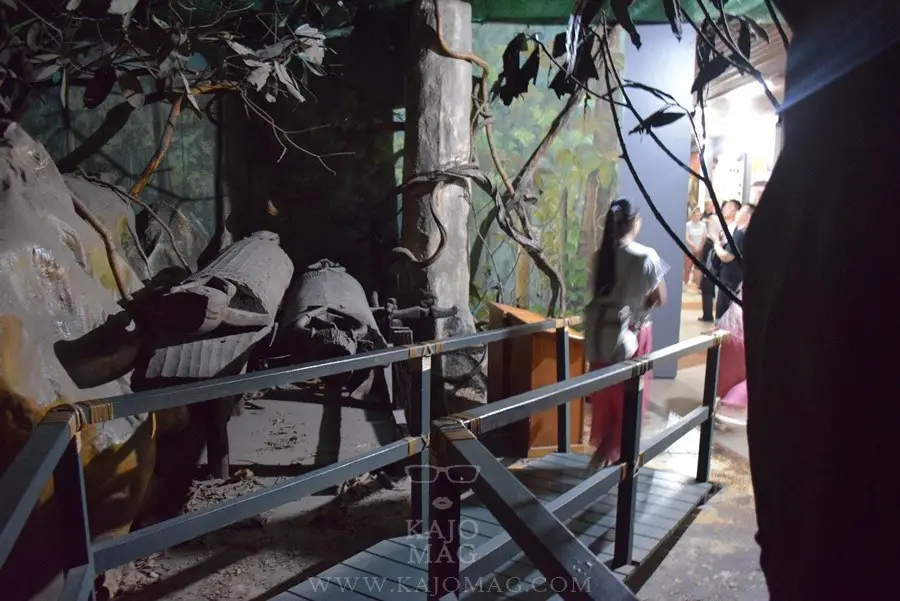
There is a small section dedicating to ‘Budaya Mengayau’ or headhunting, which explains this old tradition of Sabah’s indigenous people.

For example, did you know that when headhunters came back from a raid, they were not allowed to bring the heads into the village?

So what did they do with the heads? For Kadazandusun of Tambunan and Tamparuli, they hung the head on a tree or bamboo and called it sogindai.

In other communities, the heads were kept in a temporary hut called sulap.

After several days or weeks, a Bobolian or Bobohizan (high priestess) would performed a ritual, after which the heads would be allowed to be brought into the village.

If history and ethnology are you preference, you could find yourself reading through each panel for hours.

Open daily from 9am to 5pm, the museum charges RM2 for Malaysians and RM15 for non-Malaysian.

Photography is allowed (no flash) for visitors to capture their experience.

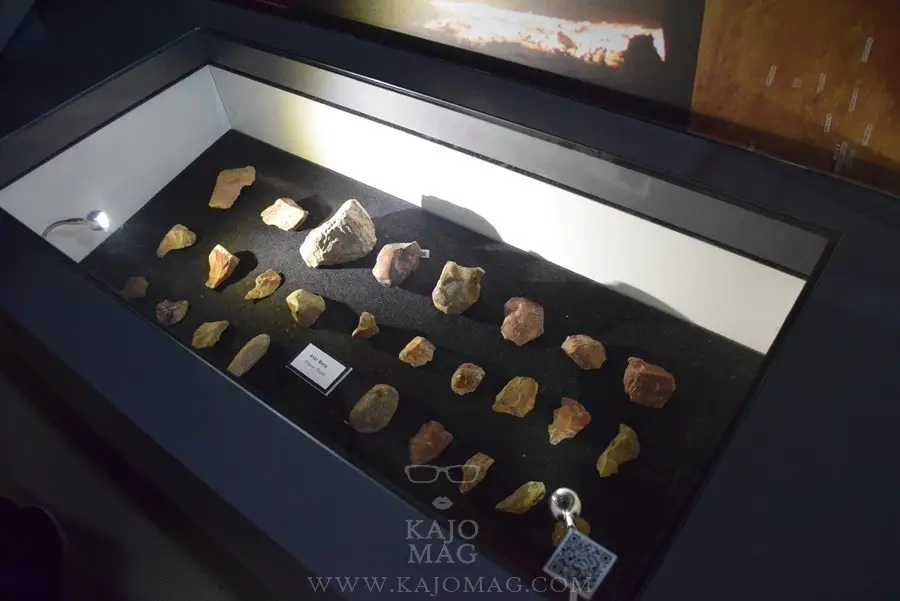
Here are photos taken by KajoMag at Sabah Museum for visitors to learn more about the Land Below the Wind:

PHOTOS: Learn more about the Land Below the Wind at Sabah Museum
The traditional attire of a Lundayeh woman. This mannequin is wearing a white blouse and a black skirt, with alet birar (beaded headgear) and beret benging (beaded belt).

PHOTOS: Learn more about the Land Below the Wind at Sabah Museum
A Bajau rider and his decorated horse.

PHOTOS: Learn more about the Land Below the Wind at Sabah Museum
A winnowing mill used to separate rice from the chaff.

PHOTOS: Learn more about the Land Below the Wind at Sabah Museum
Bakul sabat was traditionally used to carry bridal gifts in the Kadazandusun community at Tambunan district.

PHOTOS: Learn more about the Land Below the Wind at Sabah Museum
Sabah Museum has a collection of woven items from different indigenous communities in the state. One of them is this Sosopilon, a backpack used by the Kadazandusun community in Tambunan.

PHOTOS: Learn more about the Land Below the Wind at Sabah Museum
This is an usunan. The Iranun nobility of Kota Belud used it to carry the groom to the bride’s house. it is also used to carry their dead.

PHOTOS: Learn more about the Land Below the Wind at Sabah Museum
This commemorative dinner set was made in conjunction with the coronation of Queen Elizabeth in 1953 and was used at Sabah governors’ residence.

PHOTOS: Learn more about the Land Below the Wind at Sabah Museum
Some of the items displayed at Sabah Museum are private items donated by generous members of the public such as this pith helmet.

PHOTOS: Learn more about the Land Below the Wind at Sabah Museum
The design of the main building of Sabah Museum is inspired by a Rungus longhouse.

PHOTOS: Learn more about the Land Below the Wind at Sabah Museum
A row of classic cars on display outside Sabah Museum.

PHOTOS: Learn more about the Land Below the Wind at Sabah Museum
A panel explaining the local plants used as traditional medicines in Sabah.

PHOTOS: Learn more about the Land Below the Wind at Sabah Museum
Some of the primates and mammals which can be found in Sabah.

PHOTOS: Learn more about the Land Below the Wind at Sabah Museum
A sun bear which is commonly found throughout Southeast Asia including Sabah.

PHOTOS: Learn more about the Land Below the Wind at Sabah Museum
The Sambar Deer of Sabah Museum.

PHOTOS: Learn more about the Land Below the Wind at Sabah Museum
A bay owl.

PHOTOS: Learn more about the Land Below the Wind at Sabah Museum
Clouded leopard.

PHOTOS: Learn more about the Land Below the Wind at Sabah Museum
Millipede.

PHOTOS: Learn more about the Land Below the Wind at Sabah Museum
A green turtle.

PHOTOS: Learn more about the Land Below the Wind at Sabah Museum
The different types of jars displayed at the Ceramic Gallery of Sabah Museum. These were used to store drinking water, rice food and also to make a local liquor called tapai.

PHOTOS: Learn more about the Land Below the Wind at Sabah Museum
Each of the ceramic ware has its own brief description allowing visitors to learn more about every artifact.

PHOTOS: Learn more about the Land Below the Wind at Sabah Museum
The ceramic collection at the Sabah Museum has different origins including China, Thailand, Vietnam, Cambodia, Japan and Europe. However, all of them were found in Sabah. It is believed that some of these ceramics were made as early as the 10th century.

Take in the view of Padas river from Fatt Choi Coffee Cabin

If you are looking for the perfect view of Padas river, look no further than Fatt Choi Coffee Cabin in Tenom, Sabah. Padas river which flows past Tenom from Long Pasia, south of Sabah, is famous for white water rafting.

The rafting route is 30km long, making it the longest rafting route in East Malaysia to date. It has also been recognised as one of the best and safest rapids in Southeast Asia.

Take in the view of Padas river from Fatt Choi Coffee Cabin
A view of Padas river from the highest viewing point of Fatt Choi Coffee Cabin.

No rafting, only Fatt Choi Coffee

At Fatt Choi Coffee Cabin, you may not  get the thrills of the Padas river but you can experience the beauty of its view.

Beside Yit Foh, Fatt Choi is one of the famous brands of Tenom coffee.

The coffee cabin is located not far from its factory at Jalan Tenom Lama which comes with affordable lodging, eatery and viewing platform.

Take in the view of Padas river from Fatt Choi Coffee Cabin
It is the highest place in town to have a drink of Tenom coffee.

It makes the perfect spot to hang out with friends, drinking a cup of local java while enjoying the view for Padas river.

The place might be too hot and humid for a visit during the noon and it is not air-conditioned but visitors can always cool themselves down with a cup of cold coffee.

Take in the view of Padas river from Fatt Choi Coffee Cabin
Visitors can stay, eat or just drink at Fatt Choi Coffee Cabin.

Established in 1987, this brand of Tenom coffee products include white coffee, cinnamon coffee, black coffee and many more.

The best part of Fatt Choi brand is it has a cafe located at Tenom town offering freshly brewed coffee.

So if you are looking for westernised coffee drinks such as Americano, cappuccino, latte and mocha in Tenom, you can find them at TFC Coffee.

The cafe also serves cakes, waffles and sandwiches as well as cozy environment to relax.

Take in the view of Padas river from Fatt Choi Coffee Cabin
Here is an Instagram-worthy spot in Tenom, a miniature windmill with a view of Padas river at the back.

Take in the view of Padas river from Fatt Choi Coffee Cabin
Pick your type of coffee drinks at TFC coffee.

Take in the view of Padas river from Fatt Choi Coffee Cabin
Visitors can also purchase Fatt Choi coffee products at TFC Coffee.


1 6 7 8 9