Browse Tag

Malaysia - Page 8

KajoPicks: Check out these four coffee places in Bintulu

Apart from shopping complex, Bintulu is currently witnessing the rising number of different kind of eateries.

These include coffee places offering good coffee from dirty coffee to nitrogen-infused java and relaxing ambience for patrons to just hang out.

Here are four coffee places in Bintulu, Sarawak you need to check out:
1.Coffee Dream

Located at Parkcity Commerce Square, this coffee place has been operating since 2014.

Besides coffee, Coffee Dream is famous among the locals for its western food.

Omelette sandwich, spaghetti bolognese, mushroom soup, cheesy beef balls, mushroom cheese omelette, eggs Benedict, chicken Caesar salad are just the tip of their wide range of menu items.

For rice eaters out there, don’t worry because Coffee Dream has a selection of Asian favourites to choose from such as the typical nasi lemak.

While you are at it, might as well end your meal with one of their freshly baked cakes for dessert.

2.The Coffee Code Bintulu
KajoPicks: Check out these four coffee places in Bintulu
Do you like it dirty? Dirty Code from The Coffee Code.

The Coffee Code is Sarawak’s very own cafe chains. The first one was opened in Sibu, then Bintulu at Ibraco Town Square and the latest was in Kuching at Saradise, BDC.

When you’re at Coffee Code, how about giving the Dirty Code a try? It is their in-house version of dirty coffee. It is one of the best coffee places in town to spend your tea time because it serves wide range desserts.

Their specialty is perhaps waffles which come with different kind of toppings.

KajoPicks: Check out these four coffee places in Bintulu
Waffles at The Coffee Code Bintulu.
3.Escape Coffee


You can’t satisfy your coffee craving early in the morning at Escape Coffee. But you can satisfy your coffee craving late at night here because it opens from 12pm till 12am.

It is perfect for the late night work hustle since it provides free wifi.

Feeling hungry? They have good options of food on their menu such as beef sirloin steak, mixed grill, lamb chop, butter chicken waffle and chicken macaroni fruit salad.

4.Melt Cafe

The current star of Melt Cafe Bintulu, no, not its famed grilled cheese sandwich but its Nitro Coffee.

If you have not tried Nitro Coffee before, just imagine Guinness draft beer, only it’s coffee! Since the drink is infused with nitrogen, it has this rich, creamy head similar to Guinness.

So if you are a big fan of coffee, this beverage is definitely worth a try.

Longing for dessert? Give Melt Cafe’s Burnt Cheesecake a try. Some described Burnt Cheesecake as the alter ego to the classic New York cheesecake. The differences are this cake is burnt outside with toasty edges and without the usual pressed cookie base.

Of course you cannot leave Melt Cafe without trying its signature grilled cheese sandwich.

KajoPicks: Check out these four coffee places in Bintulu
Nitro Brew Coffee at Melt Cafe. Look at its creamy head on top of the glass!
KajoPicks: Check out these four coffee places in Bintulu
How the Nitro Brew Coffee looks like after few minutes.

Rajah Vyner Brooke’s message to Sarawak on Cession Day

After the end of World War II, Sarawak was briefly administered by the British Military Administration.

On July 1, 1946, the third White Rajah Vyner Brooke ceded the kingdom to the British Government.

So Sarawak became a British Crown Colony with Sir Charles Arden Clarke becoming the first British Crown Colonial Governor.

Sarawakians were conflicted and largely divided over the cession. Some felt betrayed because Sarawakians were promised self-rule according to the Nine Cardinal Principles of the rule of the English Rajah.

Rajah Vyner Brooke’s message to Sarawak on Cession Day
Sarawak anti-cession demonstration. Borneo Asian Reports [Public domain], via Wikimedia Commons

Meanwhile, the last Ranee of Sarawak, Sylvia blamed Brooke’s officer over the cession in her book stating “I think it can safely be said if there had been no Gerard MacBryan there would have been no cession of Sarawak at that time – July 1946.”

Nonetheless, Sarawak was a British Crown Colony from 1946 to 1963.

On the first anniversary of Sarawak’s Cession Day, the last Brooke ruler sent his message to the people of Sarawak in four languages; English, Malay, Iban and Chinese.
Here is the transcript of his message in English:

“On this day July 1st, I send warm greetings to all my friends in Sarawak. A year has passed since Sarawak was ceded to His Majesty the King.

I have deep thought to his proposal for cession before making it to the British Government and placing it before the Councils in Kuching. I knew that it meant the end of Brooke rule, an event which, I was proud to realise, would be matter of sorrow to very many of you. Nevertheless I took the decision because I knew that it was the best interests of the people of Sarawak and that in the turmoil of the modern world they would benefit greatly from the experience, strength and wisdom of British rule.

I have followed very closely the events of the last year and I am more than ever convinced that the decision taken was the right one. The assurances given at the time of cession that there would be no interference with your ancient customs are being scrupulously observed. At the same time large schemes for the welfare and betterment of the people have been worked out and will be put into force with the aid of funds provided by the King’s Government in Britain. I am glad that all these plans adhere to the main principles of the policy of the three Rajahs in the past, that the interests of the local population shall be paramount and that the development shall be undertaken by the people by the people and for the benefit of the people of Sarawak.

I know that there are still some in Sarawak, encouraged by persons living outside the country, who maintain their opposition to what has been done. Their cry is that they have lost their “independence” and wish to recover it. What in fact is the position? You have transferred your loyalty from the Rajah who was like your father to a greater father, the King, who has for so long been our Protector. Your feet are firmly set on the road which lead to true independence. Your local institutions are being developed, your power to express your views on laws and forms of Government is being increased, and your will gradually approach that goal, already reached by so many peoples who have had the privilege of Britain’s guidance, where you will be completely self-governing.

The length of time which must elapse before your arrive at that goal will depend largely on the willingness with which your grasp the hand of friendship and support held out to you by His Majesty’s Government. This is the greatest opportunity for progress that Sarawak has ever had. With unaltered devotion for your interests and well-being I say, “Long Live the people of Sarawak. Long Live the King.”


C. V. Brooke

5 things you can enjoy at Similajau National Park, Bintulu

Situated about 30km from Bintulu town, Similajau National Park covers a total area of 22,230 acres.

The park was gazetted in 1978 and opened to public in 1995.

Here are 5 interesting things about Similajau National Park:
5 things you can enjoy at Similajau National Park, Bintulu
Pay your entrance fee at this office before going into the park.
1.It is place where you can hike to the sound of waves crashing

There are about eight trails catering for visitors of all ages at Similajau National Park. The plank walk and education trail take about 15 and 20 minutes respectively. Thus making them suitable for young children.

Then, they have Circular Trail (1.7km), View Point Trail (1.3km), Batu Anchau (1.8km), Turtle Beach I Trail (6.5km), Turtle Beach II Trail (7.6km) and Golden Beach Trail (10km).

5 things you can enjoy at Similajau National Park, Bintulu
Choose your trail!

One tip for if you choose the Golden Beach Trail: start early and pack up some strength and endurance. Although you can make a round trip in one day, it is a very long walk.

Most of the trails go along the coast of Similajau. So you can imagine hiking these routes while listening to the waves crashing.

Additionally, the trails are mostly flat with little climbing required.

Apart from that, you can also soothe your soul with the sounds of insects and maybe some Bornean bearded pigs walking or champing their food.

5 things you can enjoy at Similajau National Park, Bintulu
Hike along the South China Sea!
2.The sand is gold in colour!

Golden Beach got its name thanks to its gold-coloured sand. This type of sand can also be found at Turtle I and Turtle II beaches.

Hanz P. Hazebroek and Abang Kashim Abang Morshidi wrote in National Park of Sarawak that the parent rocks along the coast of the park include sandstone as well as mudstone.

“The resultant soils are red-yellow podzolic soils, composed of varying proportions of clay and sand with a few centimetres of decomposing plant remains on top. The yellow-orange colours are due to insoluble iron oxides.”

Putting geology and chemical composition aside, the golden-coloured beach offers the perfect Insta-background.

But we warn you! Unlike white sandy beaches which feel smooth between your toes, these golden sands are rough and harsh. So don’t even think about walking on the beach bare-footed.

5 things you can enjoy at Similajau National Park, Bintulu
The yellow-orange sand of Turtle Beach II.
3. There is a whale skeleton to greet you at the front office

Right outside of Similajau NP’s front office, there is a whale skeleton to greet you.

The story of this whale goes back to Dec 11, 2015 when it was first found stranded at Tanjung Batu Beach around 7pm.

Sarawak Forestry Corporation staff from Similajau NP, Malaysia LNG (MLNG) volunteers, Bintulu Fire Department and Civil Defense Department successfully released it back to the sea two hours later.

However, the animal was found dead at the same beach the next morning.

Identified as Cuvier’s Beaked Whale (Ziphius cavirostris), the carcass measuring 5.7m long was then transferred to Similajau National Park.

It is the first complete assembled skeleton of Cuvier’s Beaked Whale recorded in Sarawak and the second one in Malaysia.

The other one is on display at Universiti Malaysia Sabah’s Borneo Marine Research Institute aquarium.

5 things you can enjoy at Similajau National Park, Bintulu
Say hi to whale skeleton before you head out to your journey!
4.It has a turtle hatchery

Three species of turtles have recorded landings at Similajau National Park; green turtle, leatherback turtle and hawksbill turtle.

They come from March to September annually. To protect their eggs, a turtle hatchery has been introduced to the park.

The staff usually dig their eggs from the beach and transplant them into the turtle hatchery. Then once the eggs are hatched, the hatchlings are released into the sea.

5 things you can enjoy at Similajau National Park, Bintulu
A glimpse into the turtle hatchery.
5.Similajau National Park has the Sea Turtles and Reef Ball Project

Speaking of turtles, these marine reptiles were absent for five years from Similajau since July 2010.

Then, they came back again in 2015 to lay their eggs. One of the strong reasons why they came back was due to the Sea Turtles and Reef Ball Project.

From 2013 to 2016, a total of 1,500 artificial reef balls were deployed off the coast of Similajau National Park.

This was to create habitat for marine life as well as to improve the livelihood of the local community.

In addition to that, Sarawak Forestry Corporation stated that the presence of the reef balls in the waters of Similajau National Park have greatly reduced trawling activities close to the park, thus providing protection and encouraging the return of turtles to the beaches of Similajau.

If you are feeling generous, you can adopt a reef ball through the Reef Ball Adoption Program. The funds are used to buy and deploy these artificial reefs at Similajau National Park.

Your generosity might bring more turtles to the beach to lay their eggs!

5 things you can enjoy at Similajau National Park, Bintulu
This is how a reef ball looks like.

How the story of SS Vyner Brooke will break your heart

SS Vyner Brooke started her service as the royal yacht of Sarawak. The Scottish-built steamship also worked as a merchant ship used between Singapore and Kuching.

However at the beginning of World War II, this ship owned by Sarawak Steamship Co Ltd, had a tragic ending.

Here are 5 things to know about SS Vyner Brooke:

1.She was named after the third White Rajah of Sarawak

The ship was named after Vyner Brooke. His wife Ranee Sylvia launched it on Nov 10, 1927 at Leith, north of the city of Edinburgh, Scotland.

Then the ship sailed from Leith for Singapore on Apr 17, 1928.

2.The interior of SS Vyner Brooke was clearly described in an issue of The Sarawak Gazette

How the story of SS Vyner Brooke will break your heart
A screenshot of The Sarawak Gazette published on Nov 1, 1927.

On Nov 1, 1927, The Sarawak Gazette published an article on the launching of SS Vyner Brooke.

It described the specifications and interiors of the royal yacht.

The main deck had accommodation for crews as well as a cold store room designed for temperature -2 degree Celsius.

Meanwhile, the upper deck cabin could accommodate 44 first class passengers and a large saloon for dining. The saloon was ‘panelled to the full height with polished mahogany and is provided with twenty large windows of Laycock type’.

In fact, all furniture is of mahogany and the chairs came with leather seats.

For passengers who were looking for entertainment and exercise, there was a room for deck quoits and deck tennis.

As for safety, she was equipped with lifeboats, rafts and lifebelts enough for six hundred and fifty people.

3.She was requisitioned by the Britain’s Royal Navy as an armed trader

Before the war, she sailed the waters between Singapore and Kuching under the flag of the Sarawak Steamship Company. She usually carried about 12 passengers in addition to her 47 crew.

When the war broke out, SS Vyner Brooke was considered a militarily-useful vessel. So the British Royal Navy requisitioned it as an armed trader.

Now known as HMS Vyner Brooke, the ship was painted gray and armed with guns. The crew was made of members of Malay Royal Navy Reserve as well as survivors of HMS Prince of Wales and HMS Repulse.

Both HMS Prince of Wales and HMS Repulse were sunk by Japanese aircraft on Dec 10, 1941. The wrecks now rest near Kuantan, Pahang in the South China Sea.
4.SS Vyner Brooke was bombed by Japanese aircraft and sunk

Unfortunately, the former crew of HMS Prince of Wales and HMS Repulse could not survived a Japanese attack for the second time.

On the evening of Feb 12, 1942, HMS Vyner Brooke was one of the last ships carrying evacuees leaving Singapore.

This was right before Singapore fell into Japanese hands on Feb 15, 1942.

On top of her 47 crew, there were 181 passengers, including the last 65 nurses of the Australian Army Nursing Service in Singapore, wounded servicemen as well as civilian men, women and children.

In the late afternoon on Feb 13, she was attacked by a Japanese aircraft. Fortunately, there were no casualties. By sunset, she set her sail for Palembang passing through Bangka Straits.

The next day on Valentine’s day at about 2pm, HMS Vyner Brooke was attacked by several Japanese aircraft. This time she did not survive. Within 30 minutes, she rolled over and sunk bow first.

Altogether, it is believed that 44 ships were carrying evacuees from Singapore between Feb 12 to 14. All but four were bombed and sunk as they sailed through the Bangka Straits.

Thousands of people died before any of them could reach land.

5.Some of the survivors died during the Bangka Island Massacre

According to records, there were approximately 150 survivors washed up ashore at different parts of Bangka island, east of Sumatra.

Unfortunately, Japanese troops had already occupied the then Dutch East Indies island. On Radji beach of Bangka island, a group of survivors from HMS Vyner Brooke gathered together with survivors from other vessels bombings.

What happened to them after the sinking is now known as the Bangka Island Massacre.

At first, they tried to ask for help and food from the locals but were denied due to the locals’ fear of the Japanese.

One unnamed officer from HMS Vyner Brooke had an idea. Since they had no food, no help for the injured and no chance of rescue, they considered giving themselves up as prisoners of war (POWs).

The group agreed and the officer walked to Muntok to inform the Japanese that they surrendered.

While he was away, one of the nurses – Matron Irene Drummond – instructed a group of civilian women and children to walk toward Muntok.

Those who remained on Radji beach were 22 Australian nurses from HMS Vyner Brooke and the injured.

The Massacre and aftermath

Several hours later, the officer returned with about 20 Japanese soldiers (some records stated 15).

The nurses were confident that the Japanese would not hurt them as they wore their Red Cross armbands. By right, they were Non-combatants and therefore protected under the international treaties of the Geneva Convention.

However, the Japanese started to divide the survivors into three groups. The first two groups were the male survivors who were capable of walking.

The Japanese soldiers escorted the groups down to Radji Beach and around a headland, out of the nurses’ sight.

When they heard gunshots from a distance, the survivors knew that the Japanese were not accepting their surrender.

All 22 Australian nurses and one civilian woman were in the third group. They were instructed to walk into the sea until they were waist deep.

Knowing what would happen to them, Drummond reportedly called out, “Chin up girls. I’m proud of you and I love you all.” Then, the Japanese began to shoot them down.

A nurse, Vivian Bullwinkel was the only one who survived the shooting.

Of the 65 Australian nurses on board the HMS Vyner Brooke, 12 were killed during the air attack, 21 were shot dead at Radji Beach, and 32 became POWs. Eight of the nurses did not survive the internment.

Two of its crew were taken as POWs. Some of the non-European crew members who died on board of HMS Vyner Brooke were Ahmad Rashid, Awang Adam Awang Nong, Li Wong Chuan and Phiaw Chew Teck.

7 Sarawak firsts in transportation history

‘Sarawak First’ may have become the main theme for newly registered Gabungan Parti Sarawak (GPS), but when it comes to other firsts in Sarawak, here are some notable milestones in the region’s transportation history:

1.The first aeroplane to have landed in Sarawak

The first aeroplane which landed in the Land of the Hornbills was a sea plane. It landed on Oct 16, 1924 along the stretch of Sarawak river in front of Main Bazaar, Kuching.

7 Sarawak firsts in transportation history
The first aeroplane landed in Sarawak. Credits: Ho Ah Chon [Public domain], via Wikimedia Commons

Sarawak tried to launch its own government air service in 1929. They had two planes, namely the Royalist and Venus. Nonetheless, the venture did not last long.

The first land plane to touch down in Kuching on Sep 26, 1938. It landed on the then newly-built Kuching Landing Ground.

2.When Sarawak’s streets were first lit

Sarawak installed its first street lamps in 1906 in Kuching. However, there were no records of which specific areas where the street lamps were installed.

3.The first bullock carts

After the Brooke government imported Indian cattle, the number of bullock carts used to carry heavy loads started to increase in the 1870s.

4.The first form of vehicles for hire before taxis

The first few rickshaws were brought in 1895 from Singapore. Eventually the number of rickshaws began to increase, which prodded the government to introduce rickshaw stands just like taxi stands today.

They also imposed standard rates such as one mile costs 12 cents and 10 miles-journey costs a dollar.

Some of these stands were located at India Street, Gambier Road as well as at the end of Main Bazaar.

Ho Ah Chon wrote in Kuching in Pictures 1841-1991 that some of the wealthier people who lived in town kept private rickshaws for their own convenience.

He stated, “Those, with a tendency towards overweight often employed two pullers, because, at the best of times, going up or down a steep hill in a rickshaw could be dangerous, many people were decanted onto the road, sometimes with quite serious results, at the hill to Padungan, and on the bend of Reservoir Road.

5.The first car, bicycles, motorcycle in Sarawak

The manager of Borneo Company Limited J.M. Bryan brought in the first car to Kuching in 1917 (although some records stated 1907). It was a 10-12 HP Conventry Humber.

Meanwhile the third Rajah, Vyner Brooke brought the first motorcycle into the country. Another popular means of transportation was the bicycle which was first introduced in the 1900s.

6.The first railway service

The only type of transportation service that is not available now in Sarawak is train. But Sarawak once had a small railway line in Kuching.

It was about 10 miles long spanning from Kuching town to the 10th Mile. It provided both cargo and passenger service. The journey took about 15 minutes.

There were three engines in those days called Bulan (moon), Bintang (star) and Jean. Due to financial losses, the service was shut down in 1931.

During World War II, the Japanese took over the railway service. By 1947, the line was officially closed while the tracks were sold for scrap in 1959.

7.The first lorry in Sarawak

An unnamed local trader brought in a lorry back in 1912. Then, he made use of the 2-tonne lorry to give Sarawak’s first public bus service in the same year.

Take part in a gastronomic adventure at Pasar Malam Bintulu

One of the many things you should never miss during a trip to the ‘energy town’ of Sarawak is a visit to Pasar Malam Bintulu.

Pasar Malam Bintulu, or the Bintulu Night Market, operates daily from 5pm to 10pm near the town’s old airport.

Take part in a gastronomic adventure at Pasar Malam Bintulu
A signage leading you to Pasar Malam Bintulu.
Vegetables and fruits at Pasar Malam Bintulu

For the locals, Pasar Malam Bintulu is a place to buy local produce both seasonal and unseasonal.

If you are unfamiliar with Sarawak’s local fruits, you can start by giving engkala (Litsea garciae) a try.

It is a pink-coloured fruit with a green-cap on top. Do you know engkala and avocado shared the same family? With that in mind, you can imagine that it has that creamy, buttery taste like an avocado.

When it is the fruit season, the market turns into the place to be to buy your durian or dabai (Sarawak’s black olive).

Other fruit include mangosteen, sour sop, rambutan, langsat and many more.

As for vegetables, you can even watch the traders pounding cassava leaves right there at the market to sell.

Visitors can also pick different kind of shoots, spinach, brinjal and green vegetables.

Take part in a gastronomic adventure at Pasar Malam Bintulu
Local black fungus typically used in clear soups and broths.
Take part in a gastronomic adventure at Pasar Malam Bintulu
Mangosteens
Take part in a gastronomic adventure at Pasar Malam Bintulu
The market offers both unseasonal and seasonal fruits like durian.
Local delicacies from the Malay to the Chinese

Another reason why Pasar Malam Bintulu is a local and visitor’s favourite is the wide variety of local delicacies.

Here you can find both Malay and Chinese delicacies under one roof.

The Malay stalls offer various kuih such as ketayap, apam balik, doughnuts, pudding and many more.

Take part in a gastronomic adventure at Pasar Malam Bintulu
Choose any of these delicacies to satisfy your sugar cravings.

Meanwhile at the Chinese stalls, kompia, fried stuffed tofu, five spice meat roll are the highlights.

Take part in a gastronomic adventure at Pasar Malam Bintulu
Can you spot the fried stuffed tofu and the Chinese meat roll?

Even if you are not looking for snacks, you can find one whole meal for your dinner at the night market.

Meat lovers would absolutely enjoy their trips to Pasar Malam Bintulu because here you can find chicken, fish and even pork grilled or fried.

And for carbs, you have the choices of rice or noodle cooked in Malay or Chinese style.

So it doesn’t matter if you are a local looking for groceries or if you are a visitor looking for a gastronomic adventure, Pasar Malam Bintulu is definitely worth a visit.

Take part in a gastronomic adventure at Pasar Malam Bintulu
Visit the market during the evening when the food were freshly cooked.
Take part in a gastronomic adventure at Pasar Malam Bintulu
Fresh soya for sale.

From Batang Lupar river in Sarawak to Batang Lupar district in Kalimantan

In Sarawak, Batang Lupar is famously known for its tidal bore phenomenon where waves of water goes against the direction of the current.

It is also one of the federal constituencies in Malaysia. Meanwhile on the other side of the international border, there is a district in Kapuas Hulu regency of West Kalimantan province in Indonesia which is also called Batang Lupar.

So, how did a district and a river, miles apart from each other divided by a border, share the same name?

From Batang Lupar river in Sarawak to Batang Lupar district in Kalimantan
Pak Lom, the head of village Dusun Kedungkang.
From Lanjak Entimau to Lanjak, Batang Lupar

“Our ancestors are originally from upper Batang Lupar and Batang Ai. They were at war with the Rajah many years ago and they came here to flee from their enemy,” Pak Lom, the head village of Dusun Kedungkang said.

He explained that Lanjak which is the nearest town to his longhouse was named after Lanjak Entimau. It is an area located between Batang Rajang in the north and Batang Lupar in the south of Sarawak.

From Batang Lupar river in Sarawak to Batang Lupar district in Kalimantan
Dusun Kedungkang during the evening.

This was because the Dayak Iban who live in Lanjak now were originally from Lanjak Entimau.

Lom said, “Of course back then, the border was not clearly defined. The border town of Badau which now falls in Indonesia territory was considered part of Sarawak kingdom back then.”

From Batang Lupar river in Sarawak to Batang Lupar district in Kalimantan
There are roughly 36 families living in Dusun Kedungkang.
Same culture but different countries

Despite the political border, the Iban culture in Kalimantan is not much different from Sarawakian Iban.

“We still practice our traditional arts. Here in Kedungkang, we still have our hand-tapping tattoo and pua kumbu weaving.” Lom added that he himself knew how to hand-tap traditional body ink.

Even when it came to their harvest or Gawai celebration, he explained their way of merry-making was no different from the Sarawakian Ibans.

From Batang Lupar river in Sarawak to Batang Lupar district in Kalimantan
Pak Lom’s wife, Ibu Pawa showing her hand-woven pua kumbu, Iban’s traditonal woven fabric.

Before settling back here as a farmer and carrying his duty as a village head, Lom was working for a timber company in different parts of Sarawak such as Tubau and Marudi for over 10 years. Thus making him familiar with his neighbouring country.

However, there is one celebration he pointed out that the Ibans in Batang Lupar district did not celebrate.

“We do not celebrate Gawai Antu (festival of the dead) here, I think you can only find that in Sarawak.”

Holding on to their traditional customs, the Iban community in Kedungkang also practices their ‘hukum adat’ (customary law).

If caught burning the forest in their areas, you could be fined 25,000 rupiah for each tree. Additionally if it was a durian tree, the fine could cost even more – up to millions of rupiah.

From Batang Lupar river in Sarawak to Batang Lupar district in Kalimantan
A traditional Iban longhouse in Kalimantan.
Living next to Danau Sentarum

Having this customary law to protect their environment surrounding their two-block longhouse was important, considering they are living right next to Danau Sentarum.

It is one of the world’s most biodiverse lake system located in the heart of Borneo island.

And just a few minutes’ walk from Kedungkang longhouse is Bukit Babi (Pig Hill in Malay).

According to Lom, it is one of the reasons why their longhouse is a tourist attraction. On average, there are at least two tourists visiting their longhouse daily.

He said, “Apart from coming to see our culture, tourists love to stop by to hike up the hill. They can see have a view of Danau Sentarum from up there.

Another main attraction of Kedungkang village is its 700m long plank walk from the longhouse to the lake.

From Batang Lupar river in Sarawak to Batang Lupar district in Kalimantan
The entrance to the 700m plank walk.

Just like Batang Lupar in Sarawak where its tidal bore attracts thousands of visitors during Pesta Benak (Tidal Bore Festival), one of the main tourists attractions in Batang Lupar district of West Kalimantan is the Danau Sentarum Festival.

From Batang Lupar river in Sarawak to Batang Lupar district in Kalimantan
This plank walk would turned into viewing point for tourist to watch boat parade and races when the water level is high at Danau Sentarum.

During this annual festival, the Kedungkang plank walk is turn into viewing point to watch the traditional boat parade, dragon boat and bidar races.

From Batang Lupar river in Sarawak to Batang Lupar district in Kalimantan
The ruai of an Iban longhouse in Kalimantan.

From Batang Lupar river in Sarawak to Batang Lupar district in Kalimantan
The entry point from Lubok Antu, Malaysia into Badau, Indonesia.

From Batang Lupar river in Sarawak to Batang Lupar district in Kalimantan
An inn in Lanjak, Batang Lupar. Both the names Lanjak town and Batang Lupar district in Kalimantan were named after places in Sarawak.

10 unexploded bombs found in Sabah and Sarawak over the past 10 years

What would you do if you stumbled upon unexploded bomb in your backyard? Well, the best and only thing to do is to call the police.

Here in East Malaysia, discoveries of unexploded bombs have been reported from time to time. In most cases, these unexploded bombs were discovered by construction workers.

Additionally, a number of them were from the World War II (WWII) era. Beyond this, there are little details on whose bombs they were. Did most of them belong to Japanese or Allied forces?

Nonetheless, here 10 reports of unexploded bombs found in Sabah and Sarawak over the past 10 years:

1.Sandakan (Mar 31, 2010)

A WWII bomb was found in the compound of a driving school in Sandakan, Sabah. An excavator operator found it accidentally when digging a drain.

The authority immediately cordoned off and a bomb disposal unit from Kota Kinabalu flew in to defuse it.

2.Kuching (Apr 26, 2018)

We bet that when this grass cutter showed up for work on the morning of Apr 26 this year, the last thing he thought he would find was an unexploded bomb.

He found it in a drain near Kampung Sungai Bedil Besar, Kuching. After examination, the bomb was reported to be an unexploded ordnance (UXO) which is used for training.

3.Lahad Datu (Aug 20, 2018)

Unlike most unexploded bombs on this list, this one was launched quite recently. It was used during Ops Daulat when the 2013 Lahad Datu military standoff occurred.

The bomb belonged to the Malaysian Armed Forces and was believed to have not exploded during the battle against the Royal Sulu Army.

A plantation worker found it in the early morn of Aug 20 at Ladang Sahabat 17 Plantation.

4. Tawau (June 23, 2014)

While carrying excavation work to build a specialist medical centre, a group of construction workers found a remnant of World War II at the site.

The police bomb unit then immediately detonated the bomb. Reportedly, it was the first time such unexploded bomb was found in Tawau. The authority believed there could still be many bombs that have yet to be found.

5.Sandakan (July 28, 2017)

Can you imagine stumbling upon a 250kg bomb in your daily work? That happened when a construction worker carrying out excavation work at the Road Transport Department building, Sandakan.

And the scariest part? The 130cm long bomb, a remnant from World War II, was still active.

Authorities believed that it was possible for bombs to be found in Sandakan as the area was attacked during WWII.

6.Sarikei (Apr 24, 2018)

There can be a lot of things you can find if you start to dig the earth for something. The most common thing you would find are earthworms.

Meanwhile in Sarikei a man dug up an exploded WWII bomb near Tanjung Manis Fisheries port when digging the ground for scrap metal.

7.Sibu (Dec 28, 2013)

How many bags of sand are used to detonate a bomb? In this case, it took 50 bags of sand piled over the bomb before it was detonated an hour later.

Oil palm plantation workers found the unexploded bomb in Sungai Assan on an afternoon while working at the site.

8.Miri (Dec 7, 2014)

Watch out when trying to dig a hole to plant something, you might find a bomb instead.

A man in Miri was digging a hole near his house to grow coconut trees. Instead, he found a 5kg bomb measuring 38cm long and 11cm in diameter from WWII.

9.Bau (Mar 9, 2013)

Here is a bomb used during the Indonesian-Malaysian Confrontation. A villager in Bau came across it near his farm.

According to authorities, the 65-mm gauge mortar remained active all this time.

And this was not the first time a bomb has been found in the district.

10.Sarikei (Dec 16, 2018)

This is the latest bomb finding incident in Sarawak. A WWII bomb which was still active was found in Ulu Kedup, Sarikei.

A man found it while cleaning up the river afterbridge repair work.

Do you have any old stories about finding relics from WWII? Let us know in the comment box. 

5 ways Sarawakians prepare for the Christmas season

Christmas is around the corner! How are your Christmas preparations going on?

In Sarawak, Christmas is not just about having dinner with your loved ones. There are a lot of activities going on around the state this month be it in town or the longhouses. However, lots of activities during this season of joy of means that there is a lot of work going into preparations as well.

So, here are five common ways Sarawakians are preparing for the Christmas season:

5 ways Sarawakians prepare for the Christmas season
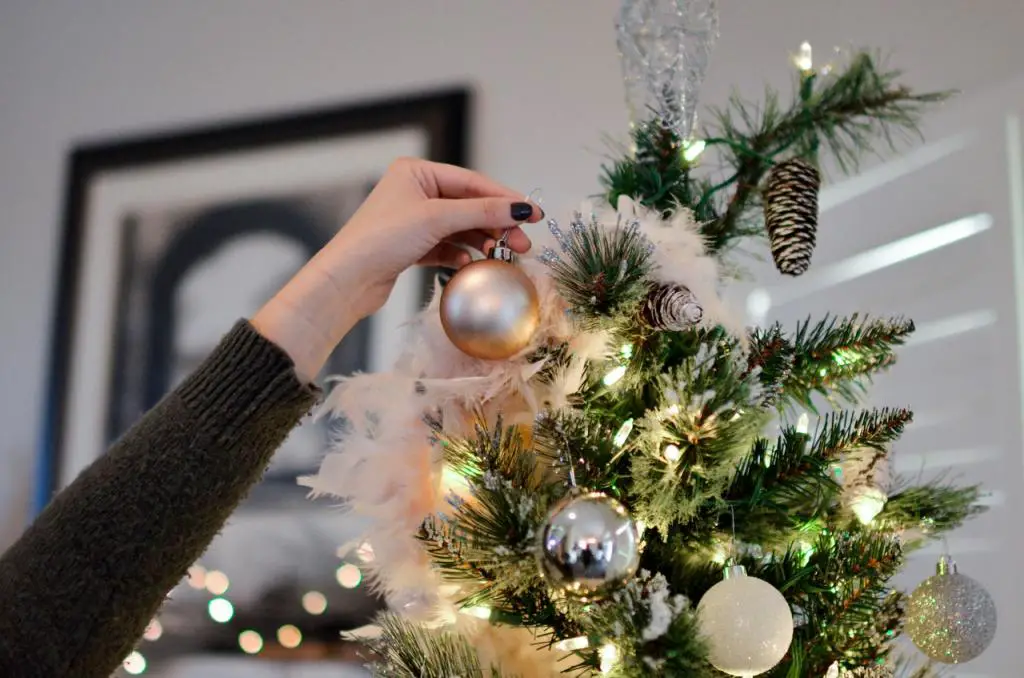
It is time to take out the faux Christmas tree to decorate. Credits: Pexels.

1.Cleaning and decorating

We may not have real pine trees to cut down, but we still follow this tradition as we take out the family Christmas tree and start decorating it. 

If you are expecting a lot of guests this holiday, that means this is the period to clean every nook and cranny of your house ahead of 2019.

For those planning to have an ‘open house’ (house visiting), preparing for Christmas also means cleaning, polishing, and counting out your special silverware.

2.Lots and lots of baking

5 ways Sarawakians prepare for the Christmas season
It is a time to bake those Christmas cookies!

Having an ‘open house’ is how Malaysians celebrate most holidays in the country. And this ‘open house’ culture would not be complete without cakes and cookies.

While cookies and cakes are easily available at bakeries and supermarkets, some families prefer to bake their own baked goods.

Being true to our Sarawakian identity, the selection of cakes must include the typical Sarawak layered cake or kek lapis, kek belacan, kek sarang semut and kek lumut.

Besides cakes and cookies, some even prepare snacks such as keropok and acar as well as peanuts to go with the alcohol.

Speaking of alcohol, some Sarawakians even make their own tuak or burak (rice wine) months prior to the celebration.

3.Organising and planning

If you are celebrating Christmas at the longhouse, then you would know this is the season full of activities.

Taking advantage of the long school holiday from Christmas till New Year, some longhouses would organise various kind of events for all ages.

The usual are sports matches such as futsal, volleyball and badminton. And the fun part? Some longhouses even take the sports up a notch by adding funny twist to it. For instance, men playing football while wearing sarongs.

Then for the children, the adults would organise games like telematches and treasure hunts.

When the night falls, the common activities are children’s beauty pageants, ngajat, karaoke competitions and lucky draw. Sometimes for the fun it, there is Ratu Pondan competition (men competing in cross-dressing to see who makes the most beautiful woman).

All these activities are planned by the longhouse committees weeks before Christmas.

4.Planning the perfect getaway

Meanwhile some families choose the Christmas season as the reason to have a vacation. Hence, preparing for Christmas means booking for flight tickets and accommodation as well as planning those travel itinerary.

5.Spiritual preparation

With about 44% of the Sarawakian population being Christians, preparing for Christmas can take more of a spiritual turn.

There are plenty of activities leading up to the day organised by various churches such as house to house caroling sessions and prayers.

In major towns in Sarawak like Kuching, Miri and Sibu, thousands of Christians will come together to join in Christmas parades.

The Miri Christmas Parade themed ‘Glory to God’ this year, for example, saw 40,000 people from 15 churches march around Miri city on Dec 8. Although it was the 11th edition, the parade made Sarawak stand out even more as a state that celebrated cultural and religious diversity while the Anti-Icerd rally was coincidentally being held in Kuala Lumpur.

As for the Catholics, they are encouraged to receive the Sacrament of Penitential to spiritually prepare themselves before celebrating Christ’s birth.

KajoMag readers, let us know how you prepare for your Christmas celebrations!

Paul Carling on being a young fashion designer in Sarawak

Paul Carling on being a young fashion designer in Sarawak

Paul Carling Rahit, the brain behind the Paul Carling label is a young Kuching-based fashion designer.

He curated the national costume for Malaysian representative Debra Jeanne Poh for the 6th Miss Grand International Pageant in Myanmar last October.

Inspired by the Rhinoceros hornbill, Sarawak’s emblem and a powerful symbol for its headhunter warriors, the 28-year-old designer called it ‘Tebengang the Great’.

Traditional embroidery methods were used to create its patterns from cowries’ shells, along with traditional beadwork adorned with brass bells.

After the photo of ‘Tebengang the Great’ was released online, some Indonesian fans were quick to claim the design was from Indonesian Kalimantan.

View this post on Instagram

A post shared by Business Instagram Account (@paulcarlingdesigner) on

KajoMag sat with Paul Carling to know his thoughts on the issue and what it’s like being a young fashion designer in Sarawak.

KajoMag: Why did you choose fashion design as a career?

Paul Carling: I was an IT student before. After some time, I realised IT was not my thing anymore. I tried to change my major few times but couldn’t. Once I managed to change my course to Design Technology majoring in Fashion, I decided to do my best.

I like making clothes and I used to make dance costumes when I was still in Unimas (University Malaysia Sarawak). From there, slowly and finally it became something I was very passionate about.

KajoMag: What is your favourite part about being a fashion designer?

Paul Carling: When I see a client feeling satisfied with the dress that I made, that is my favourite part of my job. I see my design as an art and art is freeing. When I design, the idea comes spontaneously.

Paul Carling on being a young fashion designer in Sarawak

KajoMag: What do you want women to feel when wearing your label?

Paul Carling: I want them to feel confident in them. Some of my clients come to me to customise their dresses because they could not find anything for them off-the-rack. For example, a full-figured lady usually finds it hard to look for a wedding dress in local bridal shops. Even if they could find one that fits them, it is usually an ugly-looking dress. So when they came in for a custom-made dress, it is a piece which is solely tailored for them. I love looking at their happy reactions when they wear these dresses.

KajoMag: Your national costume for Miss Grand Malaysia to the Miss Grand International pageant gathered a lot of backlash online from some Indonesian fans. What are your comments on that?

Paul Carling: As a fan of pageantry, this kind of issue is boring for me. It has been happening every year, maybe it’s a way for them to make themselves feel good or to highlight their own beauty queen. I noticed it is like some sort of trend to cyberbully other participants. As for their comments on the costume being from Dayak Kalimantan; we are from the same island and we do have the same culture. Those who said that are clearly not from Borneo. Nonetheless, the best part was that there were even commenters from Kalimantan defending the design.

KajoMag: Where do you see yourself in the next 10 years?

Paul Carling: I hope I can finish paying off my debt (laughing). First of all I want to be free of my study loan. I don’t feel like I need fame. For me, I don’t think you can be happy if you are famous but without money. The same thing goes for artistes like singers; although they are famous but if they do not have gigs, they cannot put food on the table.

I think the same thing can be applied to us fashion designers. You need to know how to maintain your business and have a good relationship with your customers. Your returning customers are always the best because they will introduce you to other clients and come back for more orders.

KajoMag: From a young designer perspective who is based in Sarawak, what do you think the local industry needs right now?

Paul Carling: We should celebrate more of our young designers. We do have famous Sarawakian fashion designers but they will not be here forever. My fellow young designers would agree that we are lacking in ways to promote our collection and we are always being compared to the famous ones like Von Jolly Couture and Datuk Tom Abang Saufi. But they are already at the top of their games. For us, the young designers, we need support and more opportunities. It is not like we are asking for funds or money; just more platforms to showcase our designs.

For myself, I’m grateful that I made the smart move to get involved with pageantry. That was how I got my name out there. However, to make a name for myself in the fashion industry – no, I’m not there yet. Without platforms to showcase our designs, most young designers in Sarawak would end up staying in their workshops at home working as just a tailor.

Paul Carling on being a young fashion designer in Sarawak
A model wearing Paul Carling design during Sarawak Fashion Awards 2017.

For more information on Paul Carling and his designs, check out his Facebook page here and Instagram. 

1 6 7 8 9 10 14