Browse Tag

Malaysia - Page 4

50 very random historical facts about Kuching you need to know

Here are 50 very random historical facts about Kuching you need to know

1.Kuching is not the first capital of Sarawak.

The first capital of Sarawak was Santubong which was founded by Sultan Pengiran Tengah in 1599 and then Lidah Tanah founded by Datu Patinggi Ali in the early 1820s.

2.There were geographical and political reasons on why Kuching was chosen as the capital.

Kuching was founded in 1827 by the representative of the Sultan of Brunei, Pengiran Indera Mahkota.

Craig A. Lockard in his paper The Early Development of Kuching 1820-1857 explained why Mahkota chose Kuching.

“Selection of Kuching as the site for a new administrative centre allowed Mahkota to avoid the jealousy and resentment his appearance would arouse among the local elite at Lidah Tanah while at the same time insuring him settlement in which he would have full control. The decision also made geographical sense, as few good existed between Lidah Tanah and the sea, most of them either too exposed to the sea-going raiders then infesting the coast, or suffering from poor soils and lack of fresh water. Located just south of the coastal swamp, Kuching was convenient to both the river mouth 21 miles away, and the antimony mines 25 miles upriver. Finally, distance from the sea, availability of hills on which to build forts, and narrowness of the river all made Kuching easily defensible.”

3.The largest archaeological site in Malaysia is in Santubong

According to the Sarawak Museum website, Santubong is in fact the largest archaeological site in Malaysia, compared to Lembah Bujang in the Peninsular Malaysia.

“ Thousands of ceramic shards were excavated in 1949 under the curatorship Tom Harrison. Other than Chinese ceramics, about 40,000 tons of iron slag formed another salient discovery. It is believed that this area was once an important centre of traders and iron mining in the region between 11th century A.D. to 13th century A.D.”

4.One of the earliest censuses recorded there logged 8000 people living in the entire Sarawak river basin in 1839.

They were mostly Dayaks with perhaps 1,500 to 2,000 Malays and a few Chinese.

5.There were Dayak who settled in Padungan

Speaking of the Dayaks, columnist Sidi Munan once highlighted the existence of Iban settlers in Padungan before the arrival of James Brooke in his 2019 column in The Borneo Post:

“I didn’t know about all this until I read an account of the early missionaries. The Rev William Henry Gomes had been working in the Mission station in Lundu. On Dec 24, 1859, while resting in Kuching, he wrote to his boss in London talking about the Dayaks of Padungan. Beautiful handwriting the Rev had, I’ve seen copies of some of his correspondence. He was familiar with the longhouse at Padungan, and must have visited it at least a few times.”

The ‘firsts’ in the History of Kuching

6.The ‘first’ library of Sarawak was burnt down during the Bau Rebellion.

It was perhaps Sarawak’s first library, although it was never officially announced as one. James Brooke had a library in his house in which he allowed his fellow European residents to use. Unfortunately, everything was burnt down during the Bau Rebellion.

Harriette McDougall in her book Sketches of Our Life at Sarawak described the incident.

“And then the library! a treasure indeed in the jungle; books on all sorts of subjects, bound in enticing covers, always inviting you to bodily repose and mental activity or amusement, as you might prefer. This library, so dear to us all because we were all allowed to share it, was burnt in 1857 by the Chinese rebels. It took two days to burn. I watched it from our library over the water, and saw the mass of books glowing dull red like a furnace, long after the flames had consumed the wooden house. It made one’s heart ache to see it.”

7.The first Chinese settlers called Main Bazaar road as Hai Chun Street (meaning lips of the sea).

According to International Times, Chinese settlers usually named the first street near river as Hai Gan Street which means ‘at the edge of river or sea’.

This is because the early transportation in Southeast Asia were heavily dependent on rivers.

When the Chinese first came to Kuching, they named the first street in Kuching as Hai Chun Street instead. The name can be translated as lip of the sea.

Today, it is more popular known as Main Bazaar Road and it is known to be the oldest street in Kuching.

8.The oldest temple in Kuching city is the Tua Pek Kong Temple, Kuching

Also known as Siew San Teng Temple, Tua Pek Kong Temple is a Chinese Temple situated near Kuching Waterfront.

Although its history can be traced back to 1843, it is believed to had been in existence before 1839.

9.The oldest mosque in Kuching is also the oldest mosque in Sarawak.

The mosque was built in 1847 by Datu Patinggi Ali and his family. In the beginning, the structure was simple and made from wood. When cement was imported in Sarawak in 1880, the mosque was reinforced using bricks and concrete. The first imam was Datu Patinggi Abdul Gapur who was the son in-law of Datu Patinggi Ali.

10.The courtyard at Fort Margherita was used as an execution ground.

Built in 1879, the position of the fort was carefully chosen to defend Kuching from possible attacks.

While it is beautiful from the outside, Fort Margherita carries a dark secret on the inside.

The courtyard reportedly was used to execute prisoners right up to the Japanese occupation during World War II.

11.The Square Tower was a dancing hall at one point.

Lucas Chin in his paper Cultural Heritage of Sarawak pointed out that the tower was built for the detention of prisoners and later used as a fort and dancing hall during the Brooke era.

An impressive building filled with past stories of prisoners and dancers since 1879, it has now become a mere restaurant.

50 very random historical facts about Kuching you need to know
The Square Tower building located at the Kuching waterfront. It was built in 1879, the same year as Fort Margherita was built. Orginially it was used as a prison but it was later turned into a fortress and later a dance hall. Photo: Creative Commons.

12.The Astana hosted fancy balls every now and then during the Brooke administration.

While the Square Tower had its role as a dancing hall, the Astana witnessed its own fair share of fun during the Brooke era.

Former Brooke officer John Beville Archer recalled in his book ‘Glimpses of Sarawak between 1912 and 1946’,

“Now and again there was a fancy dress ball at the Astana. Ingenuity in thinking out and making fancy dresses will never cease, but I remember two cases in which realism to do the thing properly overcame prudence. One gentleman, desiring to go as a Dayak, had himself painted all over with iodine. The result of course was a bed in the hospital. The other was the cases which the guest insisted on going as a Negro – he spent days in experimenting with dyes and pigments until he thought he had the right mixture. It certainly was a triumph of make up but it did not please his little wife at all. For days afterwards suspicious smears disfigured her face. The would-be Negro was eventually given a few days leave to become a pale-face again.”

Once known as the Government House, the Astana was built by Charles Brooke as a gift to his wife Margaret.

50 very random historical facts about Kuching you need to know
The Astana in 1896. Photo by Charles Hose (Creative Commons)

13.The Round Tower was originally planned to built as a fort.

According to Chang Pat Foh in the book Legend and History of Sarawak, the Round Tower was planned as a fort but never fully completed.

It was used as a dispensary for a while and later it was used by the Labour Department.

14.Kuching’s first ever hotel was the Rajah’s Arm.

It was first opened on Dec 1, 1872. The hotel was mentioned in a book by American taxidermist and author, William Temple Hornaday.

The Man Who Became A Savage: A Story of Our Own Times (1896) is a fictional account of how a man became a headhunter in Borneo.

In the book, Hornaday described the hotel as a ‘comfortable lodgment’ but with an ‘indifferent cook’.

Hornaday visited Southeast Asia including Singapore, Malaya and Sarawak in 1878 and stayed at the Rajah’s Arm Hotel during his visit in Kuching.

15.The first church bell of St. Thomas church was cast by a Javanese from broken gongs.

Harriette McDougall in her book Sketches of Our Life At Sarawak explained how the church bell was made.

“The church bell was a difficult matter. Nothing larger than a ship bell could be found in the straits. At last, a Javanese at Sarawak said he could cast a bell large enough if he had the metal; so Frank (Bishop Frank McDougall) bought a hundredweight of broken gong – there is a great deal of silver in gong metal – and with these the bell was cast. Then an inscription had to be put round the rim – “Gloria in excelsis Deo,” in large letters; and the date, Sir James Brooke’s name on one side and F.T. McDougall on the other.”

16.The first Malay house in Kuching to be built using stones and concrete was the Rumah Warisan Datuk Bandar Abang Haji Kassim located at Jalan Datuk Ajibah Abol, Kampung Masjid.

Built in 1863 by Kuching mayor Datuk Bandar Abang Haji Kassim, this was the biggest palatial size Malay house in town at that time.

Since it was the first Malay house built using stones and concretes, the locals called it ‘Rumah Batu’.

Kassim died in Mecca in 1921. His son Datu Patinggi Abang Haji Abdillah was a prominent community leader known for his protest against the cession of Sarawak to the British Empire.

17.The first Roman Catholic school in Kuching, St Joseph’s School only had 20 students when they first started.

When the first group of Mill Hill Fathers came to Sarawak in 1881, they realised there were not many formal school in Kuching.

The following year in April in 1882, the priests started a school catering for children regardless of their racial backgrounds.

They named it St Joseph’s School after the patron of the Mill Hill Fathers.

When they first started, there were only 20 boys studying there.

18.In 1921, Kuching’s Roman Catholic Parish owned at least 30 acres of rubbers as a means of support.

The Roman Catholic Mission in Sarawak began in 1881, Fathers Edmund Dunn, Aloysius Goosens and David Kilty from the Mill Hill Mission arrived in Kuching from London.

When they first arrived on the afternoon of July 10, 1881, they were met by the private secretary of Rajah Charles Brooke who arranged them to live in the hotel.

In the paper ‘A History of the Catholic Church in East Malaysia and Brunei (1880-1976)’, John Rooney described what happened when the priests first arrived.

“The Rajah had set aside ten acres of land for the use of the mission in Kuching but he suggested that its main efforts should be directed to Upper Sarawak and the Rejang. The site granted by the Rajah was a very fine one and had already been cleared by jungle but there were no buildings on it and the Fathers, worried about the costs of a long stay at the hotel, asked for the temporary loan of a government bungalow until such time as proper accommodation could be provided. The Rajah agreed to this request, but he suggested they should first pay a visit to the Rejang and arranged for them to make the trip in his own yacht. On they return to Kuching a fortnight later, they discovered that the Ranee Margaret had already furnished the bungalow for them and they were able to settle very quickly into their new home.”

During the early days of the missionary, funds were limited.

Msgr. Dunn, who was the Apostolic Prefects of Sarawak (1927-1935), encouraged each mission to plant rubber gardens to raise funds.

By 1921, Kuching mission owned 30 acres of rubbers while Kanowit 40 acres, Sibu 27 acres and the Baram mission 30 acres.

19.The first rubber trees planted in Sarawak was at the Anglican bishop’s garden in Kuching.

According to Henry Nicholas Ridley in his article which was published in the Agricultural Bulletin of the Straits Settlements in 1905, the first rubber trees in Sarawak was planted by Bishop George Frederick Hose at his garden.

He brought them over from Singapore’s Botanic Garden in 1881.

20.The first Gurdwara Sahib in Sarawak was built with all Sikhs in Kuching had to contribute at least one month’s salary towards the building funds.

According to history, the Sikh community in Kuching decided to build a Gurdwara Sahib on Oct 1, 1910.

The government agreed to contribute 0.37 acres to serve this purpose.

As for the building fund, all Sikhs in Kuching were made mandatory to contribute at least one month’s salary.

The double storey wooden building was finally open on Oct 1, 1912.

Then this building was demolished to make way for the new golden-domed temple in 1982.

21.Kuching Central Prison was older than Kuala Lumpur’s Pudu Prison.

Kuching Central Prison was built in 1882 while Pudu Prison was built in phases by the British between 1891 and 1895.

Kuching’s prison was demolished in 2010. By December 2012, all buildings within the Pudu Prison complex were completely demolished.

22.The Sarawak Club was first established as a public club and an accommodation house.

Being established in 1876, the club is now one of the oldest private membership clubs in Malaysia.

However, the Sarawak Club used to be both a club and a lodging house.

“The Club, a comfortable stone building, was founded by the Government a few years ago, and contains bedrooms for the use of outstation officers when on a visit to Kuching. A lawn-tennis ground and bowling alley are attached to it, and serve to kill the time,” Harry de Windt wrote in his book On the Equator (1882).

23.There was a ladies club which was located at the corner of Khoo Hun Yeang Street and Barrack Road.

Archer in his book pointed out that the club in those days was very masculine, stating “rather in the style of the famous notice in the Jesselton Club ‘No dogs or women admitted’”.

Hence, the very few women of Kuching formed a club on their own in 1896.

They even had a place to play croquet. Then in 1908, the building was demolished to make way for the Government Printing Office.

Then the ladies was given another club house; between back then Aurora Chambers and Sarawak Museum.

24.Kuching is the second town in Malaysia to have urban water supply after Penang.

When two small lakes were dug out in 1895 to serve as reservoirs, Kuching became the second town in Malaysia to have piped water supply after Penang.

According to Ho Ah Chon in his book Kuching in Pictures 1841-1946, before this all water had to be carried by the tukang ayer (water carrier) in kerosine tins from the nearest little stream before.

The reservoirs stopped operating in the 1930s.

25.The first ice factory in Kuching was opened on Aug 18, 1898.

At that time, one pound of ice cost two cents to ordinary residents, and one and a half cents to ice cream vendors.

26.The first building in Sarawak to use a precast concrete floor system is the Old Government Treasury and Audit Department Building.

Completed in 1927, the building is similar to the Old Kuching Courthouse architectural-wise.

The building was later used by Bank Negara Malaysia.

27.Meanwhile, the first building in Sarawak to use reinforced concrete is the Pavilion Building.

Completed in 1909, the Pavilion Building was used as Medical Headquarters as well as hospital for the Europeans until the mid 1920s.

50 very random historical facts about Kuching you need to know
The Pavillion. Photo: Creative Common.

28.Hong Leong Bank was first started in Kuching back in 1905.

It was first registered under the name of Kwong Lee Mortgage and Remittance Company.

The company granted loan against the security of export commodities such as pepper and rubber.

29.CIMB has its origin roots in Kuching.

Bian Chiang Bank was established in Kuching by Wee Kheng Chiang in 1924. In its early days, the bank focused on business financing and the issuance of bills of exchange. It was renamed Bank of Commerce Berhad in 1979.

It is one of the various bank that formed CIMB (Commerce International Merchant Bankers).

Wee also founded United Chinese Bank in 1935. It is now known United Overseas Bank or UOB.

30.The first branch of Chartered Bank in Borneo island was opened up in Kuching back in 1924.

The Chartered Bank of India, Australia and China established its first branch in Malaysia on Beach Street, Penang in 1875. Today, it is the oldest branch of any bank in Malaysia.

Then in 1888, they opened another branch on Jalan Raja, Kuala Lumpur.

When the bank opened its branch in Kuching in 1924, it was their first branch on Borneo island.

In 1985, the Chartered Bank in Malaysia changed its name to Standard Chartered Bank that we know today.

31.The first wireless station was installed in 1916.

The first wireless station in Kuching was established when two large steel pylons were put up not far from St. Joseph’s School.

Then, the first messages were transmitted from Kuching to Penang and Singapore on Oct 25, 1916.

32.The first Kuching Airport was only consisted of two grass-surfaced runways, each 800 yards long.

The airfield was officially opened on Sept 26, 1938. When the Japanese invaded Kuching, the runways were slightly destroyed. Although the Japanese rebuilt them, the airfield was destroyed by Australian bombing.

33.Bako National Park is the oldest national park in Sarawak and the second oldest in Malaysia.

Established in 1957, Bako National Park covers an area of 27.27 square kilometers at the top of the Muara Tebas peninsula at the mouth of the Bako and Kuching Rivers.

However, the area has been a reserve since 1927 when it was formerly known as Muara Tebas Forest Reserve.

Before this, these places in Kuching were…

34.Jalan Taman Budaya was originally named Pearse’s Road.

The road first named after Charles Samuel Pearse who worked in the Treasury. He joined Sarawak Service as a cadet on July 5, 1875 and later appointed cashier on Sept 1 the same year. He was appointed as Treasurer on May 1, 1877. Pearce retired on pension on 1898 and passed away in 1911.

35.Jalan Stephen Yong was originally named Jalan Wee Hood Teck.

From 1968 to 1973, the road was named Jalan Wee Hood Teck. He was the son of United Overseas Bank founder Wee Kheng Chiang.

It was later renamed as Jalan Stephen Yong after Tan Sri Datuk Amar Stephen Yong Kuet Tze. He was a former Malaysian cabinet minister.

36.Kuching High School was first known Min Teck Middle School.

The school was founded in 1916 by Kuching Teochew Association as Min Teck Junior Middle School.

37.Kai Joo Lane was known as sa lee hung or lane of zinc sheets in Teochew or Hokkien.

According to a report by The Borneo Post, the two rows of 32 shops along Kai Joo Lane were built by a Teochew businessman named Teo Kai Joo (1870-1924) in 1923.

When these shops were first built, the buildings were made of red-brown bricks with zinc sheet roofing. Hence, the name sar lee hung.

38.The site of Kuching’s Open Air Market was a reclaimed tidal creek.

While most people often referred it as Open Air Market, the building is in fact named Tower Market.

It derived its name from the remnant tower belonging to the Old Kuching Fire Station.

Even before there was a fire station, there was small creek named Sungai Gartak flowed through the area.

The creek was reclaimed in 1899.

The road Jalan Gartak was named after it.

39.The site of Old General Post Office building was once served as a police station and Rajah’s stable.

Built in 1931, the majestic building which served as a post office was designed by Singapore’s Messr. Swan & Maclaren Architects.

Swan & Maclaren were responsible of designing many Singapore’s historical buildings including Raffles Hotel (1899) and Saint Joseph’s Cathedral (1912).

Before this, the site was a police station and Rajah’s stables.

40.Padang Merdeka was once called ‘The Esplanade’.

According to John Ting in his paper Colonialism and the Brooke Administration Institutional Buildings and Infrastructure in 19th Century Sarawak, the area was established in 1920.

“It was originally reclaimed from swampy land and configured as a municipal park called ‘The Esplanade’. The rectangular park had paths that ran diagonally from the corners and a bandstand. The bandstand’s location made it in appropriate for parades and it was demolished when Sarawak became a colony,” Ting stated.

41.The site of Kuching Old Courthouse once stood a Lutheran church building.

A reverend named Father Rupe from the German Lutheran Communion built a two-storey wooden building on the site in 1847.

He planned to have the ground floor as a place of worship while he lived in the upper floor.

Just right after the building was finished, Rupe returned back to Germany.

James Brooke took over the building then and turned it into a hall for the administration of justice.

The remains of the brick steps of Rupe’s original building is still under the floorboard.

Kuching during and after Japanese Occupation

42.During WWII, the first Allied submarine in Pacific to sink a warship was the Royal Netherlands Navy HNLMS K XVI and the incident took place in Kuching.

On Christmas Eve 1941 about 65km off Kuching, the submarine torpedoed and sank the Japanese destroyer Sagiri.

The destroyer’s aft magazine caught was fire and exploded sinking the ship with 121 of the 241 personnel aboard killed.

43.Batu Lintang Camp was unusual because it housed both Allied prisoners of war (POWs) and civilian internees.

Operated from March 1942 until the liberation of the camp in September 1945, the site was originally British Indian Army barracks.

44.St Thomas School was used as a labour camp.

The Japanese reportedly even tried to built a swimming pool there but it was never completed.

45.There were four military brothels in Kuching during the Japanese occupation.

According to Ooi Keat Gin in the book the Japanese Occupation of Borneo 1941-1945, these four locations were Borneo Company Limited manager’s bungalow, Chung Wah School Pig Lane (now Park Lane), St Mary’s School Hostel and Chan’s family mansion at Tabuan Road.

The inmates of these brothels were Korean, Japanese as well as Javanese.

46.Yokohama Specie Bank opened a branch in Kuching during the occupation in early 1942 in the former building of Chartered Bank.

The Yokohama Specie bank was a Japanese bank founded in Yokohama, Japan in the year 1880.

After the end of WWII in 1946, its assets were transferred to The Bank of Tokyo. Naturally, the branch in Kuching closed down after the war had ended.

47.The Sarawak Museum thankfully suffered little damage during the war because the Japanese official in charge.

50 very random historical facts about Kuching you need to know
The Sarawak Museum in 1896. Photo: Creative Commons.

In the book ‘Glimpses of Sarawak between 1912 and 1946’, John Beville Archer recounted what took place after WWII.

“At first, I was given the Sarawak Museum office and become involved in listening to all sorts of requests and appeals. One of duties was trying to collect what I could of the Rajah’s property. Strange enough, the Japanese had done no damage to the Astana and its contents were almost intact but scattered. For instance, I managed to find the Rajah’s insignia, the State Sword and other relics. The Museum lost very little; this was because the Japanese official in charge of it for the last two years was, it is said, an Oxford University graduate.”

48.Darul Kurnia was the site where anti-cession movement protesters demonstrated against ‘Circular No.9’.

50 very random historical facts about Kuching you need to know
Anti-cession protesters on the ground of Darul Kurnia. Photo by Ho Ah Chon.

After the war ended, many joined Datu Patinggi Abang Haji Abdillah and Datu Patinggi Haji Kassim to fight against cession of Sarawak to Britain.

After realising that most of the members of the movement were civil servants, the colonial office issued ‘Circular No.9’ on Dec 31, 1946.

The circular warned civil servants that it was illegal to join in political movements.

The peak of the anti-cession movement took place on Apr 2, 1947 when 338 civil servants submitted their resignation letters.

On the same day, they all stood on the ground of Darul Kurnia to show their protest.

Located at Jalan Haji Taha, Darul Kurnia is a colonial style mansion built in the 1930s by Datu Patinggi Abang Haji Abdillah.

49.There are at least five war and hero memorials in Kuching.

These memorials include the Clock Tower at Jalan Padungan, the Sarawak Volunteer Mechanics and Drivers at Tabuan Laru, Heroes Monument at Sarawak Museum ground, World War II Herous Grave at Jalan Taman Budaya and Batu Lintang Camp Memorial at the Batu Lintang Teacher’s Education Institute.

50.Fort Margherita has flown four different flags under four different administrations.

The first flag was of course Brookes’ Sarawak flag, then the Rising Sun during WWII.

When the state became a crown colony, it was the Union Jack and now our very own Sarawak flag.

Looking back at Labuan War Crimes Trials during World War II

After the Second World War (WWII) ended, Labuan became one of the locations where war crime trials took place.

From December 1945 and January 1946, 16 war crime trials took place at Labuan.

Some of the cases trialed at Labuan were the ill-treatment of prisoners of War (POW) at Batu Lintang Camp, the Sandakan Death Marches and the final executions of POWs at Ranau.

Looking back at Labuan War Crimes Trials during World War II
Two military policemen guard four Japanese officers outside the Labuan court. Courtesy of Australian War Memorial. Copyright expired-public domain.

Why hold the war crimes trials in Labuan?

According to Georgina Fitzpatrick in the book Australia’s War Crimes Trials 1945-51, Labuan was the location of Australia’s 9th Division headquarters.

“There was a large garrison of Australian soldiers there to guard a war criminal’s compound and to provide other ancillary staff needed for war crime trials. Labuan was also the location of an Australian General Hospital (AGH) where those liberated Allied prisoners of war who were not well enough to be evacuated to Morotai had been sent to recuperate from their ill-treatment in Kuching camp. This placed them in proximity to the Japanese war criminal compound, where they could assist in identifying war criminal suspect,” Fitzpatrick stated.

Bearing witness at Labuan War Crimes Trials

It was rare to have former POWs of the Japanese to be present in person at these trials as a witness.

However, it did happen in the Labuan War Crimes Trials.

One of the six survivors of Sandakan Death Marches Warrant Officer William Sticpewich appeared at three different trials at Labuan.

Athol Moffitt was the jurist who was involved with the Labuan War Crimes Trials.

After the war, Moffitt reveal in his diary that Sticpewich had been flown back to Labuan at the request of the Japanese defence team.

The Japanese thought that he might be a friendly witness.

Unfortunately for them, this particular move became the defense team’s ‘greatest mistake’.

According to Moffitt, Sticpewich ‘got on the right side of the Japs and can speak quite a lot of Japanese – being very handy as a carpenter and good at fixing machines he made himself invaluable to the Japs during his imprisonment.

“He had the run of the camp and got a little extra food from the Jap leavings. He also poked his nose into things and can now tell us all sorts of things as to what food they had and what medicines they had etc.”

During his return to Borneo, Sticpewich was not only providing evidence against the Japanese. He also retook the Sandakan Death Marches route to help locate the graves of Allied forces.

Interpreters of Labuan War Crime Trials

Since the Australian prosecuting team spoke in English and the Japanese military obviously spoke in Japanese, the court needed interpreters to carry on with the trials.

One of the interpreters at Labuan reportedly went an extra mile to do his job.

Lieutenant Joseph da Costa was considered one of the most fluent of the Allied Translator and Interpreter Service (ATIS) interpreters at Labuan.

Despite that, da Costa was still concerned that the suspects did not understand what was going on.

Before the war broke out, he was studying in Japan and later onboard one of the last ships to leave to Australia in 1941.

While his spoken Japanese was fluent enough, da Costa was not familiar with military or medical terms in Japanese.

He then started a practice of visiting the specific prisoner in the evening to go over the day’s proceedings to make sure the suspect knew what had been said during the day.

Sergeant Donald Mann was another interpreter provided by ATIS at the Labuan trials.

Born to English parents, Mann was a former resident of Kobe.

Like da Costa, he too had been evacuated from Japan in 1941.

Since these two interpreters provided by ATIS were actually living and studying in Japan, their Japanese language proficiency was considered at higher standard compared to at other trials.

The Japanese defence counsel in Ambon war crime trials Somiya Shinji for instance argued that the accused were ‘unable to defend themselves sufficiently’ because they could not express ‘in an exact and accurate manner what they wanted to state’.

Defending the war criminals at Labuan War Crimes Trials

Looking back at Labuan War Crimes Trials during World War II

Speaking of the defence counsel, their competence was an issue which was raised many times during the trials.

The defending officer in one of the Labuan trials actually said this during his closing statement:

“The only thing for which I should like to make an apology and to beg your understanding is the problem of language. My English knowledge is extremely limited. Besides that, I am not will informed in jurisprudence at large and am quite ignorant about the Australian laws and regulations which this case is charged with. I am afraid this weakness will let me feel not only inconvenient but also to feel a kind of irritation of not being able to express my mind fully, like to scratch an itchy spot from outsides shoes.”

One of the defending officers in Labuan was Colonel Yamada Setsuo.

Even though he had been the Chief Legal Officer at Kuching during the Japanese occupation, there are some doubts that Yamada actually had legal qualifications.

Reporting on Labuan War Crimes Trials

More than 75 years passed since the war ended and the current generation roughly know about the atrocities committed by the Japanese during WWII.

However when the war literally just ended, the public, particularly the families of war crimes victims, had no idea the heinousness that their loved ones went through.

Now came in the question of how much the public should know.

According to Fitzpatrick when the Labuan trials started, the press entered into ‘a gentleman’s agreement with the military authorities to reveal only general details of what had happened to and to refrain from publishing the names of victims’.

During that time, the readers were give some amount of detail about conditions of starvation and brutality in the camps as well as about the death marches and massacres.

By doing this, the Australian military believed that they were trying to protect the families.

On the contrary, they were accused of cover-up.

Still, some of the news reports published by the Argus and the Sydney Morning Herald gave more than enough details on the cases that they must have frightened any relatives of men missing in action.

Eric Thornton from the Argus for example reported, “Shots entered the house where sick POWs were lying, and they began to move out. Those too sick to walk started to crawl toward the grass, and all were slaughtered on the spot. When asked why he did not stop the slaughter, Sugino said he was so excited he did not think of it.”

Japanese Sergeant Major Tsurio Sugino was from the Borneo Prisoner of War and Internee Guard Unit.

He was charged with ‘having caused to be killed 46 Australian, British and Indian POWs (survivors from Labuan POW Camp) at Miri on Oct 6, 1945. Sugino was found guilty and sentenced to death.

Any convicted Japanese war criminals who received a death sentence and whose sentence was confirmed were executed where they had been tried.

Those who were sentenced to terms of imprisonment were initially held where that had been tried before they were moved to other places such as Rabaul.

The last trials

The last Australian-run trial held on Labuan was a mass trial of 45 guards.

These guards were suspected of ill-treating prisoners at the Batu Lintang Camp.

The trial was completed on Jan 31, 1946. After that, any other trials on Labuan were conducted by the 32nd Indian Brigade.

Overall, the Australians conducted 16 trials in Labuan between Dec 3, 1945 and Jan 31, 1946, in which 145 accused were involved, 17 were acquitted and 128 were found guilty.

In the end of the Australian trials, 39 Japanese had received death sentences, 36 by shooting and three by hanging.

So what the survivors thought of these results?

Victims’ Responses to the Trials’ Results

Looking back at Labuan War Crimes Trials during World War II
The Survivors of Batu Lintang Camp.

Michelle Cunningham in her book Defying the Odds: Surviving Sandakan and Kuching published some accounts on the victims’ point of view on the trials’ verdicts.

She wrote, “Some months after the war a British officer, Captain H.D.A. Yates, who had remained in the army in Borneo wrote to his former prison mates to update them on the war crimes trials and the questioning of the guards. He commented on the fate of several of the guards, suggesting that some sentences might be a bit harsh and lamenting that those for the most hated guards might not be harsh enough. He was pleased that Tadao Yoshimura, the assistant quartermaster at Batu Lintang, had escaped prosecution, for he had been one of the ‘good’ boys.”

The parting gift

While there were many horrific accounts that were revealed during the Labuan War Crimes Trial, there was one unexpected story that was disclosed many years after.

According to an article by the Journal of the New South Wales Bar Association, Russell Le Gay Brereton was the first investigate and prosecute Japanese guards during the Labuan trial.

An event that would stay with him forever was witnessing the formal surrender of General Masao Baba.

He formally turned over his sword to Australian Major General George Wootten at Labuan on Sept 10, 1945.

As part of his job as an investigator, Brereton flew to Kuching and stayed at The Astana. He found the Astana to be ‘the last word in luxury. Marble bathrooms and all’.

He also flew to Sandakan which for him the worst POW camp.

Brereton was then appointed as prosecutor in the first of the Labuan War Crimes Trials particularly the trial of Sgt Major Sugino.

During the trial, he impressed the Japanese defenders and officers with his concern for justice. The defending officer Yamada reportedly invited Brereton ‘to be his guest in Japan’ after things have settle down.

Brereton left Labuan on New Year’s Day in 1946 with a parting gift from General Baba.

The general presented him a Japanese calligraphy written in thick brush strokes on rice paper with translation and dedication on the reverse side read, “True heart is the core of everything.”

Baba was brought to Rabaul for trial and was found guilty with command responsibility for the Sandakan Death Marches.

He was executed by hanging on Aug 7, 1947.

Looking back at Labuan War Crimes Trials during World War II

4 books to read to know more about life during Crown Colony of Sarawak (1946-1963)

After World War II had ended in 1945, Sarawak was under the British Military Administration for seven months.

Then in 1946, the Crown Colony of Sarawak was established as part of the British Crown Colony.

The cession officially became effective on July 1, 1946. On the same day, the last White Rajah of Sarawak Vyner Brooke gave a speech on how he took this decision as ‘it was in the best interests of the people of Sarawak and that in the turmoil of the modern world they would benefit greatly from the experience, strength and wisdom of the British rule’.

If you want to know about life during Crown Colony of Sarawak especially from colonial officers’ point of views, here are KajoMag’s book suggestions:

1.Fair Land Sarawak: Some recollections of an Expatriate Officer by Alastair Morrison

Alastair Morrison joined the British Colonial Service in 1947 and was sent to Sarawak in the same year.

He served as a district officer for a number of years before being transferred to the Secretariat in Kuching in 1954.

In 1959, he was transferred to the Government Information Office. During his time as a District Officer, he also wrote extensively for the Sarawak Gazette.

After his wife Hedda died in 1991, Morrison busied himself writing. His first memoir is about his service in Sarawak, Fair Land Sarawak: Some recollections of an Expatriate Officer (1993).

In his word to explain about the memoir, Morrison stated wrote, “This is a book of personal recollections about nineteen happy years which my wife and I had the good fortune to spend in Sarawak. It does not attempt to provide a complete account of that period of Sarawak history but will, I hope, convey something of the way of life that we enjoyed and of some of the people, both Asian and European, whom we came to know.

“The narrative may appear lighthearted in places, but this is not due to any lack of serious side to life in Sarawak. Rather it seeks to reflect the good nature and humour which are some of the most abiding impression those who know Sarawak have always taken away with them.”

His other books include The Road To Peking (1993) and A Bird Fancier: A Journey to Peking (2001).

2.Sarawak Anecdotes: A Personal Memoir of Service 1947-1965 by Ian Urquhart

From the beginning of the book, this former British colonial service reminded readers that his book is ‘not the place to write a thesis on the evils and good points of British colonialism in the past and in my lifetime’.

He added, “I stress that what I have written NEITHER meant to convey a typical picture of this history of my life NOR of the life anyone else in Sarawak NOR to provide a balanced image of the development of that friendly country. If you want a book to give a proper picture of colonial Sarawak – this is not the book for you. I hope that ‘Anecdotes’ will leave my readers with an impression of what a delightful place Sarawak was to live and work in.”

Ian Urquhart arrived in Sarawak in 1947 and then continued spending 18 years here as a colonial officer.

Some of his views which he had written in his memoir are quite controversial, especially his criticism of both federal and state governments.

Nonetheless, it is always interesting to read different points of view.

3.A Servant of Sarawak: Reminiscences of a Crown Counsel in 1950s Borneo by Peter Mooney

In 1953, Peter Mooney was offered the appointment of Crown Counsel in Sarawak.

Here, he first became the Public Prosecutor. One of his memorable cases saw him going against Lee Kuan Yew who was then a barrister in Singapore.

The case involved violations of several section of the Forestry Ordinance and also the Customs Ordinance.

The accused, according to Mooney, was the managing director of the exporters named Mr Lau who also happened to be a timber tycoon in Sibu.

‘Mr Lau’ hired Lee to defend him but in the end, the court found him guilty of all charges.

This particular case was written in a chapter of Mooney’s memoir.

In the preface of his memoir, Mooney wrote this about Sarawak, “This was the country in which I arrived. It was happy and peaceful. I thought that I had come to civilize the people. It was they who civilized me. They were friendly, warm and most hospitable, ever willing to share what little they had. Moral standards were high. It was hardly necessary to close windows or doors at night. Theft was almost unknown.”

But obviously, customs fraud had already existed back then.

Anyway, Mooney was eventually appointed the Attorney General of Sarawak as well as serving on the Supreme Council and Council Negri.

Then in 1960, he left Sarawak for Malaya to join a law firm in Kuala Lumpur.

4.Lawyer in the Wilderness by Kenelm Hubert Digby

4 books to read to know more about life during Crown Colony of Sarawak (1946-1963)
Kenelm Hubert Digby

Kenelm Hubert Digby came to Sarawak to work for the last of the White Rajah of Sarawak in 1934.

He returned to England at the end of his contract in 1939.

However, Digby returned to Sarawak in 1940 where he was appointed as Legal Adviser to Brooke.

During the Japanese occupation of Sarawak, he was among the Europeans who were interned at the Batu Lintang Camp.

After the war has ended, he returned to Sarawak as Legal Adviser. Digby then rose to become Attorney-General and later a circuit judge.

In 1980, he published a memoir based on his life in Sarawak Lawyer in the Wilderness.

Although it was published in 1980, Digby pointed the content of the book was written in 1952 when ‘events were comparatively fresh in memory’.

It is based on his experience in Sarawak from the middle of 1934 to the end of 1951.

According to Digby, the period covered saw the decline and end of ‘Brooke rule’, the trauma of the Japanese occupation and the establishment of the authority of the Colonial Office.

These words are the perfect summary of what the state had gone through as the Crown Colony of Sarawak.

How little we know about Joseph Middleton, Sarawak’s first police officer

Joseph Middleton might be an unfamiliar name to Sarawakians today, but he was actually the first police officer of Sarawak.

He was one of the two boys who departed England with James Brooke on the Royalist in 1838.

Unfortunately, there is a little we know about Middleton during his first arrival to Sarawak.

However, we do know that he was referred to in 1852 as ‘Constable’.

It is also known that he married a local woman. One record showed that he had a son named Peter who was baptised in Kuching on Dec 3, 1848.

Apart from this, we know that he was almost killed during the Bau rebellion.

Joseph Middleton was one of the three targets of the Bau Rebellion

On Feb 18, 1857, some 600 Chinese came down through the Sarawak River to attack the White Rajah in Kuching.

By the time the group had reached Kuching, Brooke already fled from his home.

This did not stop the rebels from burning down properties including Brooke’s house.

According to The Gospel Missionary issued in June 1884, the Chinese announced they did not want to make war on the English or the Malays, only on the Rajah’s government.

The report stated, “It did seem as if it was chiefly a rebellion of revenge, for the only three people they had been anxious to kill were the Rajah himself, and Mr Crookshank, and Mr Middleton, who were the chief constable and the magistrate who had sentenced the offending Kunsi and actually done the flogging. If they could kill these three they did not seem to care how many others they killed.”

Joseph Middleton during the Bau Rebellion

How little we know about Joseph Middleton, Sarawak’s first police officer
Illustration depicting the Chinese Insurrection from Harriette McDougall’s Sketches of Our Life at Sarawak. Credit: Public Domain.

The rebels certainly did not care how many they killed that fateful night as in the end, they took the lives of Middleton’s two young children.

The Sarawak Gazette revisited the event in an article published on Mar 1, 1929.

It stated, “Two little boys, John and Charles Middleton, aged six and four years, were killed and ‘the fiends kicked the little heads with loud laughter from one to another’. Richard Wellington, a clerk in the Borneo Company, lost his life in gallantly attempting to defend Mrs Middleton and her children.”

So where was Middleton when his house was attacked?

According to Brooke who published his own narrative of the event in the Wellington Independent on Sept 5, 1857, Middleton’s house was one of the earliest places where the attack took place.

The Rajah wrote, “He (Middleton) escaped with difficulty. His poor little wife hid in a bakery till the burning rafters fell about her, and from her concealment saw the assailants kicking about the head of her eldest child. The mother was paralyzed; she wished, she said, to rush out but could not move. The youngest child was murdered and thrown into the flames.”

Joseph Middleton and the second class Europeans in Sarawak

Other than the Middleton family’s tragic fate during the rebellion, there was no significant information about the constable.

According to archivist Loh Chee Yin who wrote for the Sarawak Gazette in 1960-70s, Middleton presumably still held the roll of Constable until his death in Kuching in 1866.

Middleton is unlike some of Brooke’s early officers whose names are immortalised through street names in Kuching such as Crookshank.

Hence, it is easy to forget there was a man named Middleton who came to Sarawak from England as a boy and lived here till his death.

Perhaps it was because Middleton was considered a “second-class European” in Sarawak at that time.

During the resistance led by Syarif Masahor in 1857, Bishop Francis McDougall wrote a letter to his brother in-law.

McDougall narrated in the letter, “I hear that there has been a regular panic at Sarawak among the wives of the second-class Europeans, who all packed up and wanted to start for Singapore, but their fears have been allayed, and only Mrs Middleton, who suffered so much in the insurrection, persists in going.”

The so-called ‘caste system’ among the Europeans in Sarawak is believed to have started due to the different systems of salutes during Brooke time.

At that time, there were three forms of salutes given. The first class was full arms salute, the second class was arm across body to rifle butt, and third class was simply attention.

Those who were entitled for the first class salute included the Bishop, the Commandant of Sarawak Rangers, the Treasurer and the Principal Medical Officer.

Posts such as Magistrates, Superintendent of Works and Surveys Department, Medical Officers, Inspector of Police and Prisons were given the second class salute.

Finally, the third class salute was given to the junior officers and cadets.

The Sarawak Gazette reported, “It is said that this system of salutes caused a sort of caste system among the Europeans since the local people began to refer to them as first, second and third class Europeans instead of officials.”

Middleton, who was sometimes referred to as the Police Inspector, fell into the second-class European category.

Regardless, as Loh pointed out, Middleton had “the distinction of being the first police officer in Sarawak.”

What happened in January according to Sarawak history?

Did you know that the name January comes from the Roman god, Janus? He is always depicted with two heads with one head looking back on the year before and the other looking forward to the brand new year.

Let us look back into Sarawak history and see what happened in the month of January:

Jan 22, 1851: Consecration of St Thomas’s Church Kuching

What happened in January according to Sarawak history?
Bishop Daniel Wilson

The first Anglican missionary, Reverend Francis Thomas McDougall first arrived in Sarawak in 1848.

He came here on the invitation of the first White Rajah of Sarawak James Brooke.

Brooke gave the missionary a hill covered in dense jungle to build a church upon.

McDougall started the construction of a wooden church to accommodate up to 250 people.

On Jan 22, 1851, the Bishop of Calcutta, Daniel Wilson consecrated the church in honour of St Thomas the Apostle.

What happened in January according to Sarawak history?
Bishop Francis McDougall

Jan 4, 1856: Sarikei was burned down by the Ibans from Julau

The Ibans from Julau resisted the Brooke government and on Jan 4, 1856, the so-called rebels burnt down Sarikei bazaar.

In response, James Brooke set up a fort in Sarikei in the same month to suppress the upriver Iban people.

It was built to serve Brooke allies led by locals Abang Ali and Abang Asop.

Jan 19, 1864: Britain recognises Sarawak as an independent state

As part of Britain’s recognition of Sarawak as an independent state, the British appointed George Thorne Ricketts as the first consul.

Ricketts was a former soldier who served with the British army in India and Ceylon (now Sri Lanka) from 1849 until his retirement from the army in 1858.

Prior taking up the job as a consul in Sarawak in 1864, Ricketts worked in the consulate at Monastir (now Bitola in the Republic of Macedonia) and as the acting consul-general at Belgrade, Serbia.

He worked in Sarawak for two years before he was transferred to Manila in 1866.

Jan 3, 1876: Second Gambier and Pepper Proclamation issued

Chinese farmers had been planting pepper and gambier in west Sarawak way before 1870s.

To further encourage these agricultural activities, Charles Brooke issued a proclamation regarding the gambier and pepper plantation in January 1876.

The proclamation offered gambier and pepper planters 99 years leaseholds at nominal rentals.

The second White Rajah also waived export duty and on pepper and gambier for the following twelve years for those who brought their own capital to Sarawak.

Jan 13, 1884: Belaga Fort completed

On Jan 13, 1884, the Belaga Fort was officially declared completed by the Brooke government.

It was later named Fort Vyner after the third White Rajah Charles Vyner Brooke.

Jan 20, 1884: The Great Fire of Kuching

On Jan 20, 1884 at 1:05 am, a big fire started from the intersection between Attap Street (present day Carpenter Street) and China Street.

The fire continued to spread and consumed much of the shophouses.

Only at 6am, the fire was put out by rain.

In the end, a total of 160 shophouses were burnt.

Jan 3, 1885: Cession of Trusan to Sarawak

Trusan river was the first district within the Fifth Division to be acquired by the Brooke in early 1885.

Reportedly, 20 Sarawak produce collectors went to Trusan to buy some jungle produce a year earlier. They were killed by the Murut people there.

The Sarawak government complained to the Sultan of Brunei but the sultan said he could not do anything about it.

Instead, the Sultan ordered the holder of tulin (hereditary private property) rights in Trusan to surrender the area for an annual payment of $4,500.

Then in 1885, the Trusan river basin was officially ceded to Sarawak.

Jan 1, 1897: Dog licensing introduced in Kuching

Also in January 1897, Sarawak dollar was worth one shilling and eleven pence.

January 1899: Cambridge expedition to Torres Straits visits Limbang and Baram

What happened in January according to Sarawak history?
A portrait sketch of Charles Hose. Credit: Public Domain.

A small group of Cambridge scholars led by the anthropologist Alfred Cort Haddon arrived in Sarawak as guests of Charles Hose, the then resident of the Baram district.

During their expedition, they took hundreds of photos of the people and places of the Baram, Limbang, Brunei and Kuching.

They even caught the famous Marudi peace-making ceremony 1899 in photos.

It is reported these rare photos of Sarawak have remained in storage at the University of Cambridge Museum of Archaeology and Anthropology.

What happened in January according to Sarawak history?
Alfred Cort Haddon

January, 1901: Arrival of the first Foochow immigrants in Sibu

In May 1900, Christian scholar Wong Nai Siong acted as the harbour master to signed a resettlement contract with the Brooke government.

By September that year, he began recruiting villagers to immigrate to Sibu.

Then on Dec 23, 1900, the first batch of 91 Foochow immigrants departed for Sibu.

They arrive in January 1901. However, some of them changed their minds during the journey leaving only 72 people arrived in Sibu.

January, 1905: The cession of Lawas

Charles Brooke signed an agreement with British North Borneo Company (BNBC) which saw the official handover of Lawas river to the Brooke government in exchange of 5000 pounds and several administrative areas around Brunei Bay to BNBC.

BNBC had obtained the administrative rights of the Lawas river from Brunei Sultanate on Sept 7, 1901 in order to stop the smuggling of weapons against the BNBC government in North Borneo.

Jan 13, 1928: Simanggang bazaar destroyed by fire

Simanggang bazaar was destroyed by fire on Jan 13, 1928. Then, a new bazaar consisting of 48 shops was completed in December 1929.

Check out these photos of Batu Lintang Camp after liberation

Also known as Lintang Barracks and Kuching POW camp, the Batu Lintang camp was a Japanese internment camp during the Second World War (WWII).

Unlike other Japanese internment camps, the Lintang Barracks held both Prisoners of War (POWs) and civilian internees.

The camp was originally British Indian Army barracks. The Japanese took it over from March 1942 and extended the original area.

After the Japanese officially surrendered on Aug 15, 1945, the camp was liberated on Sept 11, 1945 by the Australian 9th division.

Check out these photos of Batu Lintang camp taken after the Japanese had surrendered:

Check out these photos of Batu Lintang Camp after liberation
Flying over the prisoner of war camp (POW) in Batu Lintang at a low height, Royal Australian Air Force (RAAF) Beaufighter pilots reported sighting white POWs, clad in khaki shorts, who excitedly waved as the RAAF aircraft flew over to drop leaflets announcing Japan’s surrender.

One pilot also reported having seen white women who could have been either nurses or nuns.

Reportedly, there were 160 nuns interned in Batu Lintang camp in March 1944. Of these nuns, a large majority of them were Dutch Roman Catholic sisters with a few English sisters.

This image is believed to have been taken by the navigator of a Beaufighter aircraft possibly of 30 Squadron RAAF, whilst on operations to drop leaflets and to investigate the POW camp on Aug 22, 1945.

The RAAF planes were sent to drop these leaflets all over Sarawak’s First Division.

The leaflet was a foolscap size with a broad orange border.

Read the content of the leaflet here.

Check out these photos of Batu Lintang Camp after liberation
A photo taken on Sept 12, 1945. A Japanese guard delivering a fowl to Mrs Iva Penlington of Yorks, England who was interned at the camp, in payment for the two years use of her typewriter.
Check out these photos of Batu Lintang Camp after liberation
A photo taken on Sept 11, 1945. After the surrender ceremony at Kuching, 9th Australian Division, Kuching Force Commander Brigadier Sir Thomas Charles Eastick, accompanied by Lieutenant Colonel A.W. Walsh, 8th Australian Division ( a POW) and Lieut-Col Tatsuji Suga, Commandant of all POW camps in Borneo, visited Batu Lintang Camp.

A parade was held at which the prisoners were informed of their liberation.

In this photo, a section of the parade sitting in front of Eastick are listening to the address.

After the liberation, Eastick oversaw the liberation and repatriation of Allied POWs and internees in Sarawak.

Subsequently, he became the military governor of Sarawak from Sept 10, 1945 until December.

The last White Rajah of Sarawak Vyner Brooke awarded him The Most Excellent Order of the Star of Sarawak.

It was the highest order of chivalry within the Kingdom of Sarawak.

Check out these photos of Batu Lintang Camp after liberation
A group of POWs leaving their compound to board the hospital ship Wanganella. The hut named ‘Australia House’ is in the background.

The camp was divided into different compounds with each person was allotted a very small space within a barrack building.

These compounds included British officers and non-commissioned officers (NCOs), Australian officers and NCOs, Dutch officers and NCOs, other ranks of British soldiers, British Indian Army, Royal Netherlands East Indies Army, Roman Catholic priest and religious men, male as well as female civilian internees.

Agnes Newton Keith, one of many civilian internees

Check out these photos of Batu Lintang Camp after liberation
Agnes Newton Keith (left) speaking to Major T.T. Johnson (centre) and Eastick (right) after the surrender ceremony,

Keith was an American author and wife to Harry G. Keith.

She arrived in Sandakan in 1934 where her husband was working as the Conservator of Forests and Director of Agriculture under North Borneo Chartered Company.

When Sandakan was first captured by the Japanese on Jan 19, 1942, the Keiths were allowed to stay at their own home.

However on May 12, the couple were imprisoned on Berhala island. They spent eight months there before they were transported to Batu Lintang Camp.

Under the encouragement of her husband, Keith wrote three autobiographical accounts of her life in North Borneo.

Her book Three Came Home (1948) is based on her experience during WW2 and was made into a film of the same name in 1950.

Check out these photos of Batu Lintang Camp after liberation
A photo taken on Sept 15, 1945. Internee children being taken for a ride in an Australian field ambulance soon after their release from the Japanese by members of the Kuching Force.

There were 34 children interned at the camp and all of them survived the war.

The women of the camp often went without provision to ensure the children’s survival.

During their internment, the children were taught by the nuns.

Check out these photos of Batu Lintang Camp after liberation
A former Japanese guard from Batu Lintang Camp handcuffed on the front of a jeep.
About 8000 captured Japanese soldiers were then held at the camp after they had surrendered.

Life at Batu Lintang Camp

Check out these photos of Batu Lintang Camp after liberation
Private J. M. Curry who was cook for Australian officers at the POW camp.

Curry is wearing the chawat (loin cloth) issued to him by the Japanese, his only clothing in two years.

The oven was improvised from an officer’s trunk packed round with clay. All the kitchen gear had to be improvised as the Japanese only provided them with two 44 gallon drums.

Check out these photos of Batu Lintang Camp after liberation
A typical POW’s bed in the interior of ‘Australia House’.
Check out these photos of Batu Lintang Camp after liberation
Former POWs standing around the coffin that has been used in for a burial conducted by a former internee, Father Brown.

Due to shortage of materials, coffins were constructed with a collapsible bottom so that they could be used again.

At first, the dead were buried in coffins but soon the number of fatalities increased.

Toward the end of the war, the bodies were buried in shrouds made from rice sacks or blankets.

Check out these photos of Batu Lintang Camp after liberation
The daily ration of boiled rice for 1200 men in the camp only half filled this pig trough which they used for mixing with sweet potato.

In a war crime trial held against the Japanese soldiers in-charge of Batu Lintang camp, it is revealed that the only meat the prisoners was pig’s heads.

Reportedly, about 400 Allied POWs died of malnutrition in the last 12 months of the war.

The prosecuting officer of the case claimed that the diet fed to the camp’s pigs was more nutritious than the food given to the prisoners.

Check out these photos of Batu Lintang Camp after liberation
The frightfulness of the treatment handed out by the Japanese to their POWs is shown by the emaciated condition of two British soldiers who were evacuated from Batu Lintang camp.

Like many Japanese POW and internee camps, the life in Batu Lintang was harsh.

Both POWs and civilians were suffering from malnutrition, diseases such as beriberi, malaria, dengue and scabies.

The mortality rate among the British soldiers was extremely high with two third of the POW population in the camp.

Check out these photos of Batu Lintang Camp after liberation
A photo taken on Sept 18, 1945. All Japanese soldiers of Batu Lintang camp, were ordered from their quarters, searched and placed in the former British officers compound.
Check out these photos of Batu Lintang Camp after liberation
Private H. J.P. Riseley, a former POW, holding his chicken pet as he stands on the verandah of ‘Australia House’.

Check out these photos of Batu Lintang Camp after liberation
The graves of British, Dutch and Australian POWs at Batu Lintang Camp.

By July 1946, all the bodies had been exhumed and reburied in Labuan War Cemetery.

The Labuan cemetery is also the final resting place of soldiers who died during the Japanese invasion of Borneo, the Borneo Campaign 1945 and POWs who perished in the horrific Sandakan Death marches.

Photos by Australian War Memorial. Copyright expired – All Images are under Public Domain.

Salak fruit: 5 things you might not know about this unique fruit

Some people call salak fruit ‘snake fruit’ because of its reddish brown scaly skin which reminds one of snakeskin.

However, the salak tree belong to the palm tree family and is native to Malaysia and Indonesia.

The fruit can be peeled by first pinching the pointed tip of the fruit, and then peeling the skin away to reveal pearly edible cloves which closely resemble a peeled garlic.

As for the flavour, it tastes acidic and sweet with an apple-like texture.

Here are five things you might not know about the salak fruit:

1.It has been featured on the Malaysian stamp

On Feb 27, 1999, a Malaysian stamp was issued featuring the salak fruit.

It was under the rare fruits series of stamps.

The species that was featured on the stamp was Salacca grabrecens.

2.There are many types of salak cultivar out there

Overall, there are at least 30 salak cultivars (which is short for ‘cultivated varieties’) out there.

Some of the popular cultivars are salak pondoh and salak Bali.

In Indonesia, salak Bali is the most expensive type: It is smaller than the normal salak and apparently the sweetest of its kind.

Meanwhile in Malaysia, the most famous type is salak madu (honey).

3.The health benefits of salak fruit

Many studies have been done on the nutritional values of salak fruit.

A study by Thai researchers published in 2013 for instance, showed that salak plum possessed antioxidant properties.

Other studies showed that the tropical fruit contains vital nutrients such as calcium, iron, potassium, vitamin C and beta caroteene.

It is estimated that 100gm of salak fruit can provide approximately 82 calories and contains 4 per cent fat and 1 per cent protein.

4.Place that is named after the salak tree

Pasir Salak is a riverside town located in Perak, Malaysia.

Legend has that the town was named after the sandy riverbank that was once covered by salak fruit skins.

Hence the name ‘Pasir Salak’, ‘Pasir’ as in sand in Malay.

Some history buffs would recognise the place as where British colonial official J.W.W. Birch was assassinated in 1875, and event which would later caused British intervention in local conflicts leading to the outbreak of the Perak War.

Meanwhile, in Malaysia’s neighbouring country of Indonesia in West Java, there is an eroded volcano called Mount Salak.

Contrary to popular belief that the name is derived from the salak tree, Mount Salak’s name actually comes from a Sanskrit word.

According to Sundanese tradition, the name comes from the Sanskrit word ‘Salaka’ which means ‘silver’.

Hence, Mount Salak can also be referred to as Silver Mountain.

5.Some of the salak products you should try

Salak fruit: 5 things you might not know about this unique fruit
Image by Pixabay.

Salak candies, salak juice and pickled (jeruk) salak are some of the yummy delicacies made from this fruit.

Thanks to modern technology, you can order these products through online shopping if you cannot find them in your local stores.

10 things to know about the Japanese Army’s Unit 731

Unit 731’s official name was ‘Epidemic Prevention and Water Purification Department of the Kwantung Army’ but their actual work had nothing to do with safeguarding health and security.

This biological and chemical warfare research development unit of the Imperial Japanese Army actually started epidemics and polluted rivers with human remains.

Based at the Pingfang district of Harbin, Northeast China, the unit undertook deadly human experimentation during the Second Sino-Japanese War (1937-1945) of World War II (WWII).

Unit 731 was commanded by General Shiro Ishii, a combat medic officer in the Kwantung Army.

They routinely conducted tests on human beings who the members of Unit 731 referred to as ‘maruta’, or ‘logs’ in Japanese.

The majority of victims were Chinese with small percentage of Russian, Mongolian and Korean. They also did human experiments of European, American, Indian, Australian and New Zealander prisoners of war (POWs) who were imprisoned at Mukden camp.

It is estimated that up to half a million people were killed by Unit 731 and its related programs.

10 things to know about the Japanese Army's Unit 731
The Unit 731 complex. Two prisons are hidden in the center of the main building. Credit: Copyright expired

Here are 10 things to know about the Imperial Japanese Army’s notorious chemical warfare department Unit 731:

1.Frostbite experiments on victims including babies

Yoshimura Hisato was a lecturer at Kyota Imperial University Faculty of Medicine before he joined Unit 731 in 1938.

At the Khabarovsk War Trial in 1949, a sergeant major from Military Police at Unit 731 testified on Yoshimura’s experiments on frostbite.

He said, “When I walked into the prison laboratory, five Chinese experimentees were sitting on a long form [bench]; two of these Chinese had no fingers at all, their hands were black; in those of three others the bones were visible. They had fingers, but they were only bones. Yoshimura told me that this was the result of freezing experiments.”

After the war had ended, Yoshimura managed to escape from Manchuria, received war crime immunity, returned to university and finally became the president of Kyoto Prefectural University of Medicine.

Right up to the end, Yoshimura denied having performed these experiments although his own published scientific papers proved otherwise.

The papers revealed that not only male subjects were experimented on, but women, children and even a 3-day-old baby.

The frostbite experiment was done by chilling selected body parts to nearly 0 degrees Celsius with ice water.

2. How Unit 731 devised a method for transmission of syphilis between victims

The Japanese army wanted to develop a cure for syphilis since many of their soldiers had been infected through rape or intercourse with comfort women. But first, they wanted to study how syphilis was transmitted. Initial attempts to study the transmission of syphilis through injections were abandoned due to the absence of real results. The doctors of Unit 731 then orchestrated forced sex between infected and non infected prisoners to transmit the disease.

Nishino Rumiko, who interviewed former unit members of Unit 731, recounted during her lecture on “Unit 731 and Comfort Women”: “Infection of venereal disease by injection was abandoned, and the researchers started forcing the prisoners into sexual acts with each other. Four or five unit members, dressed in white laboratory clothing completely cover the body with only eyes and mouth visible, handled the tests. A male and female, on inflicted with syphilis, would be brought together in a cell and forced into sex with each others. It was made clear that anyone resisting would be shot.”

3.The testimony of a former medical assistant in Unit 731

Speaking to the New York Times in 1996, a former medical assistant in Unit 731 anonymously revealed what happened during his first vivisection.

“The fellow knew that it was over for him so he did not struggle when they led him into the room and tied him down. But when I picked up the scalpel that’s when he began screaming. I cut him open from the chest to the stomach, and he screamed terribly, and his face was all twisted in agony.

“He made this unimaginable sound, he was screaming so horribly. But then finally he stopped.

“This was all in a day’s work for the surgeons, but it really left an impression on me because it was my first time.”

4.A doctor of Unit 731 described his first vivisection in a 2007 interview with The Japan Times

Dr Ken Yuasa (1916-2010), a wartime surgeon, was one of at least 1,000 other doctors and nurses who conducted vivisections – surgeries conducted for experimental purposes on live organisms – under Unit 731.

In his interview with The Japan Times, he describes how took part in his first vivisection in March 1942 at an army hospital in Changzhi (formerly Luan) in Shanxi Province, China.

He tells that there were two operating tables surrounded by some 20 people, including medics, surgeons and hospital directors.

The victims were Chinese prisoners; one tall, brawny young man and an older man who may have been a farmer. Both the victims were handcuffed and waiting beside the tables.

The doctors started the vivisection with an appendectomy. Yuasa revealed that it took the doctors three incisions to locate and cut out the organ because it was ‘perfectly healthy’.

He then proceeded to perform a tracheotomy which caused bright red blood to gush out and spill on the floor.

Yuasa admitted that he was ‘impelled by interest’ so he amputated the prisoner’s right forearm.

The older patient was dead by the end of the procedures but the young prisoner was still breathing. Yuasa then injected anesthetic into his vein and executed him. Later, the victims were dumped in a hole near the hospital.

Yuasa had not realised the depth of his atrocious acts under Unit 731 until much later when he became a prisoner of the People’s Liberation Army of China, and was instructed to confess his acts in writing. After receiving a letter from the vivisection victim’s mother sometime later, reality struck. Once he returned to Japan, he went on to disclose and reveal these gruesome wartime acts until his death in 2010 so that these kinds of atrocities would never happen again.

5.Cruel experiment on mother-child relationship

In order to test the bonds between mother and her child, the doctors of Unit 731 implemented a cruel deadly experiment on the pair.

One of the experiments had a Russian mother and daughter left in a gas chamber.

Then the doctors peered through the thick glass and timed their convulsions, watching as the woman sprawled over her child in a futile effort to save her from the gas.

6.Experimenting on American Prisoners of War (POWs)

American POWs were not exempt from these cruel and harsh experiments. Besides live vivisections, American PoWs had to endure having parts of the livers removed to see if they could survive. Another experiment saw a prisoner getting drilled through his skull see if epilepsy could be cured by the removal of part of the brain. Yet another testimony told the story of how they injected one anesthetised prisoner with seawater to see if it could replace sterile saline solution.

7.Victims were exposed to bacteria through deliberate bombing

Speaking of American POWs, the survivors and their families used the Freedom of Information Act to extract from the Pentagon formerly top secret documents on Mukden POW camp.

One of the documents recounted how 20 Manchurians were tied to poles or forced to sit on the ground near a bomb filled with bacteria.

Then, the bomb exploded sending plague bacilli and anthrax bacilli into their bodies through wounds.

The document stated, “The wounded were kept in the laboratory until the symptoms of the disease appeared and when they were taken ill, they were given medical treatment and their cases were studied but most of them died in agony.”

8.The attack on civilians through germ warfare

One of the survivors of the germ warfare, Wang Juhua revealed in a 2005 interview how the attack impacted her life.

Recalling the time when she first realised that her village was attacked, she said, “I went out to feed the cattle, and I walked through the grassland. When I came back, I felt my legs itching and I scratched them. Small red dots appeared on my legs and then became blisters.”

Wang was just 8 years old at the time.

It is estimated 250,000 people were killed when Japan launched its germ-warfare experiments during its military occupation of eastern and northern China.

The one responsible for these experiments was none other than Unit 731.

They created lethal packages of fleas, wheat grain, rice and beans, all infected with deadly pathogens such as anthrax, cholera, typhoid, dysentery and bubonic plaque.

After that, they dropped all these bags from airplanes over Chinese villages. Those who survived continued to live in miserable conditions like Wang who had to live with rotting legs.

9.There are active branches of Unit 731 throughout China and Southeast Asia including Malaysia

The breeding grounds of these deadly pathogens were at the branches of Unit 731 located throughout China and Southeast Asia.

Researcher Lim Shaobin learned from Japanese WWII documents that Singapore was serving as a base in order to transport rats and fleas to Malaya.

Then in Malaya, they were transferred to Tampoi Mental Hospital in Johor and a secondary school at Kuala Pisa near Kuala Lumpur. They were also sent to a facility in Bandung, Indonesia.

Little would Malaysians today know that Malaya was Unit 731’s largest breeding ground outside of Japan and China. The unit’s research found that rat fleas thrived in Malaysians’ temperature and humidity.

The fleas were made to feed on the blood and organs of rats that had died of bubonic plague. Then, millions of these fleas were taken in big glass jars to China.

Other units under the Epidemic Prevention and Water Purification Department like Unit 9420 even sent a supply of rodents from Tokyo to Singapore to supplement the local population of rats.

10.Wiping out the existence of Unit 731

Three days after Unit 731 members heard a broadcast newsflash about the Soviet invasion, they were all ordered to destroy the evidence of the existence of their unit.

A former Unit 731 personnel Naoji Uezono revealed, “First of all the marutas were killed. Then their bodies were put in the incinerator. The specimens taken from human bodies were also put in but there were so many that they just wouldn’t burn. So we took them down to the Sungari river and dumped them in.”

Some of the bodies were thrown into the courtyard pit, covered with heavy fuel oil and set alight.

The bones that remained were collected, put in straw bags and dumped in the river.

Originally, General Shiro Ishii ordered every member of Unit 731 along with the nearby villagers to commit suicide, to the extent of issuing everyone vials of poison.

However, his idea was strongly opposed by Unit 731’s research chief Major-General Hitoshi Kikuchi.

Finally, Ishii ordered them never speak of their military past for the rest of their lives and never contact each other again.

After the war, the researchers involved in Unit 731 were secretly given immunity by the US in exchange for the data they gathered through human experimentation.

The significance of serving a whole fish for Chinese New Year dinner

There are many symbolic dishes to be eaten during the Chinese New Year season. However, it is more significant to have them for dinner on the eve of the Lunar New year.

One of those dishes is one whole fish. Did you know that it is considered a must-have and lucky food to have on Chinese New Year Eve?

The significance of a whole fish during Chinese New Year

There is a Chinese idiom, “年年有余 (nian nian you yu)”, meaning ‘to have abundance every year’.

The word ‘abundance’ in Mandarin has the same pronunciation as the word ‘fish’.

To have a whole fish served during Chinese New Year dinner symbolises the abundance you hope for the brand new year.

Why is it important to have the fish served as a whole? Can’t it just be served as fish fillet or half of a fish? Having a whole fish symbolises a good beginning and ending for the months to come. Another meaning is to serve as a reminder; to finish what you started.

Chinese Malaysians mostly follow the Southern Chinese tradition, which is to eat only the body, leaving the head and tail behind. This is to express the hope that the new year will start and finish with surplus.

Again, when eating the fish, do not turn the fish over. It is as if a boat is being overturned and your blessing will be overturned too,

How should it be cooked?

The significance of serving a whole fish for Chinese New Year dinner
Steamed fish with soy sauce. Credit: Pixabay

The most common way to prepare your fish is to steam it. The important thing to remember, however, if you want tender fish meat is not to over-steam it.

Usually, it takes eight minutes for a smaller fish or 12 minutes for a bigger fish. According to Chef Leung Fai Hung, a fish weighing 1 catty (0.6kg) takes six minutes to steam, while a fish twice the size will take double the time.

Moreover, only place your fish in the steamer after the water has come to a boil.

When it comes to picking recipes, Teochew-style steamed fish is known for its sourness because of the use of pickled plums or pickled vegetables.

Meanwhile, the typical Cantonese-style typically uses light soy sauce, Shaoxing wine and sesame oil as flavouring.

Another common recipe for steamed is using fermented black bean.

Of course, the less healthy way to cook your fish is to fry it. After frying it, you can top it with any sauce you want, for example sweet and sour sauce or soy sauce.

With the Covid-19 pandemic still raging and homes experiencing flooding as the Year of the Metal Rat moves into the Year of the Metal Ox, why not try to cook a fish on your own while staying at home this Chinese New Year?

The significance of serving a whole fish for Chinese New Year dinner
Steamed fish with black bean sauce. Credit: Pixabay.

10 random historical facts about Malaysian islands you might know

Malaysia has a lot of islands. In fact, there are 878 that belong to the country.

Taking the prize for having the largest number of islands is the state of Sabah, with 394 within its waters.

Each of these islands has its own charm. Some Malaysian islands are uninhabited, while others are a place the locals call home. The ones which offer accommodation, white sandy beaches and activities such as snorkeling and scuba diving were always swarmed by tourists during pre-Covid days.

Nonetheless, the historical attractions of these Malaysian islands are often overlooked. 10 random historical facts about Malaysian Islands you might not know:

1.One of Malaysia’s islands is shared with North Kalimantan.

10 random historical facts about Malaysian islands you might know
Pulau Sebatik. Credit: Creative Commons.

The biggest island in Malaysian territory – Borneo – is shared with Brunei and Indonesia. But do you know that there is a Malaysian island which has a border cutting straight through it with the northern half belonging to Sabah on one side and the southern part to North Kalimantan, Indonesia?

Located on the eastern coast of Borneo, between Tawau Bay to the north and Sibuku Bay to the south, the island is officially listed as one of the 92 outlying islands of Indonesia.

The border was carved out by the British and the Dutch under the Anglo-Dutch treaty when they colonised British North Borneo and Indonesia respectively, in the 19th century.

It is not immediately obvious that the island belongs to two different countries when you arrive there. There are no border guards, no immigration office, no customs department and no barbed wire fence or any kind of fencing.

2. The Suluk male population of this island was executed by Japanese forces during World War II.

During World War II (WWII), the locals formed the Kinabalu guerrillas to rebel against the Japanese forces in North Borneo.

With about 300 guerrilla fighters, the revolt was aided by the Bajau-Suluk leaders such as Panglima Ali (Sulug island), Jemalul (Mantanani islands), Arshad (Udar island) and Saruddin (Dinawan island) attacking from the sea.

They won, successfully reclaiming Jesselton, Tuaran and Kota Belud with 50 to 90 Japanese casualties.

Meanwhile, the Japanese retaliated and they retaliated hard. They launched a series of bombings from Kota Belud to Membakut, burning down villages along the way.

In Dinawan island in particular, nearly every Suluk male was executed while their women and children were moved elsewhere.

According to official reports, 66 were killed out of a population of 120 in Dinawan island.

3.On another island, the Japanese massacred the women and children who were left behind.

Today, the Mantanani islands provide a popular diving site, boasting rich marine life and blue waters. But in World War 2, the islands became a site of bloodshed.

The Japanese was gathering all the Kinabalu Guerrillas when they heard a rumour that some of them were hiding on the island of Mantanani.

Edward Frederick Langley Russell in the book The Knights of Bushido wrote, “When the Japanese force commander on Mantanani was unable to find the Chinese guerrillas for whom he was searching. During the next few weeks, each one of these men died of torture or starvation at the Kempei Tai headquarters or in Jesselton Prison. Not a soul survived.”

Two days after the Japanese force had left Mantanani with the arrested Suluks, it returned.

First, they machine-gunned the Suluk men and women, subsequently killing all the wounded.

After that, the Japanese killed 25 women and four children.

4.One of the battle of the Napoleonic Wars took place near the vicinity of this island

While the Napoleonic Wars had nothing to do with Malaysia, interestingly enough, one of its tiny battles took place near our coast.

The Napoleonic Wars (1803-1815) were a series of major conflicts between the French Empire and other European powers.

On Valentine’s day in 1804, a large convoy of East Indiaman (a type of sailing ship) consisting of well-armed merchant ships chased away a powerful French naval squadron. The naval engagement took place in the vicinity of Aur island, Johor.

The french convoy was led by Contre-Admiral Charles-Alexandre Durand Linois. Meanwhile, Commodore Nathaniel Dance was the commander of the British convoy.

Although the French force was much stronger than the British convoy (they were just merchant chips by the way), Dance’s aggressive approach against the French led Linois to retire after only a brief exchange of shot.

After chasing the French away, Dance resumed his passage toward British India.

Perhaps out of embarrassment, Linois later exaggeratedly claimed that the British convoy was defended by eight ships of the line. This claim, of course was later disputed by many historians.

Whatever makes you happy, Linois.

10 random historical facts about Malaysian islands you might know
The retreat of Rear Admiral Linois’s Squadron consisting of the ‘Marengo’ of 84 guns, the ‘Belle Poule’ and ‘Semillante’ of 44 guns each, a corvette of 28 guns and a Batavian brig of 18 guns from a fleet of 16 of the East India Company ships after the action off Pulo Aor in the China Seas on the 15th. February 1804. Credit: Public Domain.

5.Another island which witnessed a battle during World War I.

10 random historical facts about Malaysian islands you might know
Route taken by Emden during her commerce raiding operations. Credit: Public Domain.

During World War I (WWI), Penang island was a part of the Straits Settlements, a British Crown Colony.

Right after the outbreak of WWI, the German East Asia Squadron left its base in China. All but one ship headed east for Germany. In the meantime, the lone ranger which was the SMS Emden under Lieutenant Commander Karl von Muller was sent on a solitary raiding mission.

Then on the early morning of Oct 28, 1914, SMS Emden appeared off Penang island to attack any harbour defenses or any vessels she could find.

As a disguise, von Muller made her vessel to look like the British cruiser HMS Yarmouth (1911).

Once Emden entered the harbour, she came across the Imperial German navy. von Muller then proceeded to launch a torpedo at the Imperial Russian protected cruiser Zhemchug.

In retaliation, French cruiser D’lberville and French destroyer Fronde by now opened fire on the Emden. However, the French was just shooting wildly and Emden just left the harbour unharmed.

You might wonder why Zhemchug did not return fire. Well, her captain Baron I. A. Cherkassov went ashore that night to visit his wife (in some reports, they state it was his mistress).

After spending what we like to assume was a good night with his woman, Cherkassov watched helplessly from the Eastern & Oriental Hotel as his ship sank.

88 of his men died and 121 were wounded because of the attack.

6.The former name of this island is Peria (bittergourd in Malay).

Pulau Duyong is a river island located in the mouth of Terengganu river.
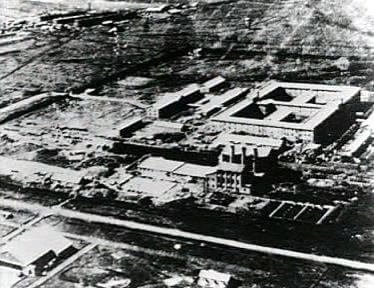
The island was a famous residence for Tok Syeikh Duyong (1802-1889). Originally, the island was known as Pulau Peria or Bittergourd Island alluding the shape of the island.

However, the villagers of the island allegedly saw two mermaids landing on its shore.

Hence, the name Duyong or Mermaid.

Honestly, Mermaid Island does sound cooler than Bittergourd Island.

10 random historical facts about Malaysian islands you might know
A mermaid sighting has led the residents of Pulau Peria to change its name to Pulau Duyong. Credit: Pixabay.

7.One of the Malaysian islands is a former leper colony and camp for Prisoners of War (POWs).

Located in Sandakan Bay, Malaysian state of Sabah, the Berhala island is about 5 hectares in size.
Before World War II (WWII), the island was used as a layover station for labourers coming from China and the Philippines. There was also a leper colony on the island.

Then during WWII, the Japanese used the quarantine station as a makeshift internment camp for both prisoners-of-war (POWs) and civilian internees.

The POWs and civilian internees were stationed on Berhala Island before they were sent Sandakan POW Camp or Batu Lintang Camp respectively.

Some of the notable internees who were held here were author Agnes Newton Keith and her husband, Harry Keith as well as North Borneo district officer Keith Wookey.

In June 1943, eight POWs made a daring escape from the island. They managed to escape to Tawi-tawi in the Philippines before they were transferred to Sandakan POW Camp.

The eight-member group was later known as the Berhala Eight.

8.The 18th descendant of Prophet Mohammad was buried on one of Malaysian islands.

Pulau Besar or Big Island is an island in Malacca. On the island, there is a tomb which belongs to Sultan Al Ariffin Syeikh Ismail.

He was the 18th descendant of the Prophet Mohammad. He received his calling to spread Islam to Java after a visit to the Prophet’s tomb in Medina.
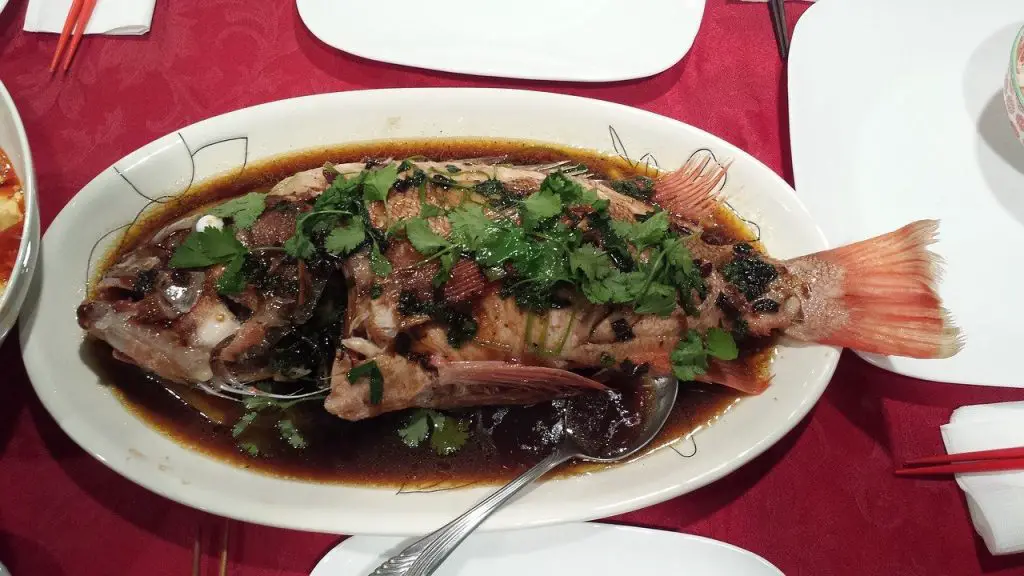
Syeikh Ismail reached Pulau Besar in 1495 and from there start to preach the Islamic teaching throughout the Malay Archipelago.

He passed away at the age of 58 and was buried on the island.

His tomb along other ancient graves and mausoleums are now part of tourist attraction of the island.

9.A Malaysian island was a refugee camp for up to 40,000 Vietnamese refugees.

10 random historical facts about Malaysian islands you might know
Bidong island in undated photo. Credit: Creative Commons.

The Vietnam War ended on Apr 30, 1975 with the evacuation of the American Embassy and the fall of Saigon to the North Vietnamese Army.

Soon after that, millions of people tried to flee the new communist rule in Vietnamese.

By May 1975, the first boat with 47 Vietnamese refugees arrived on Malaysian shore. On Aug 8, 1975, Bidong island off Terengganu officially opened on Aug 8, 1978. At one point, the small island was cramped with up to 40,000 refugees.

From then, about 250,000 Vietnamese had passed through or resided on Bidong island until it was closed as a refugee camp on October 30, 1991.

Most of them resettled in countries such as the United States, Canada, Australia and France. The remaining ones were repatriated to Vietnam against their will. The last refugees left on Aug 18, 2005 for Vietnam.

Today, a marine research station was established by Universiti Malaysia Terengganu on the island.

10.The natives of this island attacked shipwreck survivors, cutting off the legs of one of them.

The year was 1805. A 75-tonne schooner named Betsey departed Macau heading for Sydney. Her crew comprised of two officers, Captain William Brooks and chief mate Edward Luttrell, and 10 seamen, including four from China, three from the Philippines and three from Portugal.

On Nov 21, 1805, the vessel struck a reef. The crew struggled to refloat their vessel for three days before deciding to abandon her.

Brooks, Luttrell and three Portuguese crew climbed into the jollyboat while the rest abandoned the Betsey on a raft. The initial plan was to travel together, but a strong wind parted them.

Unfortunately, the raft and the crew on it were never seen again.

On Dec 2, the jollyboat arrived on the Balambangan Island off the North Coast of Borneo. There, 11 natives attacked them. Brookes died after they cut off both his legs.

The survivors, Lutterall and two Portuguese crew managed to escape and head back to the sea.

Two weeks later on Dec 15, the three men arrived at another island to find food but were attacked by a group of local Malays.

After killing one of the Portuguese, the Malay kept Lutterall and the surviving Portuguese crew as slaves. A year later, the captors finally released them.

Remember these interesting historical events when you have the opportunity to visit any of these Malaysian islands some day.

1 2 3 4 5 6 14