Browse Category

Culture - Page 9

Why were Dayak volunteers sent to Malaya in 1948?

We have heard of stories of how Sarawak Rangers assisted in the Malayan Emergency (1948-1960) when Sarawak was a British Crown Colony.

And we have read stories of how Dayak climbers assisted in scientific expeditions all the way to New Guinea.

But did you know why did Dayak volunteers were sent to Federation of Malaya in 1948?

If you are familiar with Ghostbusters’ theme song, part of the lyrics goes

“If there’s something strange,
In your neighborhood
Who you gonna call?
Ghostbusters!
If there’s something weird,
And it don’t look good
Who you gonna call?
Ghostbusters!”

As for the Malayans 80 years ago, they called the Dayak people from Sarawak to help when something happened in their neighbourhoods.

Dayak volunteers to the rescue

Why were Dayak volunteers sent to Malaya in 1948?

In 1948, the federation of Malaya requested Sarawak to send a ‘limited number of Dayak Volunteers to assist in operations against bandits.’

According to the Sarawak Gazette, these volunteers reportedly arrived in Malaya in two groups.

However, it was not reported where or how these Sarawakians completed their missions.

The report in the gazette also pointed out, “This is not the first time that Dayak volunteers have served in Malaya.”

In 1936, a ferocious ape terrorised the Weld Hill district (now Bukit Nanas) near Kuala Lumpur.

The animal ‘made a nuisance of itself by attacking and biting children and adults and all attempts to destroy the animal failed’.

Then two Dayak men from Sarawak arrived to the rescue and captured the ape.

The ape’s stuffed remains were reportedly exhibited in the Kuala Lumpur Museum back in 1948.

The Dayak people were known for their skills living in the jungle and tough terrains. Their knowledge of plants and animals was wide and their hunting skills were commendable.

Combining these traits, the Dayak people in those days made good trackers be it, tracking animals or humans.

Thus, it is no surprise why when Malaya had problem with thieves and a raging ape, the first people they turned to for help were the Dayak people.

How an Indonesian folk song became the center of communism propaganda

“Genjer-genjer” is an Indonesian folk song written in the Osing language about a plant called genjer.

Also known as yellow velvetleaf, genjer (Limnocharis flava) can be found in countries such as Indonesia, South America, Sri Lanka, India, Cambodia and Malaysia.

When the songwriter came up with “Genjer-genjer” it would later became one of the most taboo songs in Indonesian history.

An Indonesian folk song written during the Japanese occupation

Muhammad Arief first recorded the song during the Japanese occupation of the Dutch East Indies in 1942.

The musician who was from Banyuwangi town in East Java, musically arranged it for the angklung, a Sundanese musical instrument made of a varying number of bamboo tubes.

Since genjer was considered a poor man’s food and would usually be eaten when there was no other food left, Arief used it as the inspiration for his song.

He wanted to tell the story of the people of his town who had to depend on genjer for food due to Japanese oppression during World War 2(WWII).

However, the Japanese occupation government used the song as propaganda to encourage the Indonesians to sacrifice their food as crops were given to the soldiers.

“Genjer-genjer”, an Indonesian folk song continued to be used for propaganda

Fast forward to post independent Indonesia, “Genjer-genjer” became well known in mainstream music.

Fueling on the fame, the song was covered by famous artists such as Bing Slamet and Lilis Suryani.

Watch Lilis Suryani’s version of the song here.

At first, the song was used by some political movements to criticise President Sukarno’s Guided Democracy.

It was a political system in place in Indonesia from 1957 until 1966 based on the traditional village system of discussion and consensus, instead of the normal democracy.

With the support of military, Sukarno proposed a cabinet representing all major political parties including the Communist Party of Indonesia (PKI).

Due to the popularity of “Genjer-genjer”, PKI also used this song to promote communism.

Since then, a simple folk song to reflect the state of poverty became a major tool in communism propaganda.

The peak of propaganda

The infamous 30 September Movement was a major turning point in Indonesian history.

It took place on the evening of Sept 30, 1965 when a group of militants captured and executed six of Indonesia’s top military generals.

The movement proclaimed itself as Sukarno’s protectors, punishing those who were planning a coup against the president.

Even to this day, the true motive behind 30 September Movement is still unknown.

The first and most famous group to be blamed behind the massacre was the PKI.

PKI, however, claimed that it had nothing to do with them but was entirely an internal army affair.

Later in 1971, political analysts Benedict Anderson and Ruth McVley in their article widely known as
the Cornell Paper also believed the killing of six Indonesian generals was due to internal military issue.

Regardless of who mastermind the killing, there was one thing for sure, the public believed that the communists to be specific, PKI was behind it.

But what did “Genjer-genjer” have anything to do with the killings?

Genjer-genjer and the Lubang Buaya myth

Lubang Buaya is a suburb located in Cipayung district, East Jakarta. It is infamously known as the murder site of six generals.

There were plenty of myths and false reports surrounding the deaths of the six generals.

One of the most popular was that Gerwani members were using the “Genjer-genjer” song to train to kill the generals.

Gerwani or Gerakan Wanita Indonesia (Indonesian Women’s Movement) was a woman organisation affiliated with PKI.

It was started aiming to fight women issues such as gender equality and labour rights but shifted toward communism in 1960s.

This led some of the founding members such as prominent journalist S.K. Trimurti to leave Gerwani.

Soon enough, stories of how Gerwani women had been engaged in orgy with their victims and then torturing, mutilating and fondling the generals’ genitals before killing them circulated.

And they did this allegedly while singing the song “Genjer-genjer”.

Nevertheless, some believed the alleged killings by the Gerwani was a deliberate sensation orchestrated by the Indonesian army to depict communist women were immoral.

Furthermore, autopsy reports stated the generals had died due to a gunshot wounds with no signs of mutilation or torture.

The ban on the Indonesian folk song, genjer-genjer

Another rumour has it that a musical sheet for the song “Genjer-genjer” but with different lyrics from the original was found at the murder scene.

Regardless of whether this was the truth or not, “Genjer-genjer” became a taboo song.

After the Sept 30 Movement, the new Indonesian government banned the song.

The ban ended in 1998 with President Suharto’s resignation.

Muhammad Arief and TikTok

Perhaps the reason behind “Genjer-genjer” being closely associated with communism lies on Muhammad Arief, the original songwriter.

He was allegedly connected to Lekra (Lembaga Kebudayaan Rakyat), a cultural organisation affiliated with PKI.

After 30 September Movement tragedy, anti-communism sentiment was on the rise resulting in what we now know as the Indonesian Communist Purge.

From 1965 to 1966, thousands of people were captured and killed including PKI members, Gerwani women, communist sympathisers and alleged leftists.

One of them was “Genjer-genjer”’s songwriter, Muhammad Arief.

According to his son, he was taken by police military in 1965. The last the family heard was that Arief was imprisoned in Malang city.

Till today , nobody knows what actually happened to “Genjer-genjer”’s songwriter.

In 2021, the song made waves among younger generation but not because of any propaganda.

Thanks to TikTok, the Indonesian folk song became popular again as users played “Genjer-genjer” in front of their grandparents to see their reactions.

Most of the TikTok videos showed how the elders glared or scolded the TikTokers for playing the song.

If Arief was still alive, what would he think about his song today?

The rise and fall of Bulungan sultanate, a Muslim kingdom with Kayan roots

Today, the Kayan people of Borneo are known to practice mainly Christianity. Most of them have left their traditional belief called bungan and shamanism.

However, did you know that hundreds of years ago, a Muslim sultanate called the Bulungan sultanate was allegedly founded by a Kayan princess from Apau Kayan who had married a Bruneian?

Centuries ago, a great number of Kayans moved to east Borneo. There, they began the ethnogenesis of the Bulungan people when they converted to Islam.

The sultanate is located in the existing Bulungan Regency in the North Kalimantan province of Indonesia.

The center of the sultanate is today’s Tanjung Selor town which is the capital of both the North Kalimantan province and Bulungan regency.

During the peak of its reign, the sultanate territory spanned the eastern shores of North Kalimantan up to Tawau, now Malaysian Borneo.

The history of Bulungan sultanate

According to Bernard Sellato in his paper Forest, Resources and People in Bulungan, the history of the kingdom started from a group of Kayans who settled near the coast.

He stated, “This Dayak group, the Kayan Uma’ Apan, moved from Apo Kayan in the 17th century down the Kayan river, settled near Long Peleban (middle Kayan river), and then moved farther downstream to the Binai river, near the coast.

“There, a Kayan princess, marrying a visiting nobleman, Lancang, allegedly from Brunei (c.1650), started a dynasty of Indianised kings, which later was centered near Tanjung Selor. A century later (c.1750), this dynasty converted to Islam, and a long line of sultans, vassals to the sultan of Berau (himself a vassal to Kutai), followed until the 1850s, when the Dutch began interfering in local affairs, trying to eradicate piracy and the slave trade.”

Another account of the founding of Bulungan kingdom stated that it was founded by Kuwanyi, a Kayan aristocrat from Uma Apan of Usun Apau.

He was known for his leadership and bravery. Kuwanyi had a daughter named Asung Lawan. She then married a Brunei prince named Datu Mencang. It was under the reign of Asung Lawan and Datu Mencang, the kingdom became a Muslim sultanate.

Meanwhile, another origin story behind the Bulungan sultanate is more on the fantasy side.

Long time ago, there was a childless Kayan leader who found an egg and a bamboo.

He brought both home and the the egg and bamboo turned into a baby girl and and a baby boy respectively.

According to this legend, the boy and girl later founded the Bulungan kingdom.

Either way, it is widely understood that Bulungan sultanate is rooted from the Kayan people.

The rise and fall of Bulungan sultanate, a Muslim kingdom with Kayan roots
Kayan river in North Kalimantan.

A Norwegian’s visit to Sultanate of Bulungan

Carl Sofus Lumholtz (1851-1922) was a Norwegian explorer and ethnographer.

In 1913, he started an expedition to explore Dutch Central Borneo to learn about the culture in the area.

One of the few accounts about Sultan of Bulungan back then can be found in Lumholtz’s book, Through Central Borneo; an account of two years’ travel in the land of the headhunters between the years 1913 and 1917 (1920).

He wrote:

“Two days later, among mighty forests of nipa-palms, we sailed up the Kayan or Bulungan river and arrived at Tandjong Selor, a small town populated by Malays and Chinese, the number of Europeans being usually limited to two, the controleur and the custom house manager. It lies in a flat swampy country and on the opposite side of the river, which here is 600 metres wide, lives the Sultan of Bulungan.

I secured a large room in a house which had just been rented by two Japanese who were representatives of a lumber company, and had come to arrange for the export of hardwood from this part of Borneo.

Accompanied by the controleur, Mr. R. Schreuder, I went to call on the Sultan. He was a man of about thirty-five years, rather prepossessing in appearance, and proud of his ancestry, although time has so effaced his Dayak characteristic that he looks like a Malay. Dato Mansur, his executive, met us at the landing and escorted us into the presence of the Sultan and his wife, where were offered soda water and whiskey, and we were remained an hour. They are both likeable, but the Sultan appears rather nervous and frail, and it is rumoured that his health has suffered as a result of overindulgence in spiritualistic seances.

He gave an entertaining account of natives living in the trees on the Malinau river. As it had been impossible for me to obtain cartridges for my Winchester rifle, the Sultan was kind enough to lend me one of his before we parted, as well as two hundred cartridges.”

Lumholtz’s visit to the Sultanate of Bulungan took place sometimes in December 1913.

Sultanate of Bulungan under Dutch colonisation

The Dutch signed with the Sultan of Bulungan a Politiek Contract to impose their sovereignty over the kingdom in 1850.

By 1893, there was a Dutch government post set up in Tanjung Selor.

Under the Dutch control, the sultan was forced to hand over control of the remoter regions of the Bahau river, Pujungan river, and Apo Kayan.

Then in 1881, the British North Borneo Chartered Company (BNBC) was formed, placing North Borneo (present-day Sabah) under British jurisdiction.

Tawau, which was previously reigned over by Sultan of Bulungan, was claimed by BNBC.

After long negotiation with the British, the Dutch finally recognised the British borders in 1915 which is basically the border between Sabah and North Kalimantan now.

The rise and fall of Bulungan sultanate, a Muslim kingdom with Kayan roots
The rulling class of the Bulungan Sultanate (taken c. 1925-1935). Credit: Creative Common

Bulungan sultanate during Indonesia-Malaysia confrontation

Ultimately, the connection between the kingdom and Malaysia played a role in the fall of Bulungan.

After World War II had ended and many countries were freed from Japanese occupation, Indonesia gained its independence from the Dutch.

Unlike many sultanates in Borneo which were abolished after independence partly due to many sultans and their families being executed by the Japanese, the Sultanate of Bulungan retained its power.

Then Indonesia-Malaysia confrontation took place in 1963 because Indonesia opposed the creation of Malaysia.

During this time, the Sultanate of Bulungan was accused of being supportive toward Malaysia.

In April 1964, it was reported that a document was found proving the ties between Bulungan aristocracy and Malaysia.

It stated that the Bulungan royal family would proclaim a merger with Sabah and subsequently Malaysia.

Furthermore, the aristocrats were seen to be visiting Sabah frequently. However, many believed the visits were just because they had relatives in Tawau.

In the same month, the Indonesian army allegedly found arms in the former palace of the sultan. By now, they strongly believed that sultan and his followers would take part in the Confrontation but would lean on the Malaysian side.

The rise and fall of Bulungan sultanate, a Muslim kingdom with Kayan roots
Abdul Jalil of Bulungan with the Queen consort (1940). Credit: Creative Common

The massacre of Bulungan royal family

Later, an order came out to arrest all members of the Bulungan royal family.

When the army arrived at the Bulungan palace on July 2, 1964, they came under the pretense of just an ordinary official visit.

Naturally, the royal family provided a feast for the army that night to welcome their visit. The Sultan had no idea what the army had planned.

In the dawn of July 3 while the family and their servants were sleeping, the army surrounded the palace.

They then proceeded to capture everyone in the palace including the sultan.

Burhan Djabler Magenda in his book East Kalimantan: The Decline of a commercial Aristocracy narrated the fate of this aristocracy.

“The aristocrats were separated into several groups. All the male members were put into one group and into one boat, while the women and children were placed in a separate boat. They were supposed to be transported first to Tarakan and from there taken to Balikpapan. This plan never materialised,” he wrote.

Instead, off the shore of Tarakan, all about 30 of them in total were gunned down by their own guards.

There, their bodies were thrown into the sea. The soldiers also burned the palace to the ground and the fire lasted for two days and two nights.

The rise and fall of Bulungan sultanate, a Muslim kingdom with Kayan roots
Amal Beach of Tarakan

The end of the Sultanate of Bulungan

While there were many different accounts about the massacre, one thing for sure was that many members of the Bulungan royal family were executed in July 1964.

Among the immediate family of Sultan Bulungan, one son was in school in Malang during the incident.

However, he was later arrested in Balikpapan and was never heard of again.

Another two sons were able to survive because they managed to escape in time. They fled to Tawau and became Malaysian nationals.

In 2017, the descendants of the Sultan revealed to an Indonesian newspaper their intentions to return to their homeland by giving up their Malaysian nationalities and become Indonesian.

As dead men cannot speak, there was no definite proof that the Bulungan royal family was supportive of Malaysia to this day which cost their lives.

Even if they were, many agreed that killing the whole family including women and children was an extreme move by the army.

Regardless, the massacre of Bulungan royal family marked the end of the sultanate.

5 female journalists that everyone should know about

Today, the journalism industry is tainted by the wild spread of fake news and the oppression against the media.

Plus, the digital age of information has not been entirely favourable towards journalism.

On the good side, news and information are easier and faster to dispense to the wider crowd.

At the same time, plagiarism and infringement of ideas take place faster and in a larger scale than we have ever imagined before.

While a good number of journalists are still taking pride in pursuing original stories, other so-called digital content creators are taking pleasure in rewording others’ articles.

Moreover, the online violence female journalists has increased ‘significantly’ according to UNESCO’s latest findings.

The UNESCO report carried out by the International Center for Journalists surveyed more than 900 female journalists from 125 countries. It found that nearly three-quarters of these female journalists had experienced online abuse.

The study also found that a quarter of those surveyed had been physically threatened. The reasons behind these threats include covering elections or conflicts, women’s rights or for reporting stories that identified as ‘male coverage’ such as sports. These reasons mostly are not the same reasons behind threats against male journalists.

Additionally, the contribution of female journalists have been always overshadowed by their male colleagues.

5 female journalists that everyone should know about

With that, let us remember these five female journalists whose writings have contributed to society and even influenced the course of history:

1.S.K. Trimuti

5 female journalists that everyone should know about

Indonesian journalist Soerastri Karma Trimurti (1912-2008) was also known as S. K. Trimuti.

She started her career as an elementary school teacher during the 1930s.

In 1936, the Dutch authorities arrested her for distributing anti-colonial leaflets.

Trimuti later was imprisoned for nine months at Bulu Prison in Semarang, Central Java.

Her arrest became a turning point in her life. Upon her release from prison, Trimurti quit her job as a teacher and became a journalist.

In order to avoid being arrested by the Dutch, Trimurti used different pseudonyms in her articles.

When World War II (WWII) broke out, the Japanese took control of her country.

During this time, Pesat, a newspaper she published together with her husband, was banned by the Japanese.

Unfortunately, Trimurti was also arrested and tortured by the Japanese.

After Indonesia achieved its independence, Trimurti ventured into politics.

She became Indonesia’s first Minister of Labour.

Today, there is a journalism award named after her called the SK Trimurti Award. The award is to recognise journalists’ efforts in fighting for gender equality in Indonesia.

2.Chit Estella

Today, Chit Estella is known for playing crucial part in the founding of the Philippine Center for Investigative Journalism and of Vera Files.

These two are Philippines’ most prominent independent investigative journalism organisations.

Her work circled mostly on writing on government corruption and human rights violations.

At one point of her career, Estella was the editor in-chief of Pinoy Times. It was a Filipino tabloid that catalysed the ousting of Philippine President Joseph Estrada.

Sadly on May 13, 2011, the veteran journalist was killed after a bus slammed into the taxi that she was riding in Quezon City.

Her name is now among the 19 inscribed on the Monument of the Heroes Memorial Wall in Quezon City. The memorial is dedicated to those ‘who defied risks and dedicated their lives for the cause of truth, justice, peace and freedom of the Filipino people’ during Ferdinand Marcos’ regime.

This was in recognition of Estella’s early work as a journalist during the Martial Law period, a stunning 14-year period of one-man rule under Marcos spanning 1972 to 1986.

3.Daphne Caruana Galiza

This Maltese writer, journalist and blogger was a well-known figure for her works in investigative journalism.

Daphne Caruana Galizia’s reports focused on government corruption, organised crime, nepotism and money laundering.

Due to her writings, she was threatened and intimidated almost on adaily basis.

On Oct 16, 2017, a bomb which was placed in her car exploded, killing her immediately while she was driving.

As of November 2019, four men were arrested in connection of Galizia’s murder including Maltese businessman Yorgen Fenech.

He was the owner of 17 Black Limited, a mysterious shell company Galizia had been looking into just before her untimely death.

In honour of Galizia, the European United Left-Nordic Green Left (GUE/NGL) Award for Journalists, Whistleblowers & Defenders of the Right to Information was established in 2018.

4.Lin Zongsu

5 female journalists that everyone should know about

Lin Zongsu was born in Fujian Province in 1878, she was tutored by her mother at home as a child.

In 1902, she began her studies at the Patriotic Girls School of Shanghai.

As a student, she co-founded the first women student’s association called the Mutual Love Society.

The organisation published their views in the journal Jiangsu. It was through this journal Lin began her writing career, advocating for women’s rights.

After finishing her study, she started to work at her brother’s newspaper called the Chinese Vernacular News.

Lin also became an associate editor for the Daily Alarm. She wrote mostly about women’s rights during her career as a journalist.

In the end, both of the newspapers were forced to shut down in 1905.

After that, Lin went into politics, founding the Women’s Suffrage Comrades Alliance in 1911.

Her advocacy might be taken for granted today, but it was a significant move for women’s rights as Lin and other women in her organisation were fighting for women’s right to vote.

In 1913, democracy was suppressed under the Yuan Shikai regime in China.

Lin decided to leave the political world as well as China and moved to Singapore where she became teacher and ran a boating business. The money she earned was used to finance her brother’s newspaper in China.

After a decade in Singapore, Lin moved back to China where she passed away in 1944.

Today, she is remembered as one of China’s first female journalists and newspaper editors as well as a notable feminist activist.

5.Na Hye-sook

She was considered the first professional female painter and the first feminist writer in Korea.

Na Hye-sok published Korea’s first feminist short story, Kyonghui in 1918 at the age of 22.

It was about a woman who returns home to Korea from Japanese university to be confronted by people around her who do not believe in female education.

The short story resonated with Na’s life because at that time she was still studying at Tokyo Women’s College of Arts. She was taking a Bachelor of Arts in Western Painting, the first Korean woman to do so.

Na returned to Korea a year after she published Kyonghui.

Upon her return together with four other women, Na launched the first issue of Sinyoja or New Woman.

It was the first ever magazine for Korean women.

Na herself wrote several articles arguing about the practicality of Korean female dresses.

Japanese authority who ruled Korea at that time, shut down Sinyoja after only four issues.

The writer continued to write ‘controversial’ articles while juggling her career as a painter.

In the end, her article in the Samcheolli magazine in 1934 called ‘A Divorce Confession’ became Na’s most controversial write-up.

She openly talked about her sex life, pointing out that her former husband had not sexually satisfied her.

The painter also criticized male-dominance in Korean society in the article.

Her most eyebrow-raising statement was that she advocated domestic partnership before real marriage to take place.

After her article was published, the conservative Korean society was not having it. From then, nobody wanted to hire her to write, or buy her paintings.

Despite her wealthy upbringing, Na ended up living in poverty and spending her last years on charity.

She passed away alone on Dec 10, 1948 in a hospital. To this day, no one knows the location of her grave.

Her name became a phrase to reprimand young girls interested in literary or artistic aspirations as the scolding “Do you want to become another Na Hye-sok?” became widely used.

Thankfully, since then Na has been acknowledged in South Korea for her painting and writing with a retrospective featured at the Seoul Arts Centre in 2000. Even Google celebrated her 123rd birthday in 2019 with a doodle.

Pipe smoking in the olden days of Borneo

When it comes to traditional or the ‘old school’ way of smoking in Borneo, most people are familiar with the technique of wrapping the tobacco in a dried banana leaf before lighting up.

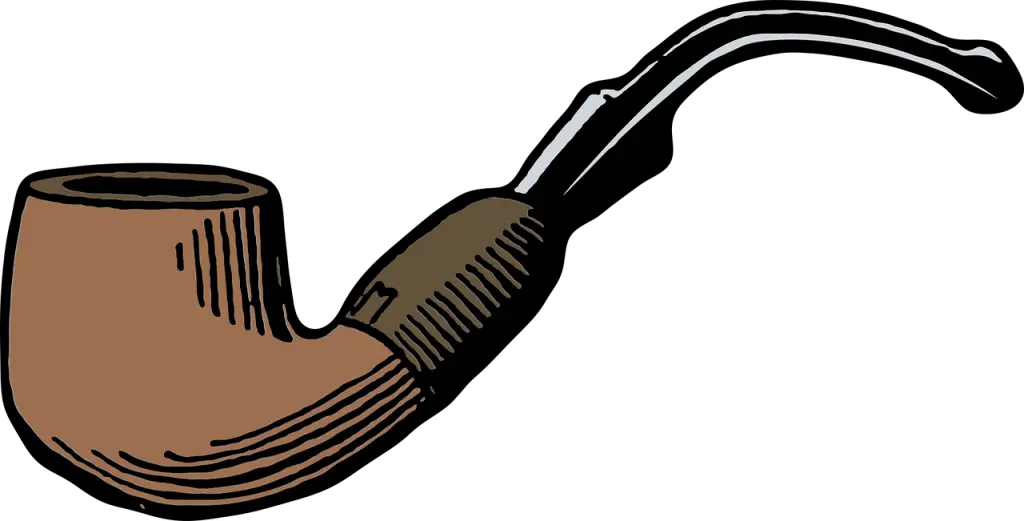
However, the oldest traditional form of smoking in the world is actually pipe smoking.

Even though pipe smoking in Borneo was less practiced compared to the traditional cigarette, it doesn’t mean it was not there.

Here are some descriptions of pipe smoking in the olden days of Borneo:

1.Alfred Russel Wallace (1823-1913)

When British naturalist Wallace was 31, he travelled through the Malay Archipelago including Borneo from 1854 to 1862.

Besides collecting specimens for his work on natural history, Wallace also observed the local culture.

Wallace once wrote in his book about pipe smoking, stating, “The Dyaks’ favourite pipe is a huge hubble-bubble, which he will construct in a few minutes, by inserting a small piece of bamboo for a bowl obliquely into a large cylinder, about six inches from the bottom, containing water, through which the smoke passes to long slender bamboo tube.”

2.Dayak smoking pipe in the Mahakam

Carl Alfred Bock (1849-1932) was a Norwegian author and explorer.

From 1878 to 1879, he travelled from Sumatra to Dutch Borneo under the authority of the then governor-general of the Dutch East Indies.

Based on his exploration, Bock wrote the book The Headhunters of Borneo; A Narrative of Travel Up the Mahakkam and Down the Barito, Journeyings in Sumatra (1882).

In the book, he described what a Dayak aasmoking pipe looked like.

“The Dyak pipe is a very peculiarly constructed instrument, consisting of a stout bamboo cylinder, about twenty-two inches long and one and a half inches in diameter, which contains water to cool the smoke ; inside this tube is placed a piece of split rattan filled with fibre, which absorbs the nicotine ; about one inch from the end of this tube is inserted, at right angles, a slender carved piece of ironwood, about eight inches in length, and bored with a hole rather more than a quarter of an inch in diameter ; this constitutes the bowl, which contains only a very small quantity of tobacco. The Dyak, however, never takes more than half-a-dozen puffs at a time, as the Java tobacco which is generally used is very strong, and the smoke is always swallowed. Cigarettes, made of a little tobacco rolled up in a small piece of banana leaf, are largely used. The use of opium is, in some districts, rapidly extending among the rich Dyaks.”

3.Owen Rutter

Speaking of a travel writer, Owen Rutter (1889-1944) was one of the prominent ones during the early 20th century,

From 1910 to 1915, Rutter was serving with the North Borneo Civil Service. After serving in the army during World War I, he travelled extensively around the world including Borneo, Hong Kong, Taiwan, Japan, Canada and the United States.
Describing about smoking pipe of a Murut in his book British North Borneo: an account of its history, resources and native tribes (1922), Rutter stated:

“The pipe is a fearful contrivance, and is guaranteed to turn the most hardened European smoker green. It consists of a cylinder of bamboo twelve to eighteen inches long with a small brass or wooden bowl about an inch from one end. Into this bowl, which is about a quarter the size of an ordinary pipe, the Murut crams his tobacco, lights it, and then, having taken one or two enormous puffs down the bamboo mouthpiece, inhales violently.

“The air is choked with the reek of native tobacco and there arise great clouds of smoke, followed by a sound of coughing and expectoration. Immediately after all this you notice that he lays the pipe aside. The smoke is over. Mercifully so, for no pipe and a few smokers could endure so drastic a performance for very long.”

4. Did pipe smoking indicate a Chinese-occupied Borneo?

William Maunder Crocker was the Governor of British North Borneo from 1887 to 1888.

Unlike other Europeans who had observed pipe smoking among the locals, Crocker claimed, “I have never seen nor heard of any Bornean tribes who smoke pipes.”

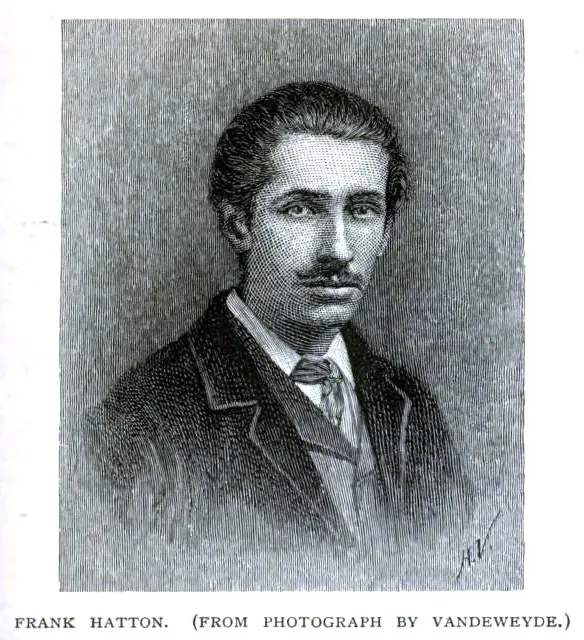
However, English geologist Frank Hatton who worked in British North Borneo had two pipes in his possession before he died on Mar 1, 1883.

Pipe smoking in the olden days of Borneo

Commenting on the Hatton’s pipes, Crocker wrote, “They must be peculiar to that one tribe, the Tungara people. All the natives of Borneo smoke, almost from the moment they leave their mothers’ arms. They roll the tobacco in a palm leaf to smoke it and it has a very fine flavour. But pipes, this is the first time anybody has ever heard of pipes in Borneo.

“These two pipe-relics of Frank’s last expedition, are made of hard red wood, and have bamboo stems. They are much the same kind of pipe as that used by the Chinese, who only put in a pinch of tobacco.

“The discovery of these pipes suggests another piece of evidence favourable to the belief that at some very remote period Borneo was partially settled and occupied by China.”

5.The law against taking away a pipe

Whether part of Borneo was ever occupied by China is a story for another day.

One thing for sure is that there is a native law that still exists to this day regarding the Bidayuh traditional bamboo water pipe, sirubok.

According to Sarawak native law Adat Bidayuh 1994 Section No 56, whoever damages, contaminates or takes a away a sirubok from a pingudung (rest stop) shall provide one hundred fruit as pingasung, or some form of restitution for a breach of the adat.

So if you see a sirubok lying around, be a model citizen and treat it like you would any piece of public property – with respect.

Remembering the attack on Semporna town in 1954

The attack on Semporna town in March 1954 is considered one of the major incidences of Sabah cross-border crimes.

A group of 30 armed Filipino pirates with two policemen and four others were killed.

The news of the attack travelled fast, especially among European communities.

In a news report by Reuters published on Mar 31, 1954, stated that, “One European, one police sergeant and two constables were killed when an unknown number of men in two boats, believed to be Filipino pirates from the South Philippines, raided the small town of Semporna, on the east coast of North Borneo, last night.

“The pirates, who were well armed with automatic weapons, tried to rob the town but were opposed by the small police force of 14 men.

“The European killed in the exchange of fire was the Assistant Conservator of Forests of Tawau (Mr Barnard).

“The North Borneo police, headed by residents of the east coasts, are scouring surrounding waters for the pirates.

“Semporna has been raided a few times by pirates in the past but last night’s raid was the most serious.

“Nearby waters are haunts of murderous Sulu and Moro pirates who find protection in the multitude of islands.”

Remembering the attack on Semporna town in 1954

The beginning of the attack on Semporna town

So what actually happened on that fateful day? How did the European Mr Barnard get caught in the fire between the police and the pirates?

The answer lies in a special report by Sabah Forestry Department.

Mr Barnard or Thomas Robert Barnard, to be precise, was the District Forestry Officer (DFO) of Lahad Datu.

He was in Semporna to carry out grading work at a log pond, about half a mile from town, owned by a prominent timber merchant Pua Din Kok.

Barnard went there with Timber Inspector Ahmad Nawi, along with boatman Damsik and his assistant.

They arrived at 5.30pm and they moored their boat at the Customs jetty where the Police Station and the Forestry Checking Station were also located.

While Ahmad was securing the boat to the jetty, he suddenly noticed two suspicious boats.

As the boats came closer, Ahmad realised the men on board were armed with automatic firearms and parangs.

Realising that the men were Filipino pirates, Ahmad immediately warned Barnard and the others.

Together with the boatmen, Ahmad jumped into sea and swam towards the mangrove trees nearby to hide.

Barnard, however, took out his shotgun to fire at the pirates, who at this moment already started to shoot at the police station.

While he managed to kill a pirate and wound another, Barnard was unfortunately shot in the back and died on the boat.

The shootout at Semporna Police Station

The pirates then proceeded to attack Semporna police station with intent to take control of it.

At the same time, the police who had heard the gunshots from the jetty were returning fire.

During the attack, the officer in-charge, Sergeant Sagar Singh was slashed in the neck. In other reports, it was stated that he was shot.

Regardless, Sergeant Singh was attacked while trying to unlock the firearms safe to retrieve more weapons and ammunition.

With the attack on the sergeant, the pirates got hold of the weapons and ammunition in the safe.

For the next three hours, the pirates looted the town, robbing the locals at gunpoint.

They finally left at about 8.45pm that same evening.

Besides Barnard and Sergeant Singh, the attack took the lives of a Chinese tailor, a 12-year-old Bajau boy and another two police constables.

The aftermath of the attack on Semporna town

After the bloody incident, BNBC set up an armed force of marine police in North Borneo.

They proved themselves to be an efficient organisation as they successfully patrolled and kept order in North Borneo waters in subsequent years.

Meanwhile, Barnard’s courageous and selfless act was posthumously awarded the Queen’s Commendation for Bravery.

3 things we learn from W.H. Treacher’s British Borneo: Sketches of Brunai, Sarawak, Labuan and North Borneo (1891)

Sir William Hood Treacher (1849-1919) was a British colonial administrator in Borneo and the Straits Settlements.

In Selangor, he was at the Anglo Chinese School in Klang on Mar 10, 1893.

His career in Borneo started in 1871 when he arrived in Labuan to be the acting Police Magistrate.

In 1873, Treacher became Colonial Secretary of Labuan before going on to be the first Governor of North Borneo (1881-1887).

Based on his career in Borneo, Treacher wrote a book ‘British Borneo: Sketches of Brunai, Sarawak, Labuan and North Borneo’.

His writings circled around his own experience as a colonial officer as well as the books and research that had been previously written about Borneo.

However, Treacher’s spellings for Malay words might take a second or two to understand.

For example, ‘chukei basoh batis’ is actually ‘cukai basuh betis’ or ‘the tax of washing feet’. Similarly, ‘mantri’ is menteri (minister).

3 things we learn from W.H. Treacher’s British Borneo: Sketches of Brunai, Sarawak, Labuan and North Borneo (1891)

Here are three things we learn from British Borneo: Sketches of Brunai, Sarawak, Labuan and North Borneo (1891) by William Hood Treacher:

1.The important role of Chinese immigrants in British Borneo

In 1881, the British North Borneo Company (BNBC) ran a census on North Borneo and found the native population was considered to be unsuited to meet the requirements of modern development.

They estimated the number of indigenous people to be 60,000 to 100,000.

In order to increase the population, the government realised they needed to push on immigration, particularly from China.

Noting the importance of Chinese immigrants, Treacher stated,

“The frugal, patient, industrious, go-ahead, money-making Chinaman is undoubtedly the colonist for the sparsely inhabited islands of the Malay archipelago. Where, as in Java, there is a large native population and the struggle for existence has compelled the natives to adopt habits of industry, the presence of the Chinaman is not a necessity, but in a country like Borneo, where the inhabitants, from time immemorial, except during unusual periods of drought or epidemic sickness, have never found the problem of existence bear hard upon them, it is impossible to impress upon the natives that they ought to have “wants,” whether they feel them or not, and that the pursuit of the dollar for the sake of mere possession is an ennobling object, differentiating the simple savage from the complicated product of the higher civilization.

[…]“The Chinaman, too, in addition to his valuable properties as a keen trader and a man of business, collecting from the natives the products of the country, which he passes on to the European merchant, from whom he obtains the European fabrics and American “notions” to barter with the natives, is also a good agriculturist, whether on a large or small scale; he is muscular and can endure both heat and cold, and so is, at any rate in the tropics, far and away a superior animal to the white labourer, whether for agricultural or mining work, as an artizan, or as a hewer of wood and drawer of water, as a cook, a housemaid or a washerwoman.

“He can learn any trade that a white man can teach him, from ship-building to watchmaking, and he does not drink and requires scarcely any holidays or Sundays, occasionally only a day to worship his ancestors.

2.How famous Hugh Low was among the locals

Sir Hugh Low (1824-1905) was another British colonial administrator and naturalist.

From 1848-1850, he was the Colonial Secretary of Labuan.

Then in 1851, Low made the first documented ascent of Mount Kinabalu.

For Treacher, being associated with Low was a life-saving thing.

“His (Sir Hugh Low) name was known far and wide in Northern Borneo and in the Sulu Archipelago. As an instance, I was once proceeding up a river in the island of Basilan, to the North of Sulu, with Captain C. E. Buckle, in two boats of H. M. S. Frolic, when the natives, whom we could not see, opened fire on us from the banks.

I at once jumped up and shouted out that we were Mr. Low’s friends from Labuan, and in a very short time we were on friendly terms with the natives, who conducted us to their village.

They had thought we might be Spaniards, and did not think it worth while to enquire before tiring.”

Read about Hugh Low here.

3.The origin of the name ‘Sabah’?

How the name ‘Sabah’ remains uncertain to this day. Some believe it came from a type of banana called ‘pisang saba’.

Treacher may not provide the definitive answer either, but he worked hard to explore the possibilities.

“Some explanation of the term “Sabah” as applied to the territory—a term which appears in the Prayer Book version of the 72nd Psalm, verse 10, “The kings of Arabia and Sabah shall bring gifts”—seems called for, but I regret to say I have not been able to obtain a satisfactory one from the Brunai people, who use it in connection only with a small portion of the West Coast of Borneo, North of the Brunai river.

“Perhaps the following note, which I take from Mr. W. E. Maxwell’s “Manual of the Malay Language,” may have some slight bearing on the point:—”Sawa, Jawa, Saba, Jaba, Zaba, etc., has evidently in all times been the capital local name in Indonesia. The whole archipelago was pressed into an island of that name by the Hindus and Romans.

Even in the time of Marco Polo we have only a Java Major and a Java Minor. The Bugis apply the name of Jawa, jawaka (comp. the Polynesian Sawaiki, Ceramese Sawai) to the Moluccas. One of the principal divisions of Battaland in Sumatra is called Tanah Jawa. 

Ptolomy has both Jaba and Saba.”—”Logan, Journ. Ind. Arch., iv, 338.”

“In the Brunai use of the term, there is always some idea of a Northerly direction; for instance, I have heard a Brunai man who was passing from the South to the Northern side of his river, say he was going Saba.

“When the Company’s Government was first inaugurated, the territory was, in official documents, mentioned as Sabah, a name which is still current amongst the natives, to whom the now officially accepted designation of North Borneo is meaningless and difficult of pronunciation.”

Remembering one of Rentap’s men, Uyu Apai Ikum

In 2014, former Social Development Minister Tan Sri William Mawan urged the Sarawak State Museum to research more on the history of the late Uyu Chandi.

Also known as Uyu Apai Ikum, he was one of the frontline warriors of Iban hero Rentap Libau.

According to Mawan, the late Uyu was considered a ‘Raja Berani’ by the Ibans.

Remembering one of Rentap’s men, Uyu Apai Ikum

Uyu and his fight against the White Rajah

Little is known about this Iban warrior except that as Mawan had stated, Uyu was one of the brave ones who had risen up against the Brooke government.

The war between the White Rajah and the Ibans of Saribas started in June 1843 and it continued on for the next two decades.

Finally in October 1861, Charles Brooke summoned two Iban leaders, Orang Kaya Pemancha (OKP) Nanang and his brother Luyoh to a meeting.

The Ibans were asked to pledge 400 tajau rusa (jars) as proof of their surrender.

If they did not cause any trouble within the next three years, these jars would be refunded to them upon the expiration of the agreement.

OKP Nanang and Luyoh as well as their followers agreed with the proposal. On their behalf, they sent one of their loyal old warriors, Uyu Apai Ikum to pay the fine.

After the fine was paid, OKP Nanang and his followers moved away, leaving Rentap to continue with the war.

Instead of surrendering, Rentap and his warriors retreated elsewhere until they finally settled down in Ulu Wak, Pakan. There, Rentap died of old age in 1870.

Uyu’s lumbong

More than a century after Uyu’s death, his grave or lumbong in Iban became a subject of study for a Japanese researcher. A lumbong is a grave site on stilts.

Motomitsu Uchibori gathered some oral history about Uyu for his paper ‘The Enshrinement of the Dead Among the Iban’.

After his surrender to Brooke, Uyu migrated to Julau and established a longhouse near a hill called Bukit Bulie. He later died of old age and was buried in a lumbong on the summit of Bukit Bulie.

Uchibori stated, “Uyu is said to have been a brave man, having taken five enemy heads and being capable of assuming the leadership of a small headhunting party (kayau anak).”

There were five others buried near Uyu due to their relationships with him. One of them was Uyu’s brother named Linggang.

Although he is said to have taken enemy heads, Linggang was not a leader like Uyu.

Hence, he was not ‘qualified’ enough to have his own lumbong. Meanwhile, the identities of the rest of the bodies remain unknown.

They were either brothers, sons or relatives of Uyu who wanted to follow this Iban warrior even after death.  

As for Uyu’s lumbong, it is an important historical site that must be preserved for future generations.

Beriberi, the deadly disease among Allied POWs during WWII

Do you know that a severe chronic form of thiamine (vitamin B1) is known as beriberi?

The term ‘beriberi’ is believed to come from a Sinhalese phrase for ‘weak, weak’ or ‘I cannot, I cannot’.

There are two main types in adults; wet beriberi and dry beriberi. Wet beriberi affects the cardiovascular system while the dry beriberi affects the nervous system.

During World War II, beriberi was widespread among Allied prisoners of war (POWs) captured by the Japanese.

This is due to they were fed only with a diet of rice which did not contain adequate quantities of most vitamins.

Beriberi, the deadly disease among Allied POWs during WWII
Four prisoners of war (POWs) with beriberi at Burma-Thai Railway. Copyright expired – public domain

Beriberi’s symptoms among POWs

When suffering from dry beriberi, the victims would experience tingling in their hands and feet, loss of muscle function, vomiting and mental confusion.

Meanwhile, suffering from wet beriberi commonly can cause oedema or severe swelling. Another Australian POW Stan Arneil recalled what was it like to suffer from oedema due to beriberi.

“The symptoms were swollen feet and legs as the moisture contained in the body flowed down towards the feet. Ankles disappeared altogether and left two large feet almost like loaves of bread from which sprouted legs like small tree trunks, in bad cases the neck swelled also so that the head seemed to be part of the shoulders.”

Despite this, the Japanese continued to force the POWs to work through their sickness as no medical care was given.

During the Sandakan Death Marches for instance, POWs were forced to march from Sandakan to Ranau, of a distance of approximately 260km long through thick tropical jungle.

Those who too weak to walk due to exhaustion or sickness, were shot by Japanese guard.

“Death had slippers” when it came to beriberi

Speaking of Sandakan Death Marches, an Australian POW who had a very narrow escape from the deadly march witnessed first hand how a victim of beriberi perished.

Billy Young was among the soldiers who was imprisoned at Sandakan POW Camp.

After a failed escape from the camp, he was sent to Outram Road Jail in Singapore. This turned out to be a blessing in disguise for Young as those who stayed at Sandakan camp all died during the war (except for six Australians who managed to escape).

Still, Young went through hell on earth where he spent six months in solitary confinement and was forced to sit cross legged for hours at a time.

Since food rations were scarce, everyone including Young became skeletal. One time, one of Young’s inmates, a Dutch, died in his arms due to beriberi.

“I put his head on my lap. I chatted to him and I pushed his chest and felt it. And you could feel it going up and down as he was panting for breath. But death must have had slippers because he died and I didn’t know so I waited.

“I put him down and I didn’t tell the guard, and I waited till his box of rice came and I put Peter’s bowl by him. And I got mine, I ate mine, and then I ate Peter’s. And that’s the only banquet we ever had between us you know.”

Similarly, many of the surviving POWs described the deaths of the fellow comrades due to beriberi as ‘wasting away’.

Beriberi, a ‘norm’ for Prisoners of War

Ian Duncan was one of thousands Australian POWs who were send to work at Burma-Thai Railway.

He once shared this to journalist Tim Bowden during an interview, “At the end of the war, I interviewed every Australian and English soldier in my camp. I was the only medical officer in the camp. And I though it was duty to record their disabilities. And you’d say to them, what diseases did you have as a prisoner of war? Nothing much, Doc, nothing much at all. Did you have malaria? Oh yes, I had malaria. Did you have dysentery? Oh yes, I had dysentery. Did you have beriberi? Yes, I had beriberi. Did you have pellagra? Yes, I had pellagra but nothing very much. These are lethal diseases. But that was the norm, you see, everyone had them. Therefore they accepted them as normal.”

Burma-Thai POW camp was not the only one which was suffering from this disease. Another infamous Japanese internment camp is Batu Lintang Camp in Kuching which had similar conditions.

After the camp was liberated on Aug 30, 1945, a female civilian internee who was also a nurse named Hilda Bates went to visit the sick POWs.

She recounted, “I was horrified to see the condition of some of the men. I was pretty well hardened to sickness, dirt and disease, but never had I seen anything like this in all my years of nursing. Pictures of hospital during the Crimean War showed terrible conditions, but even those could not compare with the dreadful sights I met on this visit. Shells of men lay on the floor sunken-eyed and helpless; some were swollen with hunger, oedema and beriberi, others in the last stages of dysentery, lay unconscious and dying.”

Meanwhile in Indonesia, it was reported the disease affected nearly one hundred percent of Bataan POWs. It was considered as the most ubiquitous disease among the POWs.

Experiments on POWs to cure beriberi

A Japanese doctor army named Masao Mizuno described experiments he conducted in a report he submitted in October 1943.

He wrote in the report, “In South Sea operations, such conditions as the lack of materials, the difficulty in sending war materials, the heat and moisture, increase the occurrence of beriberi patients. For this reasons, attention must be given to the use of local products. Favourable results in the prevention of beriberi have been noticed by the usage of coconut milk, coconut meat and the yeast from corn.”

Mizuno continued to describe an experimental treatment he did on 16 POWs who were suffering from beriberi in an unknown location.

He gave them hypodermic injections of 30ml of sterilized coconut milk. (Yes, you read that right – sterilized coconut milk.)

According to Mizuno, most patients felt a slight prickling pressure pain at the site of the first injection and one felt a slight headache.

Later, the condition of most patients improved with the second, third and fourth injections. They showed ‘satisfactory pulse, refreshing sensation and increased appetite.’

However, it is not known whether these experiments were continued or if the procedure was ever used as a treatment.

The death tolls caused by beriberi among Allied POWs remain unknown

Through survivors’ testimonies, we might know which perished Allied POWs had the disease but we will never if the disease was the leading cause of death.

Just like Dr Duncan had testified, these poor men had other diseases such as pellagra, malaria, dysentery on top of beriberi.

For the fortunate POWs who were freed after the war had ended, sickness including beriberi followed them into their liberation.

It was reported that some deaths due to wet beriberi did occur soon after their release but the number was small and did not continue.

One unusual case, however, did happened on a British POW who died of cardiac failure 31 years after his release.

As a POW, he suffered very severe beriberi. After autopsy, it was found that he had extensive myocardial fibrosis considered due to the effects of severe wet beriberi.

Unfortunately until today, it is difficult to know how many Allied POWs suffered or died due to beriberi during and after the war.

Ellena, the forgotten American colony in Sabah

Did you know that there was an American colony in Sabah? And at one point in time, James Brooke and successors were not the only white ‘Rajahs’ on Borneo island.

The establishment of Consulate in Brunei

In 1850, the United States signed a bilateral treaty of Peace, Friendship, Commerce, and Navigation with the Sultanate of Brunei. This treaty was enforced on July 11, 1853 and is still in effect to this day.

Then in 1865, the US sent its first consul in Brunei, Charles Lee Moses.

Moses later on played an important role in the establishment of Ellena.

In August 1865, Moses concluded a 10-year lease with Brunei’s Sultan Abdul Momin.

The Sultan then guaranteed land rights in various areas in the north of Borneo.

Later, Moses went on to sell these rights to an American merchant Joseph William Torrey in return for a third of any profits made.

In October 1865, Torrey along with another American, Thomas Bradley Harris decided to build a colony in the area of today’s Kimanis, about 45km from Kota Kinabalu.

The new venture was pursued under The American Trading Company of Borneo. It was a chartered company formed by Torrey, Harris and several Chinese investors.

Torrey even made a trip to Sultan of Brunei to draw up a new concession letter on Nov 24, 1865.

In the letter, the Sultan even gave Torrey the title of ‘Rajah of Ambong and Marudu’.

The beginning of Ellena colony

Finally in December 1865, Torrey with 12 Americans and around 60 Chinese founded a colony in Kimanis called ‘Ellena’.

After raising a flag of his own designed, Torrey appointed himself as the governor and Harris as his vice-governor.

The news of this colony even made it to Hong Kong China Mail. The news reported, “The progress of the enterprise will be watched with much interest, as being the first attempt of Americans to colonise away from their own continent.”

Ellena, the forgotten American colony in Sabah
Thomas Bradley Harris (standing) and Joseph William Torrey, founders of the US colony “Ellena” on the Island of Borneo

The downfall of Ellena

According to Frank Tatu in his paper ‘The United States Consul, the Yankee Raja, Ellena and the Constitution’, the British government was concerned with American intentions.

They asked their Minister in Washington to enquire about the issue.

In response, the British was informed that the US had not authorised any attempts to form any settlements in Borneo.

As for Moses, he simply acted on his own.

Maybe because the colony was not approved by their own government, Ellena went down as fast as it came into being.

Ellena became a target for pirates from Hong Kong and Macau.

In the same time, the colony did not have any financial backup and their workers were going hungry.

Rumours had it that it was Moses who recruited the pirates in an effort to collect the money from the company.

While Torrey was trying to find investors in Hong Kong for Ellena, Harris died of Malaria on May 22, 1866.

By the end of 1866, Ellena was abandoned.

The remaining Ellena colonists found work at nearby British-operated coal fields while others went back to Hong Kong.

As for Torrey, he buried his friend Harris on the top of a nearby hill in Ellena.

He still used his title as the ‘Rajah’ and conducted commerce in the region for several years.

Finally in 1881, Torrey sold his rights in Kimanis to Austrian Baron von Overbeck and partner Alfred Dent for $25,000.

This paved way for what we know now as the British North Borneo Company (BNBC).

What happened to Moses?

The fall of Ellena affected the life Moses who became poor after the collapse of the colony.

Tatu stated, “He frequently wrote the US State Department complaining that no consular fees were to be had, and imploring that he be accorded a salary. Receiving no favourable response, Moses was driven to desperation.

“Moses allegedly armed attacks on the burning of his consulate on Mar 25, 1867 by ‘Malay people’.
By way of demanding reparations, Moses threatened the Sultan with retaliation by American naval units ‘to fire and burn the city.’”

However, the Sultan strongly believed that Moses burned the consulate himself. He was reportedly seen removing valuables from the consulate for days before the fire.

In the meantime, Moses moved to Labuan to wait for any news especially from the US.

There, tragedy struck him again when one of his children died. He had no choice but to send his wife and surviving child back to the US.

In September 1867, Moses received the news that he had been suspended from his duties by the president.

Then in May 1868, he boarded the Barque Swallow and later reported to be lost at sea.

The rediscovery of Ellena and he rediscover the grave of Thomas Bradley Harris

Ernest Alfred Pavitt, a land surveyor for the British North Borneo Company (BNBC) was the one who found Harris’ grave in 1909.

In a note published in British North Borneo Herald, Pavitt wrote, “A good many years ago, having to go from the West Coast to the Interior of British North Borneo, accompanied by Mr. P.F. Wise, the District Officer of North Keppel, we made our starting point from Kimanis and from the principal native kampung on the river. Mr Wise pointed on a hill on which he had told me an American gentleman had, some years previously, been buried.

”This was again brought forcibly to my collection some days ago as in my examination of land at this particular place I sent a gang of coolies to clear the top of a small and prominent hill of jungle to enable me to have a look at the surrounding country.

“On my going up a few days later I found this was the resting place of evidently an old pioneer, as there still exist in a very fair state of preservation both the head and foot stone marking this interesting spot.”

A year later, while BNBC was opening the Kimanis Rubber Estate, they found that some of the hill sides had been carefully terraced.

The company believed that these terraces were probably the remains of the company’s experimental planting.

What happened to Torrey after Ellena collapsed?

A year after the collapse of Ellena, Torrey had a daughter born in 1867. He named her Elena Charlotte, most probably after his colony.

Torrey later bought his own ship which he christened as ‘Ellen’.

From 1877 to 1880, Torrey was a vice-consul at the US Consulate in Thailand.

By 1883, he returned to America. In 1885, he received the news that he had been appointed as the King of Thailand’s chief adviser.

While he was contemplating whether he should accept the post, Torrey died suddenly on June 22, 1885.

After his death, Torrey was known as the ‘Yankee Rajah’ and ‘the only American Rajah’ despite the fact his beloved colony did not even last a year.

1 7 8 9 10 11 39