Patricia Hului

Patricia Hului is a Kayan who wants to live in a world where you can eat whatever you want and not gain weight.

She grew up in Bintulu, Sarawak and graduated from the University Malaysia Sabah with a degree in Marine Science.

She is currently obsessed with silent vlogs during this Covid-19 pandemic.

Due to her obsession, she started her Youtube channel of slient vlogs.

Follow her on Instagram at @patriciahului, Facebook at Patricia Hului at Kajomag.com or Twitter at @patriciahului.

Remember these 20 quotes when you sink into mediocrity

It does not matter if you are working a 9 to 5 job or hustling for your start-up, mediocrity is not something you should aim for.

This is because no matter what your calling is in life, strive to be the best version of yourself.

Remember these 20 quotes when you sink into mediocrity
Never settle for less in everything you do.
So the next time you find yourself slowly sinking and living a life of mediocrity, here are 20 quotes to inspire you:

“Most humans, in varying degrees, are already dead. In one way or another they have lost their dreams, their ambitions, their desire for a better life. They have surrendered their fight for self-esteem and they have compromised their great potential. They have settled for a life of mediocrity, days of despair and nights of tears. They are no more than living deaths confined to cemeteries of their choice. Yet they need not remain in that state. They can be resurrected from their sorry condition. They can each perform the greatest miracle in the world. They can each come back from the dead…”

Og Mandino

“A life of mediocrity is a waste of life.”

Colleen Hoover

“Being realistic is the most common path to mediocrity.”

Will Smith

“The less you associate with some people, the more your life will improve. Any time you tolerate mediocrity in others, it increases your mediocrity. An important attribute in successful people is their impatience with negative thinking and negative acting people.”

Colin Powell

“Stop letting your fear condemn you to mediocrity.”

Steve Maraboli

“Don’t waste your life. No one chooses mediocrity but many settle for it. Never settle.”

Anonymous.

“If any of you have a desire to be mediocre, you will probably find that you have already achieved your ambition.”

Hugh B. Brown

“Mediocrity is excellent to the eyes of mediocre people.”

Joseph Joubert.

“The uncertainties in life are so uncertain for us to determine the kind woe we shall be entangled in in the next future. When you stay dormant, your life is at risk; when you dare to take a step, you take a step to take a risk. We have a choice. Yes! a choice to choose to dare to get to our real reasons on earth or to choose to live in mediocrity and conformity, but, we ought to note that, it is riskier to risk nothing when the life we live is always at risk.”

Ernest Agyemang Yeboah

“Mediocrity is always a safe option but never a satisfactory one.”

Apoorve Dubey

Reasons why you should not settle for being mediocre

Remember these 20 quotes when you sink into mediocrity
Always strive to be the best. Credits: Pexels.

“Mediocrity is comfortable, it makes you join the crowd, but would you like to be remembered as part of the crowd or someone followed by the crowd? For rising above the crowd – don’t be a slave to procedures, practice more & improvise.”

Shahenshah Hafeez Khan

“Push yourself to do more and to experience more. Harness your energy to start expanding your dreams. Yes, expand your dreams. Don’t accept a life of mediocrity when you hold such infinite potential within the fortress of your mind. Dare to tap into your greatness.”

Robin Sharma

“If a man is called a street sweeper, he should sweep streets even as Michelangelo painted, or Beethoven composed music, or Shakespeare wrote poetry. He should sweep streets so well that all the hosts of heaven and Earth will pause to say, ‘Here lived a great street sweeper who did his job well.'”

Martin Luther King, Jr.

“Be not afraid of going slowly. Be afraid only of standing still.”

Chinese proverb

“In our desire to please everyone, it’s very easy to end up being invisible or mediocre.”

Seth Godin

“Ridicule is the tribute paid to the genius by the mediocrities.”

Oscar Wilde

“Mediocrity is the worst enemy of prosperity.”

Henry Ford

“Don’t settle for mediocrity. Take a chance. Take a risk. Find that passion. Rekindle it. Fall in love all over again. It’s really worth it.”

Brian Cranston

“Without self -discipline, potentials are useless and mediocrity becomes the plague of life.”

Clement Ogedegbe

“Those touchy mediocrities who sit trembling lest someone’s work prove greater than their own – they have no inkling of the loneliness that comes when you reach the top. The loneliness for an equal – for a mind to respect and an achievement to admire…They envy achievement, and their dream of greatness is a world where all men have become their acknowledged inferiors. They don’t know that that dream is the infallible proof of mediocrity, because that sort of world is what the man of achievement would not be able to bear.”

Ayn Rand

Sarawakians were once encouraged to catch sharks commercially

In the 21st century, the idea and thought of encouraging a shark industry here in Sarawak would anger the public, especially environmentalists and conservationists.

However 80 years ago, Sarawakians were welcome to catch sharks for commercial purposes.

Looking at how the shark industry was thriving in British Ceylon (present day Sri Lanka), Sarawak was seen to have the same potential.

In British Ceylon, shark meat was consumed locally and fresh while the fins were dried and exported to the Strait Settlements.

In a Sarawak Gazette publication dated Jan 4, 1937, an article that first appeared in the Ceylon Trade Journal two months before about the shark industry there caught the attention of one of their readers who later sent a copy to the Sarawak Museum Curator.

It stated, “The Curator, Sarawak Museum, to whom the article has been submitted, states that all the variety of sharks mentioned (in the journal) are found in Sarawak waters, but that since the larger specimens inhabit depths of from twenty to forty fathoms, they would only be taken off Kidurong and Tanjung Datu.”

“He adds that there is no reason why the exploitation of the smaller sharks should not also be paying proposition, and there is no doubt about the abundance of these off the Sarawak coast; six footers are sometimes taken by natives when pukat fishing along shallow beaches, and large catches of small sharks are often made when line fishing in ten or twelve fathom of water.”

The demands for shark skin

While these days sharks are hunted mainly for their fins to make shark fin soup, in the 1930s Sarawakians were encouraged to catch them for their skin and oils.

Back then, there was a strong demand for shark skins, not in Asia, but in Europe, especially England.

According to the Ceylon Trade journal article, the skins of tiger sharks, blue sharks and sand sharks were suitable for the leather industry.

They preferred sharks measuring at least six feet long for skinning because smaller sharks did not have enough cutting surface for commercial value.

Once caught, the shark had to be skinned as soon as possible because it would spoil in less than 24 hours.

The article also went into great detail in how to remove the skin and even what kind of salt should be used in the preservation process as well as the type of barrels to be used for transportation.

The fins and tail were cut off first before skinning the sharks. Then the carcass needed to be washed thoroughly in seawater making sure there was no blood or slime.

To cure it, the skin was covered in salt for up to six days. “Whilst curing they should, of course, not be exposed to the rays of the sun, or come in contact rain or other fresh water.”

Sarawakians were once encouraged to catch sharks commercially
Were there a lot of sharks in Sarawak 80 years ago? Credits: Pixabay.
The demand for shark oil

In England shark oil was in demand, pricing from £23 to £24 ( £1,535.28 to £1,602.03 in 2019) per tonne. Compare that to today’s prices of USD2,000 per metric tonne for fish oil ( £1,588.60) and you can see how significant shark oil was as a commodity.

Shark oil was prepared from the liver and it was important that the liver was fresh.

If it was not fresh, the oil made from it would be rancid and have a foul smell.

Sarawakians were once encouraged to catch sharks commercially
Sharks as long as six feet had been recorded caught in Sarawak waters.
These were the steps to process shark oil:

“As soon as the livers are cut out of the carcass, they should be washed thoroughly in sea water and the galls cut off. The oil can be economically rendered for industrial purposes in a steam jacketed copper kettle. If steam is not available, a plain iron kettle can be used with a fire underneath, in which case, the kettle should contain about one-third sea water.

“The kettle should not come into direct contact with the fire and a high temperature should not be used to render the oil as it will burn very quickly and become discoloured. The fresh livers after being put into the kettle should be boiled for three or four hours and stirred frequently to render the oil from livers. As soon as the oil is rendered and cooled, and the gutty settled, the oil can be dipped off and strained with several layers of fine cloth into a 50-gallon wooden barrel or iron drum.”

Besides the oil and skin, there was a demand for dried and salted shark meat as well. In England, the price for dried and salted shark meat ranged from £20 to £28 per tonne.

With high demand for these commodities back then and seeing how the shark industry was making money in other countries, it was not a surprise that Sarawakians were encouraged to catch these predators.

As it was stated in the gazette, “We understand that shark-fishing is carried on with considerable success in British North Borneo, and there seems to be no reason why it should not be equally successful in Sarawak. We commend the idea to anyone with enterprise and capital.”

5 things to know about Kayan river, North Kalimantan

While in Sarawak we have Batang Kayan river in Lundu, in North Kalimantan they have their own Kayan river too.

North Kalimantan borders the Malaysian states of Sabah to the north and Sarawak to the west, and by the Indonesian province of East Kalimantan to the south.

Although they both flow on the same island of Borneo, both rivers are located at the opposite sides of each other.

Malaysia’s Batang Kayan is at the western tip of Sarawak while Indonesia’s Kayan river flows in the north eastern side of Kalimantan.

Here are 5 things to know about North Kalimantan’s Kayan river:
5 things to know about Kayan river, North Kalimantan
The view of Kayan river during sunrise.
1.Kayan river stretches for 576km.

Sarawak’s Batang Kayan is 125km long while the one in North Kalimantan province is way longer at 576km. It flows from Mount Ukeng, passing Tanjung Selor city and discharges into Sulawesi Sea.

Tanjung Selor city is the capital of North Kalimantan province and also the capital of Bulungan regency.

2.It is the main transportation route for the peoples in inland regions of North Kalimantan.
5 things to know about Kayan river, North Kalimantan
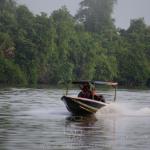
River transportations such as this speed boat plays an important role for the people who lived along Kayan river.

Most of the settlements in North Kalimantan are not well connected with road networks. So the communities living particularly in Malinau and Bulungan regencies use river transportation such as traditional boats and speedboats to commute.

The ports in Tarakan offer ferry transportation services to Tanjung Selor around the clock from morning to evening via Kayan river.

Plus, it is the main route for goods and other supplies to enter this inland regions of North Kalimantan.

Otherwise, most of North Kalimantan residents, especially those who live at the Sabah-Sarawak border may rely on trading with Malaysia for supplies.

3.It was named after the Kayan people who live along the river.
5 things to know about Kayan river, North Kalimantan
The river was named after the Kayan people who lived along the river.

In Kalimantan, the Kayan people live along the upper Kayan and the middle Kapuas and Mahakam rivers.

Meanwhile in Sarawak, they settled along the Baram, Balui, Belaga, Tubau rivers.

4.Along the Kayan river was where the Sultanate of Bulungan reigned.

Speaking of the Kayan people, here comes an interesting story of how the ethnogenesis of Bulungan people was formed.

Long time ago, there was a group of Kayan people from Uma Apan in the interior region of Apo Kayan highlands.

They expanded their territory and then settled down near the east coast of Kalimantan.

Around 1650, a princess of the group married a man from Brunei. The marriage founded a Hindu lineage which settled in Tanjung Selor.
About a century later, the dynasty converted to Islam and the rulers took the title of Sultan.

The last Sultan Jalaluddin passed away in 1958 and the Sultanate was subsequently abolished in 1959. Now the territory is a kabupaten or regency.

5. It is one of the main rivers flowing through Kayan Mentarang National Park
5 things to know about Kayan river, North Kalimantan
Kayan Mentarang National Park is accessible by longboats via Kayan river.

Located at the border between Indonesia and Malaysia, Kayan Mentarang National Park is one of the few places in Borneo which is densely forested.

It is also a fundamental site to the WWF Heart of Borneo. It is an initiative which aims to protect the transboundary biodiversity of Borneo.

Animals found in the park include Malayan pangolin, long-tailed macaque, Bornean gibbon, clouded leopard, different kinds of hornbills and many more.

So if you are heading to the park via Kayan river, you might be lucky to appreciate some of these endangered species along the way.

The letter banning Anthony Brooke from entering into Sarawak

In 1946, the third White Rajah Vyner Brooke ceded Sarawak to the British Colonial Office.

Rajah Muda Of Sarawak Anthony Brooke, the designated heir, initially opposed the cession along with a majority members of Council Negri.

After the cession, the British government actually banned Anthony from entering Sarawak.

Have you ever wondered what was written on the ban letter and what basis the British government had for barring the Rajah Muda from entering Sarawak?

The then Governor-General of the British dependencies of Malaya, Singapore, Sarawak and North Borneo Malcolm MacDonald actually wrote an open letter to Anthony which was published in The Sarawak Gazette on Mar 7, 1949.

This was after Anthony wrote several letters requesting to lift his travel ban.

So this was the content of MacDonald’s reply to Anthony dated Feb 11, 1949:

Dear Mr Brooke,

Thank you for your letters of December 28th and January 4th. As I explained in my note of January 11th. I was away from Singapore when they arrived and only received them on my return that day.

In your first letter you say that since December 17, 1947, when the Secretary of State for the Colonies told the House of Commons that he was giving personal attention to the question of the ban on your entry to Sarawak, you have been given no indication of the outcome of his consideration of the matter. I would point out that you were given this indication on February 18, 1948 in the public statement made in the House of Commons reporting the Secretary of State’s decision.

The decisive reason for this was also stated in the speech made by the Under Secretary of State on that occasion. Let me restate the position.

The British Government did not propose that Sarawak should be ceded to His Majesty the King. That proposal was made by His Highness the Rajah of Sarawak himself and the Cession was afterwards effected by means which His Majesty’s government have no doubt were legal and constitutional/

You have consistently challenged the propriety of the change, and in this connection have expressed a wish to proceed to Sarawak.

It is sometimes suggested that as a British subject you should be permitted to travel freely and to advocate any constitutional policy in any part of His Majesty’s dominions.

But you are not in relation to Sarawak an ordinary British subject to the force of circumstances to which I have referred.

You are the ex-Rajah Muda and, incidentally, have made it clear that your purpose is to restore your family, with yourself in the immediate line of succession to Sarawak’s rule.

There have been instances in various countries where a Ruler has vacated his throne either by compulsory remove, voluntary abdication or constitutional cession of his territory. It is customary in all such cases that members of this individual’s family who might be regarded in some quarters as having a claim to rule in the place of those newly installed should be denied entry for at least many years afterwards to the territory concerned. This policy has been generally accepted, in British as well as foreign countries, even if the danger of disturbances resulting from such a visit might be slight. It is regarded as a right and necessary course in the interests of the uninterrupted peace and good government of the peoples of the country.

This policy therefore applies to you in Sarawak. It was thought proper to extend the ban to Brunei and North Borneo in view of their proximity and close intercourse with Sarawak.

It is not expected that there would be violent disturbances on a large scale in Sarawak if you were permitted to return there. The contentment of the overwhelming majority of the people under the new Government is evident.

Nevertheless, your presence would raise false hopes amongst the small minority who are your adherents and excite activities which would probably cause disturbances of the peace between them and other members of the public.

Such considerations were no doubt amongst the reasons which have so often led to the decision that an individual in your special position should not be permitted to visit the country where he was once in the line of succession to the throne, at least until many years after the constitutional change took place.

Naturally the need for the prohibition becomes even stronger when as in your case, the person concerned has declared his intention to strive for a reversal of the change.

I can therefore give you no reason to hope that the ban on your entry into any of the Borneo Territories will be modified or lifted in the foreseeable future.

Yours sincerely,
Malcolm MacDonald.

The letter banning Anthony Brooke from entering into Sarawak
Sarawak anti-cession demonstration. Borneo Asian Reports [Public domain], via Wikimedia Commons

Anthony still managed to return to Sarawak. Even though he died at his home in New Zealand on 2 March 2011 at the grand age of 98, his ashes were buried as per his last wish at the Brooke Family Graveyard near Brooke Heritage Trust near the Astana, on 21 September 2013.

His ashes were buried in a private ceremony attended by his wife Gita, grandson Jason Brooke, British Deputy High Commissioner Ray Kyles, and New Zealand High Commissioner David Pine.

Remember these 20 quotes before you start your start-up

What do Amazon, Apple, Disney, Google and Harley Davidson have in common (besides being multi-billion dollar companies)?

They all started in garages. Yes, these gigantic business started from nothing.

We are entering a new era where more people are turning to starting their own businesses or entrepreneurships instead of going for that normal 8 to 5 job.

To cater to these startups, more and more incubation hubs and co-working spaces are opening up in Malaysia.

One reserved desk can start from RM920 a month in Kuala Lumpur while the price in Kuching can range from RM150 to RM399.

While these places look good on Instagram to promote your businesses, truthfully not everyone can afford it.

Even if incubation hubs had existed in the 90s, Amazon, Apple and the rest would still to choose to start from a garage.

This is because the un-glamourous side of any start-ups is that they are always scrimping and saved for money.

Meanwhile, the media is always highlighting success stories of start-ups and honestly nobody wants to hear how a start-up failed.

Nobody wants to talk about unpaid bills or canceled insurance coverage or life without savings or basically about how difficult it is to start your own company.

So before you head over to SSM (Suruhanjaya Syarikat Malaysia) to kickstart your start-up dream, we at KajoMag want you to remember these 20 quotes:
Remember these 20 quotes before you start your start-up

“Running a start-up is like chewing glass and staring into the abyss. After awhile, you stop staring, but the glass chewing never ends.”

– Elon Musk, Founder of SpaceX.

“Ideas are easy. Implementation is hard.”

Guy Kawasaki, Alltop Co-Founder.

“The dream is free. The hustle is sold separately.”

Unknown.

“Whenever I meet a successful CEO, I ask them how they did it. Mediocre CEOs point to their brilliant strategic moves or their intuitive business sense or variety of other self-congratulatory explanations. The great CEOs tend to be remarkably consistent in their answers. They all say: “I didn’t quit.”

Ben Horowitz, Loudcloud Founder.

“Life of an Entrepreneur: I wake up excited and terrified every day.”

Sarah Lacy, Founder of Pando.

“Projections are just bullshit. They’re just guesses.”

Jason Fried, Founder of 37Signals.

“If you are not willing to risk the usual, you will have to settle for the ordinary.”

Jim Rohn.

“If you’re not a risk taker, you should get the hell out of business.”

Ray Kroc, McDonald’s Founder.

“Ideas are commodity. Execution of them is not.”

Michael Dell, Founder of Dell Technologies.
Essentially, what makes any start-up successful is not giving up. Before you start your journey, always remember not to give up when things get hard.
Remember these 20 quotes before you start your start-up
Starting a start-up is not just about having a great idea. Credits: Pexels.

“Accept that some days you are the pigeon and some days you are the statue.”

Scott Adams.

“Courage doesn’t always roar. Sometimes courage is the quiet voice at the end of the day saying, ‘I will try again tomorrow.’”

Mary Anne Radmacher.

“You gotta run more than your mouth to escape the treadmill of mediocrity. A true hustler jogs during the day and sleepwalks at night.” –

Jarod Kintz.

“Things work out best for those who make the best of how things work out.”

John Wooden.

“You can’t have a million-dollar dream with a minimum-wage work ethic.”

Stephen C. Hogan.

“Nothing in this world can take the place of persistence. Talent will not: nothing is more common than unsuccessful men with talent.”

Calvin Coolidge

“I’m convinced that about half of what separates the successful entrepreneurs from the non-successful ones is pure perseverance.” –

Steve Jobs

“You don’t learn to walk by following rules. You learn by doing and failing over.”

Richard Branson.

“Starting your own business is like riding a roller coaster. There are highs and lows and every turn you take is another twist. The lows are really low, but the highs can be really high. You have to be strong, keep your stomach tight, and ride along with the roller coaster that you started.”

Lindsay Manseau.

“Bad shit is coming. It is always is in a start-up. The odds of getting from launch to liquidity without some kind of disaster happening are one in a thousand. So don’t get demoralised.”

Paul Graham.

“If everything seems under control, you’re just not going fast enough.”

Mario Andretti.
Remember these 20 quotes before you start your start-up
When things get difficult especially financially, always remember to persevere.

How the Bornean rhinoceros was hunted to extinction in Sarawak

In the beginning of 20th century, the Bornean rhinoceros was common in Sarawak.

Also known as the Eastern Sumatran rhinoceros or Eastern hairy rhinoceros, it was one of the three subspecies of Sumatran rhinoceros.

Its subspecies name (Dicerohinus sumatrensis harrissoni) was named after British anthropologist and Sarawak museum curator Tom Harrisson.

Compared to other Sumatran rhinos, the Bornean rhinoceros has the darkest skin and the fur on its calves is much denser.

Unlike the other two subspecies, the Bornean rhinoceros is markedly smaller and its head size also relatively smaller.

Rhinoceros in Borneo during prehistoric times

When sea levels fell during the Late Miocene period, between five and seven million years ago, Sundaland probably stood above the sea once again.

These mammals included primitive rhinoceroses, elephants, and monkeys. In detail, these forests may have looked somewhat different from the forests we see today.

According to Hans P. Hazebroek and Abang Kashim Abang Morshidi in National Parks of Sarawak, many animals that were widespread across the Asian continent may have reached Borneo at this time.

When the sea level rose during the early Pliocene Epoch, Borneo turned into a huge island again. So the mammals that reached Borneo stayed here and continued to evolve in isolation.

How the Bornean rhinoceros was hunted to extinction in Sarawak
The primitive rhinoceros most probably came to Borneo five to seven million years ago.
Edward Banks’ account on rhinoceros hunting in Sarawak during the 1930s

While the primitive rhinoceroses survived their journey into Borneo, most of their descendants did not survive long enough on this island.

Over the past century, this animal was highly threatened by hunting, poaching for their horn and habitat loss.

Even during the 1930s, Sarawak Museum Curator Edward Banks described how the rhinoceros population in Sarawak had been greatly reduced.

In an article published on The Sarawak Gazette on Aug 2, 1937, he wrote, “Fifty years ago anyone who shot a rhino was rather disappointed; he couldn’t eat it all, it was too far to carry home, and the most that could be obtained from it was an occasional sword hilt made from the horn; these can still be obtained at a fabulous price.”

According to Banks, a rhino in the 1930s may fetch anything up to $300-$400. He pointed out, “Its horn being the most useful part but the blood and flesh also fetch a price, solely on account of the supposed aphrodisiac properties appreciated by the Chinese.”

Banks also highlighted areas in Sarawak that had high number of rhinoceros populations included Ulu Rejang, Ulu Baram and Ulu Trusan.

“There are almost none now and in fact after a prolonged visit to the Ulu Trusan into a once populous rhino country, I saw only once a trace made about three years ago and nothing else under five years ago,” Banks wrote in 1937.

He continued, “A once populous rhino district has been wiped out by the Dayaks and one can only feel that it is a good thing that no rhinos have strayed in during the last five years and attempted to repopulate the district as they would have assuredly gone too.”

Hunting Bornean rhinoceros

The museum curator also commented on how different ethnics hunted these rhinoceros. The Punan was “an uncontrollable curse until he had finished all the rhinos”. Meanwhile, the Kayans and Kenyahs “were, as usual, reasonable, shared their beasts out among themselves, and made them last, until they finally took up a little over the garden wall poaching.”

Nonetheless, the ones that brought more harm to the rhinos were the wandering bands of professional Dayak hunters.

Banks described them to be really persistent, stating “..(they) stay on the beast’s tracks from fifteen to twenty days until they catch it up.”

Even during the 1930s, there were no bands of hunters because there were no more rhinos.

Back then there were only few individuals on Mulu, Murud, Laiun and Tibang mountains. If there were odd ones that showed up in Baram and Trusan, there were the strays coming over from the Kalimantan side.

Hazebroek and Abang Kashim also pointed out, “It is reputed that the last rhinoceros in Mulu was hunted and killed just before the Second World War. Once these magnificent animals must have been quite common in Mulu. As indicated by Berawan guides, large pools on some ridges of Gunung Mulu presumably represent their wallows.”

Sarawak’s last rhinoceros is at Pulong Tau?

Pulong Tau is an area flanks the Bario highlands. It straddles part of the headwaters of the Baram, Tutoh and Limbang rivers.

In 1986, the National Parks and Wildlife Office staff sighted rhinoceros tracks and wallows in the area.

Then in 1997, they disovered rhinoceros tracks again but there were no sightings of the animals.

Regardless, the Malaysian government declared the Bornean rhinoceros to be extinct in the wild in Malaysian Borneo.

In March 2016, however, a young female rhino was captured on the other side of Sarawak border in East Kalimantan. Hence, this gives us hope that they still exist in the wild.

Is it fair to say that Sarawakians were the ones who drove the rhinoceros into extinction in our own backyard? We believe so.

In Banks’ own words, “It is not too much to say that the rhino has been immolated to provide the Chinese with babies, the Dayak hunters with patent leather shoes and their girlfriends with silk umbrellas.”

A headhunting story told through ngajat in 1871

The ngajat is a traditional Iban dance in Borneo. It is traditionally performed as a welcoming dance, before and after a war or headhunting trip and to celebrate a bountiful harvest.

Just like the Kayan kajer, a ngajat performance usually tells a story or a theme. The common story for men’s ngajat or kajer is a man showing his story of the hunt through dance, all while displaying his gracefulness and agility. Finally, the performance ends with the dancer successful in his ‘hunting trip’.

Another common story told through ngajat is performed by two male dancers. These two dancers battle each other in a ‘dance’ combat with one of them emerging victorious.

Unfortunately, most ngajat or kajer these days by young dancers center around elegant hand movements and smooth hopping without telling any specific story or theme.

Here at KajoMag, we look back at an example of how Iban male dancers in 1871 performed their ngajat and the story they told:

The Sarawak Gazette dated Dec 15, 1871 reported a performance in Kuching led by 15 Iban fortmen.

“First came a solemn dance by two men in native costume, that is to say with a long chawat or waist cloth wrapped around them and hanging down to their feet and a tight jacket, who gyrated round at opposite corners of a square formed by laying down four long planks on the ground, in a shuffling step, keeping time to a monotonous beating of gongs; this was succeeded by a spirited combat with drawn parangs and shields,” the report stated.

“Whenever they thought they were coming to too close quarters, both combatants rapidly retreated.

“It was grotesque enough when matters came to such a pass that the dancers, crouched or lying on the ground, took furtive stabs at each other round the edges of their shields.”

A headhunting story told through ngajat in 1871
The ngajat for men usually have the dancer holds a wooden shield in his left hand and a sword in his right hand and dances facing the enemy with his body swinging to the left and to the right. Credits: Pixabay.
The ‘cutting of head’ during ngajat

According to this Sarawak Gazette report, the ngajat performed for Singaporean guests featured a headhunting scene.

The choreography started like this, “One warrior is engaged in picking a thorn out of his foot, but is ever on the alert for the lurking enemy with his arms ready at hand. This enemy is at length suddenly discovered, and after some rapid attack and defence, a sudden plunge is made at him and he is dead upon the ground.”

Then the dancer performed the taking of his head in pantomime, which the writer reported, “The last agonies of the dying man were too painfully and probably too truthfully depicted to be altogether a pleasant sight.”

This happened in 1871 when headhunting was still rampant, so perhaps the depiction was too close to home. (There was a report of a Kayan man who danced too excitedly that he cut off the head of one of his audience members).

The story of the ngajat didn’t stop there, as the dramatic part of the ngajat that could inspire a plot in Korean drama or Spanish telenovela came next: The Iban warrior discovered that the man he was just slain was not his enemy but his own brother. (Cue dramatic sound effect).

In the end, the story told in this ngajat concluded with what the writer stated as “the least pleasing part of the performance – a man in a fit, writhing in frightful convulsions, being charmed into life and sanity by necromantic physicians.”

Perhaps the writer wouldn’t enjoy how Marvel characters are brought back to life.

Ngajat, a characteristic dance
A headhunting story told through ngajat in 1871
Sarawak: Sea Dayaks with weapons and head-dresses. Credits: Creative commons.

The unnamed writer (who is most likely a European) praised the ngajat as authentic to its roots and in its depictions.

He wrote, “Dyak dancing being really savage, is more characteristic than the mock savagery exhibited at the Northern Meetings in Scotland, and to our ears the musical accompaniment is rather less disagreeable than the nasal drone of the bagpipes.”

We can’t say which one is better; bagpipes or the tabuh. But we have to say it would be interesting to see a ngajat performance at the Sarawak Cultural Village or cultural function depict a gruesome headhunting scene followed by a victim writhing around on stage in pain.

Looking back at Simanggang peace making ceremony in 1920

After decades of tribal wars between the Ibans in Ulu Ai and the Skrang, Layar and Lemanak, they finally made peace in 1920.

To mark the peaceful agreement between these parties, a peace making ceremony was held at Simanggang (now Sri Aman) on Aug 4 that year.

Although the Iban from Ulu Ai had long declared their loyalty to the Brooke government in 1909 after a series of punitive expeditions, they had yet made peace with other Iban communities.

They continued to raid others longhouses like those on the Layar in 1914 and Ulu Skrang in 1915.

After a meeting that took place in June 1920, they finally agreed to come to term with each other by exchanging jars as a sign of peace.

According to a report by the Sarawak Gazette on Sept 1, 1920, the ceremony of exchanging jars was crucial in keeping peace among these headhunters communities.

The article explained, “This custom amongst Dayak dates from time immemorial and is known as the palit mata sapu moa literally to ‘dry the eyes and wipe the face’, meaning that once this exchange has been effected, all grief for those killed in the feud is assuaged. No Dayak peace has ever been lasting without this ceremony, as so many ‘pig-killings’ bear testimony. The jars exchanged are kept in the houses of the headmen of the respective tribes as tangible tokens of the settlement of the feud. At the time of the ceremony of exchanging these jars, terrible curses are uttered by the chief headman of either side whose should at any future reopen the feud by taking the head of an aforetime enemy.”

Days before the event, the Ibans from nearby areas flocked to Simanggang just to attend the peace making ceremony.

There was a pavilion decorated in the Sarawak colours erected just for the ceremony.

As what had been agreed in June, the Ibans Ulu Ai should hand over 20 jars and the Ibans from Engkari another 10 jars to the Skrang, Layar and Lemanak during the peace making ceremony.

In return, the Ibans from Skrang, Layar and Lemanak prepared 10 jars each.

So before the event, 30 jars from Ulu Ai and Engkari were displayed on the upriver side of the pavilion while another 30 jars from Skrang, Layar and Lemanak were displayed on the downriver side.

The third White Rajah of Sarawak, Vyner Brooke who attended the historical ceremony also delivered a speech in Iban.

Looking back at Simanggang peace making ceremony in 1920
An example of jar used during a peace making ceremony.
Here is a transcript of Vyner’s speech in Iban during the peace making ceremony:

“Nyadi baka aku datai ditu ka meda kita menoa Ulu Batang Ai enggai Skrang serta Layar enggau Lemanak bebunoh babi lalu besileh tajau ka pali mata ka sapu moa. Nyadi ari kalia, apai aku, Rajah Tuai, udah ga ngemata ka Balan serta Undup palit mata enggau Skrang. Nadai kala sida bunoh sama diri udah nya. Sida pen datai ka maiatu bisi ga tanda ti di bri apai aku, Rajah tuai, leboh nya. Baka nya pen bisi ga genap menoa tanda ari prentah.

Nyadi baka kita menoa Ulu udah baik enggau Skrang, enggau Layer, enggau Lemanak. Semua hukom semua pati nyawa ari spiak ari spiak pen udah tembu. Jako kita udah betemu udah sabaka, nadai tegal laya agi, babi pun udah mati. Alam asal kita nadai nyelai, kitai pen lebih nemu baka kita semua runding sama diri meyadi sama aki sama ini.

Nyadi tu aku ngamat ka aum kita di Krangan Telaus, laban aku baka apai enggau anak diri empu. Aku sayau meda kita sama belaya. Ti di rindu aku ngasoh semua kita sama lantang pendiau, ngasoh semua menoa tau endor nemuai, tau endor bepangan. Ngasoh kita semua berkabun, ulih ka wang, ulih ka mudal.

Nya alai aku ka bri kita jako, semua kita tuai ti bisi gempuru ditu ari ili ari ulu. Ingat, ingat peasn aku.

Sahari tu aku bri jako amat enggau kita nambah sumpah kita empu.

Enti dudi taun dudi hari bisi orang mungkal kerja kitai ditu, iya nya nyadi munsoh aku nambah kaban sida ti parai. Parai siku, ganti siku. Parai tiga, ganti tiga. Nadai tau pulai ka timbang nadai tau pulai ka hukom, maia ari ili, maia ari ulu, laban semua laya ari menya udah padam di moa aku sahari tu enggau tanda nya.

Nyadi tu, kita tuai menoa Ulu Batang Ai, aku mri tanda ngamat ka jako aku, nambah tajau palit mata, awak ka kita tau nampong semaia aku sampai ka tuboh anak kita, turun menurun.

Nyadi baka tajau ti enggi Penghulu Apai Laja, Penghulu Kana, serta Penghulu Jamit, aku tudong enggau bendai tu.

Nyadi baka kita tuai menoa ili, ingat kita jako nya. Nyadi aku bri kita tanda ka semaia aku enggau kita semua sahari tu. Baka Penghulu Labang alam Skrang, Penghulu Unji alam Layer, Penghulu Suel alam Lemanak, aku tudong tajau ti enggi kita enggau bendai tu.

Nyadi aku mri ka Penghulu Tarang enggau Chendan, sangkoh kena kring semengat, kuia kena kurang semengat, pua kumbu kena ngebap semengat.

Ingat, ingat kita semua pesan jako aku. Tu ikas jako aku.

The peace making ceremony
Looking back at Simanggang peace making ceremony in 1920
Exhibition of ceremonial and ancient jars at Fort Sylvia, Kapit today.

After Vyner delivered his speech, Penghulu Unji from Ulu Layar and Penghulu from Delok proceeded with the ‘sampi’ or oath to declare their settlement of all their feuds.

Then Penghulu Labang from Ulu Skrang and Penghulu Apai Laja from Engkari continued the ceremony by killing two pigs.

The Ibans from Ulu Skrang and Engkari proceeded to stand at downriver side of the pavilion where the jars from Skrang, Layar and Lemanak were displayed and vice versa.

Once the district officers called upon of every chief, they went on to carry off the jars given to them by their former enemies.

Vyner also gave out chanang to every Iban chief as a token of the ratification of their peace making.

The peace making ceremony ended with a toast of tuak.

The Sarawak Gazette also published a translation of Vyner’s speech in English:

“Thus have I come here to witness all you people of the upper river Skrang, Layar and Lemanak make peace by the killing of pigs and the exchange of jars as a sign of having buried all your past enmities. And so, in days gone by, did my father witness the peace making between the Balau, Undup and Skrang tribes, since when they have ever lived in peace and goodwill one with another. And, to this day, every race under my rule has such signs of good faith from their aforetime enemies.

Now that all of you upper river have settled the blood feud with the tribes of the Skrang, Layar and Lemanak, you recognise how all are of the same stock, and have no further cause for dispute, honour having been satisfied on both sides by the settlements at the Telaas meeting place and the blood of a pig having been spilled to testify to this.

But I have come here to ratify that compact, as I am like a father with his children, my sole desire being that all should live in peace and friendliness one with another, and all countries be open, that you may all gain in prosperity by the cultivation of the soil, and trading one with another in the produce of your forests.

Therefore I desire to speak to you all this day, all you chiefs gathered together here from the upper and lower rivers. Make sure to remember my words.

The oaths which you will utter according to your own custom this day, I confirm with my word that, should anyone reopen this feud at any future day, that man shall become my sworn enemy, and I shall demand the life of anyone who so takes the life of another.

In the past your blood feud has been recognised, but from now henceforth this no longer exist having been finally settled this day before me by the blood of these pigs and the exchanged of those jars.

Therefore I now give, as a token of my word, to you of the upper river three chanang to cover those jars which are to be held by Penghulu Apai Laja, Penghulu Kana and Penghulu Jamit, so that these may be kept by you as a sign of my ratification of this settlement evident to your children, and all future generations.

Likewise you men of the lower rivers, remember my words, and, as a pledge of these, I cover those jars to be held Penghulu Labang in the Skrang, Penghulu Unji in the Layar and Penghulu Suel in the Lemanak each with a chanang.

And you Penghulu Tarang and Chendan I present with a spear, kuna and pua to hand you from generation to generation as a seal from myself that the spirit of strife between these tribes, of which, though you have lived amidst, neither has been a party, has now been finally laid at rest.

Remember my words, all you chiefs. I have spoken.”

Looking back at Simanggang peace making ceremony in 1920
Simanggang today

What you need to know about the Battle of Tarakan during World War II

The Battle of Tarakan refers to different actions which happened during World War II on Tarakan island, off the northeast coast of Borneo.

The first battle of Tarakan happened on Jan 11-12, 1942 when Japanese attacked the island, defeating Allied forces. Meanwhile the second battle of Tarakan took place on May 1-25, 1945 as the first phase of the Allied campaign to retake Borneo from the Japanese.

Battle of Tarakan (1942)
What you need to know about the Battle of Tarakan during World War II
A view of Amal Beach, east coast of Tarakan.

The Battle of Tarakan in 1942 began a day after the Empire of Japan declared war on the Netherlands.

Despite the fact that it is only a small island, Tarakan’s 700 oil wells, oil refinery and airfield put the island onto the Japanese forces must-conquer-list during the Pacific War.

Before the war, Tarakan was producing about 80,000 barrels of oil per month.

On Jan 10, 1942, a Dutch flying boat spotted an approaching Japanese invasion fleet. Knowing the Japanese army was coming, the commander of Tarakan’s garrison ordered the destruction of all oil installations on the island.

Today, one can only imagine the sounds and smells of these explosions as well as the anxiety waiting for your enemies to land.

By midnight of Jan 11, the Japanese forces landed on the east coast of Tarakan which today has become a tourist attraction called Amal Beach.

The troop was met with short but fierce resistance from the Royal Netherlands East Indies Army. The Dutch surrendered in the morning of Jan 12.

Instead of accepting their surrender, the Japanese executed the entire crew of coastal battery together with some 219 prisoners of wars (POWs) via drowning.

The island then remained under Japanese occupation until May 1945 when the Battle of Tarakan 1945 happened.

What you need to know about the Battle of Tarakan during World War II
Amal Beach, where the Japanese landed in 1942.
Tarakan under Japanese occupation

The Dutch thought they did a thorough job in destroying Tarakan’s oil fields. But the Japanese were able to recommission the first oil wells by August 1942. By early 1944, Tarakan was producing 350,000 barrels a month.

During the Japanese occupation, the locals of Tarakan suffered from malnutrition. The large number of Japanese troops on the island together with 600 Javanese labourers caused food shortage on the island.

Imagine that the oilfield in Tarakan alone was operated by 250 men from the Imperial Japanese Navy.

By late 1944, the Allied forces started to strike back, launchinf air raids destroying oil production and storage facilities on the island.

Unfortunately, hundreds of civilians were also killed during these air raids.

Comfort women in Tarakan during Japanese occupation

If you are not familiar with the term ‘comfort women’, they were women and girls forced into sexual slavery by the Imperial Japanese Army.

The Dutch government did a study in 1994 about comfort women during the time of the Dutch East Indies.

It concluded that about 200 to 300 European women had been taken to become comfort women.

Besides Dutch women, many Javanese and east Timorese women were also forced into prostitution.

They were usually sent to Burma, Thailand and eastern Indonesia, including Tarakan.

According to records, it is estimated about 300 women from Java were brought into Tarakan. A number of them were of other origins including Eurasians and Chinese.

Similar to many human trafficking cases today, they had been lured with the promise of jobs in clerical work and clothes making.

But in the end, they were actually forced into prostitution at Tarakan’s garrison and sometimes on visiting warships.

Battle of Tarakan (1945) was just a political act?

Many historians believed the decision by the Allies to retake Borneo from the Japanese in 1945 was mostly based on political reasons.

According to an article by Department of Veterans’ Affairs in Australia, the plan to invade Borneo had only marginal strategic value.

It stated, “General Douglas MacArthur, Commander-in-Chief of Allied forces in the Southwest Pacific Area, planned the operation to alleviate concerns of the Australian government that its forces were being relegated to operational backwaters as New Guinea had become.”

During the war, MacArthur left Australian forces out of most significant operations.

So, the idea of invading Borneo was intended to make Australian forces more visible again during the war against Japan.

General MacArthur chose to capture Tarakan in order for the island to be used to support an invasion of Java. It was crucial to recapture Java so that the Dutch could formally restore its power on the Netherlands East Indies.

Another reason was to capture the oilfields in Borneo. But this did little effect on the Japanese operation. Taking Tarakan, for example, the last Japanese oil tanker left the island in July 1944.

Meanwhile, the American air and naval troops had blockades around Japan. So there was no oil being shipped into Japan from Borneo.

What went down during the Battle of Tarakan 1945

Regardless of the reasons, the Battle of Tarakan was the first stage in the Borneo campaign of 1945.

In an operation code-named Operation Oboe One, the Australian forces landed on Tarakan on May 1.

The engineers went in first and cleared gaps through the beach defences with explosives before the main assault.

Then, naval and air bombardments also destroyed or damaged many Japanese positions.

Over the next seven weeks, there was fierce fighting as the Australians pushed inland to take the whole island.

One of the primary objectives to retake Tarakan island was to build airfields.

The airfield did open for fighter aircraft to land in late June 1945 but it was not used as much as it was intended for.

The Australians underestimated the work as they found the existing airfields were badly damaged. Meanwhile the site selected to build new airfields had excessive boggy ground.

The Aftermath of Battle of Tarakan

In the end, more than 200 Australians were killed before the last Japanese positions fell on June 20, 1945.

Although the Battle of Tarakan in 1945 was a success for Australia, Australian historian Gavin Long pointed out that the results achieved did not justify the entire cost of the Tarakan operation.

So was the battle for a sideshow? Or was it to make Australia look like they contributed something during the end of WWII? The Battle of Tarakan 1945 remains debatable among historians.

What you need to know about the Kedang Expedition 1886

When second White Rajah, Charles Brooke visited Simanggang in June 1885, the Iban chiefs there complained to him that the Lemanak and Skrang peoples were constantly being attacked by those living near the Kedang ridge on the border between Sarawak and Dutch Borneo.

According to the Sarawak Gazette report published on Mar 7, 1949, the conflicts had continued off and on for almost 20 years.

So Charles decided to put an end to it. Somehow, he believed that the only decision he could make was to attack the Kedang people. But, of course, not without the permission from the Dutch government to cross the border.

He sent a letter to the Dutch, together with maps of longhouses for his punitive expedition.

At first, a Dutch officer suggested a joint attack on these Kedang areas. But Charles rejected the motion, believing his force was better than the Dutch.

Finally, in October 1885, the Rajah received a favourable reply from the Dutch. They allowed him to bring his mostly Iban forces to attack Kedang.

After discussions with the local chiefs, the Brooke government decided to assemble at the mouth of Lingga River during the new moon in March, 1886.

On the evening of March 8, they held a council of war to discuss their strategy. The Brooke government planned on targeting the Ibans living in the upper Delok (Sarawak), the Kedang ridge (on both sides) and in the Lanjak area (Netherlands Indies).

The next morning, a force of 355 boats with 10,000 to 12,000 fighting men came together, heading to Kedang. They finally made a landing on March 12.

After climbing for some hours, they finally came across Iban Kedang farming grounds.

The Kedang Expedition war plan

The government plan was to divide the force into four detachments with each group consisting about 2,500 men.

A man referred to as Orang Kaya Pemancha in the report was the leader of the first group. This detachment headed to Gunung Lanja to lay waste all that line of country, avoiding Lake Sariang and Badau.

Meanwhile, the second group was led by an Iban chief named Minggat. Charles instructed them to burn and destroy everything they came across along the Kedang ridge.

Another Iban chief named Jabu led the third detachment. They were to march across the Kedang ridge but back by another path via Miniang stream.

Lastly, the fourth group was to stay at the camp. Their task was to burn houses near the camp, destroying anything they could not carry and gather ripe paddy. Soon enough, the camp was full of rice, pigs, poultry, dogs and valuable jars.

Minggat’s group was the first to return to camp on the March 19. They reported they destroyed 37 longhouses without losing any men.

Then, Orang Kaya Pemancha returned on March 25, reporting that his force had burnt eight longhouses and plundered everything they could carry.

The last group to return was Jabu’s. While the official number of the longhouses they burned was not recorded but it was the only the party that fell short.

Overall, the total number of longhouses destroyed was not less than 80 and the amount of havoc “quite beyond computation”.

The Dutch’s reaction to the aftermath of the Kedang Expedition

The Dutch reportedly were very unsatisfied with the manner in which the expedition was carried out, especially the rampant raiding and looting conducted by the Iban mercenaries and their attacks on several Iban longhouses that the Dutch regarded as friendly.

Before the expedition, the Dutch requested that Charles inform them of his plans in time so that they could protect the Emperan Iban they regarded as well-disposed and prevent them from giving aid to their kin who were to be attacked.

Since it was a time when there was no WhatsApp, the Dutch complained they received the letters from Sarawak on the expedition plan quite late.

The Dutch resident in Pontianak, Resident Gijsberts only received Charles’ letter (dated on Feb 25) on March 10.

Meanwhile the controleur in the area received a letter from Sarawak resident (dated March 3) on the 12th. He reportedly rushed to protect any longhouses that he could.

In the meantime, Gijsberts arrived in the area with soldiers from Pontianak and Sintang. They were able to protect the longhouses of their district headman at Lanjak.

Once the Kedang Expedition returned to Sarawak, the Dutch counted 41 burned longhouses on their territory with at least 13 of which were considered friendly. There were also 16 dead, including some women and children.

Michael Eilenberg in his book At the Edges of States stated that in order to handle the problem after the expedition, the Dutch created a new district (Onderafdeeling Batang Loeparlanden) in the borderland. They then permanently stationed a Dutch district officer (controleur) in the area. They also increased the number of soldiers at the border post in Nanga Badau.

In the end, Iban leaders on both sides of the border tendered their submission to the Dutch and the Brookes respectively.

On the Dutch side, their government gave the Iban two conditions for submission. First, they had to pay a fine as a promise to stop raiding. Secondly, all longhouses upriver affected by the Kedang expedition had to move away from the border into specific territories further downriver.

What you need to know about the Kedang Expedition 1886
Nanga Badau Border Post in current day.
Sarawak defended its action during Kedang Expedition
What you need to know about the Kedang Expedition 1886
Charles Brooke (left) and map showing the route of Kedang Expedition. Credits: Reed L. Wadley.

Reed L. Wadley in his paper “Trouble on the Frontier: Dutch-Brooke Relations and Iban Rebellion in the West Borneo Borderland (1841-1886)” analysed the complex relationship between these two governments.

Later in early April, Resident Gijsberts met who his Sarawak counterpart, Henry Deshon in Pontianak to discuss about the matter.

Logically, the first question the Dutch asked was whether Sarawak purposely sent the letters late.

Deshon, who was present during the expedition, maintained his innocence about the late arrival of the letters. Furthermore, he said the map, submitted by Charles indicated the target area within Dutch territory was inaccurate.

Gijsberts then pointed out around 20 longhouses in the Kedang and Delok areas were still left standing, casting in doubt Sarawak’s claims that the expedition was completely successful.

“For their part and reflecting Brooke’s feeling that the Dutch were weak in the dealing with the Iban, Deshon offered to post an agent in West Borneo to advise the Dutch on Dayak matters, something the Dutch rejected outright,” Wadley wrote.

What a way to tell someone that they were incompetent in their jobs by posting one of your own in other people’s territory.

Wadley continued, “However the continual acrimony and distrust (expressed publicly and no doubt even more strongly in private), the Dutch realised that the close cooperation with Sarawak was important for keeping the border Iban in check.

“Resident Gijsberts even wrote to the Governor-General in Batavia that he preferred their present, rocky relationship with Sarawak to that with the Iban.”

Furthermore, after 1886 and possibly because of the Kedang Expedition, Sarawak-Netherlands Indies relations seem to have improved.

Wadley added, “There were generally fewer complaints by Dutch officials to their superiors about Sarawak cooperation, and there appears to be more cooperation in arresting and extraditing cross-border troublemakers.”

1 48 49 50 51 52 75