Patricia Hului

Patricia Hului is a Kayan who wants to live in a world where you can eat whatever you want and not gain weight.

She grew up in Bintulu, Sarawak and graduated from the University Malaysia Sabah with a degree in Marine Science.

She is currently obsessed with silent vlogs during this Covid-19 pandemic.

Due to her obsession, she started her Youtube channel of slient vlogs.

Follow her on Instagram at @patriciahului, Facebook at Patricia Hului at Kajomag.com or Twitter at @patriciahului.

The life of Sibu historical figure Wong Nai Siong in Sarawak

Wong Nai Siong is perhaps one of the most famous Chinese pioneers to arrive in Sibu.

Born on July 25, 1849 in Fuzhou, Fujian Province of China, Wong was the eldest of four sons. His father was Wong King Po who worked as a farmer (although some records stated that he was a carpenter).

The life of Sibu historical figure Wong Nai Siong in Sarawak
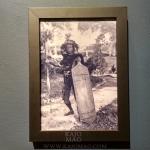
Young Wong Nai Siong in an undated photo, but most probably in the late 19th century. Credits: Public Domain.
Wong Nai Siong was one of the first to convert into Christianity in his village in Fuzhou

Looking back on his life, Wong was an educated man. He first studied at a traditional Chinese village school. Then he took the Imperial examinations and was awarded the rank of Xiu Cai.

Back in old Chinese dynasties, Xiu Cai was the name for intellectuals who participated in the Imperial Examination. Later, Wong took his County Exam or Autumn Exam in which he passed and became a Ju Ren. As a Ju Ren, Wong was an official reputable member of the literati.

In 1866, missionaries from the Methodist Episcopal came to China. Wong was then baptised in November that year, becoming one of the few to become a Christian.

A year later, a priest named Xu Yang Mei took him in. It was during this time that Wong started to learn English and became exposed to Western culture.

Wong Nai Siong started the first Christian newspaper promoting political reform in China

Wong started to be interested in reforming Chinese politics after his third brother was killed in the First Sino-Japanese War.

Another report by author Lee Khoon Choy in Golden Dragon and Purple Phoenix, stated that Wong was frustrated with the decadent Qing dynasty and wanted a change.

“He was very much influenced by Kang You Wei’s reformist ideas. China, under the rules of Empress Dowager, was signing away unequal treaties to the Western Power. He went to Beijing and got in touch with the reformist leader Kang You Wei, who was advocating a reform movement similar to the Japanese Meiji Reform,” Lee wrote.

Kang was a Chinese scholar and political thinker of the late Qing dynasty.

Wong even started the first Christian newspaper promoting political reform.

Unfortunately for both Wong and Kang, their political reform movement failed. The failure forced Wong to flee back to Fujian and eventually to Nanyang (Southeast Asia).

Wong Nai Siong was responsible for bringing Chinese immigrants to Sibu in 1900

In September 1899, Wong arrived in Singapore to work as an editor for a local newspaper.

According to David W. Scott in Mission as Globalization, this was the year when Wong stopped by Sarawak while on his tour of Southeast Asia as part of visiting his daughter and son-in-law, prominent Singaporean Chinese leader Lim Boon Keng.

This visit led to a contract between Wong and the second White Rajah, Charles Brooke.

Reportedly, the Rajah gave him a loan of $30,000. This was to cover the cost of transporting the settlers from China to Sibu.

“This agreement stipulated that Nai Siong would bring 1,000 settlers to immigrate to Sarawak for the sake of developing an agricultural colony. To select these labour migrants, Nai Siong recruited heavily among his Methodist compatriots, especially his home county and two neighbouring counties in Foochow (Fuzhow),” Scott stated in his book.

Meanwhile, the loan was to be repaid over a period of five years. Wong undertook to recover the loan from the settlers by making them pay two-third of their annual produce as tax until the debt was fully repaid.

The Sarawak government once arrested Wong Nai Siong

On Feb 20, 1901, Wong brought in 72 Foochows from China to Sungai Merah and another 535 arrived on Mar 16.

That same year, Wong received a second loan of $10,000 from the Sarawak government to bring more settlers to Sibu.

Unfortunately for Wong, he gave the money to a man named Lik Chiang for safe-keeping, but the latter ran away with it to Taiwan.

Somehow, Wong still managed to bring another group of 511 settlers on June 7, 1902.

He then set up a custom office at Lower Rajang to collect tolls from farmers and traders.

Historian Chang Pat Foh in Legends and History of Sarawak pointed out that this landed Wong in trouble because he was accused of collecting taxes without the Rajah’s authority.

Chang wrote, “He was arrested but was released not long afterwards. Upon his release, he promised to pay the debts incurred but he failed due to poor harvests by the Fuzhow community. In the end, the White Rajah gave up hope to collect the repayment of loan.”

In June 1904, Wong decided to return to Fujian, China after passing his managing duties to American priest James Hoover. His departure was surrounded by different rumours including poor health, his reluctance to deal opium and his $40,000 debt to the Rajah.

Wong Nai Siong’s legacy in Sarawak
The life of Sibu historical figure Wong Nai Siong in Sarawak
YMCA Board of Directors, Fuzhou, Fujian, China in 1920. Wong Nai Siong, front row, seventh from right. Credits: Public Domain.

Wong died on Sept 22, 1924 after suffering from liver illness. Although he only spent less than four years in Sarawak, his legacy continues to linger, especially in Sibu.

There you can find few sites built in commemoration of Wong including the Wong Nai Siong Memorial Garden at Sungei Merah, SM Wong Nai Siong and Wong Nai Siong Road.

The life of Sibu historical figure Wong Nai Siong in Sarawak
Fukien Cabinet – Fuzhou Protestants and the Making of a Modern China in 1911. Wong Nai Siong, first row, fourth from left. Credit: Public Domain.

KajoPicks: 5 best foods to go with your beer at Kuching Food Fest 2019

So by now, you might have seen all the reviews for Kuching Food Fest 2019. From the most popular foods, most popular ice-creams to the classic and best foods you should actually try.

But we, at KajoMag are going to share with you the type of food that actually matters to us – food that goes well with beer.

First of all, what kinds of foods are compatible with your brew? That actually depends on what kinds of beer you are having.

Generally, foods that digest well with your beer are barbecued meat (think Sabahan sinalau bakas) and fried salty foods.

According to Men’s Journal, cheese, sandwiches and pizza could go well with almost any beer. While chicken, seafood, pasta go well with light beer and fried foods should be paired with any brew which cleanse your palate like Stella Artois.

If you prefer your brew as dark as your soul like stout, be a carnivore and choose burgers, steak and roasted meats instead.

Some of the choices of beer offered at the Kuching Food Fest include Carlsberg, Asahi, Tiger, Royal Stout and various flavours of Somersby cider.

So here are our picks for five best foods to go with our Carlsberg Draught, Asahi and Somersby Blackberry Cider during Kuching Food Fest:
1.Thai Pork Barbecued at Stall No.211 (3 sticks for RM15)
KajoPicks: 5 best foods to go with your beer at Kuching Food Fest 2019
Thai BBQ Pork Meat

If you have been to any night markets in Thailand and tried their barbecued pork, this is the closest thing you can get to it here.

Although Kuching Food Fest does not offer any Thai beers like Chang, this flavourful and tender barbecued pork is a champion because it goes well with any other beer.

The stall also offers other items on the menu such as garlic and cheese sausages. But take it from us; if you are planning to drink beer, the garlic sausage can leave a funny after-taste on your palate, so this is best eaten on another day.

2.Swedish Kurobuta Meatballs at Stall No.190 (6 balls for RM10)
KajoPicks: 5 best foods to go with your beer at Kuching Food Fest 2019
Swedish meatballs.

Just by taking in the aroma, you can tell these Swedish meatballs are made from fresh ground pork because it gives off that warm smell of your mum cooking minced pork soup in the kitchen.

Surprisingly, the best pairing for Swedish Kurobuta Meatballs is Somersby Blackberry Cider.

So you might want to try other fruity ciders to go with it.

3.Sausages from Pinoy Lechon Baboy at Stall No.122 (1 stick with 3 sausages for RM10)
KajoPicks: 5 best foods to go with your beer at Kuching Food Fest 2019

While the meatballs go well with cider, the pork sausages from Pinoy Lechon Baboy are sweet and the flavours tend to get lost with the sweetness of the ciders.

These sausages go best with punchy beers or lagers like Carlsberg and Asahi.

4.Takoyaki at Stall No.10 (One box for RM12.90)
KajoPicks: 5 best foods to go with your beer at Kuching Food Fest 2019
Takoyaki

Unlike most takoyaki which are filled with minced or diced octopus, this one has its legs poking out from the batter.

Plus, the best part of this snack is that the octopus is nicely cooked and not chewy. Choose this if you are looking something light to go with your beer.

5.Stuffed Chicken with Rice at Stall No.176 (One piece for RM8.50)
KajoPicks: 5 best foods to go with your beer at Kuching Food Fest 2019
Stuffed Chicken with rice.

This food item is a random find at the festival and unexpectedly, it is compatible with beer.

It is made from chicken stuffed with rice. You can choose the original normal white rice and Malaysian favourite nasi lemak.

The marinade for the chicken is more on the sweet side and the rice is equally flavourful.

About Kuching Food Fest 2019

Kuching Food Festival or widely known as Kuching Food Fest is part of Kuching Festival, an annual event organised by Kuching South City Council (MBKS) to celebrate Kuching being elevated to city status on Aug 1, 1988.

This year the food fair happening from July 26 to Aug 16 is made up of 281 stalls selling a wide variety of food ranging from local, Japanese, Korean, Western Indian and Taiwanese cuisine.

While it might not be easy to find a seat due to the crowd, there are designated places for those having beer.

Do take note that some of the beer brands might run out sooner then you think, so you might want to go early.

Besides food, the festival also features nightly entertainment and a trade fair.

Read more about tips before going to Kuching Food Fest here.

10 Chinese drama YouTube channels to subscribe

If you love watching Chinese dramas and you want to watch them legally for free, you can actually watch them on YouTube.

Here are 10 Chinese drama YouTube channels to subscribe to:
1.YoYo Television Series Exclusive

YoYo Televisions Series Exclusive claims to be the biggest up-to-date Chinese TV series channel on the YouTube.

With more than 1.5 million subscribers for this channel, we couldn’t help but agree.

Perhaps one of the reasons that it has huge following is because some of the dramas even come with Indonesian subtitles apart from English subtitles.

If you don’t know what to watch on this channel, we suggest Young Blood Agency and Tornado Girl.

2.Tencent Video

Speaking of large followings, Tencent Video is perhaps the largest Chinese video streaming website.

As of March 2019, it has over 900 million mobile monthly active users and 89 million subscribers.

You don’t have to subscribe to the websites to watch Chinese dramas featured there. You can also subscribe to its official YouTube channel.

There you can find variety videos from entertainment shows to Chinese dramas.

Some of the hottest dramas from Tencent Videos in 2019 is Put Your Head on Your Shoulder and Detective L.

10 Chinese drama YouTube channels to subscribe
Read our review on Detective L here.
3.Chinese Huace & TV Official

While most of these Chinese drama YouTube channels did not bother to group their drama into proper playlist, Chinese Huace & TV Official went to great lengths to categorize them according to genre.

Subscribers can choose dramas from categories such as Modern, Costume, Period and War.

Some of the dramas even come with English, Indonesian, Turkish and Portuguese subtitles.

4.Kukan Drama Channel

When We Were Young, Mr Swimmer, The Dark Lord are just some of the high-rated dramas being featured on this Chinese drama YouTube channel.

Interestingly, it also has channels dedicated to Vietnamese, Spanish and Arabic viewers.

On the down side, some of the dramas are not made available in Malaysia.

5.Croton Mega Hit

This Chinese drama YouTube channel is owned by Croton Media, one of the biggest TV drama producers in China.

Sadly, a handful of dramas from Croton Mega Hit are not made available in Malaysia.

But you can still watch some of them such as Love 020 and Boss and Me with full English subtitles.

10 Chinese drama YouTube channels to subscribe
Read what we thought about Love 020 here.
6.Youku

If this Chinese drama YouTube channel sounds familiar, it is because it is one of China’s top online video and streaming service platforms.

On its channel, you can also enjoy its entertainment shows and documentaries but most of these shows are without English subtitles.

So far, one of our favourite dramas from this channel is Fall in Love.

7.HLBN Entertainment and HLBN

Most of these Chinese drama YouTube channels such as HLBN welcome their subscribers to help in the translation subtitles.

So if you are well-versed in English and Mandarin, consider doing it for the common good of all Chinese drama fans.

While most of the dramas are not available in Malaysia, you can still watch some of them such as Lost Love in Times and Hey Daddy.

8.Caravan

The Chinese dramas uploaded on this channel are mostly interesting and highly rated.

However, you need to sign up as a member to watch some of them.

The good news is you can still watch dramas like Colourful Bone, a love story set during ancient turbulent times.

9.Mango TV Drama Channel

The Night of the Comet, Where the Lost Ones Go, Hello Debate Opponent are KajoMag’s suggestion of dramas to watch from this channel.

Plus, the best part of Mango TV Drama Channel is most of the dramas have English subtitles and made available in Malaysia.

10.Letv Official Channel

Letv Official Channel might not give you the latest dramas from China like most of the channels on this list, but there are good dramas from a couple years back that still worth watching again.

Besides, you can also watch full length Chinese movies complete with English subtitles like Suddenly Seventeen starring Wallace Huo and Eavesdropping starring one of Hong Kong legends Louis Koo.

How salt was obtained in the olden days of Borneo

Salt plays an important role in not just Sarawakian cuisine, but in Borneo overall.

Besides seasoning, every community, whether they were Iban, Bidayuh or Kadazandusun, used salt as a means to preserve their food.

How salt was obtained in the olden days of Borneo
Here are just five ways how salt was obtained in Borneo back when there were no supermarkets:

Salt is such an available commodity for us today; we can simply buy it from any grocery store or supermarket. Have you ever wondered how the olden communities of Borneo used to get it back in those days?

1.Nipah palm

Nipah salt or garam attap is salt processed from the mature leaves of the nipah palm, Nypa fruticans.

Here in Borneo, nipah palm grows wild and abundantly along coastal areas, especially in Borneo.

The palms are constantly washed by saltwater daily and this salt can be processed from the leaves.

Unlike conventional salt, it has a smoky flavour as well as the aroma of dried nipah leaves.  

Here is how Reverend Andrew Horsburgh in Sketches in Borneo described nipah salt processing:

”The chief condiment of the Dyaks is salt, which they procure from the nipah palm, and which they much prefer to that obtained by evaporation from seawater. The boughs of the nipa are cut, dried, and burnt, and their ashes washed in water, so as to dissolve the salt contained in them. This water being then allowed to run off clear is evaporated in pans, the salt remaining at the bottom of the vessel. It is a dirty grey and often black-looking substance, processing a slightly bitter taste, which is grateful to the palate of the Dyaks; and it is generally produced in a masses of considerable size and as hard as a stone, it has much the appearance of a mineral that has been dug out of the earth.”

2.Seaweed

According to Captain Thomas Forrest in A Voyage to New Guinea and the Moluccas from Balambangan (1780), the Bajau would gather seaweed, burn them, make a lye of the ashes, filter it and finally form a bitter kind of salt.

How salt was obtained in the olden days of Borneo
Salted fish, a common delicacy found in Sabah and Sarawak.
3.Mangrove roots and nipah palm

Meanwhile, Spenser St John recorded how salt was processed at the foot of Mount Kinabalu.

“They burnt the roots of the mangrove with those of the nipah palms as well as wood collected on the sea-beach and therefore impregnated with salt.

In one place, I noticed a heal, perhaps fifteen feet in height, sheltered by a rough covering of palm leaves, and several men were about checking all attempts of the flames to burst though by throwing saltwater over the pile. This doubtless, renders the process much more productive. In one very large shed, they had a kind of rough furnace, where they burnt the wood; and suspended around were many baskets in which the rough remains of the fire are placed, and the whole then soaked in water and stirred about till the salt is supposed to have been extracted from the charcoal and ashes. The liquid is the boiled, in large iron pans purchased from the Chinese.”

4.Seawater and ashes of driftwood

In The Gardens of the Sun, British explorer and tropical plant collector Frederick William Burbidge detailed how the Kedayans used a combination of seawater and ash to obtain their salts.

“The ashes of driftwood are placed in a tub and seawater poured over them. To evaporate the water, receptacles are neatly made from the sheaths of the Nibong palm, fastened into shape by slender wooden skewers. Two logs are then laid parallel to each other, and a foot or fifteen inches apart, and over these the pans are placed close together, so as to form a rude kind of flue, in the which a fire of light brushwood is lighted, and very soon afterwards the salt maybe observed falling to the bottom of the evaporators.”

5.Salt springs
How salt was obtained in the olden days of Borneo
Salt spring in the Krayan Highlands.

Even to this day, the people of Bario and Ba Kelalan Highlands (Malaysia) as well as Krayan Highlands in (Indonesia) still use salt springs to make salt.

The water from these natural springs is boiled and evaporated for an extended period of time before it is dried to form salt.

How salt was obtained in the olden days of Borneo
An example of how saltwater is processed traditionally these days.

Read how salt springs are processed in Long Midang, Krayan in Kalimantan, Indonesia.

10 Sarawak funeral customs of the 19th century you need to know

Just like any other cultures in the world, Sarawak has its own sets of funeral customs varying with the different races found here.

While some funeral customs are still being practiced to this day, others are completely forgotten.

So here are 10 Sarawak funeral customs of the 19th century you probably never heard:
1.If more than two or three people die in the same house, they will most likely abandon it and move to another area.

Charles Grant in his book A Tour Amongst the Dyaks of Sarawak, Borneo in 1858 shared that it was a taboo to continue to stay in the same area if there were too many people in their village.

He wrote, “It appeared that many of the people of their village of Kuap had died, and Dyaks do not much like to live on at a place where they think themselves likely to be haunted by the ghosts of the dead.”

Similarly, Reverend William Crossland also wrote in his diary in 1867, “The Land Dyaks are spoken of as being very fickle as to their abode, one year here, another there, for if two or three die the house is forsaken and another built.”

2.The house in which a death occurred must be closed for certain amount of times.

If someone died back in those days, the house must be closed to strangers and in some communities even to its own occupants.

Bishop William Chalmers wrote in Some Account of the Land Dyaks of Upper Sarawak that this taboo must be practiced or else ghost of deceased will haunt it.

Meanwhile, another bishop Francis McDougall recorded almost the same thing.

In a paper entitled On the Wild Tribes of the N.W. Coast of Borneo, he stated, “The hill tribes have the custom of pamoli, or taboo, which on certain occasions they enforce with great strictness; they close their houses to all strangers, and no one can go inside under the penalty of death.”

3.When a Land Dayak died, his/her family must give a feast on that exact same day.

This funeral taboo was recorded by Spenser St. John. “On the day of a Land Dyak’s death, a feast is given by the family to their relations; if the deceased be rich, a pig and a fowl are killed, but if poor, a fowl is considered sufficient,” he wrote.

Another example St. John gave was of the Sea Dayak in which he stated, “If a Dayak lose his wife, he gives a feast, which is really an offering to the departed spirit.”

4.The family and those who carried the dead must trace back their steps when returning from the funeral.

Speaking of the Sea Dayak, here is another funeral tradition that is no longer practiced after returning from burying the dead.

St. John stated, “Amongst the Sea Dyaks, the relatives and bearers of the corpse must return direct to the house from which they started before entering another, as it is unlawful or unlucky to stop, whatever may be the distance to be traversed.”

5.Some communities would go for a headhunting trip as a sign of mourning.

This is one of those funeral customs that is definitely never practiced now. According to St John, the Sea Dayaks sometimes would go for headhunting trip after the death of their loved ones.

“After the death of relatives, they seek for the heads of enemies, and until one is brought in they consider themselves to be in mourning, wearing no fine clothes, striking no gongs, nor is laughing or merry-making in the house allowed; but they have a steady desire to grieve for the one lost to them, and to seek a head of an enemy, as a means of consoling themselves for the death of the departed. At the launching of a new boat, preparatory to the headhunting, the spirits presiding over it are appeased and fed, and the women collect in and about it, and chant monotonous tunes; invoking the heavenly spirits to grant their lovers and husbands success in finding heads, by which they may remove their mourning and obtain a plentiful supply of the luxuries and necessaries of life.”

10 Sarawak funeral customs of the 19th century you need to know
Punan’s heads taken by Sea Dayaks Pagan Tribes of British North Borneo Hose & MacDougall Published: – Copyrighted work available under Creative Commons Attribution only licence CC BY 4.0 http://creativecommons.org/licenses/by/4.0/
6.As for the olden Melanau communities, the friends of the dead would gather for a cock-fighting session.

Meanwhile, chief resident of Sarawak William Crocker shared an interesting funeral custom practiced among the Melanaus.

“A few months after the death of a Milanow the friends assemble for a monster cock-fighting and feasting which lasts three or four days; sometimes as many as three or four hundred cocks are killed, the sacrifice being for the benefit of the departed spirit.”

7.If someone died in a room, the whole flooring is changed.

Will you renovate your house after your loved ones die in your home?

This is one of funeral customs that most probably too expensive to practise in this modern time.

According to Brooke Low, when a Sea Dayak dies back in those days, the floor of the room in which he died is changed.

8.Some objects or names which related to a dead person are taboo to touch or say.

Low also recorded another funeral custom which was practiced by the Kenyah communities in Lepo Anan and Long Sebatu.

“The camphor tree abounds in the forests of Balui Pe, but the Lepu Anans (Lepo Anan) and other may not touch it for a couple of years, out of reverence for the memory of Ana Lian Avit, the powerful Kinah (Kenyah) chief, who died a few months ago. Similarly Dian’s name may not be uttered in Long Sbatu (Long Sebatu), a Kinah village, it having been the name borne by a former chief here.”

9.A river can be taboo to fish or enter into during the mourning period.

During a journey to Lingga, the second White Rajah of Sarawak Charles Brooke witnessed another funeral custom.

He wrote in Ten Years in Sarawak (1882), “On the Lingga we passed one small rivulet tabooed in consequence of a rich chief having lately died, there were some spears stuck into the bank, and poles fixed across. No one could break through these impediments without incurring a severe fine; but when the time of mourning (ulit) is expired, the relatives of the deceased poison the fish in the stream, and of the population can be present to spear them after which the taboo is opened.”

10.A widow must not leave her room for seven days and she cannot marry again until Gawai Antu.

This funeral custom was practiced by those who lived in Undup back in those days. Crossland recorded, “If the deceased be a married man the widow many not leave her room for seven days; so everything here requires is brought to her; she wails for her dead husband mourning and evening; she may not marry again until after the Gawai Antu.”

If she did get married, she is fined for adultery as if her husband were alive. According to custom, she still belongs to the husband until the performance of the last rites of the Gawai Antu.

Air Bunga, the Fountain of Youth in the Krayan Highlands

Air Bunga, the Fountain of Youth in the Krayan Highlands
The Fountain of Youth for Krayan Highlands is rather accessible.

Tales of the fountain of youth have been recounted across the world for centuries. Supposedly, it is a spring that restores the youth of anyone who drinks or bathes in its water.

Up on the valley of Krayan Highlands in North Kalimantan, Indonesia, there is a small stream which might be the local equivalent of the fountain of youth.

Located at an altitude between 760m and 1200m, the Krayan Highlands in the Heart of Borneo is an important site to maintain the sustainability of Borneo’s last remaining of rainforests.

The Dayak Lundayeh people there call it Air Bunga (or flower water in Indonesian language).

It is water that flows from a small stream named Ba’ Sarang near the village of Tang Paye.

Air Bunga, the Fountain of Youth in the Krayan Highlands
Wash your face with Air Bunga and you might wash away some wrinkles.
Air Bunga, the healing water used for generations
Air Bunga, the Fountain of Youth in the Krayan Highlands
Besides washing your face, you can also drink the water straight from the bamboo pipes.

Located about 5-minutes walk from the village hall, the water has been used for generations by Lundayeh people living in the Krayan Highlands.

Just like the Fountain of Youth, the locals believe the water has anti-aging properties as well as healing powers.

According to local guide Alex Ballang, the locals would collect the water and keep some for storage at home.

Those who live in the surrounding villages besides Tang Payeh, would also come and take some Air Bunga for various reasons.

“If you have itchiness on your body or even your eyes, you can take a bath using this water or go to the stream to take a dip,” Alex said.

The locals also use it to clean their wounds, believing it would prevent infections.

Besides using Air Bunga externally, the locals also consume it believing it would cure minor sicknesses such as stomachache.

Some even use the water for daily activities such as cooking.

Another reason why the locals believe that Air Bunga is a miraculous source of water, is that it never run dries even during drought season.

Air Bunga, the Fountain of Youth in the Krayan Highlands
The water never run dries even during dry season.
Conserving Air Bunga
Air Bunga, the Fountain of Youth in the Krayan Highlands
The walk to Ba’ Sarang requires visitors to stroll through paddy fields.

Nobody really knows how Air Bunga was discovered. Regardless, this traditional knowledge has been passed down for so long that the current generation decided to conserve the miraculous stream.

They built a small concrete dam to collect the water and use two simple bamboo pipes for the water to flow.

To maintain the place, the villagers do not allow any clearing of the forest near the stream.

Additionally, they are looking forward to the area to becoming a tourist attraction site. The villagers strongly suggest those who visit the place for the first time to bathe or wash their faces there. With that, the visitors can experience first-hand the healing properties of Air Bunga.

It does not matter if the water of Ba’ Sarang is truly miraculous or not, Air Bunga is another reason why the Heart of Borneo initiative is an area like no places in the world.

This initiative of Brunei, Indonesia and Malaysia aims to improve management and governance of protected areas while documenting important biodiversity areas that are conserved by local communities.

While it is important to protect an forest area for its environmental value, it is equally important to conserve it for its cultural value just like this Krayan Highlands’ Fountain of Youth.

Air Bunga, the Fountain of Youth in the Krayan Highlands
Whether it is truly the Fountain of Youth, it is still nice and chilling to wash your face with Air Bunga.

Does listening to music help you in your concentration?

You have heard this before; listening to music when studying or doing you work could help you to focus.

But how true is this statement? Here at KajoMag, we look at different studies on the effects of listening to music on our concentration.

Does listening to music help you in your concentration?
One study shows that listening to classical music helps you to focus in your work. Credits: Pexels.
Listening to music does help you in your concentration, but only classical music

One of the most common understandings is that listening to classical music does help you to focus. According to Dr Masha Godkin from Northcentral University, music activates both the left and right brain at the same time.

She added, “And the activation of both hemispheres can maximise learning and improve memory.”

When it comes to music, it is best to to stick with classical. One of the reasons is that there are no lyrics to distract you.

Furthermore, the tunes should be able to keep you awake but won’t inspire you to start tapping or moving your body to the beats.

Beside classical music, other types of music believed to be helpful in your concentration are spa music, nature sounds and music with 60-70 beats per minute.

Listening to music does help, but before your start studying

Music has been proven to be a stress reducer in most studies. University of Maryland Medical Center finds that listening to soothing music can decrease blood pressure, heart rate and anxiety levels.

If you about to head into a stressful working or studying session, listen to some music first to calm yourself down in order to help you concentrate better.

Does listening to music help you in your concentration?
You might want to listen to some music when you start feeling anxious or stressful. Credits: Unsplash.
Listening to music does help you to focus provided that you like the music

Researchers from University of Tsukuba did an experiment on how external factors, namely playing music, effects the performance on a task that requires alot of attention.

They compared three different conditions; music that the subject likes, music that the subject is not familiar with and silence.

Their result showed that listening to music that the subject likes does increase their performance level.

The researchers stated, “When doing self-study, selecting appropriate music would help raise the performance. Even when in a classroom, when it is not a lecture-style class but is a practice style, it might help students by allowing them to listen to music while solving problems.”

They also advised that teachers try different types of music in class to see how it might affect the level of concentration among the students.

Listening to music does not help you to concentrate

A researcher from University of Maryland did a study focusing on the impact different genres of music, played at different volume levels, had on the cognitive abilities of college students completing academic tasks.

What she found was that volume plays a crucial role and could be more important than the type of music played.

“However, data from this study has demonstrated that silence seems to be the best environment to maximize performance when engaging in cognitive activity,” the research reported.

Surprisingly, the study showed that classical music was not proven to enhance cognitive performance.

According to the study, the direct benefits of listening to music on cognitive processing could be more a fantasy than a reality.

Complete silence is the best

Meanwhile, Cambridge Brain Sciences published a study showing that memory performance was the best while listening to low arousal and negative music.

The study further stated, “However, compared to silence, background music had either no effect for some participants or significantly impeded memory performance.

Complete silence might help you to study or work better but if there is unnecessary noise in the background? You might want to consider putting on those earphones.

“It turns out some people use the same mental processes that are required to remember things to also process music, which means that a percentage of the brain regions responsible for memory – regions you need to focus on the task at hand – are actually being reallocated to processing background noise.”

At the end of the day, whether listening to music helps in concentration is pretty subjective. So you might want to try different kinds of music at a lower volume or no music at all to see which condition actually helps you the best.

Does listening to music help you in your concentration?
Maybe you might want to be in complete silence when doing your job. Credits: Unsplash.

Let us know in the comment box if listening to music helps you to focus.

First plane sightings over Sarawak; where planes were (nearly) as rare as unicorns

Sarawak’s first experiences with aviation can be dated back as early as 1922 when a Dutch flying boat was spotted flying over Belaga, about 20 years after the Wright brothers made their successful flights at Kitty Hawk, North Carolina.

Fast forward to 1924, another plane flew over the skies of Sarawak, and this time over Kuching.

Here comes an interesting fact about those particular planes; their flight paths were not planned.

The first plane to be spotted in Sarawak’s skies

The first flight to fly into Sarawak airspace was a Dutch flying boat from Dutch Borneo (current day Kalimantan) which strayed over into Belaga.

The event was first reported on The Sarawak Gazette in Sept 2, 1922 issue. However, the gazette at that time was not able to verify the incident.

“On the authority of a native officer we are informed that an aeroplane or some other flying vessel, came over Belaga fort about 8.30pm on the 14th August.

“We are told that she turned a search-light on to the fort and was flying quite low; the noise of her engines could be distinctly heard and our informant is quite certain about the matter.

“If this story is true we imagine that this is the first time any flying vessel has come over Sarawak.”

The gazette then confirmed the incident of the strayed flight and its identity in its October issue that year.

According to the report, the then third division resident verified the event stating, “Java Post confirms flying boat visited Borneo going north near Pemangkat then east inland to Kapuas 500 kilometres plainly seen close Belaga Fort fired Verey light over Belaga 8pm returning east.”

(A Verey, now spelled as Very, is a flare gun used to create illumination for improved vision or as a distress signal.)

Furthermore, the aviation company which owned the plane is now the oldest airline in the world still operating under its original name.

The plane which was a flying boat, was actually on a test flight for a feeder service in connection with the proposed Koninklijke Luchtvaart Maatschappij (today more familiarly known simply as KLM) London-Singapore route.

Response to the first plane

The Sarawak Gazette report writer then commented on how surprised the locals could be looking at an airplane for the first time in their lives.

“People at home are so used to seeing airships and aeroplanes flying overhead that Europeans in this country may find it difficult at first to realise what a novelty it must be for natives.

“Not long ago the people of Kuching were given an opportunity of seeing submarines, vessels that go under the water, and now the Belaga natives have seen a vessel which flies over land and water.

“It is true that many of the more intelligent natives have read of flying vessels, and probably some have seen them depicted on the films, but to those who were at all sceptical, and we believe there were many so, it is now proved without a doubt that the urang puteh can build ships that fly through the air.”

The spirit of the old rajah?

Meanwhile in October 1924, it was Kuching residents’ turn to see an airplane for the first time.

HMS Pegasus was an aircraft carrier/seaplane carrier bought by the Royal Navy in 1917 during the First World War.

During the last year of the war, Pegasus was stationed in the North Sea but saw no combat.

Then most of 1919 and 1920, she spent her days as a carrier supporting British intervention in North Russia and the Black Sea.

From 1924-1925, Pegasus was stationed briefly in Singapore. When she was on her way from Singapore to Miri, Pegasus sent one of her seaplanes to fly over Kuching.

It landed along the stretch of Sarawak river in front of Main Bazaar. However, the reason for its landing was not reported.

The interesting part was its arrival coincided with the unveiling ceremony of the Rajah Charles Brooke Memorial in front of the old courthouse.

According to Vincent Foo and Chai Foh Chin in Story of the Sarawak Steamship Company, some members of the large crowd even thought it was the spirit of the old rajah returning.

While other countries had planned flights to mark their firsts in aviation history, the first two planes to ever fly over Sarawak were accidental.

First plane sightings over Sarawak; where planes were (nearly) as rare as unicorns
The first aeroplane to have landed in Sarawak. Credits: Ho Ah Chon [Public domain], via Wikimedia Commons

What you need to know about the Battle of Long Jawai

The Battle of Long Jawai was one of the earliest battles in the history of the Indonesia-Malaysia confrontation (1963-1966).

The confrontation was an undeclared war which started from Indonesia’s opposition to the creation of Malaysia.

Indonesia’s then President Sukarno opposed the new nation arguing it was a British puppet state and a new-colonial experiment.

Additionally, they claimed if there was any expansion of Malaysia, it would increase British control over the region while possibly implicating Indonesia’s national security.

Meanwhile, the Philippines opposed the federation as they made a claim on eastern North Borneo for its historical links with the Sulu archipelago.

Initially, the Malayan government had set Aug 31, 1963 as the date on which Malaysia would come into existence.

This was to coincide with Malaya’s independence day celebration.

However, due to fierce opposition from the Indonesian and Philippine governments, the date was postponed.

Both countries later agreed they would accept the formation of Malaysia if a majority in North Borneo and Sarawak voted for it in a referendum organised by the United Nations.

But amidst these peace talks and the referendum, Indonesia had already started their infiltration into Sarawak through Kalimantan.

On Aug 15, 1963, there was an incursion into the Third Division (what is Sibu Division today). Then Gurkha soldiers were deployed to the border there to patrol and ambush incursions.

After a month of operations, 15 of the enemy forces had been killed and three were captured.

This was not the last of the incursion by the Indonesian army.

The Battle of Long Jawai

Less than two weeks after the Malaysian federation was declared on Sept 16, another incursion happened in a small outpost in Long Jawai of Third Division, about 30 miles from the Sarawak border.

Long Jawai back then was a small settlement with a population of 500 and the outpost was also used by the Japanese troops during World War II.

On the morning of Sept 28, about 150 (some records state 200) Indonesian soldiers attacked the outpost.

The outpost was garrisoned by six Gurkha soldiers led by Corporal Tejbahadur Gurung, three policemen and 21 Sarawak border scouts.

In Britain’s Brigade of Gurkhas by E.D. Smith, the men at the outpost were reported still sleeping when they were first attacked.

“At about half-past five the Gurkha rifleman on sentry duty heard movement near his post. Every man stood to. Shortly afterwards, three or four shots were fired nearby,” Smith wrote.

Another account pointed out that a border scout left his position to visit his sick wife in the village.

There in the village, he spotted some Indonesian soldiers and raced back to warn his comrades.

Regardless, Corporal Gurung quickly alerted the radio operators in their signal hut to establish communication with their headquarters.

Soon enough, the Indonesians launched their attacks.

They blasted the outpost with mortar bombs, machine guns and heavy small-arms fire.

Meanwhile, a small party of the enemy charged into the signal hut where the radio operators were still trying to contact their headquarters.

Unaware that their enemies were approaching since they were wearing earphones, the operators were killed before any communication was established.

The retreat to Belaga

In the meantime, the two sides of the battle continued to exchange fire until the fighting lasted for a few hours.

By 8am, only three men were left and able to continue to fight while the rest were wounded. This was when Corporal Gurung decided to call a retreat.

Unfortunately for the local scouts, all but one were captured by the Indonesian armies. Ten (some accounts stated eight) of the scouts were later executed.

The only scout who managed to escape went along with Corporal Gurung and the remaining Gurkha soldiers searching for safety.

Smith described their journey in his book, “Without food or medical supplies the small party spent the night in pouring rain, keeping the wounded men as warm as they could. Then, having made them as comfortable as possible, the corporal and his companions left for the nearest village, many miles away. Living off roots, they had a long and hazardous journey as it was four days before they reached the outpost of Belaga, weak and exhausted but with weapons spotlessly clean and able to give first-hand account of the battle.”

The aftermath of Battle of Long Jawai

At this time the Malaysian federation had come into existence. So by attacking Long Jawai, Indonesia had broken off its diplomatic relations with Malaysia.

In response, other Gurkha units were deployed into the air using helicopters. They began attacking any stragglers and small units broken off from the main force.

Eventually, they also found the tortured bodies of the local scouts.

On Oct 1, the Gurkha units caught two longboats carrying the Indonesian armies in an ambush eventually killing 26 of them.

The Indonesian survivors of this attack were later then killed in another ambush on Oct 10.

Overall, the Battle of Long Jawai had cost the lives of many from both sides. Thirty three Indonesians were killed while 13 British and Malaysian soldiers died during the battle.

What you need to know about the Battle of Long Jawai
While operating in Borneo during the Indonesian Confrontation, a soldier is winched up to a Westland Wessex HAS3 of 845 Naval Air Squadron, during operations in the jungle. A soldier is kneeling on the edge of the extraction zone. Credit: Public Domain.
Long Jawai or Long Jawe or Long Jawi or Long Jawe’?

If you can’t find Long Jawai in a Sarawak map, that is because it is spelt differently in different records.

Most non-Malaysian books and records spelt it as Long Jawai. Other records spell it as Long Jawe, Long Jawi or Long Jawe’.

All of these names refer to a large but isolated Kenyah longhouse far up the Balui tributary of the Rejang.

After the confrontation, former Sarawak Information Services Director Alastair Morrison visited Long Jawai with Temenggong Jugah Barieng when the latter was holding the post of Minister for Sarawak Affairs.

According to Morrison, the visit was to make relief payments to the relatives of those killed during the Battle of Long Jawai.

He wrote in his book Fair Land Sarawak, “The people of Long Jawi had only moved into Sarawak during the war and they had been much upset by the attack made on them. Their assailants had suffered severely because troops had been flown in behind them and they were ambushed on their return journey, but this did not save the border scouts who had been captured. They were taken a little way upriver and there slaughtered- apparently a return to an old and blood thirsty ritual.”

The residents of Long Jawai were very welcoming of Morrison and Jugah during their visit.

Morrison described his experience, “My special recollections of Long Jawi were Jugah addressing the people of the longhouse later, when we were entertained in the traditional manner, dancing the ngajat of seeing the wall behind him festooned with pictures of the British Royal Family. And, of course, the young 6th Gurkhas then garrisoning the area. Several off-duty soldiers attended the presentation and subsequent party. They were called on to dance and replied that as good soldiers they could not possibly do anything like that. They gave demonstration of arms drill instead. But as the evening wore on it became apparent that not only had they been dancing in Long Jawi, but that they had been teaching the Kenyah girls Nepalese dances too.”

A historical site wiped out in the name of development

Although Long Jawai played an important historical site for Sarawak and Commonwealth countries overall, there is no remnant of it today.

This is because the area became submerged underwater when the Bakun dam impoundment began in 2010.

What you need to know about the Battle of Long Jawai
Bakun reservoir

An amusing story of papayas during WWII in Kuching

During World War II (WWII), Batu Lintang camp housed both Allied prisoners of war (POWs) and civilian internees.

The living conditions within the compounds were cramped. The occupants were separated into different compounds and groups, namely British officers and non-commissioned officers (NCOs), Australian officers and NCOs, Dutch officers and NCOs, British other ranks, British Indian Army, Indonesian soldiers, Roman Catholic priests and religious men, male civilian internees and female civilian internees.

There were altogether 110 priests and religious Catholics, including 44 Capuchin friars, five Mountfort missionaries, 22 Brothers of Huijbergen and 38 Mill Hill missionaries.

These priests and religious men who were mostly Dutch and Irish, had a large plot of land to grow vegetables and fruits in their compound.

Meanwhile, other compounds such as those that belonged to the Australian, Dutch and British officers had not enough land for cultivation.

Besides vegetables and fruits, the priests happened to be successful in growing papayas.

According to The Sarawak Gazette report (Apr 1, 1947), it was not a surprise to see a Japanese soldier came to their compound asking for papayas.

He said that his chief needed three papayas immediately and they must be large and fully ripe.

The priests then obeyed, giving the soldier the papayas that he demanded.

Lieutenant-Colonel Tatsuji Suga and ‘his papayas’
An amusing story of papayas during WWII in Kuching

Then Lieutenant-Colonel Tatsuji Suga came into the picture. He was the commander of all Prisoner-of-War (POW) and civilian internment camps in Borneo .

Suga was believed to be a Christian. There were accounts of him attending church services at the internment camps during the war.

Within an hour after the three priests reluctantly surrendered their papayas to the Japanese, a messenger arrived from the camp commandment office.

He said that the Lieutenant-Colonel would like to see the three priests, whom he learned were all over 70 years of age.

So the priests quickly wore their best robes and proceeded to the office where they met with Suga.

Suga told the priests that while he treated all his prisoners sympathetically, he was particularly considerate of the aged.

“That being so he trusts his visitors will accept as a token of his respect and appreciation, a small gift.”

And guess what? He handed to each priest, one very succulent papaya.

1 45 46 47 48 49 75