Browse Tag

philippines

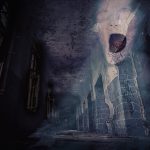
Balan-balan and 6 other similar eerie floating head ghosts throughout Asia

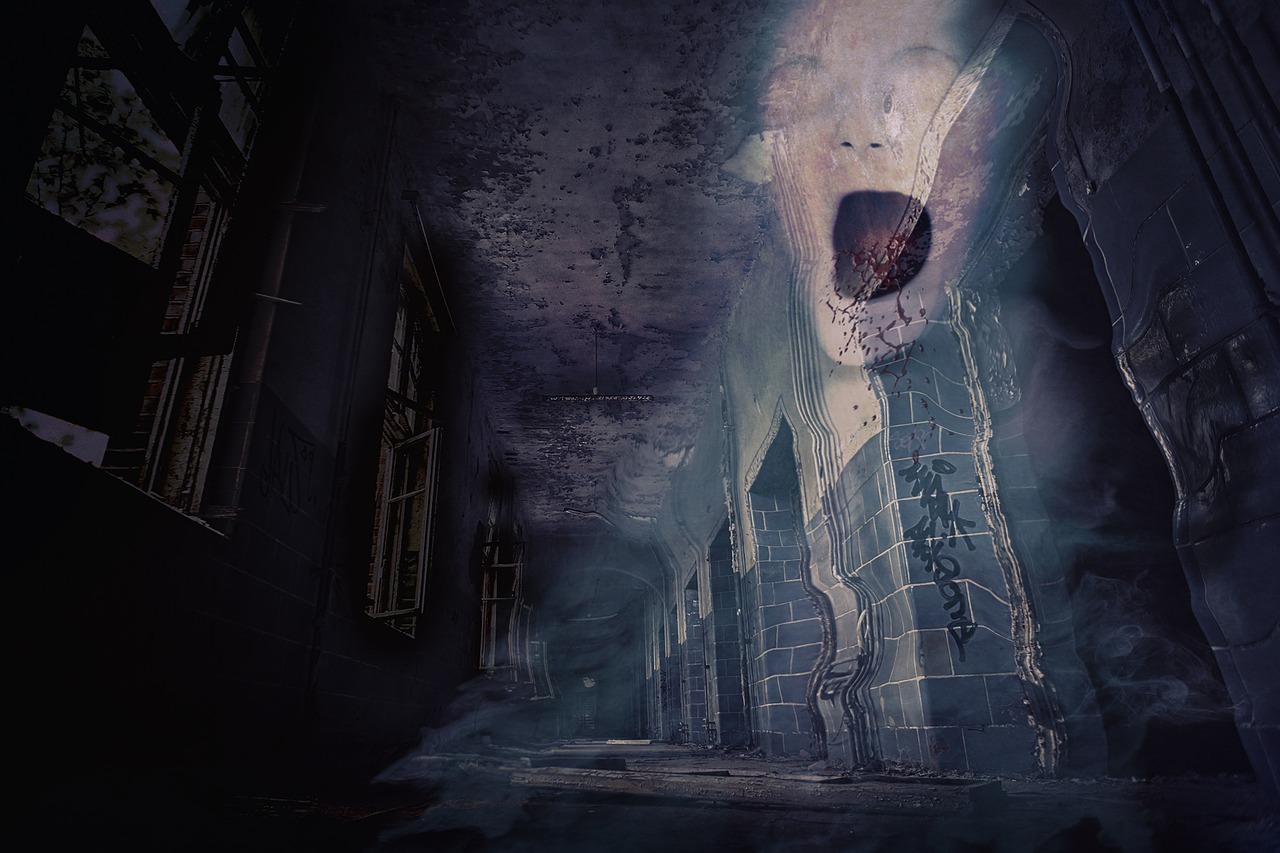
Balan-balan is a ghost of Sabahan folk mythology, also known as Penanggalan or Hantu Penanggal in West Malaysia.

Famous in Kota Belud, it is also called ‘B kuasa dua’ which means B to the power of 2, because you’re saying the b-word twice.

You’re not supposed to say its name aloud as legend says you summon it closer to you every time you say “balan-balan.”

However, some believe this entity is not a ghost, but a woman who practices black magic.

According to legend, the balan-balan is able to detach its head with lungs, stomach and intestines attached, leaving its body behind to hunt. It usually hunts at night but can leave its body any time it wants. It has a preference for the blood of pregnant women, women who recently gave birth and newborns.

A balan-balan is said to be able to pass through walls and ooze up through the cracks of the floorboards in the house.

To return it to its human form, simply soak its entrails in vinegar and—voilà!—it will reconstitute itself and become a normal person again.

One of the widely known ways in local folklore to destroy a balan-balan is to pour broken glass into its empty neck cavity – assuming you have found its headless body.

Some say that the balan-balan traits are inherited, passing down from one generation to another from mother to daughter.

There are other related myths in Asia  of supernatural entities with similar modus operandi and appearances.

Perhaps there are no immigration boundaries for those in the mystical world.
balan-balan
Balan-balan is famous in Sabah but it is similar to a ghost called Leyak among the Balinese, Kuyang by the Dayak people of Kalimantan, the Krasue in Thailand and Phi Kasu in Laos. Credit: Pixabay

1. Manananggal, the Philippines

Imagine a vampire that detaches itself from its lower body to hunt and uses huge bat-like wings to fly. Swap out the typical Hollywood fangs for a long, piercing tongue and there you have it: a manananggal.

A manananggal feeds on sleeping, pregnant women, sucking on the blood or hearts of fetuses with its tongue.

To kill it, just sprinkle some salt, crushed garlic or ash on the lower part of the body.

Then it would not be able to rejoin itself and would be killed by sunrise.

2. Kuyang in Kalimantan, Indonesia

Kuyang are believed to be women practicing black magic in search of immortality.

To increase their power, they have to feed on babies and women who just recently gave birth.

Some who claimed to have seen a Kuyang said it is just a flying head.

According to an article in Banjarmasin Post, if you are able to catch it, it will grant any wish in exchange for you to keep its secret.

Apparently the best advice is to ask for ‘Minyak Kuyang’ or kuyang oil which has the power to return objects to you even after you have given them away.

Ideally, you would be able to rub kuyang oil on your money and watch it magically return to you after making your purchase.

3. Leyak in Bali, Indonesia

Similar to Kuyang, leyak are humans practicing black magic.

Interestingly, they have a mistress or a queen, a witch named Rangda.

They say leyak haunt graveyards, feed on corpses, and have the power to change themselves into animals.

In daylight, they are like ordinary humans but at night their heads break loose from their bodies.

Unlike balan-balan which is known to be only females, it is believed that three leyak – typically composed of two females and one male – float around together terrifying people.

4. Krasue in Thailand

Krasue is believed to be an entity consisting of a floating head and a will-o’-the-wisp.

However, the origin story for Krasue is more romantic than might be expected.

According to one version of the legends, a certain Khmer princess had a forbidden love affair with a younger man of lower status.

As with all forbidden love stories, she was caught with her lover and condemned to death by burning by the Siamese aristocrats.

The princess managed to implore the help of a sorceress before her sentence, asking her body to be unharmed by the fire.

But the spell came too late and the only parts that remained untouched by the fire were her head and some of her internal organs. She was then cursed to live as a Krasue ghost.

The 2019 Thai film Inhuman Kiss is inspired by Krasue. It follows the story of a Krasue in 1940s Thailand who lives a normal life as a woman during the day but whose head detaches from her body at night to seek out fresh blood.

Watch the film trailer here.

5. Phi Kasu in Laos

A Phi Kasu is a woman who separates her head from her body, taking her inner organs and flying around to look for victims.

She uses her long tongue to suck out her victim’s organs.

Although it is possible to harm a Phi Kasu, traditional beliefs hold that she is ultimately invincible and cannot be killed.

6. Nukekubi, Japan

In the land of the rising sun, rokurokubi is a type of Japanese apparition.

There are two types of rokurokubi; one with a long, stretchable neck,  while another is like the balan-balan whose head comes off and flies around called nukekubi.

How do you kill a nukekubi? According to traditional tales, the simplest method is to move its headless body to another location. When the head returns and cannot find the body to reattach itself to, the creature is destroyed.

5 Asian foods created during World War II

World War Two (WWII) brought a lot of changes into the world including the food that we eat.

During the war, food supply was low in Japanese-occupied Asian countries because priority was given to the military.

There were even incidents of animal captives in zoos being sacrificed for Japanese military food.

When people are pushed into desperation, they tend to get creative.

Here are five Asian foods invented during WWII:

1.Nasi rames of Bandung (Indonesia)

When the Japanese occupied Dutch East Indies (now Indonesia) during WWII, food was scarce.

In order to help the Dutch community in Bandung, a Eurasian cook named Truus van der Capellan or Tante Truus ran a soup kitchen there.

She put together a balanced meal of rice, vegetable and meat onto a plate and called it nasi rames.

Other people in other places also had the same idea like Tante Truus but they mostly called it nasi campur.

2.Banana ketchup or banana sauce (Philippines)

During WWII, tomatoes were rare in the Philippines.

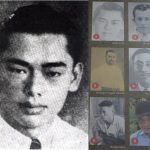
Food technologist Maria Y. Orasa (1893-1945) then invented the banana ketchup using bananas instead of tomato.

It is made using banana, sugar, vinegar and spices.

To make it looks like tomato ketchup, its original brownish-yellow colour was dyed with red colouring.

3.Darak (Philippines)

Orasa was also responsible for creating Filipino superfood during the war: the Darak.

It is a rice bran powder rich in thiamine and other vitamins which could treat beriberi.

Moreover, she created a Darak cookies recipes which saved many civilians.

Orasa’s original recipe was quite simple.

It needs 1/2 cup of rice bran powder, 1/2 cup of all-purpose flour, 1/3 cup of sugar, 1 teaspoon of lime zest, 1 egg, 1/2 cup of butter and oil for lining the sheets.

First of all, beat the eggs and set it aside. Preheat the oven to 180 degrees Celsius.

Then beat the butter until it turns creamy. Mix in sugar, rice bran powder, flour egg and lime zest gradually to make the dough.

After that, drop cookie dough using teaspoon and flatten them so that they can cook evenly.

Make sure the cookies are about two inches apart. Finally bake them until they turn golden brown.

4.Soyalac (Philippines)

Along with Darak, Orosa also invented the Soyalac (a protein-rich soybean powder) to help in the war.

In order to fight the Japanese, she joined Marking’s Guerrillas and became a captain.

The guerrillas hired carpenters to insert Soyalac and Darak into hollow bamboo sticks.

These sticks were then smuggled into prisoner-of-war camps.

These wartime foods saved the lives of many POWs who were starving during the war.

Unfortunately, Orosa died on Feb 13, 1945 after being hit in a bombing raid.

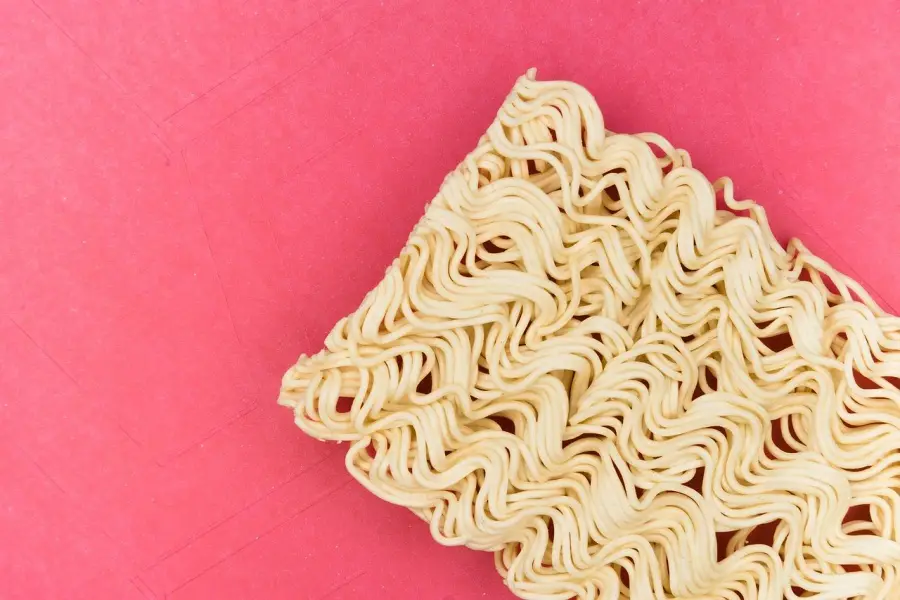
5.Instant noodles (Japan)

5 Asian foods created during World War II

While this food is not exactly a wartime food, it was created as a subsequent effect of WWII.

After the war ended, Japan was still suffering from a shortage of food.

The United States was supplying wheat flour to the Japanese people so the Ministry of Health encouraged their people to eat bread made from this flour.

Momofuku Ando then had the idea to make instant noodles. After many trials and errors, he succeeded and introduced it to the world on Aug 25, 1958.

Since the first original flavour chicken, Ando called it ‘Chikin Ramen’.

Besides being known as the inventor of instant noodles, Ando is also known for creating the world’s first cup noodle.

10 interesting facts about the 19th century Iranun pirates

Forget about Captain Jack Sparrow, the most fearsome pirates in this part of the world were the Iranun people.

Although the Iranun people are native to Mindanao island in Philippines, they also had settlements on the west coast of Malaysian Sabah as well.

During the 19th century, they were infamous for their piracy activities.

The British gave them the exonym ‘Illanun’. That is where the Malay term ‘lanun’ or pirate came about.

Here are 10 interesting facts about the 19th century Iranun pirates:

10 interesting facts about the 19th century Iranun pirates
Illustrations of Illanun or Iranun pirates circa 1800s. Credits: Public Domain.

1.The Spanish called the Iranun pirates “los Illanuns de la Laguna”

This was because their main stronghold was located on the shores of a lagoon in Mindanao island. Besides being a stronghold, it was also where their wives and children lived.

2.They also had settlements in Sabah

Apart from Mindanau island, the Iranun pirates also had settlements along the coast of Sabah including Kota Marudu, Ambong Bay and Tempasuk back then.

3.The Iranun pirates were the fiercest pirates in this region during the 19th century.

According to author Owen Rutter, the Iranuns were the fiercest and most powerful pirates of the Eastern ships.

He wrote, “They never hesitated to attack European ships, and, while they might give quarter to a native crew, to white men, they showed no mercy, owing, it is said, to the former treatment they had received at the hands of the Spaniards.”

4.Their favourite weapon was called ‘kampilan’

A kampilan is a single-edged long sword, traditionally used by various ethnic groups in the Philippines. Apart from kampilan, the Iranun pirates were also known to use spears, kris (a type of dagger) and guns.

5.The Iranun pirates marked the number of heads they took on their kampilan

Remember Killmonger from Black Panther? He scarred his body with every kill he committed. As for the Iranuns, they marked their kampilan every time they beheaded someone. According to Rutter, he had seen an Iranun kampilan with no less than 27 markings.

6.They preferred to kill in a single blow

A kampilan had a long enough handle to be wielded with two hands. Combining the weight of the kampilan and the force of two hands, a single blow was enough to cut someone’s head off their shoulders.

10 interesting facts about the 19th century Iranun pirates
Piraguas piratas de los Joloanos c.1850 A depiction of garay warships used by Sulu pirates. Credits: Public Domain.

7.They cruised not only in the Sulu Archipelago

Although their piracy and sailing skills were well-known in the Sulu Archipelago, they also roamed the Malay peninsular, throughout the Philippines, Papua New Guinea, Java, Sumatra, Bay of Bengal and all the way up to Penang.

8.An Iranun squadron was usually up to 40 big vessels

Sometimes a fleet might be numbered up to even 200 vessels of different sizes. One man would command the whole fleet while each small boat had its own captain. Each small boat was usually made of their own relatives.

9.They had two main objectives for their piracy

The Iranun pirates had two reasons to commit piracy; plunder and slaves. They stole from the ships they boarded and they took slaves from the coastal villages they attacked.

In Borneo, they were known to attack the Melanau people who settled along the coast of Sarawak.

10.The Iranun pirates usually disguised themselves as traders

Their modus operandi was to disguise themselves as traders so that they could board a ship. They were cunning thieves as well; even when they robbed a ship, they avoided taking objects that could be identified easily as stolen property.

Rutter explained that this would be so it was difficult to prove that they were anything but peaceful traders when their ships were being overhauled.

Read about how the pirates killed the first European man who wrote about the Kayan people here.

6 gorgeous Hollywood filming locations you can visit in Southeast Asia

Have you planned out your 2018 travel destinations yet?

If not, how about walking the paths of Hollywood stars by visiting beautiful filming locations in Southeast Asia?

Here are the top six scenic Hollywood filming locations to visit in 2018:

1. Palawan, Philippines – The Bourne Legacy

One of the best beaches in the world is located in Palawan.
One of the best beaches in the world is located in Palawan. Credit: Pixabay.

El Nido in Palawan served as one of the filming locations for 2012 American film The Bourne Legacy.

Aaron Cross (Jeremy Renner) and Dr Marta Shearing (Rachel Weisz) were shot riding a boat to El Nido.

It is currently ranked number 4 in Conde Nast Traveller’s list of “20 Most Beautiful Beaches in the World”.

With its white sandy beaches and limestone cliff, that is not a surprise.

Some of it’s best places of interest are Seven Commandos Beach, Simizu Island, Bacuit Bay and Cadlao Island.

2. Khao Phing Kan, Thailand – The Man with the Golden Gun

James Bond Island
Khao Phing Kan is mostly known to many as “James Bond Island”. Credit to Pixabay.

The names Khao Phing Kan and Ko Ta Pu might not be familiar to most tourists visiting Thailand as most may know them as James Bond Island.

Ko Ta Pu is a 20 metre tall islet located about 40 metres away from Khao Phing Kan.

Before the 1974 James Bond film The Man with the Golden Gun where it served as a hideout for Bond’s antagonist Francisco Scaramanga played by Christopher Lee, the island was relatively unknown.

The island became part of Ao Phang Nga Marine National Park in 1981. Since 1998, tourist boats have not been allowed to get too close to Ko Ta Pu to prevent any more erosion of the base of the limestone islet.

But that doesn’t mean you can’t see it at all: according to Phuket.com, the two best ways to view James Bond Island are from boats or from the small beach on Khao Phing Kan.

Thanks to various factors including shallow water depth, stable warm temperature and rich nutrient supply from mangrove forests; the area is abundant with marine life.

It plays home to organisms such as blue crabs, mud lobsters, black sea cucumbers, brain coral, and striated herons.

3. Angkor, Cambodia – Lara Croft: Tomb Raider

One of the filming locations for Lara Croft: Tomb Raider.
Ta Prohm, one of the filming locations for Lara Croft: Tomb Raider.

Despite the success of finding a real-life Lara Croft, Angelina Jolie’s 2001 action-adventure film received generally negative reviews.

Angkor may have become the winner in this scenario, however, as it left such a great impression on the screen that more than 2 million tourists visited it in 2013.

Ta Prohm, one of the temples in Angkor was widely associated with the movie. So much so, it was dubbed the ‘Tomb Raider temple’ among tourists.

These 12th century ruins were originally built as a monastery and university by Khmer King Jayavarman VII. Today, one of the distinct features of Ta Prohm that make it a photo-worthy destination are the trees growing out of its hallowed halls.

To top it off, the temple is almost in the same condition it was when it was rediscovered at the end of the 19th century.

Its solemn ambience, intricate wall carvings combined with its jungle surroundings make it one of the most visited temples in Angkor region.

4. Maya Bay, Thailand – The Beach

Maya Bay
The view of Maya Bay in low season.

Maya Bay is one of two shallow bays besides Loh Samah located at Ko Phi Phi Leh island surrounded by 100-metre high limestone rocks.  Besides it’s gorgeous beaches, it is also a protected nature reserve under Mu Ko Phi Phi National Park.

Being a protected nature reserve, however, didn’t protect Maya Bay during the filming of The Beach (2000). Although the world was introduced to one of southern Thailand‘s great beauties, filming a Hollywood movie there turned out to do more harm than good for Maya Bay.

In an effort to make Ko Phi Phi Leh more “paradise-like”, 20th Century Fox, the studio behind The Beach (2000) reportedly bulldozed and cleared some sand dunes of native vegetation.

A group of environmentalists filed lawsuits against 20th Century Fox, the forestry department and the Thai agricultural ministry  for damaging the ecosystem in the island which they won in 2006.

Regardless of the lawsuit, Maya Bay is still famous among tourists – perhaps too famous – that it has recorded 5,000 visitors taking up the 250 metre long beach in one day. And that was the number recorded during low season.

Maybe the pristine white beach and crystal clear water of Maya Bay are just too irresistible.

5. Bali, Indonesia – Eat Pray Love

Will ride a bicycle through terraces of rice field like Julia Roberts in Eat Pray Love?
Will you ride a bicycle through terraces of rice field like Julia Roberts in Eat Pray Love? Credit: Pixabay.

Eat Pray Love (2010) starring Julia Roberts was filmed over a number of locations which include New York, Rome, Naples, Delhi, Pataudi and Bali.

In Bali, the film was shot in Ubud, a town surrounded by rice paddies and in Pecatu, a resort popular for its beaches.

In the film, Roberts was shot riding a bicycle through rice fields and swimming in Padang-padang beach in Pecatu.

Although not many were happy with the film, from critics to media including a travel blogger who wrote ‘Avoiding Julia Roberts in Ubud, Bali’, the island is lovely to visit.

Many are sold for its lush green paddy fields, surf-worthy beaches, colourful corals and unique cultures.

6. Ha Long Bay, Vietnam – Kong: Skull Island

Ha Long Bay, Vietnam.
Ha Long Bay, Vietnam. Credit: Pixabay.

In 1898, a huge sea snake in Ha Long Bay in Quang Ninh Province was sighted by a ship’s sublieutenant named Lagredin and his crew.

The story was even reported on The Hai Phong News, a French newspaper.

One century later, another creature emerged in the bay, a 104-foot-tall ape named King Kong in the movie Kong: Skull Island (2017).

The film was also shot in two other provinces in northern Vietnam, namely Quang Binh and Ninh Binh provinces.

The bay has up to 2,000 islets, most of which are limestone.

You might not find a huge sea serpent or a giant ape but it is home to 14 endemic floral species and 60 faunal species.

Other movies that were shot here were Pan (2015) starring Hugh Jackman as Blackbeard and Life (2017) starring Jake Gyllenhaal.