Browse Category

Culture - Page 30

What you need to know about the Battle of Tarakan during World War II

The Battle of Tarakan refers to different actions which happened during World War II on Tarakan island, off the northeast coast of Borneo.

The first battle of Tarakan happened on Jan 11-12, 1942 when Japanese attacked the island, defeating Allied forces. Meanwhile the second battle of Tarakan took place on May 1-25, 1945 as the first phase of the Allied campaign to retake Borneo from the Japanese.

Battle of Tarakan (1942)
What you need to know about the Battle of Tarakan during World War II
A view of Amal Beach, east coast of Tarakan.

The Battle of Tarakan in 1942 began a day after the Empire of Japan declared war on the Netherlands.

Despite the fact that it is only a small island, Tarakan’s 700 oil wells, oil refinery and airfield put the island onto the Japanese forces must-conquer-list during the Pacific War.

Before the war, Tarakan was producing about 80,000 barrels of oil per month.

On Jan 10, 1942, a Dutch flying boat spotted an approaching Japanese invasion fleet. Knowing the Japanese army was coming, the commander of Tarakan’s garrison ordered the destruction of all oil installations on the island.

Today, one can only imagine the sounds and smells of these explosions as well as the anxiety waiting for your enemies to land.

By midnight of Jan 11, the Japanese forces landed on the east coast of Tarakan which today has become a tourist attraction called Amal Beach.

The troop was met with short but fierce resistance from the Royal Netherlands East Indies Army. The Dutch surrendered in the morning of Jan 12.

Instead of accepting their surrender, the Japanese executed the entire crew of coastal battery together with some 219 prisoners of wars (POWs) via drowning.

The island then remained under Japanese occupation until May 1945 when the Battle of Tarakan 1945 happened.

What you need to know about the Battle of Tarakan during World War II
Amal Beach, where the Japanese landed in 1942.
Tarakan under Japanese occupation

The Dutch thought they did a thorough job in destroying Tarakan’s oil fields. But the Japanese were able to recommission the first oil wells by August 1942. By early 1944, Tarakan was producing 350,000 barrels a month.

During the Japanese occupation, the locals of Tarakan suffered from malnutrition. The large number of Japanese troops on the island together with 600 Javanese labourers caused food shortage on the island.

Imagine that the oilfield in Tarakan alone was operated by 250 men from the Imperial Japanese Navy.

By late 1944, the Allied forces started to strike back, launchinf air raids destroying oil production and storage facilities on the island.

Unfortunately, hundreds of civilians were also killed during these air raids.

Comfort women in Tarakan during Japanese occupation

If you are not familiar with the term ‘comfort women’, they were women and girls forced into sexual slavery by the Imperial Japanese Army.

The Dutch government did a study in 1994 about comfort women during the time of the Dutch East Indies.

It concluded that about 200 to 300 European women had been taken to become comfort women.

Besides Dutch women, many Javanese and east Timorese women were also forced into prostitution.

They were usually sent to Burma, Thailand and eastern Indonesia, including Tarakan.

According to records, it is estimated about 300 women from Java were brought into Tarakan. A number of them were of other origins including Eurasians and Chinese.

Similar to many human trafficking cases today, they had been lured with the promise of jobs in clerical work and clothes making.

But in the end, they were actually forced into prostitution at Tarakan’s garrison and sometimes on visiting warships.

Battle of Tarakan (1945) was just a political act?

Many historians believed the decision by the Allies to retake Borneo from the Japanese in 1945 was mostly based on political reasons.

According to an article by Department of Veterans’ Affairs in Australia, the plan to invade Borneo had only marginal strategic value.

It stated, “General Douglas MacArthur, Commander-in-Chief of Allied forces in the Southwest Pacific Area, planned the operation to alleviate concerns of the Australian government that its forces were being relegated to operational backwaters as New Guinea had become.”

During the war, MacArthur left Australian forces out of most significant operations.

So, the idea of invading Borneo was intended to make Australian forces more visible again during the war against Japan.

General MacArthur chose to capture Tarakan in order for the island to be used to support an invasion of Java. It was crucial to recapture Java so that the Dutch could formally restore its power on the Netherlands East Indies.

Another reason was to capture the oilfields in Borneo. But this did little effect on the Japanese operation. Taking Tarakan, for example, the last Japanese oil tanker left the island in July 1944.

Meanwhile, the American air and naval troops had blockades around Japan. So there was no oil being shipped into Japan from Borneo.

What went down during the Battle of Tarakan 1945

Regardless of the reasons, the Battle of Tarakan was the first stage in the Borneo campaign of 1945.

In an operation code-named Operation Oboe One, the Australian forces landed on Tarakan on May 1.

The engineers went in first and cleared gaps through the beach defences with explosives before the main assault.

Then, naval and air bombardments also destroyed or damaged many Japanese positions.

Over the next seven weeks, there was fierce fighting as the Australians pushed inland to take the whole island.

One of the primary objectives to retake Tarakan island was to build airfields.

The airfield did open for fighter aircraft to land in late June 1945 but it was not used as much as it was intended for.

The Australians underestimated the work as they found the existing airfields were badly damaged. Meanwhile the site selected to build new airfields had excessive boggy ground.

The Aftermath of Battle of Tarakan

In the end, more than 200 Australians were killed before the last Japanese positions fell on June 20, 1945.

Although the Battle of Tarakan in 1945 was a success for Australia, Australian historian Gavin Long pointed out that the results achieved did not justify the entire cost of the Tarakan operation.

So was the battle for a sideshow? Or was it to make Australia look like they contributed something during the end of WWII? The Battle of Tarakan 1945 remains debatable among historians.

What you need to know about the Kedang Expedition 1886

When second White Rajah, Charles Brooke visited Simanggang in June 1885, the Iban chiefs there complained to him that the Lemanak and Skrang peoples were constantly being attacked by those living near the Kedang ridge on the border between Sarawak and Dutch Borneo.

According to the Sarawak Gazette report published on Mar 7, 1949, the conflicts had continued off and on for almost 20 years.

So Charles decided to put an end to it. Somehow, he believed that the only decision he could make was to attack the Kedang people. But, of course, not without the permission from the Dutch government to cross the border.

He sent a letter to the Dutch, together with maps of longhouses for his punitive expedition.

At first, a Dutch officer suggested a joint attack on these Kedang areas. But Charles rejected the motion, believing his force was better than the Dutch.

Finally, in October 1885, the Rajah received a favourable reply from the Dutch. They allowed him to bring his mostly Iban forces to attack Kedang.

After discussions with the local chiefs, the Brooke government decided to assemble at the mouth of Lingga River during the new moon in March, 1886.

On the evening of March 8, they held a council of war to discuss their strategy. The Brooke government planned on targeting the Ibans living in the upper Delok (Sarawak), the Kedang ridge (on both sides) and in the Lanjak area (Netherlands Indies).

The next morning, a force of 355 boats with 10,000 to 12,000 fighting men came together, heading to Kedang. They finally made a landing on March 12.

After climbing for some hours, they finally came across Iban Kedang farming grounds.

The Kedang Expedition war plan

The government plan was to divide the force into four detachments with each group consisting about 2,500 men.

A man referred to as Orang Kaya Pemancha in the report was the leader of the first group. This detachment headed to Gunung Lanja to lay waste all that line of country, avoiding Lake Sariang and Badau.

Meanwhile, the second group was led by an Iban chief named Minggat. Charles instructed them to burn and destroy everything they came across along the Kedang ridge.

Another Iban chief named Jabu led the third detachment. They were to march across the Kedang ridge but back by another path via Miniang stream.

Lastly, the fourth group was to stay at the camp. Their task was to burn houses near the camp, destroying anything they could not carry and gather ripe paddy. Soon enough, the camp was full of rice, pigs, poultry, dogs and valuable jars.

Minggat’s group was the first to return to camp on the March 19. They reported they destroyed 37 longhouses without losing any men.

Then, Orang Kaya Pemancha returned on March 25, reporting that his force had burnt eight longhouses and plundered everything they could carry.

The last group to return was Jabu’s. While the official number of the longhouses they burned was not recorded but it was the only the party that fell short.

Overall, the total number of longhouses destroyed was not less than 80 and the amount of havoc “quite beyond computation”.

The Dutch’s reaction to the aftermath of the Kedang Expedition

The Dutch reportedly were very unsatisfied with the manner in which the expedition was carried out, especially the rampant raiding and looting conducted by the Iban mercenaries and their attacks on several Iban longhouses that the Dutch regarded as friendly.

Before the expedition, the Dutch requested that Charles inform them of his plans in time so that they could protect the Emperan Iban they regarded as well-disposed and prevent them from giving aid to their kin who were to be attacked.

Since it was a time when there was no WhatsApp, the Dutch complained they received the letters from Sarawak on the expedition plan quite late.

The Dutch resident in Pontianak, Resident Gijsberts only received Charles’ letter (dated on Feb 25) on March 10.

Meanwhile the controleur in the area received a letter from Sarawak resident (dated March 3) on the 12th. He reportedly rushed to protect any longhouses that he could.

In the meantime, Gijsberts arrived in the area with soldiers from Pontianak and Sintang. They were able to protect the longhouses of their district headman at Lanjak.

Once the Kedang Expedition returned to Sarawak, the Dutch counted 41 burned longhouses on their territory with at least 13 of which were considered friendly. There were also 16 dead, including some women and children.

Michael Eilenberg in his book At the Edges of States stated that in order to handle the problem after the expedition, the Dutch created a new district (Onderafdeeling Batang Loeparlanden) in the borderland. They then permanently stationed a Dutch district officer (controleur) in the area. They also increased the number of soldiers at the border post in Nanga Badau.

In the end, Iban leaders on both sides of the border tendered their submission to the Dutch and the Brookes respectively.

On the Dutch side, their government gave the Iban two conditions for submission. First, they had to pay a fine as a promise to stop raiding. Secondly, all longhouses upriver affected by the Kedang expedition had to move away from the border into specific territories further downriver.

What you need to know about the Kedang Expedition 1886
Nanga Badau Border Post in current day.
Sarawak defended its action during Kedang Expedition
What you need to know about the Kedang Expedition 1886
Charles Brooke (left) and map showing the route of Kedang Expedition. Credits: Reed L. Wadley.

Reed L. Wadley in his paper “Trouble on the Frontier: Dutch-Brooke Relations and Iban Rebellion in the West Borneo Borderland (1841-1886)” analysed the complex relationship between these two governments.

Later in early April, Resident Gijsberts met who his Sarawak counterpart, Henry Deshon in Pontianak to discuss about the matter.

Logically, the first question the Dutch asked was whether Sarawak purposely sent the letters late.

Deshon, who was present during the expedition, maintained his innocence about the late arrival of the letters. Furthermore, he said the map, submitted by Charles indicated the target area within Dutch territory was inaccurate.

Gijsberts then pointed out around 20 longhouses in the Kedang and Delok areas were still left standing, casting in doubt Sarawak’s claims that the expedition was completely successful.

“For their part and reflecting Brooke’s feeling that the Dutch were weak in the dealing with the Iban, Deshon offered to post an agent in West Borneo to advise the Dutch on Dayak matters, something the Dutch rejected outright,” Wadley wrote.

What a way to tell someone that they were incompetent in their jobs by posting one of your own in other people’s territory.

Wadley continued, “However the continual acrimony and distrust (expressed publicly and no doubt even more strongly in private), the Dutch realised that the close cooperation with Sarawak was important for keeping the border Iban in check.

“Resident Gijsberts even wrote to the Governor-General in Batavia that he preferred their present, rocky relationship with Sarawak to that with the Iban.”

Furthermore, after 1886 and possibly because of the Kedang Expedition, Sarawak-Netherlands Indies relations seem to have improved.

Wadley added, “There were generally fewer complaints by Dutch officials to their superiors about Sarawak cooperation, and there appears to be more cooperation in arresting and extraditing cross-border troublemakers.”

The betrayal of Pengiran Muda Hashim and his family

Pengiran Muda Hashim (also known as Raja Muda Hashim) has famously gone down in history as the man who sought the backing of James Brooke and his schooner, the Royalist, to fight against rebels and pirates in Sarawak.

Responding to the request, Brooke succeeded in controlling the uprising in Sarawak.

Subsequently, Brooke was appointed Governor of Sarawak and he became a close friend with the pengiran.

The friendship between James Brooke and Pengiran Muda Hashim

The close relationship between Brooke and the pengiran was in fact not favourable to his nephew Sultan Omar Ali Saifuddien II and some of the royal family members of the Brunei Sultanate.

Just like Brooke, Pengiran Muda Hashim was against piracy and the slave-selling business. However, it was believed that part of the sultan’s income derived from the profits of selling slaves. The sultan accused his uncle and his family of being pro-English.

So in 1844, the Sultan summoned Pengiran Muda Hashim and his whole family to return to Brunei.

The pengiran returned home accompanied by his friend Brooke on board HMS Samarang.

Upon arriving in Brunei, the pengiran discovered that the role of Bendahara (similar to Prime Minister) originally meant for him, had been taken by Pengiran Yusuf.

Despite this, the pengiran still decided to stay on in Brunei as it was his home.

After a while, however, tensions started to rise between Pengiran Muda Hashim and Pengiran Yusuf.

The peak of the tension

The tension between Pengiran Yusuf and Pengiran Muda Hashim reached its peak on June 3, 1845 when civil war broke out between them.

Pengiran Muda Hashim was assisted by one of his brothers Pengiran Badruddin.

The battle took place in an area called Barakas, Brunei. The brothers brought along 1,000 soldiers from the Kedayan tribe while the Bendahara had about 300 loyal followers.

By sheer numbers alone, Pengiran Yusuf was defeated in the battle and he fled to Kimanis in current-day Sabah.

After the battle, the Sultan reluctantly appointed Pengiran Muda Hashim as the Bendahara and named him as his heir to the throne.

This event caused the previous heir to the Sultan’s adopted son, Pengiran Temenggung Pengiran Anak Hashim, to feel threatened, enough to finally make a plan for the murder of the pengiran.

The murder plot against Pengiran Muda Hashim

Owen Rutter in The Pirate Wind detailed the murder plot against Pengiran Muda Hashim and his family.

According to Rutter, the man assigned to execute the coup against the newly appointed Bendahara was a commoner named Haji Saman.

Rutter wrote,“Without warning, and in the dead of night, forty or fifty armed men surrounded the house of Pengiran Muda Hashim, set fire to it in several places then began a general attack.”

At first, the pengiran managed to escape with his wife and children while some of his brothers were killed.

When Haji Saman and his followers caught him, he persuaded them to allow him to send a message to the Sultan begging for his life.

But the Sultan refused to spare his life. Together with his surviving family and followers, Pengiran Muda Hashim retreated to a vessel. An explosion happened on the vessel killing almost everyone except for the pengiran. Determined not to be taken alive by his enemies, Pengiran Muda Hashim ended his life by shooting himself in the head with a pistol.

The betrayal of Pengiran Muda Hashim and his family
Sketch of Pengiran Raja Muda Hashim who became the close friend of Brooke, c. 1846
James Brooke mourns his friend Pengiran Muda Hashim

Meanwhile, in Sarawak, Brooke was not informed about the death of his friend.

Japar, one of Pengiran Badruddin’s slave boys had survived the attack. He tried to relay his master’s last message to Brooke but was unable to escape from Brunei.

Japar eventually made his way to board a British warship HMS Hazard that took him to Sarawak to meet with Brooke.

After much difficulties, Japar reached Kuching on Mar 30, 1846. It was from Japar that the White Rajah finally found out about the bloody coup.

The betrayal of Pengiran Muda Hashim and his family
The pengiran and his friend James Brooke.
Regarding the death of Pengiran, the first White Rajah’s feelings are best described in his own words. Here is an excerpt from his journal dated Apr 1, 1846:

“It is impossible for me to describe the indignation which I feel at this almost unheard of butchery of every member of the royal family known to be well-inclined to the British policy.

This infamous act has sealed the most flagrant breach of treaty entered into with Her Majesty’s government with the blood of the Sultan’s nearest relatives, and His Highness has now openly declared that he is prepared to fire upon the British flag whenever it shall appear near the defences which he is erecting.

Had this dreadful event arisen out of any source of internal struggle for sovereignty or power, however much to be regretted, it would not have rendered me so miserable as this fearful intelligence has now done.

Sure Her Majesty’s Government will well consider the case. It is beyond a doubt that the treachery and bad faith of the Sultan has resulted entirely from the fidelity of the Pengiran Muda Hashim, and of Pengiran Badruddin, to their engagements and the treaty entered into with the British authorities in these seas.

What other object can the Sultan have in placing himself in a position of such decided hostility to the British Government than a determination to have again recourse to the former atrocious system of a piracy and murder?

No less than thirteen of the members of the royal family have been massacred; and that the vicious sovereign gave his consent, if he did not directly order these murders, is clear on the face of the evidence before me.

Had I the power I would destroy both the city and Sultan, or at least would depose him; then if possible I would rescue the son of Muda Hashim and his surviving brothers, and place them in a fresh locality, and commence de novo with a better government under my own supervision.

I can write no more, my poor, poor friends, how sad and melancholy has been your fate! Never, never can I forget it. The regret, the indignation which I feel overpowers me.”

What you should know about the Ligitan and Sipidan dispute

The Ligitan and Sipadan dispute was all over media headlines during the late 90s and early 00s in Malaysia.

It was a territorial dispute between Indonesia and Malaysia over islands in the Celebes Sea, namely Ligitan and Sipadan.

The location of Ligitan and Sipadan islands

Sipidan lies to the south of Mabul island and southeast of Kapalai island. While the distance from the Malaysian mainland at Tanjung Tutop on the southeastern coast of Sabah is 14 nautical miles, the nearest distance to Indonesian territory is 40 nautical miles.

The island overall is uninhabited, but it has a small reservoir of fresh water. Fishermen and turtle eggs collectors from nearby Dinawan island have visited this island on a regular basis.

Conservation-wise, Sipadan was declared a bird sanctuary by the colonial government of North Borneo in 1933. Then it was re-gazetted in 1963 by the Malaysian government after the formation of the Malaysian federation.

Since 1988, the Sabah Department for Tourism and Environment built a wildlife preservation office on the island and issued licenses to erect small chalets and beach huts for a scuba-diving resort.

Meanwhile, Ligitan island lies east of Sipadan island. To the west of Ligitan is the Indonesian part of Sebatik island at a distance of 55 nautical miles. Meanwhile, the nearest Malaysian territory is Pulau Dinawan at the northern tip of Ligitan reef with the distance of 8 1/2 nautical miles.

Just like Sipadan, Ligitan is also uninhabited with only a few low bushes growing on it.

The origin of the Ligitan and Sipadan dispute

The first publicly known Ligitan and Sipadan dispute happened in 1982 when an Indonesian naval patrol appeared near Sipadan island to investigate foreign troops. Both the Malaysian and Indonesian governments reportedly tried to play down the incident, discouraging press coverage.

Then in 1991, Indonesia discovered Malaysia had built some tourist facilities on Sipadan island. The Indonesian government claimed that it had made a verbal agreement with Malaysia in 1969 to discuss the sovereignty of the islands.

Indonesia argued based on the 1891 Convention Between Great Britain and the Netherlands Defining Their Boundaries in Borneo. This was when Sabah (then North Borneo) was under Great Britain while Kalimantan was part of Netherlands’ territory.

Based on this convention, both Ligitan and Sipidan islands would be considered within Indonesian waters.

Furthermore according to the Indonesian government, after the Indonesian-Malaysian Confrontation (1963-1966), both countries established their continental shelf boundaries in the Straits of Malacca and the South China Sea by treaty.

More evidence to support Indonesia’s case was a map in 1967 by the Indonesian Armed Forces showing both islands lying within the Indonesian claim.

Malaysia on the other hand denied the allegation of an agreement between the two countries, maintaining Ligitan and Sipidan had always been part of Sabah.

Finally on Nov 2, 1998, Indonesia and Malaysia agreed to bring the matter to the International Court of Justice (ICJ).

The court decision on the Ligitan and Sipidan dispute

What you should know about the Ligitan and Sipidan dispute
A map of British North Borneo in 1888 where Ligitan and Sipidan fell under Province Elphinstone. Credit: The British Empire

In the Ligitan and Sipidan dispute, ICJ ruled in Malaysia’s favour due to the country’s effective occupation over the islands.

Plus, it also noted that Indonesia or even the Netherlands previously, had never issued a formal protest with Malaysia (or Britain) when those activities, such as construction of the lighthouse at Ligitan or the declaration of Sipadan as a bird sanctuary – were carried out.

Additionally, the court acknowledged that both of the islands were much closer to Malaysia than Indonesia.

While the Indonesian claim was mostly based on the 1891 Boundary Treaty, there was earlier documentation which supported the Malaysian claim. It was the British 1878 Agreement with the Sultanate of Sulu during which time they acquired the Sultanate area as part of British North Borneo.

50 things you would understand if you spent your childhood in a longhouse

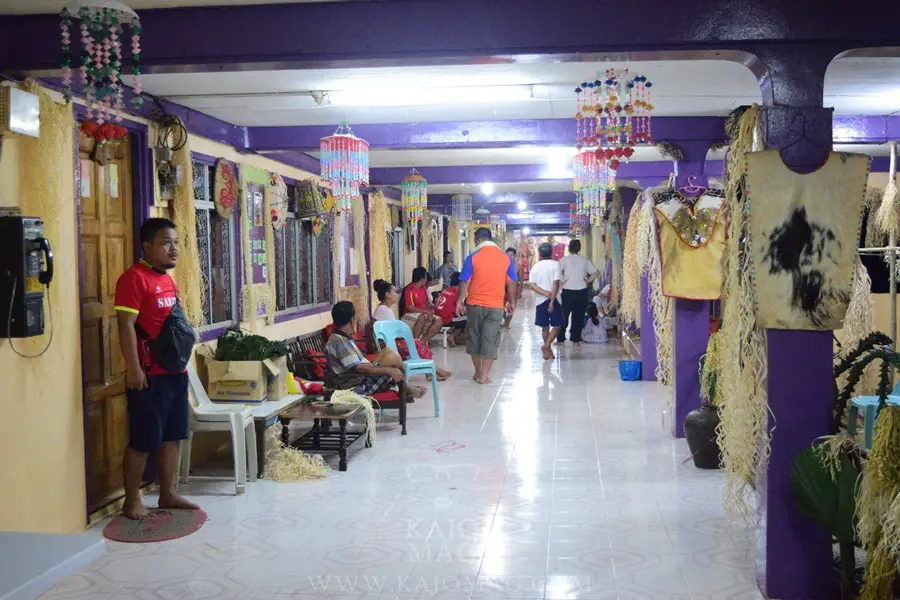
Here in Sarawak, we have the blessings of still maintaining most of our cultural traditions including our traditional house, the longhouse.

Honestly, it is sad to see some communities letting go their longhouses and building single houses. Their children will never get to experience their childhood living in a longhouse.

It doesn’t matter if you grew up in a longhouse or only spent your long year-end holiday with your grandparents, admit it, those were one of the best times of your life.

Even when your longhouse was not blessed with clean water supply and electricity, you still enjoyed the simplicity of life back then.

While some of us might whine and complain about the heavy chores we did even at a young age, as we got older we realised that we did learn a lot of life skills.

Here are 50 things you would experience if you had an amazing childhood at the longhouse especially during the 90s:

50 things you would understand if you spent your childhood in a longhouse
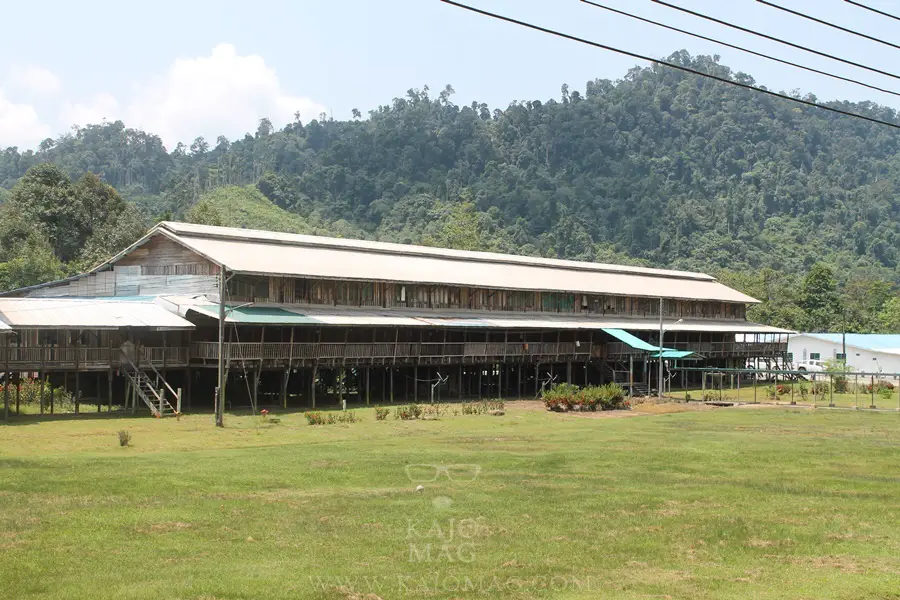
An example of a longhouse in Sarawak. This is Uma Lahanan in Sungai Asap.
Taking a bath

1.For girls, you learn the trick of using a sarong from young. Apart from using it to change your clothes or bathe, you also learn how to use it as a ‘life-buoy’.

2.You check out the water level in the metal drums before taking your bath.

3.If the water levels on these metal drums are too low, then you find your excuse to bathe in the river.

4.When it starts to rain, you run to make sure all the metal drums are out in the open to collect the rainwater.

Learning all kinds of life-skills in the longhouse

5.Growing up in the longhouse enables you to learn all kinds of life-skills such as how to catch fish with your bare hands in shallow water creeks between the stones, how to use a fish net or set up a bubu (bamboo fish trap).

6.You also learn the basics of rowing a longboat; how to change the direction when rowing and how to push the boat away from a tree or a wharf using an oar.

7.You get yelled at at least once in your life for holding on to the edge of the boat when it is docking.

8.Sometimes, you are trusted to dock the boat. But somehow, somebody is always there to retie your knot.

9.You spend the night catching green cicadas using only a plastic bag tied to a stick. After deep-frying them, those green cicadas made the best ‘keropok’.

10.Sometimes, you helped your grandparents, parents, aunties sell some kuih from ‘bilik’ to ‘bilik’.

11.Usually, doing dishes is a chore that requires three people. The first person to sponge the dirty dishes with dish soap, the second person to rinse the dishes in the first basin then the third person doing the final rinsing in the second basin.

12.You learn how to wash your own clothes from early on.

13.In addition to that, doing laundry is also communal work, especially when draining water out of thick clothes. One person needs to hold one end while the other twists it till the water is totally wrung out.

Celebrations at the longhouse
50 things you would understand if you spent your childhood in a longhouse
Preparing for a celebration usually requires the work of all ages.

14.Before any celebrations such as Gawai and Christmas, you love to help in baking cookies and cakes. One reason is you get to eat the cookies and cakes. Another reason is that you know where your elders stash them away just in case somebody decides to finish them off before the celebration.

15.However, what you do not like about preparing for any celebration is the cleaning part. You need to help in cleaning the whole bilik and decorate the living room. You will also be needed to help take out all the dishes and glasses to wash.

16.Christmas caroling is fun because you get to visit almost every ‘bilik’ at the longhouse. Sometimes, you can even visit other longhouses.

17.Then during these celebrations, you secretly enjoy watching your drunk relatives.

18.The best part about these celebrations is to ‘ngabang’ or visit from ‘bilik’ to ‘bilik’.

19.There are only two modes of transportation when visiting other longhouses; riding in a longboat or sitting on the back of a 4WD.

50 things you would understand if you spent your childhood in a longhouse
Once you reach your teenage years, riding in the back of 4WD somehow is a common thing.
Your childhood entertainment at the longhouse

20.If you walked past a ‘bilik’ which had cartoons on their TV, chances are high you would stop there and watch.

21.You create all kinds of games with your cousins. Some of these games come with punishments for the losers.

22.Additionally, you create games when taking a bath in the river. The most common games are who can hold their breath underwater the longest or who can swim from one point to another point the fastest.

23.You learn how to make somersault dives into the river.

24.If there is one bicycle among your cousins, everyone takes turns riding it.

25.Mosquito bites and scratches are common on your body.

Going to the kebun

26.You dread about going to the farm or orchard but you end up playing the hardest there.

27.Plus, you pick and taste all kinds of wild fruits and berries along your way to the farm.

28.Wearing adidas kampung is essential but you also learn how to walk barefoot in the jungle. The key is to walk only on soil surfaces while gripping it with your toes and also avoiding any sharp thorns.

29.Growing up, you get yelled at at least once in your life for the wrong way you handle the parang.

30.Furthermore, you get scolded at least once for breaking a taboo in the forest.

31.You pick up the skill of gathering firewood.

32.The best part about lighting up a fire is fanning it.

33.When it comes to picking fruits, ‘jolok’ is your best friend.

34.Speaking of fruits, you stay to wait for durians to fall at least once in your life. And that ‘thump’ sound you hear gets you running like crazy.

35.Food, as simple as it is at the longhouse, seems to be extra delicious during lunchtime at the farms or orchards.

36.Food is also more delicious when enjoying it by the river.

Your nighttime at the longhouse

37.Communal sleeping is common in the longhouse. Sometimes you fight with your cousins for the best spot to sleep at night. And the best spot is usually somewhere near the fan, not near the door or next to someone who snores.

38.You are familiar with the smell of kerosene at night, all thanks to kerosene lamps.

39.Additionally, you are used to sleeping to the sound of a diesel power generator.

40.You must go to the loo before sleeping just to avoid a journey to the toilet in the middle of the night.

Watching the adults in the longhouse

41.You enjoy watching the elders playing the Four-colour card game.

42.Sometimes you even watch them gamble or engage in cock-fighting.

43.When the elder men e.g. your father or uncles come back from a hunting or fishing trip, you run to see what they caught.

50 things you would understand if you spent your childhood in a longhouse
Raise your hand if you recognise this.

44.You secretly roll the traditional tobacco cigarettes for fun (sometimes even light it up out of a dare).

45.Besides cigarettes, you learn how to wrap Areca nuts (buah pinang).’

50 things you would understand if you spent your childhood in a longhouse
Areca nuts. Credits: Pixabay

46.You like to watch the women cutting Areca nuts using the special cutter and even try to cut them on your own.

47.Sometimes, you also need to help in wiping the betel leaves (daun sirih) clean.

48.On top of these, you actually try to chew Areca nut wraps and then realise it is not a wise decision.

49.Admit it; you recognise the smell of Zam Zam hair oil and coconut oil.

50.You get lice in your hair at least once in your life after coming back from the longhouse.

Do you have other experiences spending your childhood in the longhouse? Share with us in the comment box.

The mysterious post-war ghost ship found in Mukah

Also known as a phantom ship, a ghost ship is actually a vessel with no living crew aboard. It can be because of two reasons.

Firstly, it is just a haunted ship or at least rumoured to be haunted just like the Flying Dutchman in the Pirates of the Caribbean. The second reason is because it was found adrift with its crew missing or dead.

The term ‘ghost ship’ is sometimes referred to ships that have been decommissioned but not yet scrapped. It is also a term used for drifting boats that have been found after breaking loose of their ropes.

And that was the case of the ghost ship found in Mukah at the end of January 1948.

The mysterious post-war ghost ship found in Mukah
A post-WWII ghost ship in Mukah? Credits: Pixabay
The post-war ghost ship in Mukah

On Mar 1, 1948, The Sarawak Gazette reported there was “an unheralded guest” which arrived on the coast of Sarawak.

The ‘guest’ was a vessel found about 20 miles east of Mukah with no crew on board.

The report stated, “Weather conditions were unfavourable for an examination until Friday the 13th February when a launch from Kuching arrived there.”

After an initial examination, they found out the vessel was a landing craft tank (LCT).

A LCT was an amphibious assault craft for landing tanks on beachheads. These landing tanks were initially developed by the British Royal Navy and later by the United States Navy during World War II (WWII).

By the looks of it, the LCT found off Mukah had been taken out of commission after WWII.

There were no documents on board and the living quarters showed no sign of recent use.

Nonetheless, there were some clues found on the adrift LCT. “On the bow the number 930 is painted in large letters and a stencil on the aft bulkhead reads ‘This craft reconditioned by Philippine Consolidated Shipyards.'”

The markings also indicated that the probable date of the reconditioning was June, 1947.

In addition to that, they found only one of the five engines to be in working order.

The hull of the vessel had been smashed to that extent that the craft was in danger of breaking in two.

The theory behind the ghost ship found adrift

Since there was no living soul on board the ghost ship to give their testimony to how she ended up where she was found, the best that Sarawakians at that time could do was guess.

The Sarawak Gazette writer guessed that the ghost ship was actually a United States naval vessel which had been laid up probably in the Philippines and probably also alongside other vessels.

“She had broken adrift during a storm and had badly damaged the upper sections of her hull by rolling against the sides of neighbouring craft.”

One crucial clue that the ghost ship given was that her mooring ropes still dangled from her port and starboard quarters.

Plus, with side tanks undamaged she retained sufficient buoyancy to weather the storms. She eventually got stranded off the coast of Borneo ending her involuntary voyage.

Cost of food was also an issue in Sarawak back in 1899

No matter which country or century you are from, living expenses like the high cost of food has always been a primary concern.

But did you know this issue also affected the people of Sarawak even in 1899?

In an article published in The Sarawak Gazette on Nov 1, 1899, an unnamed author compared the increasing of cost of food in the former kingdom, highlighting how much the prices had increased over the years.

According to the author, there were no import duties on any food stuffs. Meanwhile, the market tariffs only affected vegetables, pork and fish, and these to a very small degree.

Here at KajoMag, we enjoy looking back through history, and so here is how much our food commodities cost back in 1899:

1.Fish products

Fish was sold at the market for 1/2 to 1 cent per catty (the weight equivelent of 604g). Salted terubok fish was sold at 2 or 3 cents each, which then increased to 8 to 10 cents in 1899.

The author also complained that salted tenggiri fish was selling at $5 per picul (which is old-school for a shoulder-load or 60kg), and then increased to $18.

Even dried prawns suffered the same fate whereby the price rose from 7 to 8 cents per catty to 20 cents.

Cost of food was also an issue in Sarawak back in 1899
Dried shrimp. Credits: Pixabay.

2.Vegetables

The switch from vegetables to pepper cultivation had led to an increase in vegetable prices in Sarawak in 1899.

“How prices have risen with the last few years the following figures will show: Kribang or sweet potatoes which is a staple article of food formerly cost 35 to 40 cents per picul and now cost $1 to $1.50, and all other vegetables have risen over 50%.”

3.Pigs

The author also wrote about the price of pigs in 1899, “Pigs which were formerly sold at $9 per pikul now fetch $24 per pikul, and the retail price has risen from 13 to 14 cents per catty to 30-35 cents.”

Sarawak used to import pigs from Pontianak but then the number slowly decreased due to export duty imposed on these animals.

Was price control the answer to the high cost of food?

Although the author concluded that the cost of living and the cost of production had increased in Sarawak, he pointed out that the ‘reasons and the remedy for it are beyond us’.

He stated, “The government cannot say to a man, ‘you shall produce such and such food stuff and sell at such and such a price’. That experiment was tried during the first French Revolution and failed miserably.”

So according to the author, the government’s hope that bringing Hakka immigrants to plant more rice and vegetables would be fruitful in catering to the increasing demand of food.

He continued, “Cheaper rice would doubtless make a difference but we cannot hold out hopes of any great reductions either now or in the near future.”

More than 100 years later, these prices have never been reduced!

4 simple Kajo-tested recipes with terong Dayak you can try at home

/

My mouth automatically waters just thinking about terong Dayak….

4 simple Kajo-tested recipes with terong Dayak you can try at home
The Borneo Sour Brinjal is a native vegetable in Sarawak

When you visit the local wet market, you will see a variety of local fruits and vegetables available here in Sarawak.

One of the most iconic (and pretty) vegetables is the terong Dayak, or Borneo sour brinjal.

As a native Sarawakian, I have a moral obligation to tell everyone that if they are going to buy some, it is better to get them from the market since they are fresh.

Since the Borneo sour brinjal is easy to get here, KajoMag thought it would be helpful to list down some of the popular ways to cook this iconic vegetable.

Simple yet tasty Terong Dayak Soup

This is perhaps the simplest yet most tasty way to really enjoy the natural tanginess of terong Dayak.

All you need to make this dish is just two bowls of water, two cloves of garlic and some anchovies (ikan pusu). As with many dishes, you will have to slice the brinjal into equal slices of eight, and wash away the seeds.

To start, add in the garlic, anchovies and some belacan (optional) into a pot of water.

Then, add your brinjals into the pot and boil until tender.

Terong Dayak with Ikan Salai (Smoked Fish)

4 simple Kajo-tested recipes with terong Dayak you can try at home
Terong Dayak with Ikan Salai (Smoked Fish)- Picture credit: Imor L.

The terong Dayak and smoked fish combo is one of the most popular ways to cook this iconic vegetable.

To prepare, cut the brinjal into eight slices again and discard the seeds.

Add in lemongrass and a couple cloves of garlic into a pot of water.

When the water starts to boil, add in the smoked fish and after about 15 minutes, add in the brinjal.

For extra flavour (and colour), you may add in some chillies or upa tepus.

Terong Dayak Asam Pedas

4 simple Kajo-tested recipes with terong Dayak you can try at home
Terong Dayak Asam Pedas

Since terong Dayak has a natural tangy taste, it complements spicy flavours really well.

Which is why we like to cook it with asam pedas.

To make this, the brinjal is cut into equal 1/8 slices and the seeds washed away.

Then, place three cloves of garlic, one shallot, one piece of chilli, lemongrass, some turmeric, about a tablespoon of asam jawa with a little splash of water into a blender and blend.

When the oil is hot, add in the blended mixture. Add in the brinjal first since it takes more time to cook.

Stir fry the brinjal for a while and then add two bowls of water. After about 10 minutes, add in the fish and salt to taste.

Stir fried terong Dayak

4 simple Kajo-tested recipes with terong Dayak you can try at home
Stir fried terong Dayak

If you are not really a soup person, then this recipe is perfect for you.

Unlike the other recipes that require you to cut the brinjal into 8 slices, this one requires you to slice it thinly.

After prepping the brinjal, pound together three cloves of garlic, shallots, anchovies or dried shrimp, belacan and some chillies into a paste.

You may want to discard the seeds from the chilli as this dish can be quite spicy.

Stir fry the pounded paste and add in the brinjal with a little bit of water. Cook until soft. Add salt to taste but not too much as the paste is already quite salty on its own.

Solum graeco vel at Has ad alienum

Expetendis complectitur at vix, lorem quaeque apeirian te sea, vel te civibus officiis disputationi. Appellantur mediocritatem est id. Pro te nisl invidunt voluptatibus. Aperiam mediocrem sea ex, te mea legere timeam vituperatoribus. Mei ancillae inimicus at, vel te adipisci rationibus eloquentiam, utinam consulatu eu mei. Cu usu duis semper aperiam.

Adhuc euripidis no qui. Eam et liber concludaturque, feugiat assentior posidonium pri ut. Case justo ut est, ex dolores aliquando vix. Minimum ocurreret constituam id sea, ignota iisque epicuri sed ne. Ne nec quem feugiat, ad ius iisque commodo efficiantur, his enim illud quodsi an.

Et his impetus numquam, elit dicta dissentias ei sea. Vitae populo ponderum id ius, soluta eripuit accumsan quo eu. Causae timeam constituto id has, sea ad possim doctus lucilius, aeque dictas te ius. Pri et nullam singulis mnesarchum. Suavitate intellegebat et pri, ut mei diceret intellegat.

Our Memories

Duo quodsi legimus suscipiantur ex, ocurreret laboramus accommodare mei ne. Nonumy quaerendum ei sea, at odio legimus delectus pro, ei dicant virtute ponderum sit. Sea impedit mediocritatem ut, nam electram aliquando ex. Nonumy adipisci mei ad, unum offendit pro at, vix habemus adipisci ei. Ad pro graeci bonorum prodesset, magna dicit maiestatis nam cu. Duo et pertinax mediocrem, principes definitiones in pro, quem sumo posidonium est ex.

Solum graeco vel at Has ad alienum
Duo quodsi legimus suscipiantur ex, ocurreret laboramus accommodare mei ne. Nonumy quaerendum ei sea, at odio legimus delectus pro, ei dicant virtute ponderum.

Ut pro minimum dignissim persecuti, dicit noluisse apeirian no per. Nostro consequat voluptaria ut sea, integre reprimique scripserit an mel, eum ad everti vituperata. Vel movet tibique convenire no, perpetua partiendo tincidunt cu eum, errem sensibus ad per. Cum ne rebum volumus honestatis. Noster aliquip vituperata in sed. Cu eam erant malorum.

Local Foods

Officiis accommodare ad usu, ut has platonem recteque. Ei quod errem civibus eum, an vix sonet propriae. Imperdiet disputando ne vis, te elit nihil sea. In has paulo affert argumentum, decore graece everti cum ne, in eruditi imperdiet quo.

Eam an minim platonem, persius consulatu mediocritatem cu pri. Ea libris timeam mentitum mea. Percipit adolescens ut ius, per eu appellantur reformidans intellegebat. Aliquam maiestatis eu mea, pri dolorem conclusionemque at, et virtute theophrastus eos. Diam recteque duo no.

Cu eam erant malorum.

An mea dignissim hendrerit. Ne ius velit quando ancillae. Tota constituto nam at. Assum adolescens voluptatibus nam cu, omnis scriptorem an mel, eu rebum aliquid dolores sed. Cu mollis nostrud necessitatibus vim, duo ne case necessitatibus, sumo tibique ut est.

Solum graeco vel at Has ad alienum
Imperdiet disputando ne vis, te elit nihil sea. In has paulo affert argumentum

Molestie verterem mediocritatem at eum. Justo malis mediocritatem nec ex, cum aeque accusata cu. Vix augue molestiae ei. In ipsum deseruisse vis, per in saepe facilisi repudiandae, mucius essent democritum quo ex. Ex quo dolorum laoreet salutandi. Ut nam nulla indoctum, cum ex corrumpit consetetur theophrastus. Ad meis dictas vidisse sit. Nisl corpora ne mea. Splendide consectetuer an cum, vix dicit dolores id. Eum sensibus forensibus at. Ut sed vero iudicabit.

The massacre of Sarawak officers at Long Nawang during WWII

When news of Japanese troops coming to attack Sarawak broke out, the Chief Secretary put out instructions requiring all Brooke officers to remain at their stations.

However, a group of Sarawak officers decided to flee the kingdom and head to Dutch Borneo. Their decision to take refuge near the border of current day Kalimantan led to what most historians called the Long Nawang Massacre.

The journey to Long Nawang from Sibu

According to local historian Ooi Keat Gin, the Brooke officers in the Lower Rejang fled in a party of 26 men, three women and two children who were aged nine months and five years old.

The party was led by Andrew Macpherson, Resident of the Third Division. He brought along his wife who was then six-months pregnant. Other Brooke officers in the group included Sibu, Kanowit and Kapit district officers.

Ooi wrote, “Macpherson’s plan was to go up the Rajang, cross over into Dutch Borneo to Long Nawang, a Dutch military outpost.

“The party reached Kapit by motorboat, negotiated the Pelagus Rapids to arrive at Long Bahau above Belaga. They stayed at Kenyah longhouses along the way. After Belaga, smaller and lighter boats brought them through the shallower, rapid-infested headwaters of the Ulu Rejang.”

After 28 gruelling days of crossing treacherous mountains on Jan 22, 1942, the group finally arrived at Long Nawang, which was also a Kenyah settlement.

There, the party had the comfort of a four-bed hospital with an adequate supply of medicine. Furthermore, they had enough food supply to last for a year.

Macpherson and his team separate at Long Nawang

After arriving at Long Nawang, Macpherson who was suffering from malaria, decided to stay there. However, he allowed the rest to proceed and carry on their plans.

So four men – Jacks, Schotling, McKerracher and T.E Walter – decided to go to Long Iram and then Samarinda.

The men reached Samarinda and managed to board a plane to Bandung. Somehow Jacks and McKerracher eventually reached Perth while Walter and Schotling were captured and imprisoned by the Japanese.

Meanwhile another group of Brooke officers unfit to travel decided to return to Belaga. There, they were eventually taken into custody and interred at Batu Lintang POWs Camp. They may have had a better fate than those who stayed behind at Long Nawang.

The other refugees of Long Nawang

Besides Macpherson and his team, there was another group of Brooke officers and a missionary priest from Marudi who made their way to Long Nawang.

According to retired Mill Hill Missionary priest Theo M. Feldbrugge, he had a paternal uncle who was a Mill Hill priest during World War II.

The older Rev Feldbrugge was the parish priest of Marudi. Together with Resident of Marudi Mr Hudden and a few other British officers, they decided to go to Kalimantan to seek refuge.

“So they walked up to Baram and by boat and then they walked all the way to Long Sang, Long Nakang and across the mountains down the riverside till finally they ended up in Long Nawang.”

The arrival of Dutch and Indonesian soldiers

In April 1942, Lieutenant D.J.A Westerhuis arrived at Long Nawang along with 40 Dutch and Indonesian soldiers.

Four months later, two Kenyahs brought the news that more than 70 Japanese soldiers were on their way to Long Nawang.

But Westerhuis did not believe that the Japanese would ever discover their hideout.

Rev Feldbrugge pointed out that Long Nawang was at the very head of the Mahakam river in Indonesia which went to Balikpapan.

“And they thought the Japs would never come. But the Japs were in Balikpapan and they were told God knows by whom that Orang Putih were there in Long Nawang.”

So the Japanese came up to Long Nawang, trickling in via Mahakam river.

The massacre

On August 20, 1942, about 76 Japanese marines led by Captain Mora Shima arrived at Long Nawang attacking the border post with mortars, light machine guns and rifles.

Many were killed during the attack. The Japanese rounded up the surviving Europeans, imprisoning them while they allowed the Indonesian soldiers to return to their military post at Tarakan.

There were at least two eyewitnesses for what happened next; Corporal Tamburiang and Private Markus who were former native polices living in Long Nawang were executed on Aug 26 and buried in two graves.

Then a month later on Sept 23, the Japanese massacred all the women and children.

Another witness, Tusau Padan who was 11 years old at that time saw how the execution of the children took place.

The young children were forced to climb palm trees. Then they were impaled on the upraised bayonets when they slipped down in exhaustion.

All the women and children were buried in one grave.

After the war, the victims of Long Nawang massacre were exhumed and reburied on Tarakan island at Makam Pahlawan.

There have been requests by the descendants of the massacre victims to bring them home from Tarakan to Sarawak.

Among them were the grandchildren of Desmond Vernon Murphy, a British officer serving as Assistant Superintendent of the Sarawak constabulary and Sarawak Rangers.

Murphy was one of the officers who joined Macpherson to Long Nawang and later executed. His grandchildren wanted him to be buried in the Heroes Graves in Kuching so that it would be easier for them to visit to pay their respects.

The massacre of Sarawak officers at Long Nawang during WWII
Tarakan War Cemetery after the dedication on Oct 9, 1945. Photographer: Lt W. N. Prior.
Credit: Public Domain (Copyright expired).
Why did the Japanese massacre the refugees of Long Nawang?

It took the Japanese alone four weeks to reach Long Nawang. Having to travel out of the area with the more than 40 prisoners including women and children along would have taken them even longer.

For the Japanese troops at that moment, it was more expedient to kill the prisoners right there in that thick jungle.

Another reason why they were killed was because, for the Japanese, the refugees were considered enemy fugitives (even Macpherson’s newborn baby).

Ooi wrote in his book The Japanese Occupation of Borneo, “The fact that the refugees at Long Nawang did not voluntarily surrender themselves as was the expectation of the Japanese military authorities following the establishment of a new regime in Borneo made them, legally speaking, enemy fugitives.”

He added that from this perspective their execution was in line with wartime military requirements.

As for Captain Shima, the man who was responsible for the Long Nawang Massacre? There were no traces of him after WWII, and so he was never persecuted for his war crimes.

1 28 29 30 31 32 38