Browse Category

Culture - Page 17

10 things you might not know about the Sandakan Death Marches

Some of you might have heard of the Sandakan Death Marches. It is a series of forced marches from Sandakan to Ranau cutting through the dense rainforest of Borneo.

Overall, there were 2,434 Allied prisoners of war (POWs) died during their internment at Sandakan camp and the marches to Ranau.

It is widely considered to be the single worst atrocity suffered by Australian servicemen during the World War II (WWII).

After the Battle of Singapore in February 1942, Australian and British POWs were captured and sent to Borneo between 1942 and 1943.

They were interned at Sandakan POWs camp and forced to build a military airstrip.

Just like how the POWs were forced to build the Burma Railway, these prisoners were forced to work at gunpoint with little food to eat.

To worsen the situation, they were given little to no medical attention.

By August 1943, the officer prisoners were moved from Sandakan to Batu Lintang camp in Kuching in order to take more control of the prisoners. This turned out to be a blessing-in-disguise for the officers.

As for those who were left behind in Sandakan, the condition deteriorated significantly following the officers’ removal.

Their food were further reduced and even sick prisoners were forced to work on the airstrip.

Once the airstrip was completed, the prisoners initially still remained at the Sandakan camp.

About The Sandakan Death Marches

In January 1945, the Allied forces successfully dropped a bomb, destroying the airfield. At that time, there were only 1,900 POWs alive at the came.

After the bombing, Captain Hoshijima Susumi ordered the remaining prisoners to march to Ranau, about 260 kilometers away.

The first march took place between January and March 1945. The Japanese picked 470 prisoners whom they thought to be fit enough to carry baggage and supplies. Although the journey supposed to take nine days, the first group was given enough rations for four days.

Meanwhile, the second series of the marches started on May 29, 1945. About 536 prisoners were ordered to march toward Ranau in groups of fifty with accompanying Japanese guards.

The second march lasted for 26 days. With prisoners less fit than the first march, they were even given fewer rations. In the end, only 183 prisoners reached Ranau on June 24, 1945. That was when they found out, there were only six prisoners still alive from the first march.

After the second march prisoners departed, the Sandakan camp was left with about 250 POWs.

At first, since they were so sick, the Japanese initially planned to let them die of starvation. However, on June 9, 1945, the Japanese ordered the final group of 75 men to head to Ranau.

They were so weak, none of them survived beyond 50 kilometres. When a man collapsed from exhaustion, the Japanese guard shot him. In the meantime, the remaining prisoners left at the camp eventually died from sickness or starvation or both.

Here are 10 more facts about the Sandakan Death Marches:

10 things you might not know about the Sandakan Death Marches
The Australian Imperial Forces section of a cemetery at Sandakan camp. Credits: Australian War Memorial

1.Not all 2,428 died during the Sandakan Death Marches

The biggest misconception about the Sandakan Death Marches that there was a total of 2,428 Australian and British POWs died during the marches.

According to historian and author Lynette Ramsay Silver, 1,047 died during the marches which took place between January and June 1945.

Meanwhile, the remaining 1,381 never left the Sandakan camp. They perished due to sickness, starvation or execution by the Japanese Imperial soldiers.

10 things you might not know about the Sandakan Death Marches
The Kundasang War Memorial  is a memorial located in Kundasang, near Ranau which is dedicated to the British and Australian soldiers who died in the Sandakan POW camp during their death marches to Ranau.

2.The last known Sandakan Death Marches track cutter died in 2018.

Tuaty Akau was the last known Sandakan Death March track cutter. He died on his birthday on Oct 29, 2018, aged 105.

During WWII, he joined his father-in-law who was recruited by the Japanese to cut the trail to prepare for the marches.

He told his story to Daily Express in 2016, “One time my fellow track cutter stopped for a cigarette and was hit on the head with a rod.”

Tuaty also shared how he saw weak prisoners passing by and tried to offered rice to them but was scolded by the guards.

Thanks to Tuaty, a long time dispute between two historians – Silver and Dr Kevin Silver – was finally solved.

Dr Smith argued that the track head to Miruru via the Liwagu Valley while Silver claimed that it never went to Miruru. Tuaty then confirmed Silver’s evidence that the trail never head to Miruru.

Another witness of the march, Zudin (who died in 2017) also confirmed that the trail never passed Miruru.

10 things you might not know about the Sandakan Death Marches
An inscription found at Kundasang War Memorial.

3.Operation Kingfisher is the rescue plan that never took place

The saddest part of the marches was the fact there was a planned rescue operation.

Unfortunately, the mission (called Operation Kingfisher) never took off the planning desk.

There are several alleged reasons why the Allied forces did not execute Operation Kingfisher.

It was reported that Agas reconnaissance missions incorrectly reported that there were no prisoners left in the Sandakan camp.

Another factor said that there was no adequate air support.

Nonetheless, if only Operation Kingfishers was not abandoned, perhaps many men could have returned to their families.

10 things you might not know about the Sandakan Death Marches
The Australian Garden At Kundasang War Memorial.

4.Japanese soldiers reportedly turned to cannibalism

The Japanese soldiers themselves had their own suffering in Sabah during the war.

Dick Braithwaite and Yun Lok Lee wrote in their paper Dark Tourism, Hate and Reconciliation: The Sandakan Experience, “Many Japanese soldiers also perished of starvation and disease in the jungle. In the latter half of the Pacific War, Japanese Troops were chronically under-supplied. In order to preserve their fighting effectiveness under such conditions, individual soldiers who were no longer effective were given a day’s rations and cast out of their military unit and told to fend for themselves. Many turned to cannibalism.”

10 things you might not know about the Sandakan Death Marches
Some of the newspaper clippings at the memorial.

5.Those who were killed even after the Japanese had surrendered

By the end of July 1945, there were about 38 prisoners (some report stated 33) left alive at Ranau.

Weak and sick, they were unable to do any work. They were then killed by the guards, sadly perhaps up to 12 days after the Japanese officially surrendered on Aug 15. By killing the remaining prisoners, the Japanese wanted to get rid all possible witnesses of the marches.

As for the remaining POWs at Sandakan camp, the last man alive – John Skinner was beheaded on Aug 15 at 7.15am.

Five hours later, Emperor Hirohito announced that Japan had unconditionally surrendered.

These POWs clearly did not have the same fate with the prisoners at Batu Lintang Camp in Kuching.

After the war, there were two ‘death orders’ found among the official Japanese papers at the camp.

The first order was scheduled on Aug 17 or 18 but for unknown reason was not executed. The second order was scheduled to take place on Sept 15. Thankfully, the camp was liberated on Sept 11 by the Australian 9th Division.

The timely liberation of the camp may have saved the lives of over 2,000 men, women and children at Batu Lintang Camp.

6.The White-Japanese, the ‘betrayer’ among the Australians?

Among the six survivors of the Sandakan Death Marches, there was one Australian soldiers regarded as ‘White Jap’ by his fellow survivors. He was Warrant Officer William Hector Sticpewich.

Silver wrote in her website that he was very much hated by his fellow survivors, “So much so that, post-war, they refused to have anything to do with him.

“There have always been question marks over Sticpewich’s behaviour. Described as ‘a Jack of all trades’, as soon as he reached Sandakan he made himself indispensable to the Japanese and, therefore, avoided labour on the airstrip.

“By his own admission, he went to the airstrip on one occasion only – in late 1942 when all POWs, including the sick and officers, were put to work to ensure the first stage of construction was finished in time for a grand opening.”

Unlike other survivors who looked emaciated after their rescue, Sticpewich was reportedly in fantastic condition.

Additionally, Sticpewich was suspected to have killed another soldier Private Herman ‘Alby’ Reither when they both escaped from Ranau on July 28, 1945.

In response to Silver’s investigation, Avtar Singh wrote in the Daily Express that finding fault for war veterans and then going after them in public had to stop.

He opined, “They had suffered enough both during and after the war. And let’s remember, nobody profits from these allegations and these stories.”

7.Tracking the bodies of POWs

10 things you might not know about the Sandakan Death Marches
A couple walking through the Contemplation Garden of the Kundasang War Memorial where the panels name all the victims.

After the war ended, the difficult part of searching the remains of more than 1,000 soldiers scattered along the 250 kilometres of jungle trekking began.

One of the soldiers tasked for the job was Stan Roberts. He was a member of 8 Australian War Graves unit. Roberts was deployed to North Borneo in June 1946 to locate the remains and transferring them.

Once the remains were exhumed, they were wrapped in lengths of hessian and carried back to Ranau. There, Roberts searched for any clues to identify the remain.

Since all the army identity discs had rotted, being made from compressed cardboard, there was little to help identify the remains.

A number of those died on the Sandakan Death Marches were given their final resting place at Labuan War Cemetery. Those who could not be identified were reburied as ‘Known unto God’.

10 things you might not know about the Sandakan Death Marches
The remains of men who died or were killed in the ruins of the Sandakan camp were identified by members of war graves units sifting through hundreds of named personal items. Credits: Australian War Memorial.

8.Why the Japanese did what they did

Yuki Tanaka in Hidden Horrors: Japanese Crimes in World War II gave his insight on why the Japanese soldiers committed such horrendous crimes against the POWs.

“The ill-treatment and massacres of POWs at Sandakan and the Sandakan Death Marches were made possible in large part by the traditional Japanese military ideology and the training procedures that arose from it. Men were trained to follow orders habitually and unquestioningly, and the training evidently worked. Captain Yamamoto Shoichi and Captain Takakuwa Takuo apparently never questioned the orders they were given by their superiors. Their primary concern was how they could carry out their orders, and this thinking led them to commit war crimes. It is insufficient to attribute responsibility to these individuals, however, without placing their behaviour within the context of Japanese military ideology,” he wrote.

Yuki further explained, “Dehumanisation involves a psychological distancing process whereby it becomes possible to act aggressively toward a weaker person without feeling the remorse that would occur in more normal circumstances. When dehumanisation of the enemy reaches its extremes, normally unthinkable acts such as the massacre of POWs become possible. In the situation at Sandakan, the Japanese believed they were under such threat from an Allied Invasion that there was no hope for them; they were destined to dehumanise prisoners and act brutally toward them,

“At Sandakan the enemy bodies that could be counted were those of dead prisoners rather than enemy combatants, but the officers at Sandakan shared the same malignant obsession with counting the dead. The Japanese, partly out of the overwhelming anxiety that they were about to meet their own deaths, felt driven to kill prisoners and then, perversely, were able to use the numbers of dead to reduce their anxiety.”

9.War trials against the Japanese soldiers

Regardless of the reasons, what the Japanese soldiers committed during Sandakan Death Marches undeniably were war crimes.

Sticpewich might be considered a betrayer to some but he was one of the witnesses along with Botterill, Short and Campbell during the war crimes trials in Tokyo and Rabaul.

During the occupation, the Sandakan camp was led by Lieutenant Susumi Hoshijima.

Since he was a military engineer, he was in-charge of building the military airstrip. Hoshijima was promoted to Captain toward the end of the war.

He reportedly told the POWs, “You will work until your bones rot under the tropical sun of Borneo. You will work for the Emperor. If any of you escape, I will pick out three or four and shoot them. The war will last for 100 years.”

10 things you might not know about the Sandakan Death Marches
Captain Susumi Hoshijima (centre) during the war crimes trial in Labuan. Credit: Australian War Memorial.

In May 1945, Captain Takakuwa Takuo was put in-charge of the POWs.

Too bad for Captain Hoshijima, the war did not last for 100 years. He was found guilty for war crimes and hanged on Apr 6, 1946.

Meanwhile, Captain Takakuwa and his second-in-charge Watanabe Genzo were found guilty of causing the murders of POWs and were hanged and shot on Apr 6, 1946 and Mar 16, 1946 respectively.

As for Lieutenant-general Masao Baba, he was charged with command responsibility for the Sandakan Death Marches. The commander forces in northern Borneo was found guilty and hanged on Aug 7, 1947.

10 things you might not know about the Sandakan Death Marches
News headline reporting on the trial of Lieutenant-General Masao Baba.

10.The Suicide of Colonel Suga

The person who was responsible of all POWs and civilian internment camps in Borneo during WWII actually was Lieutenant-Colonel Tatsuji Suga.

He was an English lecturer before the war and volunteered as prison camp commander after the Japanese attack on Pearl Harbour.

In Borneo, there were mainly three interment camps; Batu Lintang (Kuching), Kota Kinabalu and Sandakan. Besides these, there was a brief internment camp on Labuan island.

Suga was based at Batu Lintang and practically absent at other camps.

10 things you might not know about the Sandakan Death Marches
Flying over the prisoner of war camp (POW) in Batu Lintang at a low height, RAAF Beaufighter pilots reported sighting white POWs, clad in khaki shorts, who excitedly waved as the RAAF aircraft flew over to drop leaflets announcing Japan’s surrender. Credits: Public Domain (Copyright expired). https://www.awm.gov.au/collection/C242106

Unlike other Japanese soldiers such as Hoshijima, Suga was remembered by some internees to be kind.

One Australian civilian internee Rosemary Beatty recalled that Suga would take the children to his residence and served them coffee and fruits. Sometimes he even gave the children sweets.

Whenever Suga was away from Batu Lintang camp, the brutality by the guards increased. It is unknown if it is due to Suga’s instruction or his men took advantage to abuse the prisoners during his absence.

Believed to be a Catholic, he attended masses at the camp during the war. Once, he even rewarded the elderly priests with some papayas. Little did he know, the papayas were obtained by his men from the priests’ own garden.

On Aug 24, Suga himself officially announced to the prisoners at Batu Lintang that Japan had surrendered.

He was heartbroken as he believed that his entire family had been killed in the bombing of Hiroshima.

When the Japanese officially surrendered in Kuching on board HMAS Kapunda on Sept 11, 1945, he was there to attend. Later that day, Suga officially surrendered himself at Batu Lintang Camp.

Together with several of his officers, he was flown to Labuan to await for their trials as war criminals.

According to the website Digger History, Suga was found dead in the morning of Sept 16, 1945. He reportedly committed suicide by stabbing his throat with a table knife. He was also found with a water bottle half-filled with sand. While some reports suggested he struck his own head using the bottle before stabbing himself, other stated that he had help in his suicide.

Did Suga disobey the first death order to execute all Batu Lintang’s prisoners? We might never know.

And did he die with the knowledge of atrocities committed at the Sandakan Death Marches and camp? We also might never know.

One thing for sure, Suga died without knowing that his wife and three of his children had in fact survived the Hiroshima bombing.

Iban olden customary laws against adultery and elopement

Some people call it love, while others call it breaking the adat (custom).

Historically, many cultures consider adultery a very serious crime, subject to severe punishment such as capital punishment, mutilation or torture.

This includes the Iban people of Sarawak.

Iban olden customary laws against adultery and elopement

According to Iban ethnologist Benedict Sandin, before Sarawak was under Brooke rule, if an Iban stole another man’s wife and he was caught, the woman’s husband had every right to strike him with a club.

He explained, “As a rule, therefore, in order to prevent this from happening, immediately after the incident, it was the duty of the longhouse chief to kill a cock as soon as possible. If the striking with a club had taken place before the cock was killed and the adulterer was killed in the process, his death would not be compensated by the killer. But if it occurred the killing of the cock, the striker would be heavily fined in accordance with the customary law of ‘Malu Mungkal’.

Furthermore, he would be ordered by the chief to pay the ‘pati nyawa’, the compensation for taking a life. The cost of ‘pati nyawa’ is one valuable jar in which the type is according to the rank of the deceased.

Charges for ‘berangkat’ or elopement

Let’s say if it was only an ordinary case of elopement, then both of the accused would be charged with adultery.

Writing for the Sarawak Gazette on May 31, 1964, Sandin stated, “They would be fined 30 catties which was equivalent to $21.60; the man twenty and the women ten.

“If they were to marry they would be charged with berangkat (taking someone’s husband or wife and vice versa). In due course the man would be fined 1 1/2 piculs or $43.20 and the woman one picul or $28.80.”

Meanwhile, the man was allowed to divorce his adulterous wife by paying the ordinary fine of twenty catties or $14.40. If they had children, they would be divided between the parties. If there was only one, according to Sandin, it would be given to the guiltless party.

The Melanau Oya legend of Dayang Tri Kalala you might not know

If you never heard of the Melanau legend of Dayang Tri Kalala, here is a version of the tale from Oya which was published in the Sarawak Gazette on Nov 30, 1953:

Long, long ago, when Sarawak was only inhabited by natives there lived in a small but comfortable house at Sungei Sibu a beautiful Melanau princess called Dayang Tri Kelala or Lazy Princess because laziness was her chief characteristic.

Opposite her house stood an apong palm with its branches sprea out like a huge fan. As the little princess was alone she played each day under the palm.

Time passed and the princess grew into a beautiful woman.

The Melanau Oya legend of Dayang Tri Kalala you might not know

Dayang Tri Kalala’s change of attitude

One day as she was playing as usual under the palm, she was surprised to hear her name called. Being trained not to answer calls when alone in the jungle, she did not answer at first but looked this way and that. She could see no one. She grew frightened and would have run away had she not heard her name called the second time.

The voice said, “Fear not, young and beautiful lady, for I am your friend the apong palm.”

On hearing this the princess gained courage and said, “Oh, is it you? I am so glad you can talk. From now on I shall have someone to talk to.”

But the palm said, “Go home and fetch a parang with you. With it you shall cut off some of my branches and leaves and make them into a sibuyong (a huge basket) and a slapau (a broom).


The princess did not like the idea of hard work and said, “Please do not ask me to do this because I am too lazy.”

But the palm turned on her in a threatening voice and reluctantly she agreed to start work.

It took her more than a week to finish the sibuyong and the slapau.

When she had completed her allotted task she found herself strangely energetic, whereupon she used the slapau she had made to clean her house, inside and out.

A prince and a tyrant

At that time a very handsome prince lived in Oya. He was unfortunately captured by a tyrant who wanted to marry him to his ugly daughter. This the prince would not do, because he did not love her and furthermore, because he knew that she was very cruel to other girls in the district.

He therefore made up his mind to run away, but the tyrant sensed this and place guards over him, so that it was impossible for him to execute his plan in spite of his loyal friends who tried to help him.

In time the tyrant decided on the marriage feast for his daughter.

The Melanau custom requires that a wedding ceremony to the prince to be performed at night, in order that her ugliness might be concealed.

He insisted that before the ceremony the prince should walk with his bride through the kampung.

The prince who was helpless did as he was told.

But as soon as they came to the place where the wedding was to be held the prince suddenly disappeared and every effort to look for him ended in failure.

The Prince and Dayang Tri Kalala

Dayang Tri Kalala found her sibuyong missing one day and was sad. For a week she searched. One night while she lay restless in bed, she heard a loud knock at her door, and, on opening it found her sibuyong standing on the threshold.

As she was wondering how it had come back to her, she heard a whisper from inside it saying, “Please open the sibuyong.”

No sooner had she done this than out came a handsome young man, dressed like a groom.

Both were speechless as each gazed on the others’ beauty.

The young man at last found his tongue and said, “Well, am I not welcome to your house?” Recovering her poise Dayang Tri Kalala answered, “Yes, indeed, if you despise not my humble abode.”

When they were inside the house the young man began to tell the princess who he was and unfolded to her what had befallen him. He said that the magic sibuyong had brought him to safety and shelter under her roof.

It was destined that she should become his protector and would she consent to accept him as her helpmate for life?

Dayang Tri Kelala shyly replied that she would seriously consider the matter, and in the meantime, invited the prince to stay in her house. He, in turn, informed her that he had hopes that his faithful men who were even then concealed in the forest awaiting an opportunity to overthrow the tyrant, would soon come to his rescue.

The end of the tyrant

They waited thus patiently for about a month without fresh developments.

Then one day as the princess was picking flowers in the forest she heard the beating of gongs from a distance.

As the sound came nearer she ran to fetch the prince who was fishing in the river .

For fear that it might be his enemies descending upon him, the prince armed himself with a sumpit (blowpipe) and hid with the princess behind a huge tree. Soon they were able to spy a group of men and women walking in procession towards them and singing out in a chorus. “Where is our prince? We are men from Oya. We have come to welcome our prince back as the tyrant and his daughter have both been killed.

When the prince heard this he begged Dayang Tri Kalala to come out to the open with him and show themselves.

As the princess hesitated, the prince leap forward and declared himself.

The men soon recognised and they knelt, crying,”Long live our prince.”

The prince, however, ordered them to stand up and to go to the princess to kneel before her, for she had saved his life.

This they joyfully did for the princess was gracious as she was beautiful.

The princess then thanked the prince for the honour he had bestowed on her, and when she was asked again to return with him to Oya as his bride. She willingly agreed this time.

And as soon as they had arrived home safely they were married and lived happily ever after, ruling both Oya and Sibu.

Whenever she had time Dayang Tri Kalala would teach the young women of her tribe how to make sibuyongs and slapaus out of the apong palm. And to this day we still find Melanau women fashioning and using the apong slapau.

The mystery behind eight missing priests in Sabah during WWII

One of the worst things when it comes to the atrocities of war is not knowing the fate of your loved ones who went missing.

When people went missing during wartime, it became logical to presume they were dead.

However, without physical evidence, one may never know the circumstances surrounding their deaths.

When Borneo was under Japanese occupation during World War II, all European soldiers and civilians were taken as prisoners of war (POWs). These civilians included missionary priests and nuns who came to the island to spread Christianity and established schools.

In Sarawak, most of the priests and nuns were taken to the Batu Lintang POW camp. One Mill Hill priest who was the parish priest of Marudi went along with other British officers to go to Long Nawang, Kalimantan to seek refuge. There, he was executed with more than 40 people by the Japanese.

In North Borneo, however, a small group of priests and their companions went missing, their bodies never found, even after the war.

It is understood that they were killed but how? And when?

Who were the missing priests?

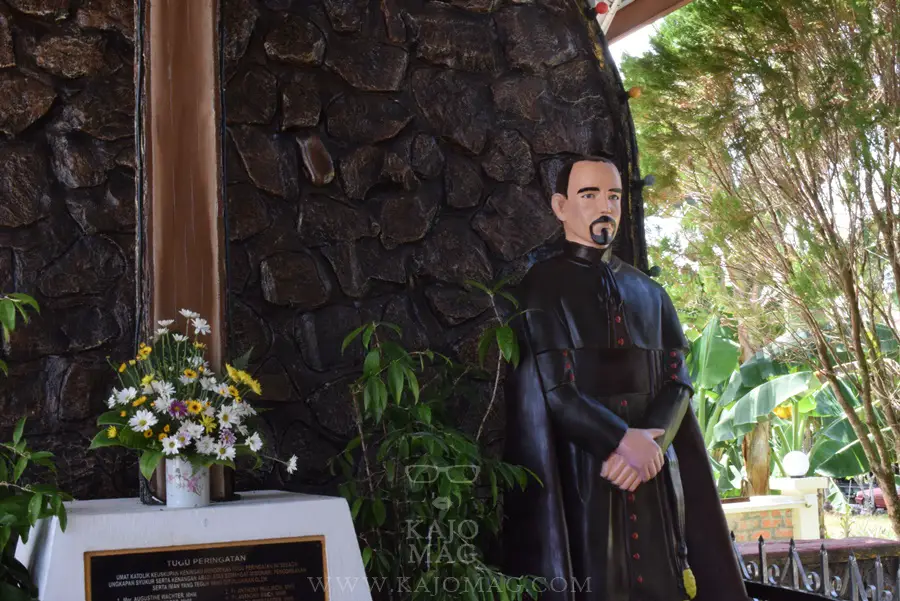
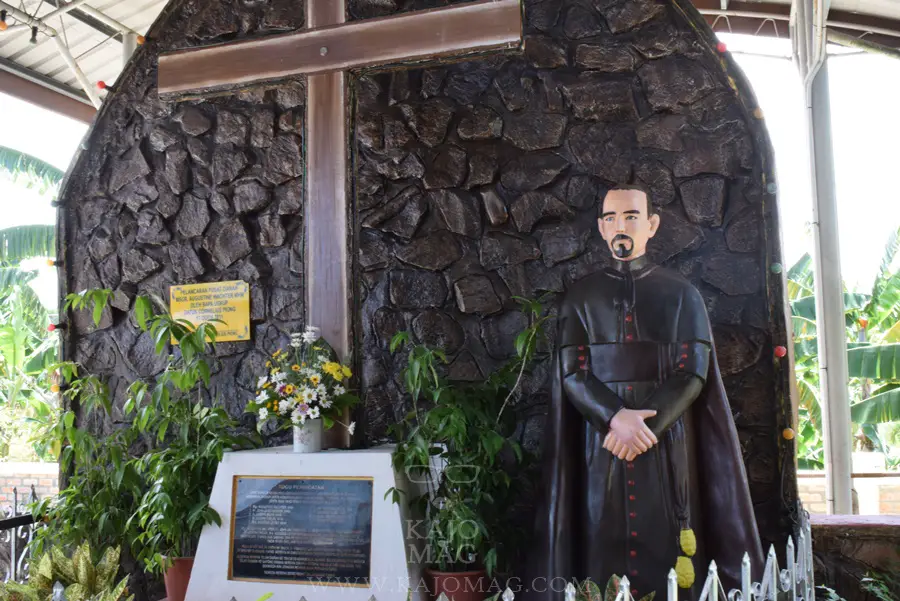
The oldest of the missing priests is Monsignor August Wachter, who was also the Prefect of Northern Borneo at that time.

Born in Bludenz in Austria on Dec 7, 1878, Wachter was ordained as a priest on Dec 6, 1903. He came to Borneo in September, 1905, first arriving in Kuching and serving in Mount Singai. He also founded the St Michael Catholic Church Penampang and the Congregation of the Franciscan Sisters of the Immaculate Conception.

Reverend Joseph Bӧhm was born on Feb 20, 1900 in the diocese of Prague. He was ordained priest at the age of 27 and immediately sent to Borneo.

Meanwhile, Reverend Joseph Theurl was born on April 24, 1907 in Innsbruck, the fifth-largest city in Austria. Just like Bohm, he was sent to Borneo after his ordination on July 8, 1934.

The fourth of the missing priests was Reverend John Unterberger. He came to Borneo two days after his ordination on Sept 21, 1907. Unterberger was also the Pro-Prefect during the absence of Monsignor Wachter.

Reverend Mark Obertegger was born on April 18, 1905 at Meran. He came to North Borneo in 1930. The sixth missing priest is Reverend Anthony Raich. He was ordained during the First World War but he only joined the Mill Hill Society in 1923. Raich left for Borneo a year later in 1924.

The seventh priest in the group was Reverend Francis Flűr. Born on Jan 29, 1906, he was ordained on July 14, 1905 and then sent to Borneo.

Little is known about the eighth member of the group except that his name was Bro. Aegidius Leiter. He was a close companion of Monsignor Wachter.

Along with these eight religious men, there were three young local men who went missing with them. They were Patrick Lee, Peter Wong and Stanislaus Sabahai.

A fragment of a Roman collar that could have belonged to one of the missing priests

According to Union Catholic Asian News, British and Dutch missioners were detained in Batu Lintang POW Camp soon after the Japanese occupied Borneo in early 1942.

The report stated, “German missioners’ movements were restricted, except for Monsignor Wachter, who was free to visit Catholic communities. When Germany surrendered, the Japanese military no longer trusted the German missioners. Detained in May 1945, they were herded from place to place until they arrived in Tenom, the North Borneo Japanese military headquarters deep in the interior of Sabah, where one priest died of malaria in June. The other missioners were last reportedly seen alive in early August in Tenom, a piece of Roman collar found on the Sapong rubber estate near Tenom led to the belief they were killed there, but their bodies were never found.”

Located on the Tenom Lama-Kemabong road, Sapong was a rubber and tobacco estate established in 1905.

During the Japanese occupation, the estate became the 37th Japanese Army Headquarters in early 1944 to avoid being targeted by the Allies forces.

Were the missing priests shot to death?

An unnamed author wrote a historical account of what happen during the Japanese invasion of North Borneo which was published in The Daily Express on Nov 8, 2014.

In an article entitled ‘Looking back: North Borneo war scars’, the author gave his part of the story on might have happened to the eight missing priests.

He stated, “I have a sad and frightening story to tell. Monsignor A. Wachter, who was the Head of the Prefecture Apostolic of North Borneo and a few other priests of German nationals were later interned by the Japanese and were brought to Tenom from Penampang after the fall of Germany in 1945.

“Monsignor Wachter and the other priests, while being interned in Tenom, tried to contact us (my two brothers, Henry Edward, Jack Harry Maurice and myself) but they were refused permission by the Japanese to see us. We only learnt after the war, they were brought to Tenom from Penampang.

“Had we known they were in Tenom, we would have done something to rescue them from the Japanese. It was indeed sad to hear that Monsignor Wachter and the other priests were believed shot and killed by the Japanese.

“After the war, while I was serving in the District Office, Tenom, I tried my level best to locate the grave or graves of the late Monsignor Wachter and the other priests but to no avail.”

The mystery behind eight missing priests in Sabah during WWII
A view of Tenom town.

The missing priests could not have been killed by the Japanese because they spoke German?

However, another famous theory about what happened to the eight missing priests is that they were not killed by the Japanese in the first place.

As per reported in the Union Catholic Asian News, the Austrian priests at first were not interned by the Japanese because they knew how to speak German.

During WWII, the fight was between two major groups of nations which became known as the Axis Powers and the Allied Powers. The Allied forces were the countries that fought against the Axis powers. Meanwhile, the Axis Powers is an alliance between Germany, Japan and Italy.

It was believed that the Japanese did not interned the Austrian priests due to their alliance with the German.

If it is true, why did the Japanese capture and subsequently move them from Penampang to Tenom in May 1945?

The widely reported theory is that since Germany surrendered unconditionally to the Allies on May 7, 1945, the Japanese could no longer believe the German-speaking Austrian priests.

Another theory is that after the failed resistance led by Albert Kwok and his Kinabalu Guerrillas, the Japanese started to turn aggressive toward the Catholic missionaries.

Putting aside what might be the reason behind the Japanese’ change of heart toward the priests, there is one thing for sure. The eight missing priests were moved from Penampang to Tenom in May 1945.

The answer could be in ‘A Glimpse of a Mystery’

In searching for the truth behind the mystery of missing priests, the answer could lie in the book ‘A Glimpse of a Mystery’.

Written by Fr Charles Chiew in 2012, the book explored all the possibilities of what could have happened to the priests.

He believed that the shooting of the priests by the Japanese was just based on rumour and hearsay.

In the end, Chiew concluded “without hesitation submit that the eight Austrian Mill Hill Missionaries, their companions and the Japanese soldiers and officers of the Judiciary Department perished at Sapong during the Allies Airstrike sometime between July 1 and August 15, 1945 (most likely on July 3, 1945).”

According to Chiew, there was no reason for the Japanese to kill the priests and they were in fact, brought to Tenom for their safety.

Even so, the airstrike caused the building of Judiciary Department and its occupants to be completely annihilated.

How did the Allies forces find out about the location of 37th Japanese Army Headquarters?

Operation Semut was a series of reconnaissance operations carried by Australia’s Z Special Unit during WWII. By June 1945, Operation Semut 1 successfully spread its armed forces thinly in entire northern Sarawak even as far as Tenom.

On top of that, they successfully gathered intelligence regarding Japanese positions in these areas.

The Allies forces then were able to launch precisely their attacks on Japanese strongholds including the Sapong estate, dropping bombs on it without knowing that there could be civilians inside these buildings.

At the end of the day, however, the mystery behind the eight missing priests could only be answered by theories.

Was it possible they were shot by the Japanese and then their graves were annihilated during the Allies airstrike? Maybe. Or what had Chiew proposed was true in the first place that they were all well and alive until the bombing? We might never a hundred per cent sure.

In remembrance of the eight missing priests, a cenotaph was erected to commemorate them at the Church of St. Anthony, Tenom.

Here are the photos of the cenotaph taken by KajoMag in August, 2018.

The mystery behind eight missing priests in Sabah during WWII

How the officiating day of Kuching Old Courthouse went down in 1874

After the second White Rajah Charles Brooke ascended the throne in 1868, he started to look for the administrative center for Sarawak government.

He then picked the current location of Kuching Old Courthouse.

The construction started in 1868 and completed in 1874.

When it was finally officiated in 1874, the courthouse was one of the most majestic buildings in Sarawak.

Even though it is widely known as the old courthouse, the building housed several government agencies back in those days.

An unnamed writer wrote an article how the courthouse was officiated more than 100 years ago in The Sarawak Gazette on June 7, 1949, and here how it went:

Kuching was a gay place on the June 3, 1874; it was a fine day and the town was suitably beflagged.

At 8am a salute of 21 guns was fired from the Fort and all vessels in port were dressed overall whilst the firing of crackers and banging of guns continued throughout the morning.

The day was the birthday of His Highness the second Rajah and the big event was the opening of the new government offices, the same offices which are in use today.

A guard of honor composed of men of the Sarawak Rangers was mounted in the corridor of the court house and the opening ceremony was carried out by Captain William Henry Rodway, Acting Resident of Sarawak, ably supported by the Datu Bandar.

After the opening ceremony the health of Their Highnesses the Rajah and Ranee was proposed by Captain Rodway, there was another 21 gun salute, more crackers, more firing, and obviously a good time was had by all.

In the evening there was dinner at the Rajah’s Arms Hotel and the proceedings were enlivened by the band of the Sarawak Rangers who plated by kind of permission of the Commandment.

The new government offices took no less than seven years to build and they are described by a contemporary as being “a very handsome plain building suitable for the purpose; and if boasting of no great architectural beauty, is free from blemishes and bad taste and is not an eyesore.”

The courtroom measured 64 feet by 42 feet, the roof was open, and lined with wood deeply stained, which, with the heavy rafters and belian beams showing, all dark stained, gave a handsome, grave and heavy appearance suited to a court.

Adjoining and behind the dais was the Resident’s office, 22 feet square and next to that was another room occupied by the Government Printing Press.

At the end of the building, were four fine lofty rooms; the Treasury, the Post Office, the Audit Office and the Shipping being accommodated in them.

And there you have all the Government offices in Kuching in 1874.

How the officiating day of Kuching Old Courthouse went down in 1874
Kuching Old Courthouse in 2019.

It would be interesting to celebrate the anniversary of Kuching Old Courthouse every June 3 to promote the conservation of the building. What do you think KajoMag readers?

A Sarawak crocodile hunter from the 1950s shares his know-how

If you search ‘crocodile hunter’ on Google, the first thing that pops up in the result is ‘Steve Irwin’.

Irwin, who was famously known as the Crocodile Hunter, was an Australian television personality, zookeeper and environmentalist.

He died untimely in 2006 after being pierced in the chest by a stingray barb while filming in Australia’s Great Barrier Reef.

Do you know that Sarawak were known to have crocodile hunters more than 50 years ago?

One of them is John Leong, who wrote to Sarawak Gazette on February 28, 1955 about the sport of crocodile hunting in Sarawak.

According to Leong, crocodile hunting is a sport practiced in various parts of Sarawak but “as there is some risk attached to it, it should only be indulged in by people with steady nerves.

A crocodile hunter shares his method

Apparently, there were two methods to hunt a crocodile. “The first with hooks, the second with torch and spear. Both methods are widely used in Sarawak but little has been put down in writing about either,” he wrote.

“As for the method of using hooks; take 18 to 20 yards of good rattan sega, and some stout string for attaching the hooks, but it is better if you can have these on about yards of steel wire attached to the rattan”

For its bait, Leong used any type of flesh and he hung the hook eight to 10 inches above the surface of the water.

He explained that crocodiles use their nose to seek their prey and they can smell the flesh of any warm-blooded animal from a great distance.

What happens when the bait has been taken by the crocodile? The reptile would try to pull away the rattan in whichever direction its going.

Leong stated, “For this reason it is important that the rattan should not be fixed to any tree or log, but should be perfectly free. It is in the end of the rattan floating on the water that gives away the position of the crocodile and enables him to be traced.

“The rattan is now seized firmly, and at this point it is desirable to pronounce certain words as a precaution against attack by the crocodile.The rattan is the hauled vigorously; it is important to have ready some two yards of stout cord to tie the jaws of the crocodile as soon as it is emerges. Its fore-legs are then similarly secured, and afterwards its hind legs. It can then be towed to the bank where it is detached with an axe. It should be skinned immediately and the body disposed of. The skin should be rubbed over with salt and then put into a box. Store in a cool and dry place till ready for sale. Bear in mind when skinning that when you come to sell it, the dealer will measure the skin across the body as well as in length.”

Hunting for crocodile using torch and spear

According to Leong, the second method to hunt for crocodile is using torch and spear.

He stated, “In this case it is essential to use a big boat, indeed it is most unsafe to use small one, as the creature lashes out violently with its tail. Hunting in this fashion takes place, needless to say, at night.”

Firstly, let the boat drift silently down the river until the glint of the crocodile’s eyes can be seen.

Then, flash the torch at the crocodile like a lightning while paddling the boat closer.

When you are ready, throw the spear aiming as far as possible for the neck. Otherwise, the spear might go through the body and pierce the belly skin.

Do not forget to tie a good length of cord on the spear with a float at the other end of the cord.

“When struck by the spear the crocodile will plunge to the bottom and scurry away, but the float will reveal his whereabouts. When the cord has been secured, it is hauled in. If when the crocodile emerges it proves to be a big one, another spear will be needed to hold it,” Leong stated.

Understandingly, the reptile will fight furiously. However, when it begins to tire, slip a cord through its mouth and tie its jaws up, then its forefeet and its hind feet.

Finally, tow it to the bank and cut it. According to Leong, with reasonable luck it is possible to get five to six crocodiles in a night using this method.

Leong’s experience as a crocodile hunter

A Sarawak crocodile hunter from the 1950s shares his know-how

Leong explained that hunting with torch and spear is really a dangerous hobby since the crocodile can swiftly attack.

He added, “This sport calls for a steady eye, quick thinking and a cool head. If you can imagine that the crocodile is merely a large fish, all will be well, but I honestly do not recommend anybody to follow this method unless they possess really reliable charms.”

Leong, who was a teacher, also shared his love for crocodile hunting. He hunted either in his spare time or during the school holidays.

Before he was posted to Ulu Baram as a teacher, he used to hear of people being taken by crocodiles.

The crocodile hunter claimed that since he moved there such a thing was unknown. The children were finally able to swim freely across the river without any fear.

Crocodile Hunting in Sarawak present day

In October 2016, the status of crocodile management in Sarawak had been brought down from Appendix I to Appendix II in the list of the Convention on International Trade in Endangered Species of Wild Fauna and Flora (CITES). Under Appendix I, Sarawak was not allowed to sell the meat and skin overseas.

Now, Sarawak Forest Department approves applications to hunt crocodiles with hope that it would minimise conflicts between humans and reptiles. Those who are issued licenses will be briefed further on the department’s standard operating procedures (SOP) to prevent misuse and overharvesting.

Previously, Sarawak Wildlife Protection Act was enacted in 1990 to protect the animals from extinction.

What happens during a Melanau berayun ritual

Do you know what is the difference between Melanau berayun and berbayoh rituals?

While both rituals were meant as healing ceremonies, berbayoh is performed for minor ailments and berayun is reserved for more serious cases.

At the same time, both rituals are aimed to get rid of the spirit which caused the body to be sick.

Former Mukah district officer W.G. Morison had never witnessed a berayun ceremony during his tenure as even during the 1940s, this type of ceremony was not widely and publicly performed.

However, he did interview the elders of an unnamed kampung in Mukah.

Here is how the berayun ceremony was carried out in Mukah, according to Morison:

The day before the ceremony is due to take place, green shoots and leaves of all kinds are collected; some of these are made into shapes resembling birds and animals and are used to decorate the place where the ceremony is to be held.

At the same time as the decorations are being made, a bamboo and pinang construction is erected within the house of the sick person.

Between the bamboo and pinang posts the ‘swing’, made of rattan sega, is slung. ( The rattan, which was actually shown to Morison, was about five feet long and an inch in diameter).

Also at this time a rabong and nabun are made. A rabong is a model boat made of sago wood or sago fronds and sometimes covered-in, sometimes not; it is in the rabong that the evil spirit of sickness is carried to the sea after exorcising has taken place.

A nabun is a small model hut made of sago palm bark and constructed under the patient’s house.

Preparing for the ritual

The rabong is placed near the house, and a tangga, or ladder, of nipah palm is made from the rabong to the sick person. Another tangga, made of the same material connects the house with the nabun.

The bamboo posts around the swing are linked up by strands of rattan on which are hung the leaf decorations already referred to, and the mayang pinang. Tied to the top of the bamboo posts around the ‘swing’ is a ceiling or langit, consisting generally of white or blue cloth.

The ceremony itself begins at about 7pm. Before that, however, crowds collect at the patient’s house which is brightly lit for the occasion, and those who have taken part in the decorating partake of a meal.

Off and on throughout the ceremony the bayoh is accompanied by a gong orchestra which consists of two drums and a set of small gongs (chanang and tetawak).

The orchestra arrives some time before the start of the ceremony but does not play until the arrival of the bayoh.

At about 7pm, as the bayoh approaches the patient’s house, the music starts; meanwhile the patient is placed close by the swing in readiness.

The Melanau berayun begins

On arrival, the bayoh starts the ceremony by sitting on the swing himself, at the same time wrapping his head up in a sarong but leaving his face uncovered. He then starts to swing himself gently backwards and forwards, at the same time chanting.

As the ceremony proceeds the orchestra plays louder and quicker; the swinging becomes more violent and the chanting wilder.

Finally the bayoh passes or appears to pass into a state of a semi-trance, and while in this state, he often continues singing in languages foreign to his native Melanau.

During this time the bayoh keeps himself balanced on the thin rattan swing; then he gradually recovers from his trance and stepping down the swing, he dances around his patient, accompanied the while by the gong orchestra.

On completing his dance, the bayoh massages the patient’s body with leaves and the mayang pinang.

Swinging the patient

What happens during a Melanau berayun ritual
Berayun which means to swing. Credits: Pixabay.

After this the bayoh will request assistance from his helpers in the crowd of onlookers. If the patient is able to walk, these helpers then support him to the swing and place him thereon.

At a sign of the bayoh the patient has been swung backwards and forwards several times.

On the last nights of the ceremony, after the patient has been swung, many of the onlookers will join; the orchestra will work up to a crescendo and the swingers will work themselves into a frenzy, encouraged the while by the continuous chanting of the bayoh. When this chanting ends, the ceremony is brought to a close.

The last part of the ritual

The berayun ceremony is divided into a three periods of five, seven and nine consecutive nights. One of Morison’s informants said that his father had been successfully through the three periods nine times during his lifetimes and that he had, in consequence, lived to a great age.

If, after any one of these periods, the patient is deemed to have been cured, he is taken down by boat to the mouth of the Mukah River.

This would be done early in the morning and the now cured person, the bayoh and as many of the former’s relatives as possible get into one boat which is gaily decorated.

Two or three other boats, one of which is reserced for the orchestra, join in the journey down river where the final ceremonies take place.

Also in the bayoh boat is the rabong in which the evil spirit is now incarcerated. Also in the rabong is an offering consisting of eggs, sometimes a chicken and a little sago.

At the mouth of the river the bayoh sets the rabong afloat; he wishes the spirit ‘bon voyage’ but also requests it not to trouble the patient again.

The practice of actually setting the rabong afloat is not usual, being done generally only on the case of insane people.

In most other places it is the custom to set the rabong on a trestle on a bank of the river below the kampong.

I was informed that this used to be done at Mukah also but owing to the excessive stealing of the rabong and their contents in former times, it was decided that they should be set afloat in the river mouth.

What happens during a Melanau berayun ritual
Mukah river

Have you witnessed a Melanau berayun ceremony before? Share us your experience in the comment box.

A writer from the 1930s answers, “Why Widow is Preferred”

There are so many amusing stories published on the Sarawak Gazette during its years of publication.

However, one article written by an anonymous writer with the pseudonym ‘A Professional Singler’ from Miri left us bewildered both about its content and the questionable grammar.

Published on May 1, 1931, the writer attempts to answer the question, “Why Widow is Preferred?”. This is what he wrote.

“Knowing that we are one of the same modernists nature living on this earthly tragedy world; each one has its own supposition to marry an extractive and fashionable young beautiful girl is really no means for a poor creature to attainment.

Needless to say, young girls often wonder why they are so often left and widows are taken. They need not a wonder.

A widow makes a better wife than a young girl for many important reasons.

The widow takes a man at his face value-having had one husband, she knows more or less what to expect from the next. The widow also usually has a ‘marriage technique’- and who does not require considerable technique?

The inexperienced young wife, in only too many cases, chooses the wrong way is publicly to ‘boss’ one’s husband.

The wrong way again is to remind husbands of things they said before they were married; to give them bad news as soon as they get home from the fieldwork or office, to point sins of omission or commission before breakfast or supper; and to ignore their prejudices, thereby threading on their pet corn; and above all, to order them about.

The right way is invariably the widow’s way. The widow carefully takes note of her second adventure’s peculiar little tastes and habits and idiosyncrasies.

She chooses the right moment – his right moment, not hers – for the denouement – that is when he is well fed, rested and comfortable -and then she makes him feel kind and good and noble when, in answer to her appeal to his want.

A man who has married a widow knows that, although he cannot be certain that he has got gilt-edged security, he is at any rate not gambling on an outside chance – as is often the case with an inexperienced young wife.

He knows that a widow is easier to get on with, is usually more considerate and helpful. No man wants to have to live up to the standard of a super-being indefinitely. It is as much as he can do to be human – before breakfast.

But probably the most important reason of all why a man, although possibly preferring blondes, nevertheless marries a widow – whatever her colour – is that he knows his wife will have to learned how to cook a decent meal, how to get full value for money, and how to buy the best in the cheapest market.

Socially, a young beautiful wife is an excellent partnership-making-equipment for furnishing the social halls, and generally goes out at all costs, when the pleasure seeking satisfies her return home late in the evenings, especially in the nights.

A writer from the 1930s answers, “Why Widow is Preferred”

Thankfully, the article was written during the 1930s. If it was published in the age of social media, we wonder what kind of feedback the writer would receive. One of thing for sure, there would have been a lot of memes inspired by his article.

Rev Aloysius Hopfgartner, founder of Sacred Heart School Sibu

Sacred Heart School Sibu is perhaps one of the oldest schools in the state.

It was founded in 1902 by Reverend Aloysius Hopfgartner.

Who was Rev Hopfgartner and how much time did he spend here in Sarawak?

Rev Aloysius Hopfgartner, founder of Sacred Heart School Sibu
Rev Aloysius Hopfgartner in an undated photo.

Here are 10 things you should know about Rev Aloysius Hopfgartner in remembrance of the founder of Sacred Heart School, Sibu:

1.Rev Aloysius Hopfgartner’s missionary life in Borneo

Born in Muhlwald, Taufers, in the South Tyrol, Italy on Jan, 1874, he was ordained as a priest at the Saint Joseph’s Missionary Society for Foreign Mission or better known as the Mill Hill Missionaries in 1901.

He came to Sarawak in August of the same year and was posted to Sarikei immediately.

A year later, he was posted to Sibu where he founded the Sacred Heart School.

For the next few years, he worked closely with the Ibans in Sibu division.

In 1911, Hopfgartner was transferred to Sandakan until his return to Kuching in 1916. Since then, he remained most of the time in Kuching. He was also the principal of St. Joseph School from 1931 till 1934.

In November 1935, Hopfgartner succeeded Monsignor Edmondo Dunn as the Apostolic Prefects of Sarawak following Dunn’s death.

2.The history of Sacred Heart School, Sibu

According to the school’s website, Hopfgartner built a small ‘atap’ shed as an English school on the present Government Concrete Wharf located.

Three years later, the school moved to Lanang Road. Instead of an attap hut, the building consisted of two storeys.

The ground floor worked as the class while the first floor served as a dormitory for the boarders.

During the early days of the school, there were no school uniforms. Most of the students reportedly wore clogs to school back then.

The teachers taught the students English comprising Grammar, Composition and Dictation along with arithmetic, Malay and Religious Knowledge. Meanwhile, students who wanted to learn Chinese needed to attend extra afternoon classes.

The school session lasted from morning to evening. The morning classes started from 8am till 11am while the afternoon classes were from 1.30pm to 4pm.

As for recreational activities, the students only had the luxury to play football. They also needed to go through a session of manual labour where they collected firewood and cut grass.

By 1907, the school was relocated to Mission Road. Built over marshy land alongside the Rajang river, the water usually seeped through the school’s floorboards during floods or high tides.

3.He was the first known European to be fluent in Hakka in Sarawak

During his service in Sarawak, Hopfgartner learned how to speak the local languages including Hakka.

Reportedly, he was so fluent in Hakka, a Chinese dialect that he could give his homilies in that language.

4.Rev Aloysius Hopfgartner helped in the foundation of Sisters of St Francis of Sarawak.

Dunne was inspired to start a localised women’s religious order in the Catholic Church of Sarawak.

He wanted them to follow the rule of the Third Order of St Francis of Assisi. Dunne then asked Hopfgartner to compose a book of rules for the nuns.

He first studied the statutes of St Ann’s native nuns of Madras Archdiocese which also belonged to the Third Order of St Francis. He made the rules as closely as possible to theirs but with minor modifications.

Finally on July 26, 1928, Dunne formally issued the decree of establishment of what is now known as the Little Sisters of St Francis of Sarawak.

The nuns are vowed to live in simplicity and humility after the example of St Francis of Assisi. They work mostly serving the poor and the youths.

5.Rev Aloysius Hopfgartner set the stone of the St. Peter Padungan church, Kuching.

In 1937, Hopfgartner bought seven acres of swampland at the Padungan area. He also rented a house near it to start a school and a new parish.

Then in 1940, a new school and a convent were built next to new parish. During World War II, the Japanese took over the school and convent to be used as a centre for war casualties and internment of European civilians.

Hopfgartner planned and started to build the church in 1949. St. Peter Padungan church was finally completed on Dec 18, 1949.

However, Hopfgartner was not alive to see its completion.

6.Life during Japanese Occupation

During the Japanese occupation, he was confined with one other priest to his own house.

They were always under the watchful eyes of the Japanese, at any moment likely to be singled out for their particular attention.

While Hopfgartner survived the ordeal under Japanese rule, his health declined tremendously after the war.

7.He was one of the last recipients of Order of the Star of Sarawak

The third White Rajah Vyner Brooke established The Most Excellent Order of the Star of Sarawak on Sept 26, 1928.

It is the highest order of chivalry within the Kingdom of Sarawak.

The motto of the order was “Haraplah Sa-lagi Bernafas”, which was also the kingdom’s motto. It is the translation of the Latin phrase Dum Spiro Spero which literally means “As long as I breathe, I hope.”

The award was to recognise exceptional service by the Sarawak subjects and foreigners alike to the state of Sarawak.

It was last rewarded in 1946 making Hopfgartner, who received it on June 20, 1946, among the last recipients of the award.

8. Rev Aloysius Hopfgartner collapsed at the current site of St Peter Church Padungan and never woke up again.

According to the unnamed writer of his obituary, he met the priest in February 1949 and commented on his ‘frail appearance’.

Known as Hoppy to those who were close to him, the writer wrote, “Hoppy’s only comment was that he was weakening and the end was approaching. He had no regrets or fears, and he accepted the inevitable in that true priestly spirit in which he lived his life.”

Toward the end of April that year, he made his routine trip to Bau, walking for miles on foot during his visit.

He then returned to Kuching feeling ill. Yet, Fr Hopfgartner went out again to inspect the church building in Padungan.

Unfortunately, he suffered a stroke during his visit and reportedly remained in semi-consciousness for the next 19 days.

Fr Hopfgartner passed away peacefully on May 15, 1949. He was 75.

In Sacred Heart School, there is a clock tower and bronze plaque erected in Hopfgartner’s memory.

The forgotten history of Travelling Dispensary No. 2 in Sarawak

Since its introduction in 1973, the Flying Doctor Service has been providing basic health services to at least 37,000 patients annually in Sarawak‘s rural area.

The team usually comprises a medical officer, an assistant medical officer and two community nurses.

Covering at least 116 remote locations, these helicopters fly out from Kuching, Sibu and Miri.

Before the existence of the Flying Doctor Service, there was travelling dispensary which used boats to reach out to rural patients.

If you never heard of them, here are five things to know about the history of Sarawak Travelling Dispensary No. 2:

The forgotten history of Travelling Dispensary No. 2 in Sarawak
1.Why is it No. 2, not No. 1?

Well, the Travelling Dispensary No. 2 was based in Samarahan and was the second floating dispensary built by the Sarawak Medical Department.

According to former senior hospital assistant Austin L Reggie, travelling dispensary no. 2 was under the charge of a travelling hospital assistant.

Writing for the Sarawak Gazette on June 7, 1949, Reggie pointed out the areas where the travelling dispensary no. 2 had visited.

“Since the beginning of June 1948, the dispensary has been paying weekly visits to the following places; Goebilt, Muara Tebas, Sambir, Tembirat, Beliong, Tambai, Kampung Baru, Muara Tuang, Kampung Melayu, Tanah Mirah, Segenam, Kanawit, Panchor, Sejingkat, Sebayor and Merdang.

“The Dispensary also visits Bako, Buntal and Santubong every fortnight since February, 1949.

“In March, it made up a trip to upriver villages, calling at Kampung Segedup, Batu Kawa, Rantau Panjang, Batu Kitang, Landeh and Siniawan.”

2.Travelling Dispensary No.1

Travelling Dispensary No. 1 was first started in Sibu in March 1948. The first area it visited was along the Igan river.

Since it was the first of its kind, many came to call it the Travelling Dispensary No.1. Manned by a hospital assistant, an attendant and a boat driver, it did not only serve as a mobile outpatient clinic but also as a river ambulance.

The staff attended to 3,792 patients in the first nine months of the mobile dispensary’s operation.

By 1949, the number of patients had increased to 13, 893.

3.Working on Sarawak Travelling Dispensary No. 2

“Although independent, the life of a travelling hospital assistant is not a rosy one, as some people may suppose it to be; for he is always kept busy administering to the sick during his travels,” Reggie stated.

He often skipped his lunch because he had no time to take it.

When he had attended to all of his patients at one village, he must leave and go to the next where there may be another big batch of sick persons waiting for treatment.

If there were any cases which were beyond his scope of knowledge, he either advised them to go to General Hospital for treatment or brought them using his boat.

Reggie explained, “The treatment is sometimes carried out on board the dispensary and sometimes in one of the kampung houses selected for the purpose by the headmen, especially when women and children present the greater percentage of cases.

The villagers are always willing to help in carrying the boxes of drugs, etc., to and from the dispensary when they are asked to do so.”

4.The villagers’ response

The villagers were well aware of the travelling dispensary’s schedule.

According to Reggie, they called them ‘perahu obat’. They even recognised the sound of the 22-horse-power engine of their boat.

“As soon as they hear the familiar sound of the machine they will come running down to the landing stage with bottles or other containers either for mixtures or ointments in their hands – some carrying sick children or other relatives on their backs for examination and treatment. Those who live on the opposite side of the river and those living some distance away where there are no roads, will come over by boats.”

5.The early effectiveness of Travelling Dispensary No. 2

Since its inception in June 1948 to the end of April 1949, the Travelling Dispensary No.2 had treated 15,498 Malay and Dayak as well as 4,506 Chinese patients.

Within that short period of time, the team successfully reduced the number of scabies, ulcers, ringworm problems and malaria cases in the Samarahan district.

With that, the department looked into having more boats and engaging more medical assistants.

According to an official record, at the end of 1967 there were 43 static and 14 travelling dispensaries serving in Sarawak.

1 15 16 17 18 19 39