Patricia Hului

Patricia Hului is a Kayan who wants to live in a world where you can eat whatever you want and not gain weight.

She grew up in Bintulu, Sarawak and graduated from the University Malaysia Sabah with a degree in Marine Science.

She is currently obsessed with silent vlogs during this Covid-19 pandemic.

Due to her obsession, she started her Youtube channel of slient vlogs.

Follow her on Instagram at @patriciahului, Facebook at Patricia Hului at Kajomag.com or Twitter at @patriciahului.

“Tuan’s Lament”, a war song written by Semut operatives during WWII

A war song is any musical composition that relates to war or a society’s attitudes towards war.

Sometimes a war song can be pro-war or antiwar while some are just description of lives during war time.

Do you know when Operation Semut took place in 1945 during War World II (WWII), the operatives composed a song about their lives in Sarawak?

The operation was a series of reconnaissance operations carried out by Australia’s Z Special Unit.

About Operation Semut

Launched in mid-1945 by the Australian Services Reconnaissance Department (SRD), the operation had two main missions.

First was to gather intelligence and to train the indigenous people in launching guerrilla warfare against the Japanese.

Overall, the operation was considered a remarkable success. It was estimated there were about 1,500 Japanese casualties with 240 captured under Operation Semut. These were inflicted by a force of around 82 Allied soldies and 200 local guerrillas.

While there were no casualties amongst the Z Special Unit members, about 30 local heroes were killed during combat.

"Tuan’s Lament", a war song written by Semut operatives during WWII
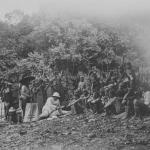
Photograph of Major G. S. Carter (centre) with Semut 2 operatives. Credits: From Australian War Memorial website, Public Domain.
About “Tuan’s Lament”

“Tuan’s Lament” written during Operation Semut is sung in the tune of “The Mountains of Morne” by Irish musician Percy French.

The lyrics were published in The Sarawak Gazette on Jan 31, 1965 under the article “From an old War Chest”.

Going through the lyrics now, readers could at least catch a glimpse what the operatives went through 75 years ago.

“Tuan’s Lament” chorus mentions ‘Charlie the Raj’ which most probably refers to Charles Vyner Brooke, the third White Rajah of Sarawak.

See the war in the eyes of Semut operatives through the lyrics of “Tuan’s Lament”:

Verse 1
Away in the east far out o’er the sea
There’s a place named Sarawak, a great mystery
They said you will go and fight the foe there
We answered ‘For Charlie we’d fight anywhere’.

Chorus
Charlie the Raj
Charlie the Raj
Its all in the service of Charlie the Raj

Verse 2
Our ideals were high and our hearts very large
We left home and comforts to fight for the Raj
To relieve the oppressed was our guiding aim
But we found ourselves players in a far different game

Verse 3
We arrived in Sarawak so strange and so dark
Where collecting of skulls is the lads favourite lark
Each house has its quota, smoked to a turn
At the first glimpse of this for the homeland you yearn

Verse 4
The first thing they told us was ‘here you must stay’
And work for dear Charlie on a dollar a day
The rate they arrived at was decided by Fish*
They dare not pay less ‘cos the coolies get this.

Verse 5
We chased round the country- the Japs on the run
The natives decided to join in the fun
With sumpits and parangs they did rather well
The ‘heathen’ decided Sarawak was hell.

Verse 6
The Japs soon discovered that no man can spare
Lebeh satu kapala and a handful of hair
To join honoured ancestors Jap not lose face
If stop in this country just not in the race

Verse 7
The ‘heathen’ surrendered and now he has gone
But for Charlie the Rajah we still carry on
But now we are tired we don’t want to roam
So Charlie, dear Charlie, oh please send us home.

*Fish here may be a nickname for J.C.B. Fisher

KajoPicks: 8 South Korean period action films to watch

Here are 8 Kajo-approved South Korean period action films to watch:

1.The Great Battle (2018)

The Siege of Ansi was a battle between Goguryeo (an ancient Korean kingdom) and Tang forces in Ansi.

Ansi was a fortress on the Liaodong Peninsular in present-day Northeast China.

Lasting from June 20, 645 to Sept 18, 645, the Siege of Ansi was one of the biggest battles of the first campaign in the Goguryeo-Tang war.

The star of the battle was Yang Manchun, a Goguryeo commander of the Ansi Fortress.

In this Korean period action film, heart-throb Jo In-sung plays Yang Manchun, which will make you wonder if the historical figure could have really been that good looking.

Of course, critics were quick to criticise this particular casting as it was highly unlikely that Yang Manchun was in his mid 30s.

Nonetheless, The Great Battle was able to pull through, becoming one of the highest box office films of South Korea in 2018.

Watch the trailer here.

2.Warriors of the Dawn (2017)

What do you as a king when a foreign country tries to invade your kingdom? You flee the country, leaving your young son to take over, of course!

That was what King Seonjo, the 14th king of the Joseon Dynasty of Korea did when Japanese forces came knocking on his kingdom’s door.

He escaped to seek refuge from the Ming Empire, abandoning his people and leaving crown prince Gwanghae in-charge.

This Korean period action film follows the story of a group of mercenaries tasked to protect the reluctant Prince Gwanghae during the 1592 Imjin War.

Played by Yeo Jin-goo, the prince then leads the royal court to fight their enemies with the help of To-woo (Lee Jung-jae).

Growing up as a child actor, Jin-goo has proven over and over again that he has just gotten better in acting as he pursued a more adult role in this movie.

However, his acting is still somehow overshadowed by Jung-jae who is known for his charisma and chameleon’s ability as an actor.

Watch the trailer here.

3.War of the Arrows (2011)

How often does a period action film makes the top grossing films in any country? Honestly, it is a rare thing to happen especially in Hollywood over the last few years whereby most of the highest grossing films have been from the Marvel franchise.

This movie was the highest grossing Korean film of 2011, drawing an audience of 7.48 million.

It is set after the Second Manchu Invasion of Korea about an archer who risks his life to save his sister from slavery under Qing’s Prince Dorgon.

While the other characters such as the archer Nam-yi (Park Hae-il) and his sister Ja-in (Moon Chae-won) are fictional, Prince Dorgon or Rui was a real historical figure.

Watch the trailer here.

4.The Admiral, Roaring Currents (2014)

If it is a battle between 12 ships and an invading fleet numbering 333 vessels, the showdown must be epic.

This period action film revolves around the Battle of Myeongnyang, an event which took place on Oct 26, 1597 near Jindo Island, southwest of the Korean peninsula.

One of South Korea’s prominent actors, Choi Min-sik (I Saw the Devil, Lucy) plays the legendary naval commander Yi Sun-sin who led a heroic victory against the Japanese during the battle.

Instead of recruiting Japanese actors, Korean talents such as Ryu Seung-ryong, Cho Jin-woong, Kim Myung-gon took the role of Japanese historical figures Kurushima Michifusa, Wakisaka Yasuharu and Todo Takatora respectively.

With 10 million admissions only 12 days after its premiere, the movie sets a record for achieving the highest number of viewers in the shortest amount of time in South Korea.

Watch the trailer here.

5.The Fortress (2017)

After reading about King Injo of Joseon (16th king of the Joseon dynasty), most people would think him weak and indecisive.

Well, he did cause the depletion of his country’s economy and two wars with the Manchus during his reign.

This Korean period action film lets the audience into the mind of King Injo; what happened during the Second Manchu invasion of Korea in 1636 when he sought refuge in Namhansanseong fortress.

Portrayed by Park Hae-il, King Injo needs to decide whether to bend his knee to the Qing dynasty or not.

On his side is Choi Myeong-gil (Lee Byung-hun), a scholar and politician who advise the King to make the crucial decision.

Watch the trailer here.

6.Kundo: Age of the Rampant (2014)

Starring Ha Jung-woo and Gang Dong-won, this Korean period action film sets in mid-19th century Joseon.

It is about a power struggle between the unjust wealthy who run the society and a group of what would stand for the Korean version of Robin Hood and his merry men.

This band of fighters named Kundo decide to steal from corrupt officials and then share their loot with the poor.

Kundi: Age of the Rampant has everything a Korean period action film can offer; a hero who rises from the lowest point of his life, a villain who clearly deserves to die from the beginning and tonnes of sword fighting and archery scenes.

Besides this, Jung-woo who plays the role of a former butcher who joins Kundo to avenge the death of his family is almost unrecognisable, largely because he is rocking a clean-shaved head in the movie.

Watch the trailer here.

7.The Age of Blood (2017)

Speaking of sword-fighting, here is a Korean period action film that gives you high adrenalin sword-fighting scenes.

Can you imagine slashing your opponents with your feet holding a sword while both of your hands are tied up in the air?

The Age of Blood (2017) follows the story of Kim Ho (Jung Hae-in) who is suddenly demoted to a lowly prison guard after he lost a battle.

Suddenly on his first day on the job, he finds five top fighters from the rebel group have to sneak into the jail to break out their captured leader.

Well, not a smart idea for the rebels because Kim Ho just had a career change from a swordsman for the king.

Watch the trailer here.

8.The Showdown (2011)
KajoPicks: 8 South Korean period action films to watch

Here is another Korean action period film based on the Manchus invasion of Joseon.

As the saying goes, the enemy of my enemy is my friend, the Joseon soldiers decide to help Ming China fight against the Manchus.

In the middle of Manchuria, the Joseon soldiers who barely survived the battle are now cornered by the Manchu forces.

Now, they have to fight a bloody battle for the survival.

The movie starring Park Hee-soon, JJin-Goo and Ko Chang-seok.

What went down in Bekenu during the Brunei Revolt 1962

Bekenu is a small fishing town near Miri at the northeastern part of Sarawak. It is a humble town with many of the shophouses dating from the 1930s.

Many might not remember that this small town witnessed an important historical event during the Brunei Revolt 1962.

The Brunei Revolt was an insurrection to oppose Brunei inclusion in the Federation of Malaysia.

The insurgents were members of the North Kalimantan National Army (TNKU), a militia linked to the Brunei People’s Party (BPP) and supplied by Indonesia.

At that time, the town was briefly taken over by the rebels.

Brunei Revolt in Niah

The rebellion first broke out at 2am on Dec 8, 1962. The rebels attacked police stations throughout Brunei, the fifth division of Sarawak along the the western edge of Sabah.

Then came the news that Bekenu was in rebel hands and there was also uncertainty as to the situation in Niah.

C Company from 99th Gurkha Infantry Brigade under Major Mark Pennell was sent to deal with the situation in Niah.

During the Brunei Revolt, hundreds of Dayaks were immediately called to help fight and contain the rebels.

The Ibans decorated their longboats with bright red feathers and set off by river to Niah.

By the time that C Company arrived in Niah by river, there was no sign of rebel forces.

Reportedly, after hearing the Iban party was about to arrive, the rebels made their escape to the jungle.

What went down in Bekenu during the Brunei Revolt 1962
This photograph was taken at the height of the Brunei Revolt on December 10th 1962. It shows soldiers of the 1st Queen’s Own Highlanders unloading stores from a 34 Squadron Beverley shortly after the British had seized the airport. Credit: British Empire.
Brunei Revolt in Bekenu

Meanwhile, the mission to liberate Bekenu fell under B Company.

Under the command of Major David Mostyn, the company approached on foot, arriving in Bekenu early morning of Dec 13, 1962.

It took them 16 hours of hiking along the coast through mangrove swamp from Tanjung Batu in Bintulu to the west of Bekenu.

The moment they arrived in Bekenu, the soldiers engaged in a brief firefight with the rebels who then fled downriver. There, they were ambushed by another platoon.

During the operation, six rebels were killed, six captured and about 10 escaped into the jungle.

For the next three to four days, patrols went up and down the river searching for escaped rebels.

Overall the operation to secure Bekenu during the Brunei Revolt was considered an immediate success.

Lesson to learn from the Brunei Revolt, especially in Bekenu, according to Tom Harrisson

One of the lessons from the Brunei Revolt taught Sarawak was that greater attention should be paid to the small racial groups.

Sarawak’s then museum curator Tom Harrisson was in charge of all irregular forces in the Sibuti, Baram, Upper Limbang and Trusan headwaters to prevent rebels from escaping into the interior during the Brunei Revolt.

According to Harrisson, looking at what happened in Bekenu where the rebellion gained support from the local Kedayans, in the modern world one small group can break up the whole of pattern of a nation.

“Some people have asked me if there are any lessons Sarawak can learn from this revolt. Well, of course, there are all sort of lessons for the administration and intelligence and so on which are right above my head. But in my mild capacity as government ethnologist and curator of the Sarawak museum, there is an ethnological problem that comes of this- that is you cannot afford to ignore small racial groups,” Harrisson wrote in an article published in 1963.

He continued, “The Kedayans have played a major role in this. There are only about less than 10,000 of them in Sarawak but they have not been taken into account. There are practically no responsible Kedayans in any positions. They are not represented adequately in government and this applies equally to many other group in the north.”

He then gave an example of how large groups of Sarawak back then were given attention not only in administration but over the radio where only they had programs.

“Although the population of people like the Kedayans, the Kayans, the Kenyahs, Kelabits and Muruts are relatively small, they occupy enormous area of this country,” Harrisson wrote.

“In my view, what happened at Bekenu, among the Kedayans there, who I know quite well and who are extremely industrious farmers, is that they did get completely confused and misled. They are guilty all the same, no one is denying that, but there is a lesson that the same sort of thing can happen widely and I do not think the argument is sufficient that this group is small one, therefore we can ignore it.”

By Dec 17, some 40 rebels were dead and 3,400 were captured, putting an end to the rebellion. Though the rebellion was cut short, it is seen as one of the first stages of the Indonesia-Malaysia Confrontation.

15 travel horror movies to make you think twice before travelling

Travel horror movies are one of those films which answers your question, “What could go worse on this trip?”

Well, these movies then push the boundaries of your imagination: there are serial killers, mad scientists, criminals, mysterious diseases, zombies waiting to ruin everyone’s vacation.

15 travel horror movies to make you think twice before travelling
Grab some popcorn and a pillow to cover your eyes during horrifying scenes in these travel horror movies. Credit: Pixabay.
So here are 15 travel horror movies make you think twice before going on your vacation (or maybe about what to pack):
1.Hostel (2005)

What could be the worst thing that could happen when travelling across Europe? How about being preyed on by a mysterious organisation that tortures and kills kidnapped tourists?

Not for the faint-hearted, this travel horror flick there are a lot of torture scenes and severed bodies.

These are the last few things you could expect when checking into a hostel. Hostel later went on to become part of a trilogy.

2.The Human Centipede (2009)

Here is another movie not for the faint-hearted. A German surgeon kidnaps three tourists and joins them surgically, mouth to anus, forming a human centipede. The movie premise is so disgusting, yet apparently there are no scenes of excrement and it went on to win several international accolades in the horror movie genre. This film also had sequels made, but the final in the sequence was nominated for the Golden Raspberry Awards.

3.Cabin Fever (2002)

When director Eli Roth (who also directed Hostel) went to Iceland for a trip, he got infected with a skin infection. Inspired by his experience, Roth co-wrote and directed this travel horror comedy film.

It is about a group of college graduates who rent a cabin in the woods and get infected by a flesh-eating virus. (Yes, it is a far leap from a skin infection.)

4.Eden Lake (2008)

When a couple choose a remote lake in the English countryside for a break, it means they clearly need a break from everything.

Their vacation is interrupted as a group of teenage delinquents target the couple, first stealing their belongings and then terrorizing and torturing them throughout the movie.

5.Frozen (2010)

Which one is scarier? Being stuck out in the snow as you freeze to death or being stuck in the air where you cannot come down?

How about a situation combining both? The movie follows a trio of skier and snowboarders stranded on a chairlift near the top of the mountain at a ski resort. Now, they have a choice of having to leave the chairlift or freeze to death.

6.The Cabin in the Woods (2012)

Here is another slasher film on the list and it stars Kristen Connolly, Chris Hemsworth and Anna Hutchison.

It is about a group of college students going for a retreat to a remote forest cabin. No, there is no serial killer in this movie… just some crazy scientists, zombies and werewolves.

7.Afflicted (2013)

The found footage concept may not be for everyone; sometimes it is too dizzying and eventually, annoying to watch.

This concept however, is suitable for this travel horror flick as it follows a pair of childhood friends travelling the world while filming a web series.

Their adventure gets cut short when they catch a disease during their stop in Barcelona.

8.A Lonely Place to Die (2011)

Be careful if you rescue a girl in the wilderness during your climbing trip. That girl could be: a) a ghost, or b) a kidnapping victim whose kidnappers are out to kill you after you rescue her.

A Lonely Place to Die (2011) is about a group of mountaineers who discover a girl buried alive in a small chamber in the forest of the Scottish Highlands.

9.The Hills Have Eyes (2016)

When someone tells you there is a shortcut you can take during your road trip, do not take their advice; it will be a trap.

There could be a serial killer or a blood-thirsty bear lurking along the so-called shortcut.

In this travel horror movie, there is a group of cannibalistic mutants targeting a family whose car breaks down after taking a ‘shortcut’.

10.The Shallows (2016)

Surfing is a fun thing to do when you do some solo travelling. But it is not so fun when you get stranded 180m from shore and there is a white shark waiting to have a piece of you.

The story follows medical student Nancy Adams (Blake Lively) who travels to a secluded beach in Baja California following the death of her mother.

Although it’s not likely that you will be stalked by a vengeful great white shark, it reminds yourself to prepare for all contingencies when you solo-travel, especially to a secluded beach.

11.The Last House on the Left (2009)

When a group of men who rape and almost kill your daughter take refuge at your vacation home, what do you do? You turn the place into a murder scene as you exact your revenge.

And what makes a good murder weapon other than the microwave which you used to make your family’s dinner?

This is a story of how a normal family could be driven into doing something evil when you cross them.

12.Turistas (2006)

It stars familiar names like Josh Duhamel, Melissa George and Olivia Wilde. This travel horror story turns ugly when a group of international backpackers in Brazil find themselves caught in an underground organ harvesting ring.

The twist is that the victims in the movie find that their organs are used for the poor.

13.The Ruins (2007)

What if your trouble during vacation comes not in the form of a human but in a form of a murderous plant instead?

The Ruins follows two young American couples enjoying their vacation in Mexico. When they visit a Mayan temple, they find themselves at the mercy of a vine that moves around and kills people.

14.Wolf Creek (2005)

This Australian travel horror thriller film takes you to the Wolf Creek National Park in Western Australia.

There, a serial killer lurks, waiting to abduct and kill tourists while taking their possessions as trophies.

The movie actually inspired by real-life The Backpacker Murders. It is a series of murders which took place in New South Wales between 1989 and 1993.

Authorities eventually arrested and charged Ivan Milat for killing seven backpackers including three German and two British nationals.

15.The Strangers (2008)

One of the worst things could happen to anyone is a random act of violence. There is no cause or closure or even obvious cure for these kind of cases.

The Strangers (2008) opens the viewers’ minds that death or crime could happen to anyone at random time or place.

It follows Kristen (Liv Tyler) and James Hoyt (Scott Speedman) whose stay at a vacation home is disrupted by three masked criminals who break into thee house.

Do you have any other 15 travel horror movies you would like to suggest? Let us know in the comment box.

KajoPicks: 10 South Korean spy films about North Korean espionage

When it comes to the spy film genre, the most famous movies are none other than the James Bond series.

While Hollywood took on a more fictional, imaginative angle of espionage activities, South Korean filmmakers turned to their northern neighbour for inspiration.

A handful of dramas and movies based on North Korean espionage came out over the years, and some of them were inspired by the real deal.

So here are KajoMag’s 10 South Korean spy films about North Korean espionage to watch:
1.Spy Gone North (2018)

Loosely based on the true story of South Korean spy, Park Chae-seo, this movie stars Hwang Jung-min, Lee Sung-min and Cho Jin-woong.

Jung-min plays the role of Park Seok-young, an agent recruited by the National Intelligence Service (NIS) to infiltrate the highest ranks in North Korea.

He is given the code name ‘Black Venus’. His mission is to travel to Beijing disguised as a salesman and establish a business connection with high ranking North Korean official Ri Myung-un (Lee Sung-min).

Instead of expecting action and guns like most spy films, Spy Gone North (2018) is more of a slow-burn political drama.

Watch the trailer here.

2.The Berlin File (2013)

If you are looking for more action and thrill for your dose of South Korean spy films, watch The Berlin File (2013).

Talented Korean actor Ha Jung-woo stars as North Korean agent Pyo Jong-sung in Berlin who is betrayed and cut loose when a weapons deal goes wrong.

While trying to escape from Berlin, South Korean agent Jung Jin-soo (Han Suk-kyu) and North Korean agent Dong Myung-soo (Ryoo Seung-bum) are also hot on his trail.

The director Ryoo Seung-wan wanted the movie to be reminiscent of The Bourne Identity. So you can imagine it to be fast-paced with intense characters build-up for the secret agents.

3.Commitment (2013)

After his father’s failed espionage mission, North Korean Myung-hoon (Big Bang’s TOP) and his younger sister Hye-in (Kim Yoo-jung) are sent to a labor prison camp.

To save his sister, Myung-hoon volunteers to become a spy and infiltrates the South to finish what his father failed to do.

Arriving in South Korea, he poses as a North Korean defector and enrolls at a local high school.

Things get tricky when both North and South Korean governments are out to get him.

Watch the trailer here.

4.The Suspect (2013)

The selling point for us to watch this film is the fact that Gong Yoo is playing the role of a spy.

His character Ji Dong-chul is one of the top special forces agent in North Korea until he is abandoned by his own government.

This South Korean spy film is another revenge movie as Dong-chul finds out his wife and daughter are killed.

He defects to the South where he is framed for a murder by the South Korean intelligence service.

Watch the trailer here.

5.Secretly, Greatly (2013)

Secretly, Greatly (2013) is a South Korean spy film that starts light and funny and then intense and emotional halfway through the movie.

It stars Kim Soo-hyun, Park Ki-woong, and Lee Hyun-woo who play North Korean spies infiltrating South Korea as a village idiot, a rock musician and a high school student respectively.

What are the odds of three North Korean spies living in the same neighbourhood anyway?

They start to get comfortable with their lives in the South until a mission comes ordering them to commit suicide.

Watch the trailer here.

6.Operation Chromite (2016)

Liam Neeson in a South Korean spy film? Sign us up for this movie. Based on the real-life events of the Battle of Inchon, Neeson takes up the role of General Douglas MacArthur who devises a secret plan to attack behind enemy lines at Inchon.

The movie sets in 1950, few months after North Korean forces have invaded most of South Korea.

Then, an American-led UN coalition is sent to Korea to help the South Koreans.

But before any making any move, MacArthur plans a top secret South Korean intelligence operation. Operation Chromite presents a fictionalised version of the real operation in which the spies gather essential information from within occupied Inchon.

Watch the trailer here.

7.Secret Reunion (2010)

Imagine two spies; one from South Korea and another from the North reuniting years after both are no longer in the espionage business. Will they pretend to not know each other or plot to murder each other?

The story follows Agent Lee Han-gyoo (Song Kang-ho), a South Korean spy who falls from grace after failing to stop the assassination of a North Korean dissident.

Meanwhile, Ji-won (Kang Dang-won) is a North Korean undercover spy living in South Korea who is betrayed by his fellow agent.

Six years later, Han-gyoo works as a private investigator and Ji-won in construction. Fate brings them together later in life; will they pick up what they left years ago?

Watch the trailer here.

8.Silmido (2013)

In 1968, a black operations unit of the Republic of Korea Air Force known as Unit 684 is formed to assassinate North Korean leader Kim Il-sung.

Thirty-one civilians made up of either petty criminals or unemployed youths are recruited with the promise of money and jobs if they succeed in their mission.

Unit 684 members are trained on Silmido, an inhabited island off the Yellow Sea. They have to endure harsh training for years, during which seven of them die.

Things go even farther south in August 1971, when the assassination mission is cancelled following the improvement of relations between North and South Korea.

Feeling betrayed and upset after all they went through, the surviving members of Unit 684 start an uprising against the South Korean government.

This movie is the dramatised version of the Unit 684 retaliation against their government.

Watch the trailer here.

9.The Spies (2012)
KajoPicks: 10 South Korean spy films about North Korean espionage

Imagine living your life undercover for 22 years and suddenly you receive a mission to assassinate a target.

Section chief Kim (Kim Myung-min) was dispatched to South Korea 22 years ago to spy for the North Korean government. Over the years, he sticks to his life routine; making a living by selling fake Viagra pills smuggled from China.

After he receives a sudden assassination order, he starts to gather his teammates.

The movie follows how Kim and his teammates reluctantly carry out the assassination plot.

10.Double Agent (2003)

During the Cold War, Lim Byong-ho (Han Suk-kyu) is chased by North Korean officials in Berlin where he narrowly escapes.

However, he is caught by South Korean officials in which he is brought back to South Korea for interrogation.

After enduring horrifying torture, Lim convinces the South Korean to let him working as a training officer for operatives on survival in North Korea.

The plot thickens as it turns out Lim is actually a North Korean spy who still receives orders from his sleeper agent in South Korea.

Watch the trailer here.

The migration of Indonesian romusha to Malaysian Borneo during WWII

‘Romusha’ is actually a Japanese word for labourer. However during World War II (WWII), it specifically referred to forced labourers during the Japanese occupation of Indonesia.

According to the US Library of Congress, it was estimated in Java between 4 to 10 million romusha were forced to work by the Japanese military.

Indonesia during Japanese occupation

The experience in Indonesia during World War II varied depending on where one lived and one’s social status.

Those who lived in areas considered important to the war effort such as Balikpapan or Tarakan (for their oilfields) experienced torture, sex slavery, execution and war crimes.

The migration of Indonesian romusha to Malaysian Borneo during WWII
Pantai Amal, where the Japanese landed at Tarakan in North Kalimantan.

The romusha’s services were supposed to be voluntary but in reality many were recruited against their will.

Some were taken from their homes while others were even seized in the middle of a movie in theaters.

Most of them were put to work through threats and violence.

If they were lucky, they were put to work on Java island itself. The unfortunate ones were those who werw sent to work outside Java.

These locations included New Guinea, Malaya, Singapore, Thailand, Burma, British Borneo (current day Sabah and Sarawak), Indochina and Hong Kong.

Regardless of the locations, these romusha were forced to work under harsh conditions with insufficient food, shelter or medical care.

They were often treated worse than Prisoners of War (POWs) from Allied countries.

The migration of Indonesian romusha to Malaysian Borneo during WWII
Japanese invastion of Java. Credits: Creative commons.
Romusha in British Borneo

There is no exact number on how many romusha were sent to Borneo island during WWII. It is understood that they came here to work on oilfields and build facilities such as airstrips.

Richard Wallace Braithwaite in his book Fighting Monsters: An Intimate History of the Sandakan Tragedy gave one rough number.

“One estimate is that 31,700 Javanese were sent to North Borneo and another 48,700 to South Borneo. This occurred mainly in 1944. They constructed airfields in British Borneo, worked in the oilfields at Miri, and were used elsewhere in Borneo hacking tunnels and storage facilities out of rock.”

It was also reported there were about 3,000 Javanese romusha working in Sandakan airstrip alone during WWII.

Braithwaite further noted,

“Many romusha died in the transport ships before they reached their destination. While the Japanese kept good records, most records were destroyed after capitulation. The mortality rate for those who were sent outside was 74.3 per cent. However, only 5,000 survived of those who went to British Borneo, a much higher mortality rate of 85 per cent.”

Shigeru Sato in War, Nationalism and Peasants: Java Under the Japanese Occupation, 1942-1945 gave a different estimate number for North Borneo.

He wrote,

“Sending of Javanese labourers overseas was done mostly within the 1944 fiscal year. Like other commodities, the supply of labourers from Java fell below the levels set in the initial plan due to shipping difficulties. In the case of North Borneo, for which 17,000 men were approved for the year 1944, the total number of romusha who arrived from Java during the entire occupation period was 9,000 according to one estimate between 12,000 and 13,000 according to another.”

So did the romusha in Borneo return to Java after WWII?

After the end of WWII in September 1945, the Dutch Indies government established the Nederlandsh Bureau voor Documentatie en Repatrieering van Indonesiers (Netherlands Bureau for Documentation and Repatriation of Indonesians, or NEBUDORI).

This was to register, care for, and repatriate displaced Indonesians, most of whom were Javanese romusha.

The Japanese on the other hand did not make much effort to repatriate Indonesian romusha.

According to Shigeru, the repatriation of romusha by the Dutch began in May 1946, and by April 1947, a total of 52,117 Javanese romusha had been repatriated from Singapore, Malaya, Thailand, Indochina, Borneo, Celebes, New Guinea, the Moluccas and the Lesser Sunda Islands.

However, the repatriation of Indonesian romusha was not an easy job.

According to Braithwaite, when it came to repatriation back to Java, the romusha were the lowest priorities of the Allies.

“Some refused to go on Dutch ships as the Indonesian revolution was well underway and they did not trust the Dutch. Some presumably thought that going into a revolutionary zone in Java was likely to be worse than their situation in Borneo. In the end, only about a thousand returned from British Borneo. It was 1947 before authorities made ships available to them. By then, most had found employment and many were married to local women and had children.”

A thousand reportedly only managed to return home to Java out of the estimated number of 5,000 to 13,000 that were sent here.

This meant many had either decided to call Sabah and Sarawak home after the war or died working as romushas.

Nobody knows the fate of every romusha

There is no way to confirm these. The Japanese did not keep proper records of the romusha system and those who died were often buried in unmarked graves.

Historians believed the brutality of the romusha is one of the main reasons for the mass death rates among Indonesians under the Japanese occupation.

With no proper records documenting their arrivals or departures and no tombstones to mark their graves, the lives and sufferings of romusha outside of Indonesia, particularly in Malaysian Borneo, can be easily lost amongst the current and future generations.

5 things you need to know about dragons in Iban folklore

Despite being a mythical creature, the dragon appears in various folklore of many cultures around the world.

In Western culture, it is typically depicted as winged, horned, four-legged and capable of breathing fire.

Meanwhile, dragons in Eastern culture are usually wingless (but capable of flight) short-legged, serpentine creatures.

Would it be interesting to know that the dragon in Iban folklore is a bit of both worlds?

Here are at least five things you should know about dragons in Iban folklore:
5 things you need to know about dragons in Iban folklore
A dragon in Iban folklore has a luminous stone in the centre of its brow that works like a flashlight. Credits: Pixabay.
1.The physical appearance of a dragon in Iban folklore

According to an Iban legend, the dragon or naga is a huge snake with a horn protruding from its forehead.

Unlike its fellow dragons from other folklore, an Iban dragon has a luminous bezoar or gombala stone in the centre of its brow. It works like a flashlight for the dragon to lights its way at night.

It also has several pairs of wings, legs, arms, eyes and sharp claws and teeth.

2.There are two species of dragons.

According to Iban ethnologist Benedict Sandin, there are two species of dragons in Iban folklore. One species loves the water so it lives in the sea, pool or in the river. Meanwhile, another species prefer the mountain top.

The one which lives on the mountain top kills with its crested tail. It can also spit venom and breathe fire .

3.It is believed that a dragon protected the Ibans during the infamous Cholera expedition

Benedict wrote in The Sarawak Gazette on Nov 30, 1964, “It was said by the Ulu Ai Ibans during the Cholera Expedition against Penghulu Bantin of Delok in 1902, before the arrival of the Government forces at the mouth for Delok river in the upper Batang Ai, that they saw a huge dragon track going down from the hill to the river. During the following night Bantin had a dream. He dreamt that he met a huge dragon which told him not to worry about the enemy as he (the dragon) would fight for him.”

Eventually, one fifth of the 10,000 men recruited to fight the alleged rebels died of Cholera hence the name ‘Cholera Expedition’.

4.A dragon also helped fight the Japanese during World War II

When an Iban leader, the late Temenggong Koh fought against the Japanese during World War II, he gave offerings to the dragon god seeking its protection.

Benedict shared, “It was due to this that whenever the late Temenggong Koh was worried by the enemy he would throw an offering into the river to appeal for immediate help from his dragon god. He did this during the fighting against the Japanese soldiers at the own of Song during liberation days in 1945.”

5.There is a guardian dragon cited in a mourning song

In the olden days, according to Benedict, the Iban believed that whenever a person died in this world, thousands of their relatives who died before them will come from the other world to fetch their soul to live with them in Mandai Mati.

“On their way to Mandai Mati, on reaching the Pintu Tanah (Door to Earth) which separates this world from the next, a guardian dragon is mentioned in the following mourning song,” he added.

Here is the English translation of the song:

Then spoke the maiden Simba
Who, when she died was transformed into a hawk
“Where are you maiden Jawai
Who wears a single red pelaga stone,
And you maiden Iyak,
Who is lively and gay?
Please open the door of the dragon snake;
The door of red soil;
So that we can have a way to return to our country,
In the forest full of small mango trees;
With flowers all upside down.

We have no time!
Replied the dragon snake,
Because we are doing most important work,
Having been asked by Pungga and Laja,
To weave for them coloured petticoats,
Which they will wear on a short expedition,
To the mouth of the Kantu river
If they return from thence,
They will bring for us two lumps
Of precious (gombala) stones,
As big as areca nuts.

5 movies and dramas based on the Hwaseong serial murders

After remaining unsolved for 33 years, South Korean police announced on Sept 18, 2019 that they had identified the prime suspect of the Hwaseong serial murders.

These murder cases rocked South Korean society from 1986 to 1991 as they soon realised that they could be looking at the country’s first serial killer.

Female victims’ ages ranged from 13 to 71, and were usually found bound, raped and murdered in Hwaseong, south of Seoul.

Most of the victims had been strangled to death; many with their own clothes.

Their bodies were found in different places including pastureland, canals, rice paddy fields and embankments.

Using the latest forensic techniques to retrieve DNA, officers managed to identify 56-year-old Lee Chun-jae as a suspect in at least three of the killings. Lee was already serving a life sentence for the rape and murder of his sister-in-law in 1994.

As of October 15, Lee’s status has been changed from ‘suspect’ to ‘accused’. Despite the statute of limitations having expired for all the Hwaseong serial murders, police have sent his case to prosecutors. The police had retained key evidence and samples all this while in the hopes of solving these heinous murders.

Often compared to Zodiac Killer cases as they had never been solved before, the Hwaseong serial murders have been portrayed several times in popular culture.

5 movies and dramas based on the Hwaseong serial murders
Here are 5 movies and dramas evoked by the Hwaseong serial murders:
1.Memories of Murder (2003)

This movie is the most famous portrayal of the Hwaseong serial murders in popular culture.

Besides its cinematography, Sang Kang-ho’s performance as Detective Park Doo-man gained wide praise from movie buffs.

It is set in 1986 in the province of Gyunggi where a second young and beautiful woman is found dead, raped and gagged with her own underwear.

The movie circles around Park, a small town policeman and his partner Cho Yong-koo (Kim Roi-ha) who use brutality to solve the case.

Then comes Seo Tae-yoon (Kim Sang-kyung) into the picture. He may be younger than Park but he is experienced enough to help Park with the investigation.

Memories of Murder have a few similarities with the real events of the Hwaseong serial murders.

For instance, the fact that the victims were gagged with their underwear was drawn from the case.

In the movie, however, the DNA evidence was sent to US for analysis compared to the Hwaseong serial murders where evidence had been sent to Japan.

Just like in the real cases, the DNA results did not match any of the suspects back then.

Watch the trailer here.

2.Confession of Murder (2012)

Imagine if the killer had published a tell-all book about how he committed all the murders after the statute of limitation expired, knowing that he would not be prosecuted.

In this movie, Lee Du-seok (Park Si-hoo) does exactly that, describing all his killings in detail.

Detective Choi (Jung Jae-young), who investigated the murders 15 years prior starts to hunt the killer again.

Meanwhile, Han Ji-soo (Kim Young-ae), who lost her daughter to the serial killer pledges revenge.

At the same time, another killer appears, casting doubt on who the real killer is.

So who is the real killer? Is Du-Seok just an impostor or is the other killer just a copycat?

Full of suspense, this movie is also about the victims families who take matters into their own hands after believing authorities had failed them.

Watch the trailer here.

3.Gap-dong (2014)

This 20-episode drama is set in the fictional city of Iltan in Gyeonggi Province. After a total of nine murders within a 12-kilometer radius over three years, the police conclude the man behind the crimes is a guy they nicknamed ‘Gap-dong’.

Detective Yang (Sung Dong-il) believes the killer is an intellectually challenged man named Ha Il-sik.

To prove his innocence, Ha commits suicide. Subsequently, his son Moo-yeom (Yoon Sang-hyun) becomes a police officer to clear his father’s name.

After 17 years, a string of crimes resembling Gap-dong’s murders occur. Is it committed by the same murderer or a copycat?

This time, Detective Yang and Moo-yeom have to put aside their pasts and work together to catch Gap-dong.

Watch the trailer here.

4.Tunnel (2017)

In 1986, Detective Park Gwang-ho (Choi Jin-hyuk) tries to catch a serial killer. While chasing the serial killer, he enters a tunnel.

When he emerges from the other side of the tunnel, Detective Park finds himself in the year 2016.

He then realises the serial killer has continued killing after 30 years. This time, he needs to work with Detective Kim Seon-jae (Yoon Hyun-min) and a criminal psychological counselor Shin Jae-yi (Lee Yoo-young).

You can watch the drama legally here for free.

5.Signal (2016)

Starring Lee Je-hoon, Kim Hye-soo and Cho Jin-woong, this drama has not only drawn from the Hwaseong serial murders but also other real-life crimes in South Korea.

The plot starts when a mysterious walkie talkie shows up, allowing a detective in the year 2000 to communicate with a cold case profiler in 2015.

Together, they not only solve crimes but prevent some cases from ever taking place.

Signal (2016) is one of the highest rated Korean dramas in cable television history. There is even a Japanese remake of the drama which premiered in 2018.

Watch the trailer here.

Watch this drama on Viu here.

How a Chinese magician brought crocodiles to Sarawak and other tales

When it comes to legends related to crocodiles in Sarawak, most people will remember the story of Bujang Senang.

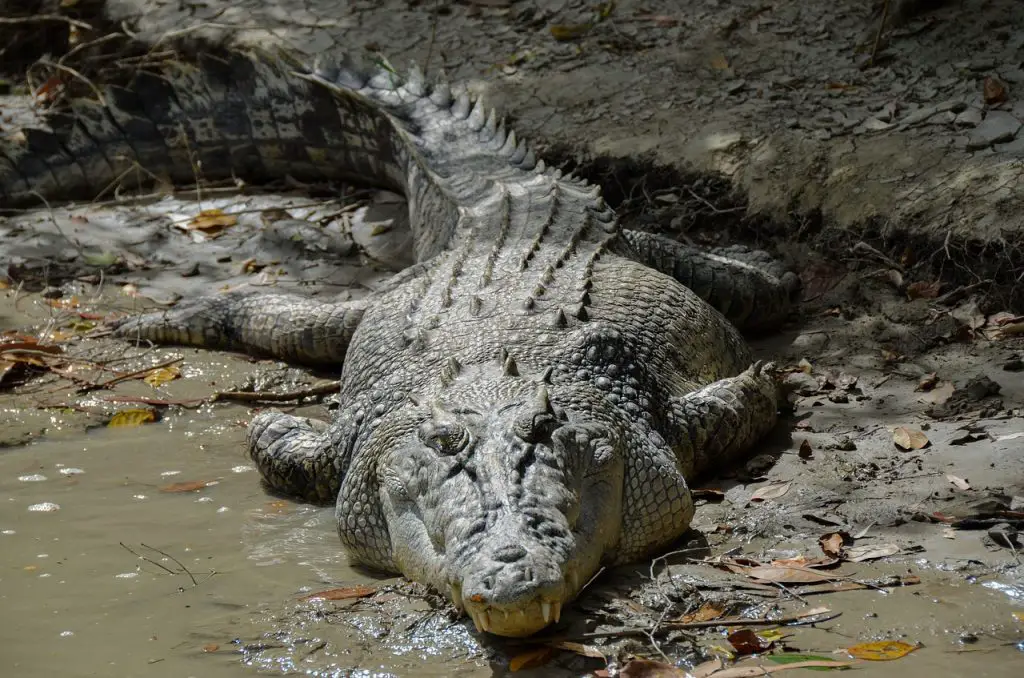
It was a 20-foot long saltwater crocodile that once roamed the river of Batang Lupar in Sri Aman.

How a Chinese magician brought crocodiles to Sarawak and other tales
The narrower part of Batang Lupar river near Engkilili town.

Bujang Senang was believed to have swum in that river as early as 1942. (Saltwater crocodiles can have long lifespans, averaging 70 years and even up to 100.)

There is no exact number of how many had fallen into its prey, but after killing a woman in Sungai Pelaban, a tributary of Batang Lupar on May 20, 1992, it was shot to death after two more deaths later.

Some legends have it that Bujang Senang was an incarnation of an Iban warrior named Simalungun who was killed and cursed to turn into a crocodile. Seeking vengeance, he vowed to kill the descendants of those responsible for his death.

The legend of how crocodiles came to be in Sarawak

Among his accounts of how to go crocodile fishing or hunting them by torch light, J.Leong Ipoi, a Kenyah from Baram, relates a legend in the Sarawak Gazette on Aug 31, 1965 of how crocodiles first came to Sarawak.

Apparently, many years ago, there were no crocodiles found in this country.

Then came a Chinese magician named Sam Pa Kong, who brought one crocodile with him “because he did not find any fierce and wild animals here.”

He had packed the animal inside a mosquito net, which made it furious as it could not see anything.

“On arrival Sam Pa Kong set free the animal. That is why until the present time, people dare not wash their mosquito nets in the river. If they do, a crocodile will attack them,” Leong wrote.

He continued, “During many years, the Chinese said crocodiles in the Baram never attacked the Chinese because the Chinese had set the animal free.”

How a Chinese magician brought crocodiles to Sarawak and other tales
The saltwater crocodile is one of the crocodile species found in Sarawak.
Before there were crocodiles, there were water ghosts

Leong also shared a story of how water ghosts and other wild animals existed before there were crocodiles in Sarawak waters.

These water ghosts were more dangerous than crocodiles.

He wrote, “They used to take children or adults into the water while they were swimming. They did not take people for food. Instead, they only wanted to kill, most of the dead bodies recovered were still in proper condition.”

Then came a man who gave the villagers an idea of how to get rid of these dangerous ghosts.

He asked the villagers to plant chillies, ginger, tuba and other plants which could sting and give off a biting heat.

After harvesting these plants, he told them to pound them together.

How a Chinese magician brought crocodiles to Sarawak and other tales
Signage to warn visitor about crocodiles at Engkilili.

Under the man’s instruction, the villagers loaded the pounded vegetables onto the boats. At the right place, everyone capsized the boats, dumping their loads.

“This caused the fish to come out of the water including the water ghosts because their eyes could not stand it. Many of the ghosts escaped to the river bank. Some of them looked like human beings, with long finger nails, some had animal bodies but human heads; others with long hair around their bodies and also long teeth,” Leong stated.

Here comes the gruesome part of this legend; the villagers started to run after them, chopping off their heads.

Since then, only a few water ghosts are said to have survived the skirmish, but are no longer a danger to human beings.

How a Chinese magician brought crocodiles to Sarawak and other tales
Saltwater crocodile. Credits: Pixabay

How did Bintulu get its name?

Located in the central region of Sarawak, Bintulu was just a small village when James Brooke acquired it from the Brunei Sultanate in 1861.

Like most settlements ceded to Brooke, the first thing he did was build a fort in the area. In Bintulu, the Brooke government built a wooden fort name Fort Keppel named after the White Rajah’s friend Sir Henry Keppel.

In 1867, the first Sarawak Council Negri or General Council meeting was convened in Bintulu.

One of the earliest descriptions about Bintulu was written by Italian botanist Odoardo Beccari.

He arrived in Kemena River on Aug 13, 1867 using a gunboat named ‘Heartsease’.

After arriving in Bintulu, this was what he had to say about the town.

The fort of Bintulu which was built entirely of wood, was in somewhat ruinous condition. It stood nearly on the sea-shore, and just behind it, at a distance of few paces, the primeval forests commence.

Some chinamen had settled at the vicinity of the fort and had built a small bazaar; but the village is chiefly formed by the houses of the Melanau beyond the Chinese kampong (village).

These Melanaus used to live further up the river, but since the construction of the fort, and the installation of an officer of the Rajah near the mouth of the river, they came to settle near the sea – a thing they would never have dared to do in former days for fear of the attacks of the Lanun pirates and Dayak pirates.

Even during the 19th century, the area was known as Bintulu but how did the name come about?

Here are four legends on how Bintulu got her name:

How did Bintulu get its name?
In 1867, Kingdom of Sarawak’s first General Council meeting was held in Bintulu, making it the earliest legislative system in Malaysia. Today, a clock tower and a centenary stone remain as a reminder of where the meeting took place. 
1.Bintulu people had elongated heads?

One legend has it that in the olden days, Bintulu people had elongated heads. According to Chang Pat Foh in Legends and History of Sarawak, ‘bat’ means long and ‘ulau’ means head. Hence the name ‘bat ulau’ before the name Bintulu came about.

2.It was a place for drying skulls after headhunting

Additionally, Chang related another legend about Bintulu when headhunting was still a common practice.

The locals referred to headhunting as ‘milai’ while the process of drying and smoking the skull was called ‘betak’ in the local Melanau language.

There used to be site known as a place for drying the skulls in Bintulu where the locals called it ‘betak ulau’ or head drying place.

As time passed, the place’s name ‘betak ulau’ slowly evolved to Bintulu today.

3.A place to pick up skulls after headhunting

The third legend centered around headhunting. The act of picking up heads after headhunting was called ‘mentu ulau’. Sooner or later, people started to call the area ‘Mentulau’.

When the Brooke officials came, they allegedly interpreted the word ‘mentulau’ into ‘Bintulu’.

4.A place where sea and water mixed

“The fast running water from Sungai Jelalong and Sungai Tubau which flows into South China Sea mixes with the river water from Batang Kemana at the mouth of the river.

“Long ago, the people who stayed at Muara Batang Kemena gave the name ‘Ba Tulau’ to the place where they stayed. ‘Ba’ in Melanau Bintulu dialect means water whereas ‘tula’ means mixing. Hence, ‘Ba Tulau’ mean ‘mixing water,” Chang wrote.

How did Bintulu get its name?
Bintulu Night Market
1 41 42 43 44 45 75